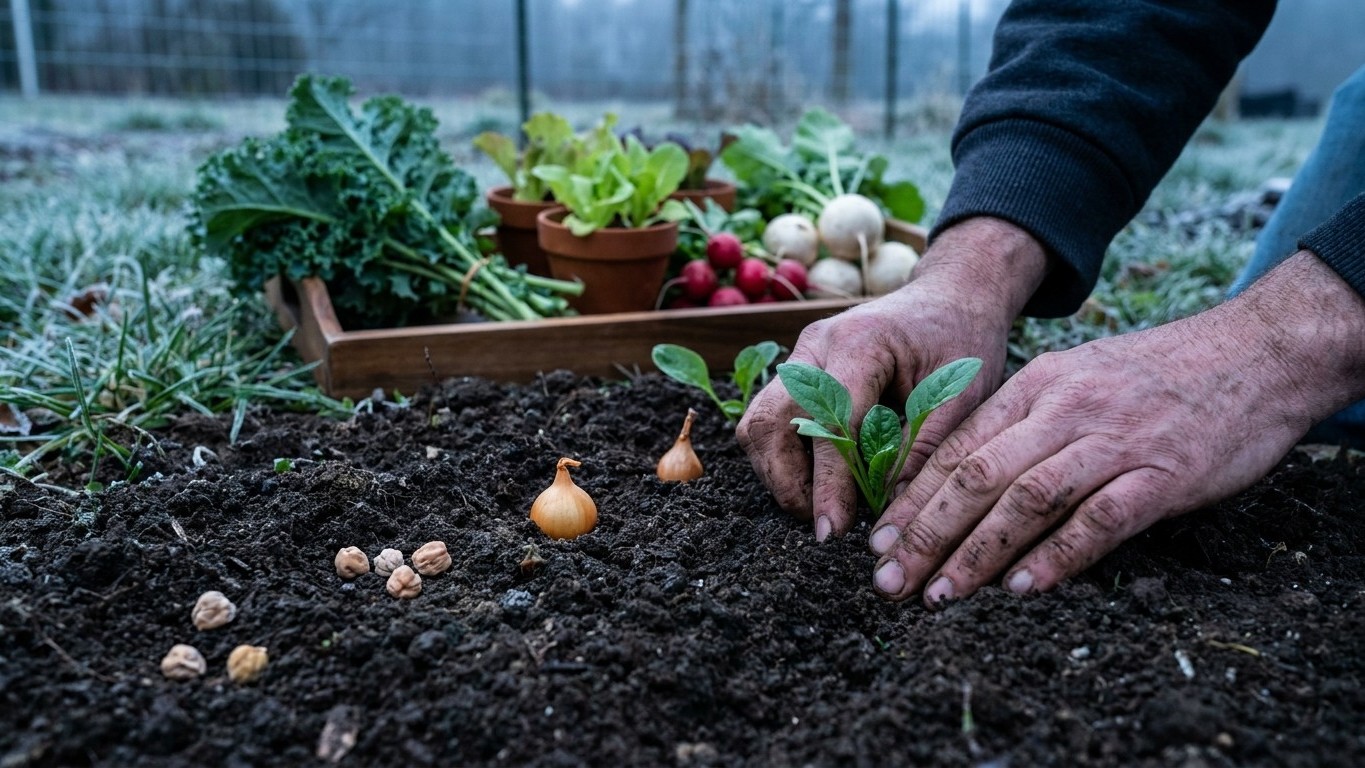

Maryland gardeners can put a real list into the ground in March: spinach, lettuce, peas, kale, radishes, turnips, and onion sets all tolerate the cold snaps that are still likely before the last frost. Seed potatoes go in toward month’s end in the warmer counties. Tomatoes, peppers, and anything tender stay indoors under lights until the soil itself warms, not just the air.
What goes in the ground in March

The calendar says spring is close, but the soil doesn’t read calendars. Maryland’s last spring frost, based on NOAA’s 30-70% freeze probability band for 1991-2020, falls somewhere between April 3 and April 16 depending on where in the state you garden. March sits squarely in the window before that, which means the ground is still cold and a hard freeze remains a real possibility on any given night.
That doesn’t make March a dead month for planting. It makes it a month for crops that shrug off frost. Spinach germinates in soil as cool as 40°F and actually prefers cool conditions over heat. Peas do the same, and gardeners have long timed their pea sowing to the day soil can be worked rather than to a fixed date. Lettuce, kale, arugula, radishes, and turnips all handle a light freeze without damage, and their seed is cheap enough that an early sowing lost to a hard frost costs little.
Onion sets and shallots can go in as soon as the ground isn’t frozen or waterlogged, since both crops need a long cool period to bulb properly later in the season. Garlic, if it wasn’t planted in fall, is really out of its ideal window by March, but shallots still work as a spring-planted substitute. Toward the back half of the month, in the milder parts of the state, seed potatoes go into the ground, usually chitted (pre-sprouted) indoors for a couple weeks first.
Where planting gets risky is anything in the squash, bean, or nightshade families. Soil temperature, not air temperature, decides whether those seeds rot before they germinate. A warm afternoon in March does not mean the six inches of soil where a tomato root needs to grow has caught up. Save those for the section on mistakes below, because this is exactly where March gardening goes wrong most often.
Gardeners on the Eastern Shore, with its milder microclimate, can push these dates a bit earlier than the state average suggests. Anyone in Garrett or Allegany counties, up in the mountains, should expect these same crops to go in weeks later than gardeners near the Chesapeake.
What to start under cover
Seed starting works backward from the frost window, not forward from today’s date. With the last frost falling between April 3 and April 16, tomatoes, which typically need 6 to 8 weeks indoors before transplant, should already be up and growing by early March in most of the state. If they aren’t, there’s still time for a slightly later transplant date, just don’t expect the earliest possible harvest.
Peppers and eggplant run on a longer clock, often 8 to 10 weeks before transplant, which puts their ideal start date in mid-to-late February. Starting them now means accepting smaller transplants at planting time, which isn’t a disaster but does push the first harvest back. Broccoli and cabbage transplants, by contrast, only need about 6 weeks under cover and can still be started now for an April move into the garden, since both tolerate a light frost after transplanting.
The two failure modes here are worth naming plainly. Start too early, and seedlings sit in small pots far longer than they should, turning leggy and rootbound while they wait for soil warm enough to receive them. Tomato starts kept indoors an extra month often stretch toward the light, develop weak stems, and transplant poorly even after hardening off. Start too late, and the plant simply runs out of growing season before the first frost in fall, which for most warm-season vegetables in Maryland falls between October 26 and November 5. A pepper started in April instead of February may never fully ripen its fruit before that fall frost arrives.
Grow lights matter more in March than gardeners often assume. Window light alone, even in a south-facing window, rarely delivers enough intensity to keep seedlings compact, and the leggy-seedling problem is more often a light problem than a temperature problem.
What is ready to pick
March harvests in Maryland come mostly from what survived winter rather than anything freshly planted. Kale and collards that overwintered in the garden often taste better after repeated frost exposure, since cold converts starches to sugars in those leaves. Leeks left in the ground since fall are usually still harvestable now, their tough outer layers peeled back to reveal a perfectly usable core.
Cold frames and low tunnels, if a gardener kept them going through winter, are likely producing spinach, lettuce, and other greens a full month or more ahead of open-ground plantings. Anyone without a cold frame can get a similar early harvest indoors: sprouts and microgreens grown on a windowsill or under a small light are ready in one to two weeks from seed and need no outdoor cooperation at all.
Rhubarb, if forced under a bucket or pot to block light, sometimes produces its first tender stalks by late March in the warmer parts of the state, though most crowns won’t be ready for a full harvest until April.
The other job this month is checking what’s in storage. Winter squash, potatoes, and onions kept in a cool, dark space should get a hands-on inspection now. Soft spots, sprouting eyes on potatoes, or a sweet fermented smell from an onion all signal it’s time to use that item before it spreads rot to its neighbors in storage. A single soft squash left in a bin can take down several others within a couple weeks.
The jobs that matter this month
March carries a heavier workload than the planting list suggests, and most of it has a real deadline attached. Dormant pruning of apple, pear, and peach trees needs to happen before buds swell and break, since cuts made after growth starts waste the tree’s stored energy and invite disease into fresh wounds. Once you see green tissue pushing through the bud scales, that pruning window has closed for the season.
Seed ordering belongs on this list too, and it’s easy to underestimate how quickly good varieties sell out. Popular tomato and pepper varieties, along with anything from a smaller seed company, often go out of stock by the time gardeners further south have already started their transplants.
Soil work matters as much as anything planted in it. A soil test taken now gives enough lead time for lime or sulfur, if the results call for either, to actually shift pH before the main planting season arrives; those amendments work over weeks, not days. Turning a compost pile that’s been sitting since fall speeds up decomposition right as the garden starts needing finished compost for spring beds.
Tool maintenance is the kind of job that never feels urgent until a dull hoe or rusted pruner slows down every other task on this list. Sharpening blades, oiling hinges, and replacing a cracked handle now costs an afternoon; doing it mid-season costs a week of working around broken equipment.
Bed and fence repairs deserve the same treatment. Raised bed corners that heaved over winter, fence posts loosened by frost, trellis wire gone slack all get fixed faster before anything is planted around them.
What not to do in March
The most common March mistake in Maryland is planting warm-season crops because the air felt warm for a few days. A 70°F afternoon doesn’t mean the soil six inches down has caught up, and tomato, pepper, bean, and squash seed sown into cold soil either rots outright or germinates so slowly that pests and disease get the upper hand before the plant does. Wait for the soil itself, not the thermometer on the porch, to signal readiness.
A close second is uncovering strawberry beds, perennial herbs, or cold-frame crops too early after a warm stretch. Mulch and row cover exist precisely because the freeze risk doesn’t end when a mild week arrives; it ends when the frost window closes, somewhere between April 3 and April 16 depending on location. Pulling protection off in early March, only to have a hard freeze roll through two weeks later, can undo months of overwintering effort in a single night.
Feeding nitrogen too early is a quieter mistake but a costly one. Lawns and dormant perennials that get a nitrogen application before root growth has really resumed tend to push soft, weak top growth that’s more vulnerable to a late freeze, rather than the sturdy growth a well-timed feeding would produce. Holding off a few extra weeks, until the plant is actively growing, gets a better result than an early application ever does.
Working wet clay soil, common across much of Maryland, causes damage that lasts the whole season. Soil worked while still soggy compacts into clumps that resist root growth for months. Wait until a handful crumbles rather than smears before tilling or digging.
Checking this against your own county
Everything above describes Maryland as a whole, and that’s a starting point, not a set of instructions for any one backyard. Elevation shifts these dates by weeks: the mountains of Garrett and Allegany counties sit weeks behind the frost dates that apply near the Chesapeake, while the Eastern Shore’s milder microclimate often runs ahead of the state average. The USDA hardiness zone map places Maryland across a 5b to 8a range, and that spread alone signals how different one county can be from another.
The most reliable next step is checking a county-specific source. The University of Maryland Extension publishes planting guidance tuned to local conditions, and it’s worth checking against whatever frost pattern your own garden has shown in past seasons.
Common questions
Can I plant tomatoes in Maryland in March?
Not outdoors. Maryland’s last frost falls between April 3 and April 16, and tomato seedlings can’t tolerate that cold. Keep them growing indoors under lights until the frost window has passed in your area.
When is the last frost date in Maryland?
Based on NOAA’s 1991-2020 climate normals, the last spring frost falls between April 3 and April 16 across most of the state, though mountainous western counties run weeks later and the Eastern Shore tends to run milder.
What vegetables can I direct sow in March in Maryland?
Peas, spinach, lettuce, kale, radishes, and turnips all tolerate the cold and can go directly into workable soil this month. Onion sets and shallots can go in as well.
Is it too early to plant potatoes in Maryland in March?
In the milder parts of the state, seed potatoes can go into the ground toward the end of March, especially if they’ve been chitted (pre-sprouted) indoors beforehand. Gardeners in colder counties should wait a few more weeks.