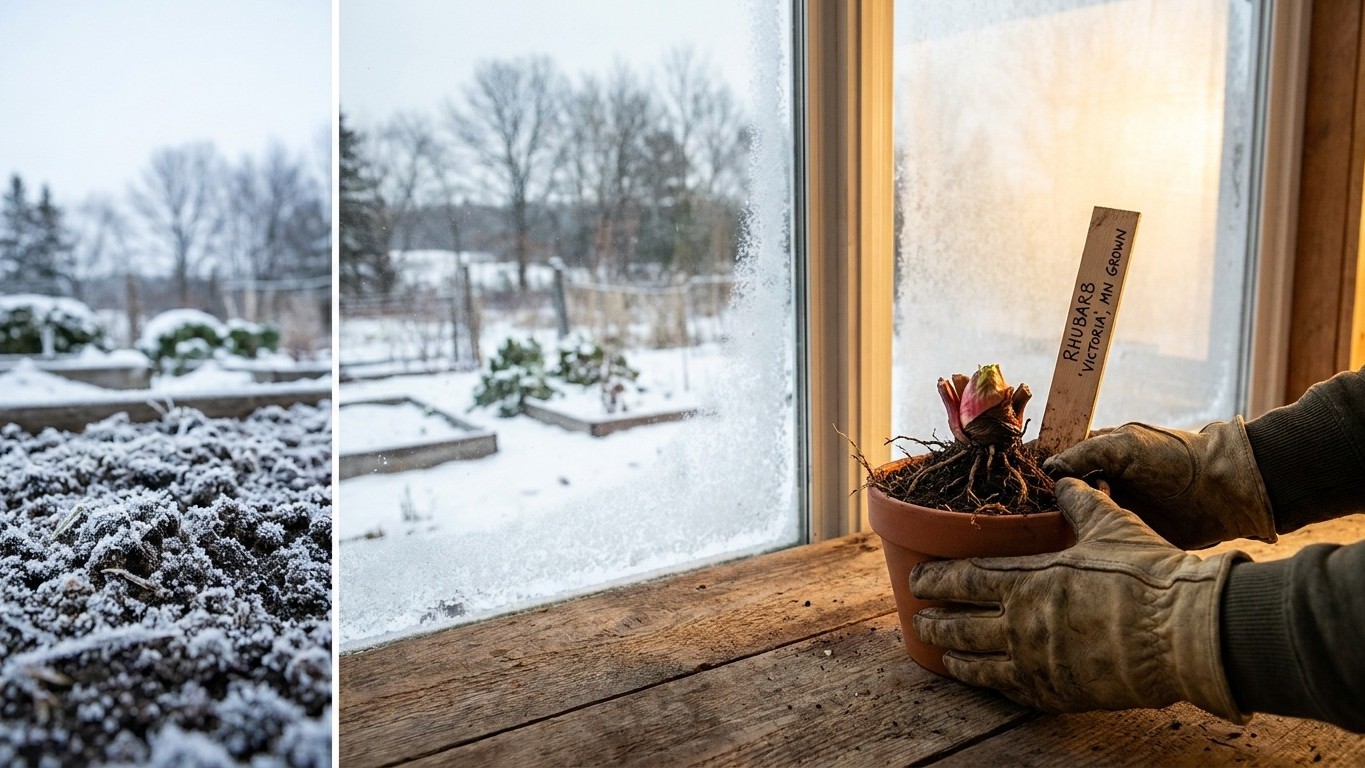

Minnesota’s ground is frozen solid by December, so the direct answer is that nothing new goes into open soil this month. What actually happens outdoors is limited to a handful of dormant tasks and cold-frame maintenance. Indoors, it’s a month for forcing roots, sowing seeds that need a long cold spell, and getting next season’s plan on paper before the good varieties disappear.
What goes in the ground in December

The calendar isn’t what stops planting in Minnesota this month, the soil is. Once ground temperatures drop below freezing, roots can’t take up water or grow, and December across the state sits well past the first fall frost window of October 11 to October 23 and nowhere near the last spring frost window of April 17 to April 30 (both figures for the Twin Cities, per NOAA NCEI 1991-2020 Climate Normals). In a USDA hardiness range that runs from zone 3a in the north to 5a along the southeast river valleys, December ground is locked up statewide. Say it plainly: there is no outdoor sowing or transplanting this month.
What still counts as “planting” happens under cover or indoors. Forcing witloof chicory or rhubarb crowns dug and stored earlier is a genuine December project: pot the roots in sand or soil, keep them in a dark, cool space around 50 to 60 degrees, and you’ll have fresh chicons or forced rhubarb stalks within a few weeks. Cold frames and low tunnels holding hardy greens sown back in late summer can still be checked and vented on milder days, but this isn’t a month for new sowings into them, the light and heat aren’t there to establish anything fresh.
Bare-root fruit trees, roses, and canes are a spring or pre-freeze fall job in this climate, not a December one. If nursery stock arrives now by mistake, heel it into a protected, unheated space (an unheated garage or a trench packed with mulch) rather than trying to get it into frozen ground. In the rare stretch where far-southern Minnesota soil stays workable into early December, garlic cloves can still go in with a heavy straw mulch laid immediately, but that’s a narrow window, not something to count on.
What to start under cover
Counting backward from the last spring frost window of April 17 to April 30 is the only reliable way to time indoor starts, and December is simply too early for almost everything on a typical seed-starting schedule. Onions and leeks, which need the longest lead time at 10 to 12 weeks before transplanting, point to early-to-mid February starts. Peppers, needing 8 to 10 weeks, land in late February. Starting either of those in December means weeks of extra growth indoors under weak light, which produces exactly the leggy, rootbound seedlings that struggle once they finally go outside.
The exception is anything that needs a long cold-moist period before it will germinate at all. Many native perennials and some hardy flower seeds require 60 to 90 days of cold stratification, and sowing them into pots now, then leaving the pots in an unheated garage, cold frame, or the refrigerator, sets them up to break dormancy right on schedule for spring planting out. This is the one category where December sowing is not only safe but necessary, since skipping the cold period means the seed may never sprout.
The second failure mode worth naming is the opposite one: waiting too long. Gardeners who put off ordering seed until February often find that slow-growing, long-season crops like onions, celeriac, and some perennial flowers no longer have enough weeks left before the frost window closes. December is the moment to place seed orders and sort them by start date, even if the actual sowing for most vegetables is still two to three months out.
What is ready to pick
Little to nothing comes out of a Minnesota garden bed in December, and there’s no point dressing that up. Anything left in open ground has been through weeks of hard freezes by now. The harvest that still exists this month lives under cover or in storage.
Cold frames or low tunnels holding kale, spinach, or mâche sown in late summer can still yield pickings on milder days, since these crops tolerate hard frost and simply pause growth rather than dying. Leeks mulched heavily before the ground froze can sometimes be dug where the mulch kept the soil workable, though this depends entirely on how deep the freeze has gone in a given spot. Indoors, sprouts and microgreens are the most dependable December harvest: a tray on a counter turns seed into food in a week or two regardless of what’s happening outside the window.
The other job this month is going through the root cellar or basement storage shelf. Squash should feel firm with no soft spots or dark patches near the stem, a common early sign of rot. Potatoes that have started sprouting or gone green need to be pulled and used first, and any onion that feels soft at the neck won’t keep much longer. Checking stored crops every couple of weeks now prevents one rotting squash from spreading trouble to everything around it.
The jobs that matter this month
A frozen garden still has a full task list, and December’s jobs are the ones that pay off in spring precisely because they’re done while nothing is actively growing. Dormant pruning of fruit trees, brambles, and grapevines belongs here: with leaves gone, the branch structure is easy to see, and cuts made while the plant is fully dormant heal without the stress or disease pressure that summer pruning invites. Apple and pear trees, raspberry canes, and grape vines all take well to a December to late-winter pruning window.
Seed ordering has a real deadline too. Popular varieties, especially heirloom tomatoes and anything sold by smaller regional seed companies, sell out by late winter, and ordering now means the seed is in hand well before the backward-counted start dates from the previous section arrive. Pairing that order with a written rotation plan for next season, tracking which beds grew tomatoes, brassicas, or squash last, keeps soil-borne pests and diseases from building up in the same spot year after year.
Soil testing is easiest to arrange now, before spring backlogs hit university labs, and results give time to source lime or sulfur and apply amendments over winter rather than scrambling in April. Compost piles still benefit from an occasional turn even in cold weather, since it keeps the pile from going anaerobic and speeds decomposition once temperatures rise. Tools deserve attention too: cleaning soil off pruners and shovels, sharpening blades, and oiling wooden handles before they sit unused for months prevents rust and cracking. Raised bed frames, trellises, and fencing damaged by fall storms are far easier to repair now, on a mild dry day, than in the mud of early spring when planting pressure is already on.
What not to do in December
A stretch of unusually mild air in early December, the kind that hits 45 or 50 degrees for a day or two, tricks people into thinking the ground has thawed enough to work. It hasn’t, not at depth, and any seed or transplant put into that soil sits in cold, wet conditions that rot it before it can grow. Treat a mild day as a chance to do outdoor maintenance jobs, not as a planting window.
That same mild spell causes a second mistake: pulling row cover or cold frame lids off hardy greens to “let them breathe,” then getting caught when temperatures drop back hard a day or two later. Plants that had adjusted to the protected environment take the sudden refreeze harder than they would have without the brief warm-up. Keep covers on through winter and only vent briefly on the mildest, calmest days.
Fertilizing is the third trap. Applying nitrogen to perennial beds, lawns, or fruit trees this late pushes soft new growth right before or during a hard freeze, and that new growth is exactly what gets killed, weakening the plant going into the coldest stretch of winter. Any feeding for perennials should have happened in fall, well before dormancy set in; December is a month to hold off, not to catch up.
Watering habits also need adjusting rather than stopping outright. Containers and cold frames still need occasional moisture checks, since soil can dry out even in cold weather, particularly in a bright, thawed spell, but overwatering dormant plants in near-freezing conditions invites root rot with no active growth to use the extra moisture.
Checking this against your own county
A statewide December calendar is a starting point, not a fixed instruction, and Minnesota’s geography stretches that point further than most states. Elevation, lake effect near Lake Superior’s North Shore, and the roughly two-to-three-week gap between northern and southern frost timing all shift these windows in either direction. A frame or storage setup that works fine in the Twin Cities can be weeks behind schedule in Duluth or International Falls.
The most reliable way to narrow this down to an actual county is the University of Minnesota Extension, which publishes regional planting guidance built around local conditions rather than a single statewide date. Check for guidance specific to your area before locking in a schedule based on statewide averages alone.
Common questions
Can I still plant garlic in Minnesota in December?
Only if the ground is still workable, which is unusual by December across most of the state. Garlic is normally planted in fall before the ground freezes, with a heavy mulch layer applied right after. If a rare mild stretch keeps far-southern soil workable into early December, cloves can still go in with mulch applied immediately, but this isn’t something to count on.
Is it too late to start seeds indoors in December?
For most vegetables, yes, since counting backward from the April 17 to April 30 last-frost window puts standard start dates in February and March. The exception is seed that needs 60 to 90 days of cold stratification, which should go into pots now and sit in an unheated space through winter.
What USDA hardiness zone is Minnesota in?
Minnesota spans USDA zones 3a to 5a under the 2023 Plant Hardiness Zone Map (built on 1991-2020 normals), with the coldest zone in the far north and the mildest along the southeastern river valleys. The USDA system is based on one measure, average annual extreme minimum temperature, so it doesn’t capture frost timing or growing season length on its own.
Will kale survive outdoors in a Minnesota winter?
Kale tolerates hard frost well and can hold under heavy mulch or in a cold frame through much of early winter, but it isn’t reliably hardy through the coldest stretch of a Minnesota winter without protection. Cold frames or low tunnels extend its harvest window well past what open ground allows.