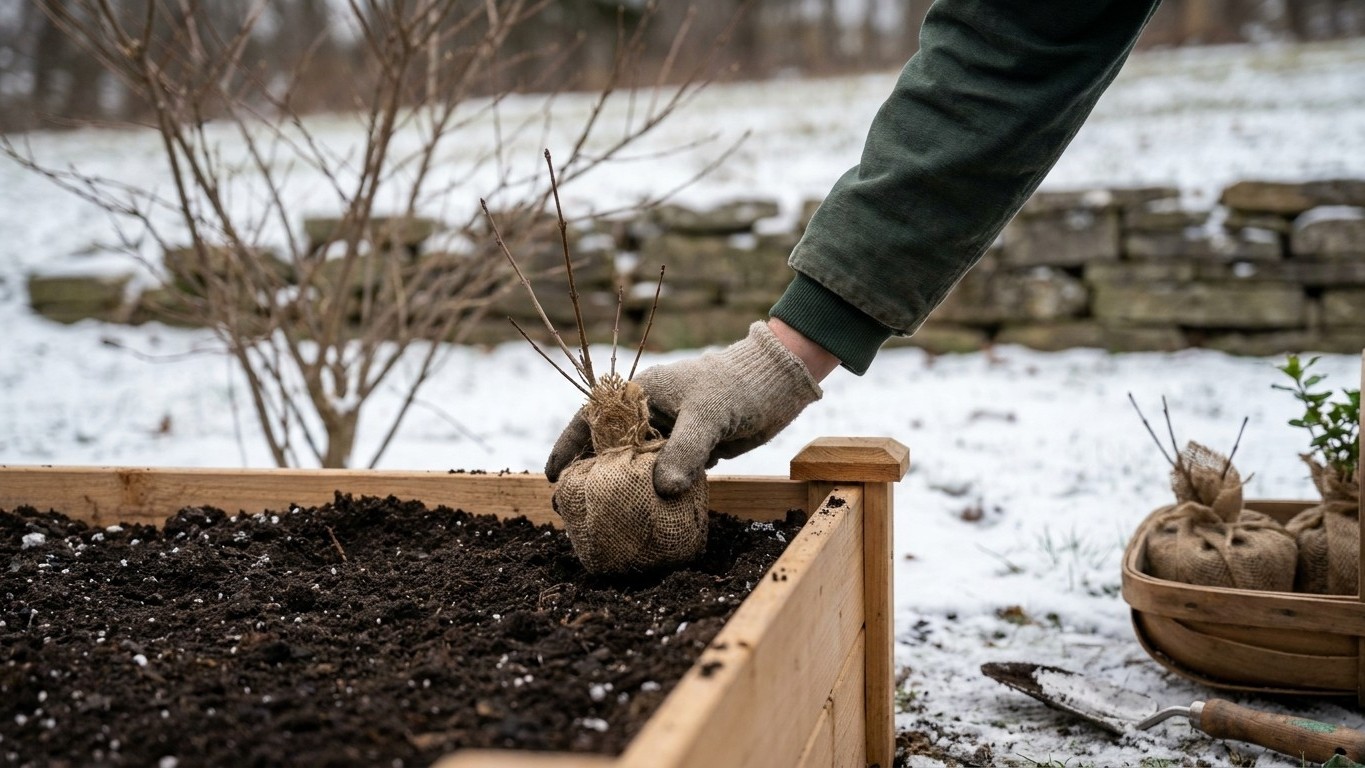

Nothing goes into open ground in Montana in December. The soil is frozen across nearly the entire state, and the growing season won’t reopen until the last spring frost clears, sometime between April 29 and May 10 in the Billings valley, one of the mildest spots in the state. What changes the picture this month isn’t the calendar but what’s still workable under cover, in storage, or through a layer of protection.
What goes in the ground in December

Say it straight: by December, direct-sowing or transplanting into open Montana soil is off the table almost everywhere in the state. The first fall freeze already arrived weeks earlier, somewhere between October 1 and October 14 in the Billings area, and the ground has had a full month or more to lock up solid. Montana spans USDA Hardiness Zones 3a through 6a, and even in the milder 6a pockets, December soil temperatures sit well below anything a root system can tolerate. This isn’t a gamble to weigh, it’s a closed window.
That doesn’t mean the garden is off-limits. A handful of tasks still fit, provided the ground gives you any cooperation at all.
| Option | Still possible in December? | Notes |
|---|---|---|
| Garlic and shallots, in-ground | Only if soil is still workable | Most Montana gardeners get these in during October; a late, unfrozen pocket is the exception, not the rule |
| Cold frames and low tunnels | Yes, for crops already established | Protects hardy greens planted earlier in fall, doesn’t create new planting opportunity |
| Bare-root and dormant woody plants | Rarely, needs unfrozen ground | Digging a proper planting hole in frozen Montana soil isn’t realistic most winters |
| Forcing rhubarb or chicory indoors | Yes | Uses stored roots, not garden soil, so frost is irrelevant |
If garlic cloves are already tucked in from fall, the job now is protection, not planting: a thick mulch layer keeps the freeze-thaw cycle from heaving cloves toward the surface. For everyone else, December’s ground work is really about waiting it out and using the indoor season productively instead of forcing something the frost calendar won’t allow.
What to start under cover
Work backward from the frost window instead of forward from the calendar. With the last spring frost landing between April 29 and May 10 in the Billings reference area, most warm-season transplants (tomatoes, peppers, squash) don’t get started until six to eight weeks before that date, which puts their sowing window in March. Slow-growing alliums from seed, if you’re raising onions rather than buying sets, typically need ten to twelve weeks under lights before transplanting, landing in February. December sits too early for nearly all of it.
That leaves a narrow lane: crops with a genuinely long lead time. Perennial herbs like rosemary, thyme, and lavender germinate slowly and benefit from months of indoor growth before they ever see outdoor soil, so a December sowing under grow lights isn’t unreasonable. Microgreens are the other exception, since they run on a harvest cycle measured in days, not a transplant date tied to frost at all.
The two failure modes worth naming plainly: sow too early relative to your actual transplant date and you end up nursing leggy, rootbound seedlings for months before the ground is ready for them. Sow too late and you miss the transplant window entirely, forcing a rushed direct-sow later that shortchanges a short growing season. In December, the more common mistake is the first one. It’s tempting to get a jump on tomatoes or peppers because the seed catalogs just arrived, but doing the arithmetic from your local frost date, not from impatience, is what keeps seedlings from stalling out in a pot for twelve weeks.
What is ready to pick
Little to nothing is coming out of open Montana ground in December. That’s simply where the season sits, months past the last harvest and months before the next one. What still puts food on the table comes from three places: what was tucked under protection earlier in fall, what’s sprouting indoors, and what’s sitting in storage.
Cold frames and heavy row cover can keep spinach, mache, and some hardy kale alive through a Montana winter, though given the state’s Zone 3a-6a range, survival depends heavily on snow cover acting as insulation rather than the row cover alone. Where snowpack is thin, even protected greens can freeze solid. Sprouts and microgreens indoors are the more reliable bet this month, ready in a week to ten days with no frost risk at all.
The other job is stored crops. Winter squash, potatoes, and onions from the fall harvest need a monthly check for soft spots, wrinkling skin, or sprouting eyes. A squash with a soft patch near the stem is starting to break down and should get used first, not left to spread rot to the rest of the bin. Onions that have started sprouting green shoots are still edible but won’t keep much longer. Potatoes that have gone soft or green-tinged should be pulled and composted rather than eaten. None of this is glamorous work, but it’s the difference between a pantry that lasts through winter and one that quietly rots in the corner.
The jobs that matter this month
December carries plenty of real garden work, even with nothing growing outside. Dormant pruning is the headline task: apple, pear, and other fruit trees, along with berry canes, are easiest to shape while they’re leafless and the branch structure is visible. Cutting now, while the plant is fully dormant, reduces stress compared to pruning during active growth, and it’s far easier to spot dead or crossing wood without a canopy of leaves in the way.
Seed ordering belongs on this month’s list too. Popular varieties, especially short-season types bred for Montana’s compressed growing window, tend to sell out by late winter. Ordering now means starting seeds on schedule come February and March instead of settling for whatever’s left.
Planning next season’s crop rotation is easier now than in the rush of spring, when the ground thaws and everyone wants to plant at once. Sketching out which beds held tomatoes, brassicas, or legumes last season, and where they’ll move next, prevents the soil-borne disease buildup that comes from planting the same family in the same spot year after year.
A few more tasks round out the list, each one cheap to do now and expensive to skip:
- Test soil pH and nutrient levels while beds are idle, so amendments can be worked in as soon as the ground thaws
- Turn or insulate the compost pile to keep microbial activity going through the cold
- Clean and sharpen pruning shears, loppers, and shovels before they sit unused all winter
- Repair raised bed frames, trellises, and fencing while there’s no growth in the way
- Keep checking stored squash, potatoes, and onions for early signs of rot
What not to do in December
The most common mistake this month is starting warm-season seeds too early because a seed catalog or a stretch of mild weather makes spring feel closer than it is. Tomatoes and peppers sown in December, months ahead of a March start date, don’t get a head start. They get leggy, rootbound, and stressed long before the last spring frost clears in April or May, and a stressed transplant rarely outperforms one started on schedule.
Montana’s chinook winds create a second trap. A sudden warm spell can push temperatures up dramatically for a day or two, tempting gardeners to pull back row covers or open up cold frames early. The freeze that follows a chinook is often just as sudden, and anything left uncovered can be damaged or killed within hours. Treat a mild December afternoon as a pause, not a signal that winter has loosened its grip.
Fertilizing dormant plants is wasted effort at best. Nitrogen applied to dormant fruit trees or perennials in December sits in soil that’s too cold for roots to take it up, and much of it simply leaches away before spring growth resumes. Save the feeding for when active growth actually starts.
Finally, don’t assume garlic already in the ground is safe without mulch. Repeated freeze-thaw cycles through winter can heave cloves partway out of the soil, exposing them to cold and drying wind. A few inches of straw or shredded leaf mulch solves this for the cost of an afternoon’s work.
Checking this against your own county
A state-wide December guide is a starting point, not a substitute for local knowledge. Montana’s elevation swings, from river valleys to mountain passes, along with the difference between the northern and southern parts of the state, can shift frost timing by weeks in either direction. The frost dates cited here reflect the Billings area, one of the state’s milder valleys; higher and more exposed locations can see frost in any month of the year.
For a planting calendar built around your specific county, the Montana State University Extension is the reliable next stop, along with the National Centers for Environmental Information’s freeze data for a station closer to home.
Common questions
Can I still plant garlic in Montana in December?
Only if the ground is still workable, which is unusual by December in most of the state. Garlic is typically planted in October so it can establish roots before hard freeze. If you missed that window, wait for spring planting instead of forcing cloves into frozen or half-frozen soil.
Is it too late to start seeds indoors in December?
For most vegetables, yes, it’s too early rather than too late. Tomatoes, peppers, and similar transplants aren’t started until six to eight weeks before the last spring frost, which falls in March for most of Montana. December sowing risks leggy, stressed seedlings by the time transplant season arrives.
Will row covers keep my greens alive through a Montana winter?
Sometimes, but survival depends heavily on snow cover for insulation. In the state’s colder zones, a row cover alone often isn’t enough during an extended deep freeze without a snow layer helping trap heat.
What’s the single most useful gardening task in December?
Dormant pruning of fruit trees and berry canes. The bare branch structure is easiest to read this month, and cutting now causes less stress than pruning during active growth later in the year.