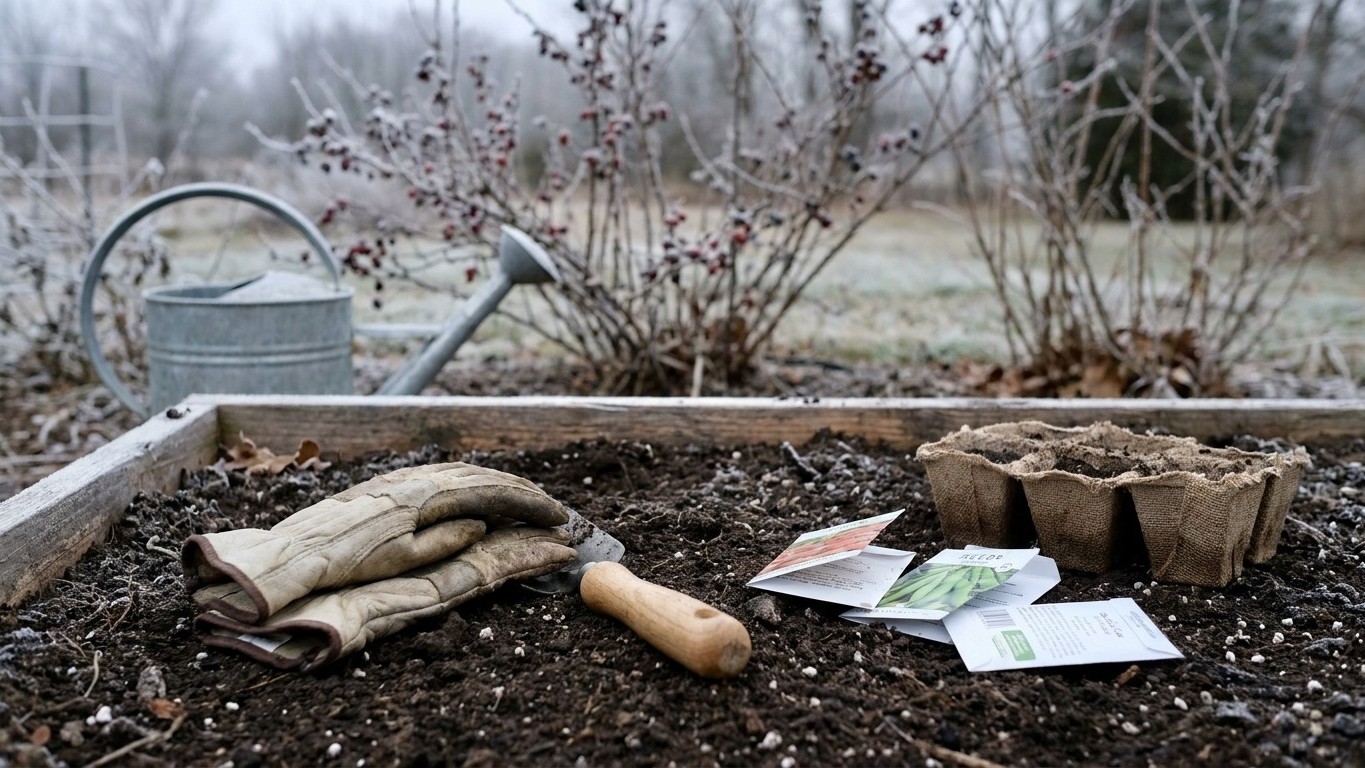

In February, nothing goes into open garden soil anywhere in Montana. The state’s last spring frost falls between April 29 and May 10 in the Billings area, and mountain valleys run colder still. The real work this month happens indoors and under cover: seed starting on a schedule, dormant pruning, and the planning that decides how the whole season plays out.
What goes in the ground in February

The honest answer for outdoor planting in February across Montana is none. The state’s frost-free window doesn’t open until late April at the earliest, and that’s for the milder valleys around Billings, based on NOAA’s 1991-2020 climate normals. Higher elevations and mountain valleys elsewhere in the state can see frost in any month of the year, so treat that April 29 to May 10 range as the generous end of the calendar, not a promise.
That gap of ten to fourteen weeks rules out direct-sowing anything, even the cold-hardy stuff people plant in milder states this time of year. The ground is frozen solid or buried under snow across most of the state, and working frozen or waterlogged soil does more harm than good.
What’s actually possible in February lives in a narrower lane. Bare-root fruit trees and cane fruit (raspberries, currants) can go into cold storage or be prepped for planting the moment the ground thaws, but planting them into frozen soil is not an option. Cold frames and low tunnels set up in fall can still shelter hardy greens that were overwintering, and this is the month to check that snow load hasn’t collapsed them. Forcing rhubarb or chicory indoors, in a dark, cool spot with the crowns lifted from storage, gives a harvest of tender stalks or blanched leaves weeks before anything stirs outside. None of this replaces spring planting. It just keeps a gardener’s hands busy and a little fresh food coming while the ground stays locked.
What to start under cover
Seed starting in February works backward from the frost window, not forward from a date on a calendar. Onions and leeks need roughly 10 to 12 weeks of growth before they’re ready to transplant outside, and since transplanting waits until after the last frost (April 29 to May 10 for the milder parts of the state), starting them indoors in February lines up correctly. Celery and parsley, both slow to germinate, follow the same logic and belong on a February seed tray too.
Peppers and eggplant are a different story. They typically need 8 to 10 weeks indoors before transplant, but transplanting them outside doesn’t happen right at the last frost date. Montana soil is slow to warm, and these warm-season crops sulk or die if set out into cold ground even after the air has warmed up. Starting them in February, on a schedule built for a Deep South spring, produces leggy, rootbound plants sitting in trays for weeks longer than they should, waiting on soil that isn’t ready. Holding peppers and eggplant until March avoids that failure mode entirely.
The second failure mode runs the other way: starting slow growers like onions too late. Miss the February window on those and the transplants go out undersized, which shows up later as smaller bulbs at harvest. The fix in both cases is the same: count backward from when the ground will actually be workable in a given county, not from a fixed date on a seed packet.
What is ready to pick
Outdoors, February offers little to nothing across Montana. Snow cover and frozen ground mean no fresh harvest from the open garden anywhere in the state this month.
What still feeds a household comes from three places. Overwintered kale, leeks, and parsnips left in the ground under a heavy mulch or snow blanket can often be dug even now, since hard freezes sweeten rather than ruin these particular crops, though a shovel and some patience are required to get through frozen topsoil. Cold frames that sheltered spinach, mache, or hardy lettuce through the winter can yield a few leaves on any stretch of sunny days, and this is worth checking weekly rather than assuming everything froze solid.
Indoors, sprouts and microgreens are the fastest fresh food available, ready in one to two weeks from seed with nothing more than a tray, water, and a windowsill. And this is the month to walk the root cellar or basement shelf and check stored squash, potatoes, and onions. Squash with a soft spot near the stem, potatoes that have started to green or sprout, and onions gone soft at the neck need to be pulled and used before they spread rot to the rest of the bin.
The jobs that matter this month
Winter months carry real deadlines even without a single seed going into open ground, and February is stacked with them.
Dormant pruning tops the list. Apple, pear, and cherry trees, along with raspberry and currant canes, are cut back while they’re fully dormant and the structure of the plant is visible without leaves in the way. Wait too long and the sap starts moving, which stresses the plant and invites disease into fresh cuts. Pruning now, while everything is still asleep, is the lowest-stress window of the whole year for this job.
Seed ordering belongs on the same to-do list. Popular varieties, especially cold-hardy ones bred for short seasons, sell out early, and a February order beats the scramble in March when the good stock is already gone. This is also the natural moment to sketch next season’s crop rotation, since the beds are empty and there’s no planting pressure clouding the decision. Move nightshades, brassicas, and legumes to different beds than they occupied to keep soil-borne pests and diseases from building up in one spot.
Soil testing and amending pay off best done now, since amendments like lime or compost need weeks to work into the soil before anything gets planted. Turning the compost pile, even a frozen one, keeps the decomposition process from stalling completely. Tools deserve attention too: cleaning rust off pruners and sharpening blades now means no fumbling with dull equipment once the pace picks up. And any bed frame, trellis, or fence section damaged by winter weight or ice should get repaired while there’s no crop in the way of the work.
What not to do in February
The most common mistake this month is starting warm-season seeds like tomatoes and peppers too early because a seed packet lists a generic timeline that doesn’t account for Montana’s slow-to-warm soil. The result is spindly, rootbound plants sitting in trays for weeks past their prime, waiting on ground that won’t be ready until well after the last frost date. Starting these on a March or April schedule, not February, produces sturdier transplants.
Uncovering cold frames or removing winter mulch after a few warm days is another trap. A brief thaw doesn’t mean winter is over anywhere in Montana, and hardy greens or dormant perennials exposed too soon can be knocked back hard by the next freeze, which arrives without much warning this early in the year. Leave protective covers in place until the pattern of warm days is sustained, not a single lucky stretch.
Feeding nitrogen to fruit trees or perennials this early is also a mistake. Nitrogen pushes tender new growth, and that growth has no defense against a hard freeze that’s still weeks or months away. Save nitrogen applications for closer to active growth, once the real warm-up has started, and use February instead for slower-acting amendments like compost or balanced fertilizer worked into beds that won’t be planted for a while yet.
Checking this against your own county
A statewide frost window is a starting point, not an instruction for a specific backyard. Elevation alone can shift Montana’s last frost date by weeks between a river valley and a mountain bench a few miles away, and the USDA Plant Hardiness Zone Map puts the state anywhere from zone 3a to zone 6a, with Billings sitting on the milder end of that range. Local terrain, wind exposure, and even a nearby lake can move the safe planting date further still.
The most reliable next step is checking those specifics against Montana State University Extension, which tracks local frost data and planting guidance by county at montana.edu/extension.
Common questions
Can I plant anything outdoors in Montana in February?
No. Frozen or snow-covered ground across the state rules out direct-sowing or transplanting outdoors this month. The earliest safe outdoor planting waits for the frost-free window, which starts April 29 at the soonest in the milder Billings area and later in higher, colder parts of the state.
What vegetables should I start indoors in February?
Onions, leeks, celery, and parsley are good February starts, since they need 10 to 12 weeks of indoor growth before transplant and line up with the late-April to May transplant window. Hold off on peppers and eggplant until March to avoid leggy, rootbound plants waiting on soil that’s still too cold.
Is there anything to harvest in a Montana garden in February?
Little to nothing from the open ground. Overwintered kale, leeks, and parsnips under mulch or snow can sometimes be dug, cold frames may yield a few hardy greens on sunny stretches, and indoor sprouts or microgreens fill the gap in the meantime.
What’s the biggest mistake gardeners make in Montana in February?
Starting warm-season crops like tomatoes and peppers indoors too early, based on a generic seed-packet timeline rather than Montana’s slow soil warm-up. The plants end up overgrown and stressed weeks before the ground is actually ready for them.