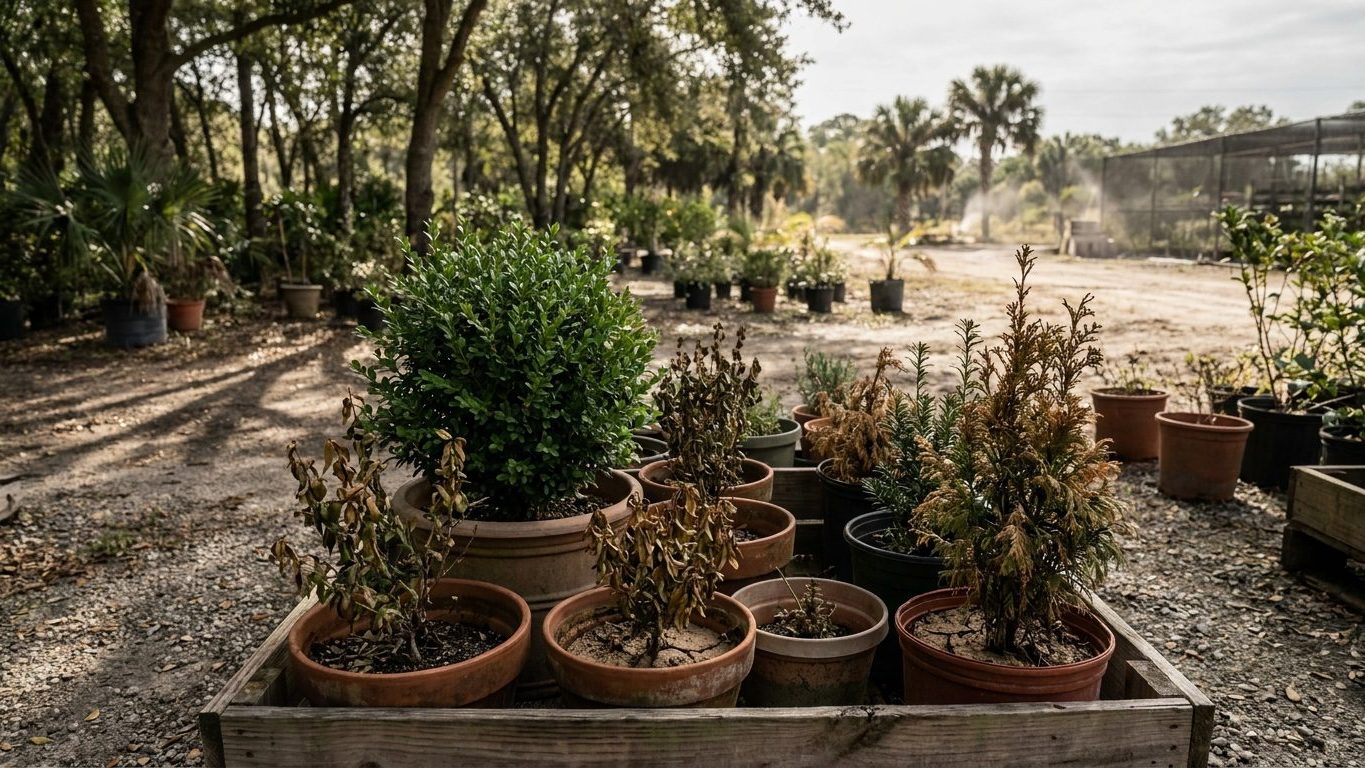

Montana’s hedge palette is narrower than most nursery catalogs suggest. Of the twelve hedge species tracked here, six hold across the state’s full USDA range of 3a to 6a, six hold in only part of it, and none fail everywhere. The six with limits include boxwood, Leyland cypress and cherry laurel. Two of the plants that do hold, arborvitae and Eastern red cedar, can never be cut back to size once they outgrow it. Both facts should shape what goes in the ground.
What actually holds in Montana
The USDA Plant Hardiness Zone Map (2023 edition, built on 1991-2020 normals) rests on a single number: the average annual extreme minimum temperature. Montana spans zones 3a to 6a, so the same shrub can be a sound hedge in one valley and a row of dead sticks in another. “Holds” here means survives the winter low. It says nothing about wind, dry air or soil, and nothing about whether the plant looks good doing it. The hardiness ranges come from the NC State Extension Gardener Plant Toolbox.
The six that fail in the cold half
Start with the losers, because a dead hedge costs the most. These six hold only in part of the state’s range:
| Plant | Holds in zones | Regrows from old wood? |
|---|---|---|
| Boxwood (Buxus sempervirens) | 5a, 5b, 6a | Yes |
| Leyland cypress | 6a only | No |
| Cherry laurel | 6a only | Yes |
| Inkberry holly (evergreen) | 4a to 6a | Yes |
| Privet | 4a to 6a | Yes |
| Yew (Taxus x media) | 4a to 6a | Yes |
Inkberry, privet and yew give up only in zone 3. Boxwood also drops out in 4a and 4b. Leyland cypress and cherry laurel need 6a, the warmest ground in the state’s range, and that is a narrow target. If you are not sure your yard sits there, treat both as a gamble rather than a plan.
The six that hold everywhere
Arborvitae, Eastern red cedar, Eastern hemlock, American hornbeam, winterberry holly and arrowwood viburnum all survive from 3a through 6a on cold numbers alone. Winterberry loses its leaves in winter, so it will not screen a view in January. The rest of the group ranges from a 4-foot trimmed hedge to a 20-foot wall. Hardiness is the entry ticket, not the whole test, and the sections below cover what separates these six once they are in the ground.
The hedges you can never cut back down
Three plants on the list cannot regrow from old wood: Leyland cypress, arborvitae and Eastern red cedar. Cut into their bare interior and nothing sprouts back. A hedge of any of them that outgrows its space stays outgrown, and the only fix is a saw and a replacement.
Leyland cypress is the sharpest example. It grows 3 to 4 feet a year and reaches 15 to 25 feet as a screen. At that pace a new planting passes 6 feet of privacy in under two years, and the trimming window (late spring to midsummer) is already running by then. It also holds only in 6a. So it is a fast plant, a warm-zone plant and an unforgiving plant all at once.
Arborvitae is gentler, at 6 to 9 inches a year, and can be kept anywhere from 4 to 15 feet as a hedge. Prune it in late winter before growth starts, or in midsummer. The rule is to pick your final height on planting day and keep trimming to it from the start. Eastern red cedar grows 12 to 24 inches a year and reaches 8 to 20 feet as a screen. Its pruning note is blunt: late winter, light cuts only.
Now the good news. Everything else on the list forgives a bad haircut. Yew, privet, boxwood, inkberry, cherry laurel, hornbeam, winterberry, hemlock and arrowwood all regrow from old wood. Eastern hemlock still carries a “light cuts only” note, but it recovers if you overshoot. Privet is the most cut-tolerant of the group, though it asks for two trims a season, in spring and again in midsummer, and it grows 2 to 3 feet a year to make up for the work.
For a tall screen where you would rather not be locked in, hemlock (10 to 20 feet as a hedge) is the safer pick over cedar or arborvitae. For something shorter and deciduous, hornbeam and arrowwood viburnum both regrow. The non-regrowing conifers are fine when you know the height you want and will hold it. They are a poor bet when you are guessing.
Matching the plant to the job
Start with the height you need, then check that the plant holds where you live. The six that survive statewide differ a lot in size, speed and pruning calendar:
| Plant | Height as hedge | Growth a year | Prune | Cut back later? |
|---|---|---|---|---|
| Arborvitae | 4 to 15 ft | 6 to 9 in | Late winter, or midsummer | No |
| Eastern red cedar | 8 to 20 ft | 12 to 24 in | Late winter, light cuts | No |
| Eastern hemlock | 10 to 20 ft | 12 to 24 in | Late spring, light cuts | Yes |
| American hornbeam | 6 to 15 ft | 12 in | Midsummer, after first flush | Yes |
| Winterberry holly | 5 to 15 ft | 6 to 12 in | Late winter, dormant | Yes |
| Arrowwood viburnum | 6 to 10 ft | 12 to 24 in | Right after flowering | Yes |
For a tall windbreak or privacy screen, the evergreen conifers in the table (cedar, hemlock, arborvitae) do the work at 8 feet and up. For a mid-height hedge in the 6 to 10 foot range, arrowwood viburnum and hornbeam are the forgiving choices. Arrowwood wants its trim right after flowering, so cutting it in late winter costs you that year’s bloom.
Low, formal hedges are where the state splits. Boxwood makes a tidy 2 to 6 foot hedge, but it grows only 3 to 6 inches a year, which means going from a 2-foot hedge to 4 feet takes four to eight years, and it holds only in 5a to 6a. Yew gives a similar look (3 to 8 feet, 6 to 12 inches a year) and reaches down to 4a. Inkberry offers an evergreen alternative to 4a as well. For anyone in zone 3, none of the three works, and the choices narrow to the six statewide plants, with hornbeam and arrowwood the closest fit for a trimmed edge.
Timing depends on your own frost dates. NOAA’s 1991-2020 Climate Normals for Billings put the last spring freeze between April 29 and May 10, and the first fall freeze between October 1 and October 14. Billings is one of Montana’s milder valleys, so treat those dates as a best case. Mountain valleys elsewhere can frost in any month. Boxwood and hemlock, both pruned in late spring, should wait until your own last frost has passed.
Each state sorts these same species against its own zone range, so the lists for Hedge Plants for Oregon: What Holds, and What Only Looks Hardy and Hedge Plants for Alabama: What Holds, and What Only Looks Hardy read differently. The wider Hedges section covers the general pruning and spacing principles.
The ground you are planting into
Montana’s official state soil, named by law in 2015, is the Scobey series, a Mollisol: the deep, dark prairie soil type that made the Corn Belt. USDA NRCS records for its surface layer show a pH of about 7.0 (near neutral), organic matter around 2.0 percent, and a texture of 35 percent sand, 31 percent clay and 34 percent silt. It is well drained. Those numbers describe a soil that is neither strongly acid nor strongly alkaline, holds some clay, and does not sit in water.
That is the soil that represents the state, not the soil in your yard. Montana has hundreds of soil series. River bottoms, hill country and any lot a builder has scraped or filled can differ completely from Scobey. The figures are representative values for the surface layer of the mapped series, not a measurement of a worked garden bed, and the pH above is not your pH.
The plant data used for this page covers cold hardiness only, so it does not tell you which of these hedges dislike alkaline soil or slow drainage. Get your own numbers before you buy fifty plants. Montana State University Extension, through its county extension offices, is the place to ask about soil testing in your area.
Fall is the natural time to do it. With Billings’ first-freeze window opening October 1, this is the month to test soil, mark the hedge line and measure the space, then plant in spring after your last frost. Draw the line first, because a hedge of the wrong plant in the wrong place costs years, not dollars.
Common questions
Which hedge plants survive everywhere in Montana?
Six of the twelve species tracked here hold across zones 3a to 6a: arborvitae, Eastern red cedar, Eastern hemlock, American hornbeam, winterberry holly and arrowwood viburnum. Surviving is the bar, not thriving, and local wind, soil and exposure still matter.
Can I grow boxwood in Montana?
Only in zones 5a, 5b and 6a. Boxwood fails in 3a to 4b. If your yard sits in 5a or warmer, it works as a slow, low hedge of 2 to 6 feet, growing 3 to 6 inches a year and regrowing if you cut it back.
Which hedges can never be cut back hard?
Leyland cypress, arborvitae and Eastern red cedar do not regrow from old wood. Once they outgrow their space, the fix is replacement, not pruning. Keep them trimmed to size from the start.
What is my hardiness zone?
Montana spans 3a to 6a on the USDA Plant Hardiness Zone Map, so no single zone covers the state. Look up your own ZIP code on that map. The frost dates on this page are from Billings, one of the milder valleys, and are not statewide figures.