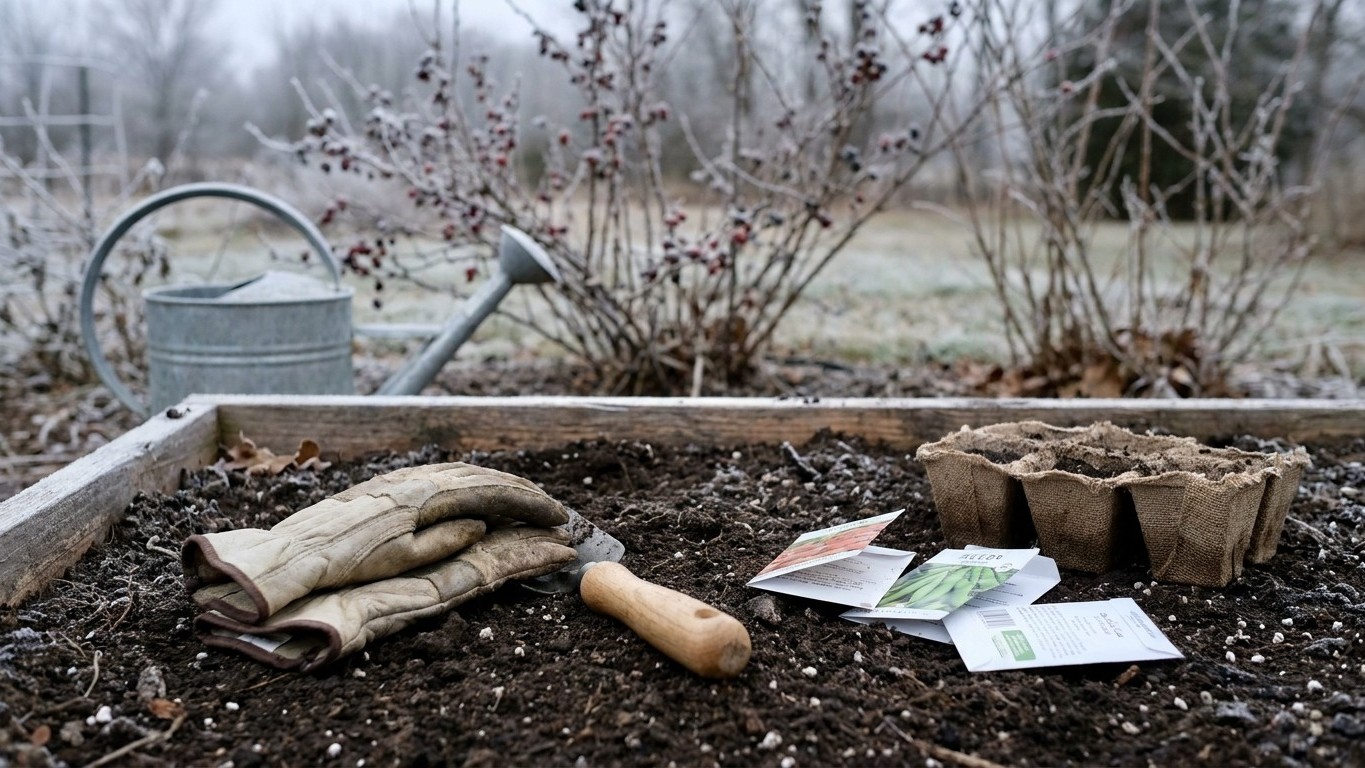

Across most of Nevada, February planting means almost nothing goes into open ground. High desert valleys and mountain towns sit frozen solid, while a handful of low-elevation pockets near Las Vegas might get a workable soil day during a warm stretch. The honest job list this month leans on garlic already in the ground since fall, cold frames, bare-root plantings, and indoor seed starting timed to each county’s own frost window rather than one statewide date.
What goes in the ground in February

Soil temperature decides what survives, not the date on the wall. A seed packet that says “plant in February” is written for a different climate than most of Nevada offers. The state runs from low desert basins around 2,000 feet to mountain valleys and high plateaus well above 5,000 feet, and that elevation spread is exactly why the USDA Plant Hardiness Zone Map lists Nevada across zones 4a to 10a, a system built on one number, the average annual extreme minimum temperature, and nothing else. A zone 10a pocket and a zone 4a valley are not the same garden, and they are not even close.
For the bulk of the state, the ground itself answers the question: frozen, or close enough to it that a shovel bounces off. In that condition, nothing newly sown or transplanted has a chance outdoors. What does have a chance is what was already tucked in months ago. Garlic and shallots planted in fall are sitting quietly under mulch or snow, doing exactly what they should be doing at this point, nothing visible, roots working underground.
What’s actually workable this month
If a particular yard happens to be in a low-elevation, south-facing spot with soil that has thawed, a narrow window opens for the toughest cool-season players: garlic cloves, shallot sets, and spinach or fava bean seed under a cold frame or low tunnel where the plastic or glass buys several degrees of protection. Bare-root fruit trees, roses, and cane berries can go into a prepared, unfrozen hole while they’re still dormant, since they’re not actively growing and won’t be shocked by cold nights the way a leafy transplant would. Rhubarb crowns and chicory roots can be dug and brought indoors to a dark, cool spot for forcing, which gives an actual harvest of tender stalks or chicons weeks before anything comes up outside.
Everything else, tomatoes, peppers, squash, beans, belongs on the calendar for later. Putting them in now, even under cover, risks cold-soil rot before a single root establishes.
What to start under cover
Seed starting indoors works backward from a date the calendar doesn’t give you: your county’s typical last spring frost. Nevada’s range on that number is enormous, and a statewide figure would mislead more than it helps, so this is the one piece of homework worth doing before buying a single seed packet. Once that local date is in hand, the arithmetic is simple. Onions and leeks want roughly ten to twelve weeks under lights before that date. Peppers need about eight to ten weeks, since they’re slow starters and dislike being rushed. Tomatoes need six to eight weeks, no more, because tomato seedlings that sit indoors too long turn leggy and rootbound in their trays.
That leggy, rootbound outcome is one of the two ways this goes wrong. A plant started too early spends weeks stretching toward a window instead of building sturdy stems, and by the time it’s safe to go outside it’s a tangled, top-heavy mess that transplants poorly and sulks for a week or two. The opposite failure is starting too late: a gardener waits for a mild afternoon, sows then, and ends up with seedlings still too small when the safe outdoor date finally arrives, losing weeks of productive season they can’t get back.
February is a reasonable indoor start month for onions, leeks, and early cabbage-family crops in most Nevada counties, given how far out their outdoor transplant date typically sits. It’s usually too early for tomatoes and peppers everywhere except the state’s warmest low-desert corners, where an earlier local frost date shortens the countback. A heat mat under peppers and a grow light close enough to keep seedlings from stretching solve most of the common indoor-starting problems.
What is ready to pick
Outdoors, February harvests are thin across most of Nevada, and there’s no point pretending otherwise. What keeps a household in fresh food this month comes from three places: what was left standing under cover, what’s stashed in storage, and what can be grown fast indoors.
Overwintered kale, leeks, and hardy leafy greens that were mulched heavily in fall are often still there under the snow, sweeter after cold exposure than they were in fall, and worth clearing snow to check on after a storm. A cold frame or unheated hoop tunnel planted with spinach, mache, or claytonia back in autumn can still be yielding a few handfuls of leaves on any week the daytime temperature climbs enough to lift the lid. Sprouts and microgreens grown on a windowsill in trays take a week to ten days from seed to harvest and need no outdoor conditions at all, which makes them the most reliable fresh green this month regardless of where in the state a garden sits.
Stored crops need a hands-on check now, not a glance. Squash should feel solid with no soft spots near the stem end; anything with a give under thumb pressure gets used first, not saved for later. Potatoes that have started sprouting eyes or gone green from light exposure should be pulled and used before they spread rot to the rest of the bin. Onions that feel soft at the neck or smell sharp when handled are already going, and one bad onion left in with the rest will take down its neighbors within a couple of weeks.
The jobs that matter this month
A dormant garden still has deadlines, and February is when several of them land.
Dormant pruning of fruit trees, grapevines, and cane berries is best done now, while the plant is fully leafless and its branch structure is easy to read. Cuts made before buds swell heal faster and don’t waste the plant’s stored energy on wood that’s about to be removed anyway. Apple, pear, and stone fruit trees benefit from opening up the center for airflow and light; canes like raspberry and blackberry need old, spent wood cut to the ground so new growth doesn’t have to compete for the plant’s resources.
Seed catalogs move fast, and the popular, well-adapted varieties for short or high-elevation seasons sell out earlier than most gardeners expect. Ordering now, rather than waiting for a warm afternoon to remind you, is the difference between growing the variety that actually matures in your season and settling for whatever’s left on the shelf.
Soil testing pays for itself this month because there’s time to act on the results before planting starts. A basic pH and nutrient test, run through a local lab or the county extension office, tells you what to amend and how much, instead of guessing with a bag of fertilizer. Compost piles benefit from a turn now too; the material that’s been sitting since fall has usually compacted and cooled, and a fork through it restarts the breakdown before spring demand hits.
Round out the list with tool maintenance (sharpened pruners and clean spades save time and prevent disease spread later), bed and fence repairs while nothing is growing to work around, and one more pass through stored crops to pull anything turning before it spreads.
What not to do in February
The classic February mistake in Nevada is trusting the air instead of the soil. A run of 60-degree afternoons in the low desert, or even a mild stretch at higher elevation, feels like spring, but soil several inches down often hasn’t caught up, and a warm-season seed dropped into cold, damp ground just sits there rotting instead of germinating. Wait for the soil itself to warm, not the forecast.
A related error is pulling protection off too soon. Row cover, mulch, or a cold frame lid that comes off after one warm week leaves tender growth exposed the moment temperatures swing back down, which they reliably do this time of year across nearly every part of the state. Leave winter protection in place until the pattern actually shifts, not just one favorable stretch.
Fertilizer timing trips people up too. Feeding nitrogen to dormant fruit trees or perennials now pushes soft new growth right before the risk of another hard freeze, and that tender growth is exactly what gets damaged first. Hold nitrogen until growth is already underway and the frost risk has genuinely passed, and lean on phosphorus and potassium if root development is the goal this early.
Last mistake: assuming a neighbor’s timing applies to your yard. Two properties a few hundred feet apart in elevation, or one in full sun versus one shaded by a north-facing slope, can be weeks apart in soil readiness, even in the same town.
Checking this against your own county
Everything above is a statewide starting point, and Nevada is one of the worst states in the country to apply a single statewide date to. Elevation swings of several thousand feet, desert basins next to mountain valleys, and huge differences between the northern high country and the southern low desert can shift a real frost window by weeks in either direction. The University of Nevada, Reno Extension service tracks local conditions county by county and is the reliable next stop for a number that actually applies to a specific address: extension.unr.edu.
Common questions
Can anything be planted outdoors in Nevada in February?
In most of the state, no, the ground is too cold or frozen. The exceptions are fall-planted garlic and shallots already growing, and bare-root dormant plantings of fruit trees or roses where the soil has thawed.
When should tomato and pepper seeds be started indoors?
Count back six to eight weeks for tomatoes and eight to ten weeks for peppers from your county’s typical last spring frost date, which varies widely across Nevada’s elevation range and should come from the local extension office, not a statewide figure.
Why does the same February advice not work across the whole state?
Nevada spans USDA hardiness zones 4a to 10a, one of the widest ranges of any state, driven mostly by elevation. A low desert basin and a mountain valley can be months apart in soil thaw even in the same February.
What’s the most useful garden task this month if nothing can be planted?
Dormant pruning of fruit trees and canes, ordering seed before good varieties sell out, and a soil test are the three jobs with the clearest payoff, since all three save time or money once the season actually starts.