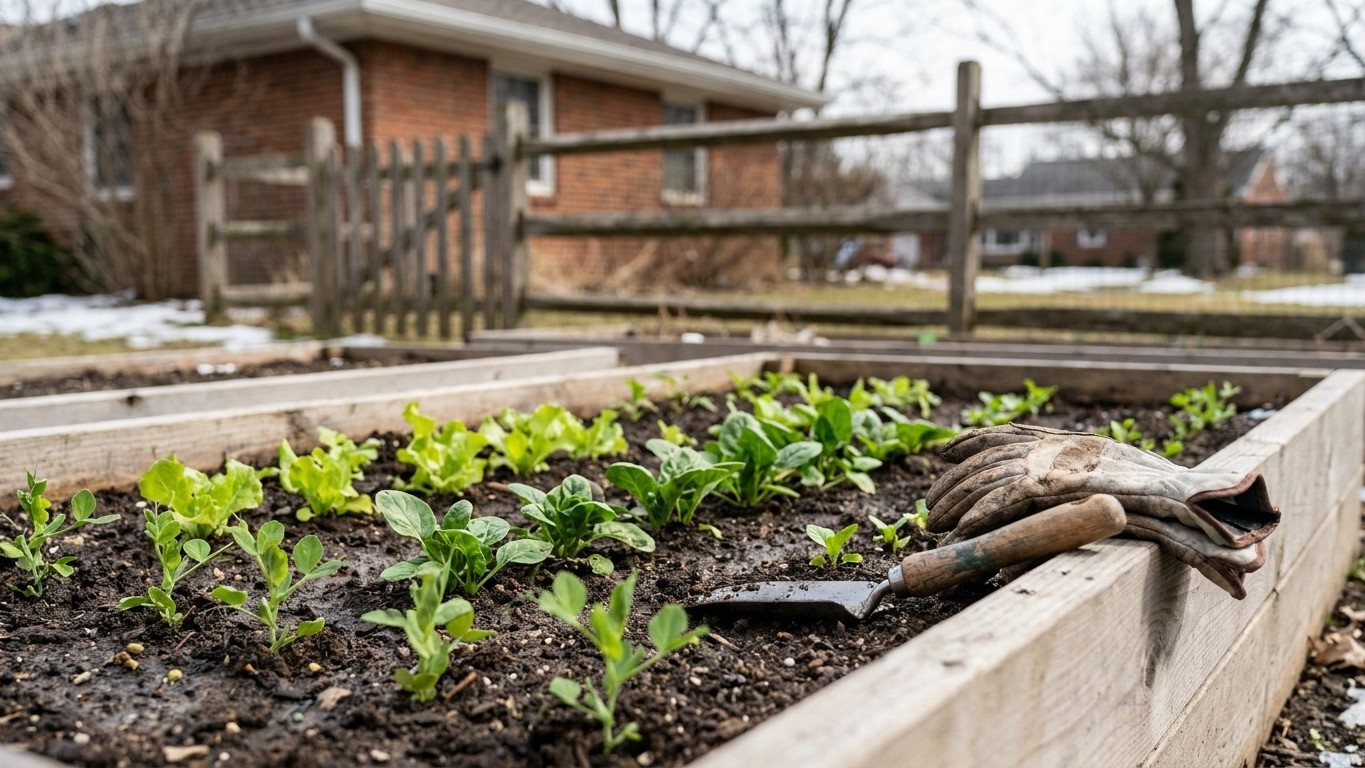

March splits Nevada in two. In the low desert around Las Vegas, the ground is already past its frost risk and cool-season crops can go straight into open soil. At elevation, in Reno, Carson City, and the mountain valleys, frost is still very much in play, so March means starting seeds under cover and getting hardy crops in rather than planting anything tender outdoors.
What goes in the ground in March

What decides whether a seed or transplant survives isn’t the date on the calendar, it’s soil temperature and how close the ground still sits to a killing frost. Nevada’s elevation range from roughly 2,000 feet in the Las Vegas valley to well over a mile high around Reno and Carson City means those two conditions can be months apart within the same state.
NOAA’s 1991-2020 climate normals for the Las Vegas airport station put the spring freeze window (the period when a 32°F freeze has a 30 to 70 percent chance of occurring) between January 7 and February 1. That’s an extreme reading, driven by desert heat and urban pavement, and it should not be read as a Nevada-wide planting guide. What it does tell low desert gardeners is that by March, the coldest stretch is already behind them, and cool-season crops that need workable, warming soil can go into open ground: lettuce, spinach, peas, radishes, carrots, and brassica transplants like broccoli and cabbage. Onion sets and any garlic or shallots not already in the ground from fall can still be planted where soil is workable.
Higher and colder parts of the state are a different story. Reno, Carson City, and mountain valleys sit at elevations where frost lingers much later into spring than anything the Las Vegas figures describe. There, treat March as a gamble month for anything but the toughest crops: garlic, shallots, peas, and cold-hardy greens under a cold frame or low tunnel. Bare-root fruit trees, cane fruits, and dormant perennials can still go in while they’re dormant, since they tolerate cold soil far better than seedlings.
| Region | Elevation range | March frost status | Safe to plant outdoors |
|---|---|---|---|
| Las Vegas valley (low desert) | Around 2,000 ft | Past typical spring freeze window | Lettuce, spinach, peas, radishes, carrots, onion sets, brassica transplants |
| Reno / Carson City (high desert) | Roughly 4,500 to 4,800 ft | Still within frost risk | Garlic, shallots, peas, hardy greens under cover |
| Mountain valleys and rural elevations | 5,000 ft and above | Deep frost season continues | Bare-root trees and canes while dormant only |
What to start under cover
Seed starting works backward from your local last frost date, not forward from March 1. Warm-season crops like tomatoes and peppers generally need about six to eight weeks indoors before they’re ready to move outside, and peppers often want closer to eight because they’re slower to size up. Count back from whenever frost typically clears in your county, and that tells you whether starting now is early, on time, or already late.
In the Las Vegas valley, where spring frost risk has largely passed by this point, gardeners starting tomato and pepper seed under cover now are timing it so transplants are ready to go outside as soil warms further into spring. In Reno, Carson City, and higher elevations, where frost lingers much longer, starting under cover now still gives seedlings time to grow strong stems and root systems before they face outdoor soil that’s still cold.
The two ways this goes wrong are opposite problems. Start too early, and warm-season seedlings sit indoors too long, become rootbound in their trays, and stretch into leggy, weak-stemmed plants that struggle once transplanted. Start too late, especially at elevation where the growing season is already short, and there isn’t enough time left after the last frost for a full harvest before fall cold returns. Since published frost dates here apply specifically to the Las Vegas airport station and don’t transfer to the rest of the state, the safest move for Reno, Carson City, and rural counties is checking a local extension office for the actual frost window before setting a start date.
What is ready to pick
In the low desert, March harvests are mostly whatever went in during fall or midwinter: overwintered greens like kale, chard, and spinach, along with any brassicas that were transplanted earlier in the cool season. Lettuce sown in late winter starts producing baby leaves for cutting. The tell for readiness on greens is simple, leaves that are full-sized for the variety and haven’t started to bolt or turn bitter from a warm spell.
At elevation, outdoor harvests are still thin to nonexistent this month. That’s where cold frames and row covers earn their keep, protecting hardy greens that would otherwise be locked under frozen ground. Indoors, sprouts and microgreens fill the gap fastest, ready in one to two weeks from seed with no soil required beyond a shallow tray.
Whatever region you’re in, this is also the month to walk through the root cellar or pantry and check stored squash, potatoes, and onions. Squash with soft spots or a sweet, fermenting smell needs to be used immediately or composted. Potatoes that have started sprouting eyes or gone soft and wrinkled are past their prime for storage but still fine cooked right away. Onions that have gone soft at the neck or started sprouting green shoots are the ones to use first, before they spread rot to the rest of the batch.
The jobs that matter this month
Dormant pruning tops the list almost everywhere in Nevada this month, especially at elevation where fruit trees and cane berries are still fully dormant. Prune apple, pear, and stone fruit trees while they’re leafless, when it’s easiest to see the branch structure and remove crossing or damaged limbs without stressing a tree that’s actively growing. Cane fruits like raspberries and blackberries benefit from the same timing, cutting back old fruiting canes to make room for new growth.
Seed ordering has a real deadline attached to it. Popular varieties, especially heat-tolerant tomatoes and peppers suited to Nevada’s dry, intense summers, sell out of seed racks and mail-order catalogs early in the season. Ordering now, rather than waiting until planting week, means getting the varieties actually bred for the state’s growing conditions instead of whatever’s left on the shelf.
Soil deserves attention before the growing season picks up speed. Testing pH and nutrient levels now gives enough lead time to amend before transplants go in, and turning compost piles speeds up decomposition so finished compost is ready when beds need it. This is also the natural point to sketch out crop rotation for the coming season, since nothing is in the ground yet to complicate the plan.
Round out the list with tool maintenance and structural repairs: sharpening pruning shears and hoes, cleaning and oiling anything that rusted over winter, and fixing raised bed frames or fencing that took damage from wind or snow load. None of it is glamorous, but skipping it now means discovering a broken trellis or a dull blade mid-planting, when there’s no time to deal with it properly.
What not to do in March
The most common mistake in the low desert is treating a warm afternoon as proof the soil has caught up. Air temperature climbs fast under desert sun, but soil several inches down warms much more slowly, and tomatoes or peppers set out into soil that’s still cold will stall, yellow, or simply sit without growing until real warmth arrives. Check soil directly, not the thermometer on the porch, before moving warm-season transplants outdoors.
At elevation, the equivalent error is uncovering hardy crops too early after a mild stretch. A few warm days in Reno or Carson City don’t mean frost risk has passed, and pulling row covers or cold frame lids off prematurely exposes tender new growth to a freeze that can undo weeks of protection in a single night. Leave covers in place until the pattern, not a single warm day, has shifted.
Nitrogen timing trips up a lot of gardeners too. Heavy nitrogen feeding now, before roots have had a chance to establish, pushes soft, leafy top growth that’s more vulnerable to cold damage and pest pressure than growth that develops more slowly alongside a solid root system. Hold off on nitrogen-heavy fertilizer until plants are actively growing and root systems have had time to settle in.
Checking this against your own county
A state-wide month is a starting point, not an instruction, and nowhere is that truer than in Nevada. Elevation alone can shift a planting window by weeks between one county and the next, and the difference between low desert and mountain valley conditions is closer to a season than a few degrees. Before committing seed or money to a planting date, check it against local conditions through the University of Nevada Reno Extension, which publishes county-level guidance built for the state’s actual range of climates rather than a single reference point.
Common questions
Is it too early to plant tomatoes outdoors in Nevada in March?
In the Las Vegas valley, soil is often warm enough by later in the month, but at elevation in Reno, Carson City, or mountain counties, frost risk continues well past March, so tomatoes belong indoors under cover until local conditions and a county extension office confirm it’s safe.
What vegetables tolerate cold soil best this month?
Peas, garlic, shallots, spinach, and other hardy greens handle cold, still-recovering soil far better than warm-season crops, which is why they’re the safe bet in colder parts of the state while tomatoes and peppers stay under cover.
Why do frost dates vary so much within Nevada?
Elevation is the main driver. The Las Vegas valley sits around 2,000 feet and clears frost risk far earlier than Reno or Carson City, which sit near a mile high, or mountain valleys that climb higher still, so a single statewide frost date doesn’t exist.
Should stored potatoes and onions be thrown out once they sprout?
Not necessarily. Sprouting or slightly soft potatoes and onions are past prime for long storage but usually still fine to cook and eat right away, they just shouldn’t sit in storage any longer once that change starts.