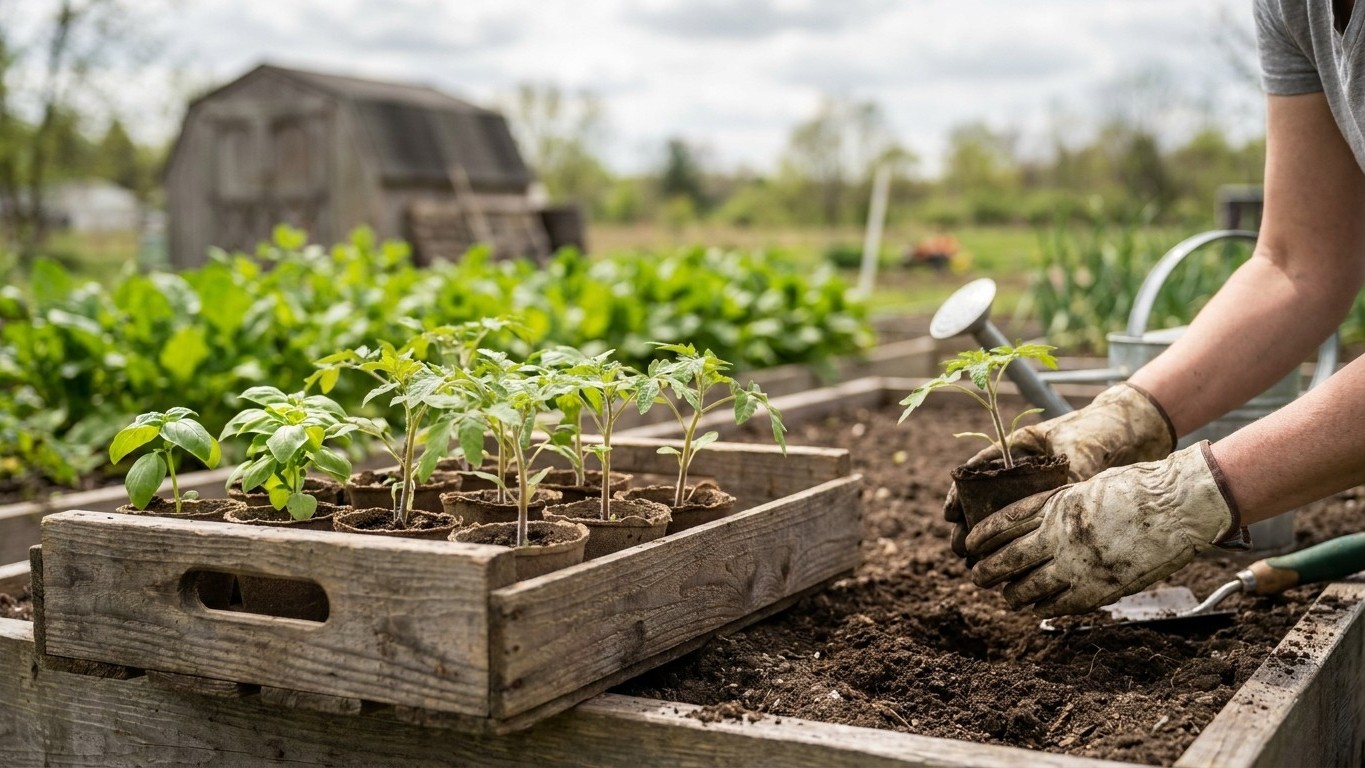

May in New Brunswick splits into two very different gardening months. Early May still sits inside frost territory, so hardy greens, alliums, and peas go in the ground while soil is workable. Warm-season crops wait, because the average last spring frost lands around May 23 at the Moncton station, and that date is a midpoint, not a guarantee. Gardeners who plant tomatoes on the first warm afternoon are gambling with half the years on record.
What goes in the ground in May

The decision that matters here is not the calendar page, it’s the soil thermometer. Cold-hardy crops germinate and grow in soil that’s still chilly by human standards, while warm-season plants sulk, rot, or simply refuse to sprout below a certain threshold. That’s the mechanism behind everything that follows this month.
New Brunswick sits in Canadian hardiness zone 5a for the reference location tracked by Natural Resources Canada, using the seven-variable Canadian system, not the single-factor USDA scale used elsewhere on this site. The two don’t convert cleanly, so treat 5a as a province-specific reference point, not a number to compare against a USDA zone from another state.
The average last spring frost of May 23, drawn from the Moncton station’s 1981-2010 climate normals, is a mean date. In roughly half the years on record, frost arrives later than that. Treat the whole back half of May as still frost-capable, especially away from the coast.
What’s safe now versus what’s a gamble
| Category | Examples | Risk level in May |
|---|---|---|
| Cold-hardy direct sow | Peas, spinach, lettuce, radish, arugula | Low, can go in as soon as soil is workable |
| Alliums | Onion sets, shallots, seed potatoes | Low, tolerate light frost once sprouted |
| Root and brassica transplants | Kale, cabbage, broccoli starts (hardened off) | Low to moderate, cover on frost nights |
| Warm-season direct sow | Beans, corn, squash seed | High before late May, seed can rot in cold soil |
| Warm-season transplants | Tomatoes, peppers, cucumbers | High until well past the average frost date |
Garlic planted the previous fall keeps pushing up through May without any help. Rhubarb crowns and asparagus roots, if not already established, can still go in as bare-root or dormant stock early in the month while the ground is cool and moist. Cold frames and low tunnels extend the safe list by a week or two on either end, letting a gardener sneak lettuce and spinach in earlier than the open bed would allow.
What to start under cover
The arithmetic here runs backward from that May 23 average frost date, not forward from the first of the month. Tomatoes and peppers typically need six to eight weeks indoors before they’re ready to face open soil, which means those seeds went in well before May began. What May actually offers is the second wave: crops with a shorter runway to transplant size.
Cucumbers, summer squash, and melons generally need only three to four weeks under cover before they’re big enough to move outdoors, which puts an early-to-mid May sowing date on track for a transplant sometime after the frost risk eases. Count backward from whatever week feels safe in your own garden, not from the calendar month alone.
May is also the hardening-off month for anything started earlier indoors. Seedlings that spent March and April under grow lights need a gradual introduction to wind, direct sun, and temperature swings, usually seven to ten days of increasing outdoor time, before they can handle a full transplant. Skip this step and even healthy seedlings can stall or scorch.
The two failure modes to watch for run in opposite directions. Start too early without a plan for hardening off, and plants turn leggy, rootbound, and stressed by the time the ground is finally ready. Start too late, and fast-maturing crops like cucumbers or squash run out of warm season before frost returns in fall, since the first fall frost averages October 2 at the same Moncton reference station.
What is ready to pick
Little comes out of an open vegetable bed this early, and that’s normal, not a sign anything went wrong. What’s actually on the table in May comes from what survived winter in place or what’s been pushed along under cover.
Perennial harvests lead the list. Established asparagus beds send up spears through the month, and picking them regularly (rather than letting them go to fern) keeps the plant productive. Rhubarb stalks thicken enough for a first cut on established crowns, though first-year plants should be left alone to build root strength. Chives, sorrel, and other hardy perennial herbs green up fast and are often the first fresh cut of the season.
Anything overwintered under a cold frame or heavy mulch, spinach, kale, or mâche sown the previous fall, often resumes growth as soon as light and temperature allow, giving an early salad well before anything newly planted catches up.
Stored crops from the previous harvest deserve a walk-through this month too. Potatoes, winter squash, and onions held in cold storage start to show their weak points as spring warmth creeps in: check for soft spots, sprouting eyes on potatoes, or a sweet, fermenting smell on squash, and pull those out before they spread rot to the rest of the stock.
The jobs that matter this month
Soil preparation earns its place at the top of the list because everything else depends on it. Working compost or aged manure into beds while the soil is still cool and moist gives it weeks to integrate before the main planting push, and it’s far easier to turn soil now than after a dry spell hardens it.
Staking and support structures for peas, and eventually for tomatoes and vining crops, are cheaper and easier to install before the plants sprawl. Driving a stake through an established root system later in the season damages the plant; setting the frame now costs nothing but a few minutes.
Watering rhythm matters more than volume this early. Newly sown seeds and fresh transplants need consistent surface moisture to germinate and establish, which usually means light, frequent watering rather than a single deep soak, at least until root systems reach further down.
Succession sowing of quick crops like radish and lettuce, planted every couple of weeks rather than all at once, keeps a steady harvest coming instead of one glut followed by a gap. Pest scouting starts in earnest too: cutworms, slugs, and early aphid colonies are easiest to control while populations are still small, and a five-minute check of new transplants can save a bed later.
Dividing overgrown perennials, whether hostas, daylilies, or rhubarb crowns that have outgrown their space, works best while plants are just breaking dormancy and can recover quickly from the disturbance.
What not to do in May
The most common mistake is trusting the air temperature over the calendar’s frost math. A run of warm, sunny days in early or mid-May can feel like summer, but the average last frost of May 23 means a cold night is still statistically likely. Tomatoes, peppers, and squash set out during a warm spell can be wiped out by a single overnight dip.
Uncovering cold frames or removing winter mulch too aggressively after a mild stretch is the second trap. A week of warm weather doesn’t retire the frost risk, and plants exposed too early lose the protection they need for the nights that follow.
Nitrogen timing trips up a lot of gardeners too. Heavy nitrogen feeding early in the month pushes lush, soft leaf growth on crops like tomatoes and peppers before they’ve even gone outside, and that soft growth is more vulnerable to cold damage and slower to recover once transplanted. Hold off on nitrogen-heavy feeding until plants are established outdoors and actively growing in warmer soil.
Direct-sowing warm-season seed into soil that hasn’t warmed enough is its own quiet failure. Bean and squash seed sitting in cold, wet soil often rots before it germinates, which just means a second sowing and a lost couple of weeks. A simple soil thermometer check beats guessing by feel.
Checking this against your own county
A province-wide frost date is a starting point, not an instruction for a specific yard. Elevation, coastal fog off the Bay of Fundy, and the general difference between New Brunswick’s northern and southern regions can shift these windows by two or three weeks in either direction. A garden in the highlands or a low-lying frost pocket runs on its own clock.
For a more local read, check with the federal agriculture department’s resources at agriculture.canada.ca, and cross-reference against your own observed frost history where you garden, rather than relying on a single provincial average.
Common questions
Is it safe to plant tomatoes outdoors in May in New Brunswick?
Only very late in the month at the earliest, and even then it’s a risk. The average last frost lands around May 23, and that’s a midpoint date, meaning frost arrives later in about half the years on record. Waiting a bit longer, or keeping frost cover on hand, protects the investment in transplants.
What vegetables can go directly into the ground earliest in May?
Peas, spinach, lettuce, radish, and onion sets tolerate the cool soil and occasional light frost typical of early May, making them the safest direct-sow choices while warm-season crops wait.
Why does the Canadian hardiness zone matter if I’m comparing to a USDA zone elsewhere?
The Canadian system, which places New Brunswick’s reference location at zone 5a, is built on seven climate variables rather than the single winter-minimum-temperature factor behind the USDA scale. The two don’t line up on a shared scale, so a Canadian 5a shouldn’t be treated as equivalent to any specific USDA number.
What should I do if a cold night is forecast after I’ve already planted?
Cover tender transplants with row cover, cloches, or even overturned buckets overnight, and avoid watering right before a frost since wet soil holds cold longer near the root zone. Hardy crops like peas, alliums, and greens generally don’t need this protection.