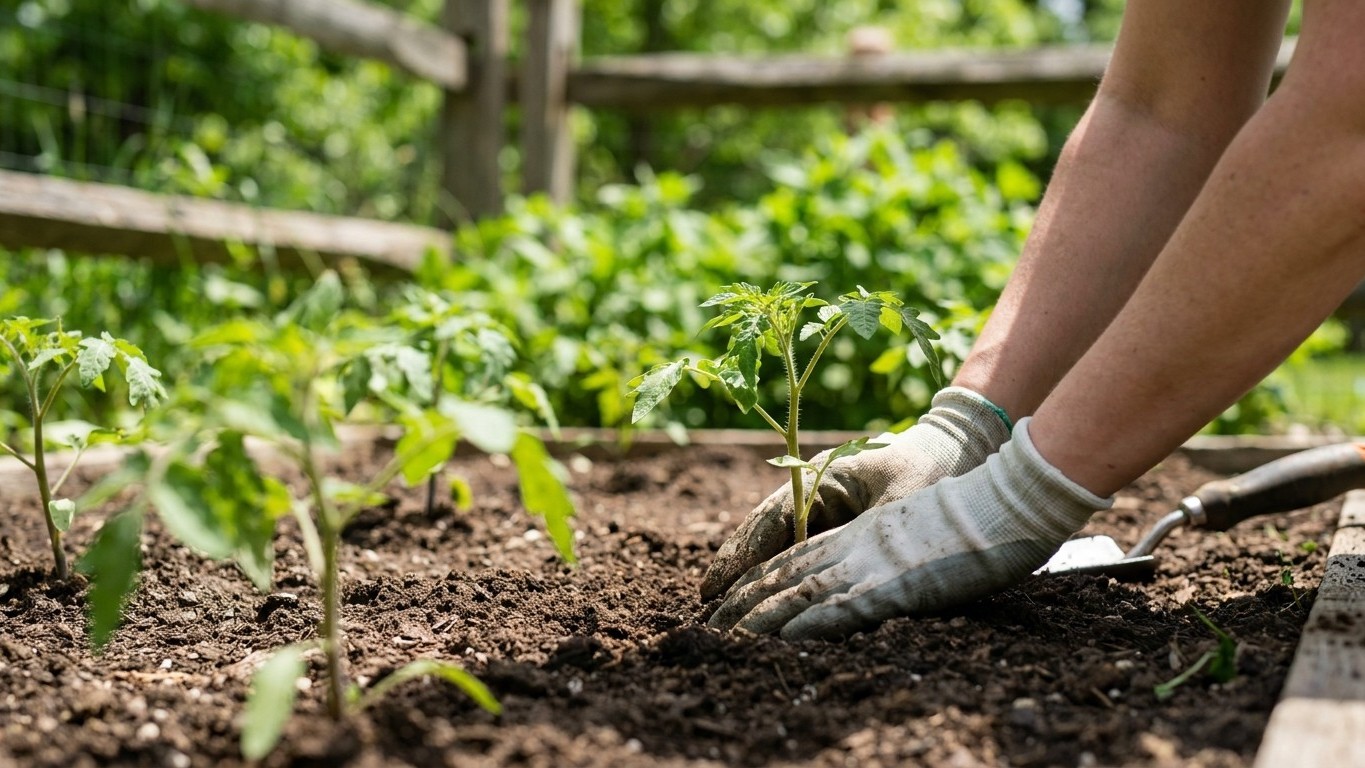

June is the month New Brunswick gardeners have been waiting for. With an average last spring frost around May 23, most of the province is clear to plant warm-season crops outdoors by early to mid-June, while cool-season crops that went in earlier keep producing right alongside them. The real work this month is timing the tender stuff correctly and keeping the fast growers coming.
What goes in the ground in June

The average last spring frost for the region sits at May 23, based on Environment and Climate Change Canada’s 1981-2010 normals for the Moncton station. That number is a midpoint, not a guarantee: in one year out of two, frost arrives later than that date. So the first week or two of June still carries some risk, especially away from the coast or at higher elevation, and gardeners who jumped the gun on tomatoes in late May should keep row cover within reach.
By the second week of June, soil temperature has usually caught up enough to direct-sow bush and pole beans, summer squash, cucumbers, and sweet corn. Winter squash and pumpkins can go in now too, since they need the full stretch to the average first fall frost of October 2 to size up properly. Transplants of tomatoes, peppers, and eggplant that were hardened off in late May can go into their final spots once nighttime lows stay comfortably above freezing.
Cool-season crops still have room
None of this pushes out the cool-season plantings. Peas sown in April or early May are climbing trellises by June, and a second, shorter-season pea variety can still go in during the first week for a late-summer picking. Leaf lettuce, spinach, and radishes should be resown every couple of weeks through June to avoid a gap once the earlier sowings bolt in the heat. Onion sets and seedlings, plus leeks started earlier under cover, move to the garden now.
New Brunswick’s Canadian hardiness zone, 5a for the reference city used in the federal mapping, reflects seven climate variables rather than the single winter-minimum measure used in the US system. It cannot be lined up against a USDA number, and it describes one municipality, not the whole province. A garden on the Bay of Fundy coast or up in the Miramichi highlands can run noticeably cooler than that reference point, which matters more for June’s frost gamble than any seed packet’s printed zone map.
What to start under cover
Most of the classic indoor starts, tomatoes, peppers, onions from seed, are already outgrowing their trays by June and should be heading outside rather than staying under lights. But June still has a job for starting under cover: fast-maturing crops meant to fill gaps later in the bed, plus a second round of brassica transplants for a fall harvest.
Count backward from the average first fall frost of October 2 rather than from any fixed date on the calendar. A cabbage or broccoli variety that needs roughly 60 to 70 days to maturity, plus a few weeks of transplant establishment, can still be started indoors in early June for a September harvest. Anything that needs 90 days or more from seed to plate is cutting it close if started this late, since a handful of cool nights before the average frost date can slow growth well before the frost itself arrives.
The two failure modes to watch for are familiar to anyone who has started seeds before the window is right. Starting too early, back in April or early May for crops meant for a June transplant, leaves plants rootbound and leggy by the time soil and air conditions are actually ready. Starting too late in June for anything but the shortest-season varieties leaves too little runway before that October frost line, especially for fruiting crops that need weeks of warm days to ripen after they flower.
What is ready to pick
June rewards the gardener who planted cool-season crops back in April. Asparagus beds established in prior seasons are in full production, and rhubarb stalks are thick enough for a first cutting. Overwintered kale, if any survived under snow cover, is often still edible early in the month before it bolts in the warmth.
Spring-sown lettuce, spinach, and radishes reach picking size through June, and gardeners should harvest lettuce and spinach as soon as leaves are usable rather than waiting for full size, since both bolt quickly once daytime highs climb. Garlic planted the previous fall sends up scapes late in the month; cutting them off redirects the plant’s energy into the bulb and gives an early harvest in its own right, good in a stir-fry or blended into a pesto.
Strawberries on June-bearing varieties start ripening toward the end of the month in most of the province, and the first peas from early sowings can be ready by late June as well. Anyone still working through stored root vegetables from the previous season, onions, winter squash, or potatoes kept in a cool basement, should check them now: warming temperatures speed up any rot that started over winter, and a soft spot on one squash can spread to its neighbors if left in storage.
The jobs that matter this month
Mulching is the single highest-value job in June. Once soil has warmed, a layer of straw or shredded leaves around tomatoes, squash, and beans holds moisture through the first real heat, suppresses the weeds that germinate fastest in warm soil, and reduces the fungal splash-back that causes early blight on tomato foliage. Mulching too early, while soil is still cool, only slows warming and delays root growth, which is why it waits for June rather than May.
Staking and trellising need to happen before plants sprawl, not after. Peas, pole beans, indeterminate tomatoes, and cucumbers all grow fast enough in June’s longer days that a plant left unsupported for even a week can tangle itself into a mess that is hard to untangle later without breaking stems.
Succession sowing keeps the harvest window open. Lettuce, radishes, and bush beans sown every two to three weeks through June avoid the boom-and-bust pattern of one giant harvest followed by nothing. Pest scouting matters just as much: Colorado potato beetle adults and flea beetles are active on emerging potato and brassica leaves through the month, and catching the first generation of beetles or their orange egg clusters on the underside of leaves is far easier than dealing with a full infestation two weeks later. Watering rhythm should shift too, from the gentle daily checks of early spring to a deeper, less frequent soak that encourages roots to grow down rather than staying near the surface where they dry out fast.
What not to do in June
The classic June mistake in this climate is trusting the air temperature over the soil. A string of warm, sunny days in late May or early June can feel like summer, but if that average May 23 frost date has not yet passed in a given year, and remember it’s later than that in half of all years, tender transplants set out on the strength of a warm afternoon can be hit hard by a clear, cold night. Keep a floating row cover or an old sheet on hand through at least the first week or two of the month for anything already in the ground.
Uncovering cold frames or removing winter protection entirely after one mild stretch is a related error. Ventilate on warm days, but leave the structure in place until nighttime lows are reliably settled, since a cold frame full of hardened-off seedlings can still freeze solid if it’s left open on the one night a cold front slides through.
Feeding nitrogen at the wrong moment causes its own problem. A heavy dose of high-nitrogen fertilizer on tomatoes or squash once they start flowering pushes lush green growth at the expense of fruit set, leaving a large, leafy plant with little to show for it by August. Nitrogen is most useful earlier, while plants are building leaf structure; once flowers appear, a fertilizer with more phosphorus and potassium supports fruit rather than foliage.
Checking this against your own county
A province-wide date for June planting is a starting point, not an instruction. New Brunswick’s coastal areas, the Saint John River valley, and the northern and upland districts do not share the same frost timeline, and elevation or proximity to the Bay of Fundy can shift the safe planting window by weeks in either direction. The Moncton figures used here describe one station, not every backyard in the province.
For a planting calendar built around a specific location, and for guidance on crop varieties suited to shorter or longer local seasons, Agriculture and Agri-Food Canada‘s site is a reliable starting point.
Common questions
Is it too late to plant tomatoes in June in New Brunswick?
No. Transplants set out in the first half of June still have the full run to the average first fall frost of October 2 to produce a good harvest, provided the plants were hardened off first.
Can I still direct-sow corn and beans in June?
Yes, and for most of the province June is actually the preferred month, since soil has warmed past the point where these seeds rot rather than germinate.
What happens if frost hits after I’ve already planted tender crops?
Since the May 23 average is a midpoint, not a safe cutoff, keep row cover or old sheets on hand through early June and watch the overnight forecast rather than relying on the calendar date alone.
Does the province’s hardiness zone number tell me when to plant?
Not directly. The Canadian zone 5a figure reflects seven combined climate variables for one reference location and does not translate into a USDA number or a specific frost date; it’s a general guide to what perennials survive winter, not a planting calendar.