
August in New Hampshire is a hinge month. Warm-season crops are still cranking out tomatoes and squash, but the calendar is quietly turning toward fall. The direct answer: this is the window for fast-maturing greens, roots, and a last round of beans, planted with one eye on the first frost. Garlic goes in later, not now. What matters most is counting backward from that fall frost date, not forward from the calendar.
What goes in the ground in August

The soil is warm, root systems are established, and the days are still long enough to push new seedlings fast. That combination makes early August the best window left for anything that needs 60 days or fewer to reach the table. After that, the math turns against you.
Direct-sow fast greens now: lettuce, spinach, arugula, and mesclun mixes typically finish in 30 to 45 days, so even a mid-August sowing has room to mature before the first fall frost, which lands anywhere from October 13 to October 26 depending on where you are relative to the reference station used for that range. Turnips, radishes, and beets fall in the same category. Kale and collards are a tighter call: they want closer to 55 to 60 days to reach a useful harvest size, so the first week or two of August is the real deadline for those, not the whole month.
Bush beans can go in during the first week of August in the southern part of the state, but this is the last realistic sowing of the year. Pole beans are too slow at this point. Peas planted now for a fall crop need cooler soil to germinate well, so a light mulch or afternoon shade over the row helps them along.
Toward the back half of the month, cover crop seed becomes the better use of any bed that has finished producing. Winter rye and crimson clover both establish well from a late-August sowing and protect the soil through winter instead of sitting bare. This is not a consolation prize; it is one of the most useful things you can do with an empty bed at this point in the season, and it sets up next spring’s soil far better than leaving it fallow.
Skip anything warm-season here. Tomato and pepper transplants, corn, cucumbers, summer squash: all of these need more time than remains before frost, no matter how warm the air feels in August.
What to start under cover
Starting seed under cover in August is less about protecting from cold and more about buying extra weeks at the tail end of the season. Anything started indoors or under a shade cloth now and transplanted out in early September gets a head start that a direct-sown seed loses to slower late-summer germination in warm, dry topsoil.
Work backward from the first fall frost window (October 13 to October 26) rather than from a date on the calendar. If a variety of kale or lettuce needs 55 days from transplant to harvest, and you want it picked well before the earliest frost date rather than the latest, you are looking at seeding under cover no later than the middle of August, with transplant out about three weeks later.
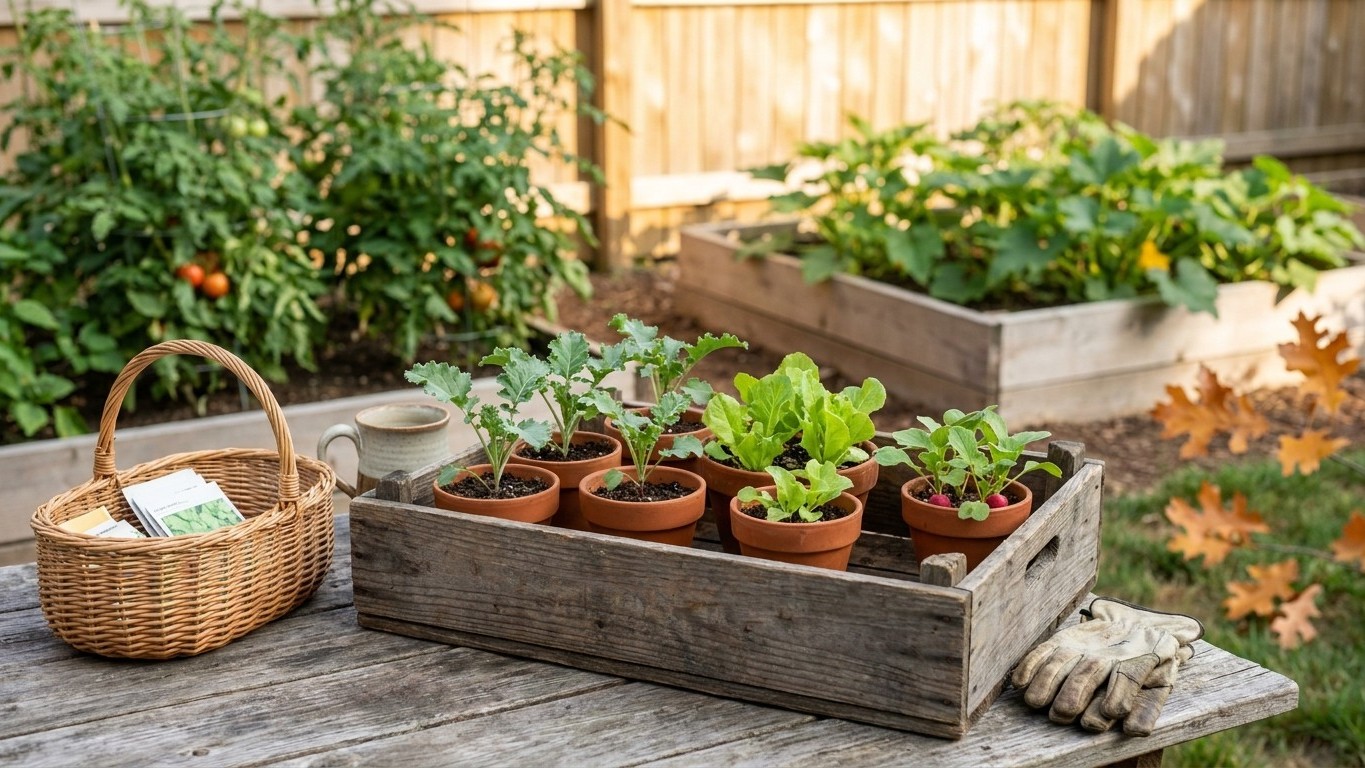
Fall lettuce and spinach destined for a cold frame benefit from being started in flats now, kept out of the hottest afternoon sun, and moved into the frame once night temperatures start dropping in September. Started too early, in the peak heat of early August, lettuce seed can stall or bolt; started too late, the seedlings never bulk up before growth slows with shorter days.
The two failure modes to watch for are the same every year. Start too early and the plants sit leggy and rootbound in their trays waiting for cooler weather to plant out, which stunts them permanently. Start too late and the seedlings are still small when the light starts fading in earnest, and they never catch up. Splitting the difference, seeding in the first half of August for a September transplant, is the safer bet for most of the state.
What is ready to pick
August is peak output almost everywhere in the state, and the harvest list is long enough that the real skill is keeping up with it rather than waiting for anything.
Tomatoes start coloring up in earnest, and the ones that split or crack after a heavy rain should come off the vine even if slightly underripe rather than left to rot. Summer squash and cucumbers need checking every day or two, since both can go from perfect to oversized and seedy in 48 hours in warm weather. Sweet corn signals readiness with dry, brown tassels and a kernel that squirts milky (not clear) liquid when pressed. Beans should be picked while still slim, before the seeds inside start to bulge the pod.
Blueberries and raspberries are winding down or in full swing depending on variety and location, and berries that pull free with the lightest touch are ripe; anything that resists is not there yet. Early apple varieties can start dropping in late August, and a windfall apple under the tree is often the best signal that it is time to start checking the ones still on the branch.
Garlic and onions planted earlier in the season should already be cured or curing in a dry, airy spot; check them periodically for any bulb that feels soft, since one rotting bulb in storage can spread to its neighbors quickly.
The jobs that matter this month
August rewards the gardener who keeps moving rather than coasting on a full garden. Several jobs done now pay off directly in what comes out of the ground before frost.
Water and mulch
Dry stretches in August stress shallow-rooted crops fast, and inconsistent watering is what causes cracked tomatoes and bitter cucumbers. A deep soak two or three times a week beats a light daily sprinkle, and two to three inches of mulch over exposed soil cuts evaporation and keeps root zones more even.
Succession sowing and staking
Every bed that finishes a crop this month is an opportunity for one more fast green or root before frost, so replanting immediately, rather than leaving the space empty, is worth the effort. Pole beans, indeterminate tomatoes, and anything still climbing needs staking or tying up now before the weight of a full crop pulls the plant over; a collapsed vine is harder to harvest and more prone to rot where it touches the soil.
Pest scouting
Squash vine borer, Japanese beetle, and tomato hornworm are all active in August, and catching an infestation early, before it spreads through a whole row, is far easier than dealing with it once the damage is visible from a distance. A short walk through the garden every couple of days, checking the undersides of leaves, catches most problems while they are still manageable by hand.
Curing and storage checks
Garlic and onions pulled earlier in the summer need a dry, ventilated space to cure fully before long storage, and any bulb showing soft spots should be pulled from the batch and used right away rather than stored alongside sound ones.
What not to do in August
The most common mistake this month is treating warm air as a green light for warm-season transplants. A tomato or pepper set out now, or a summer squash direct-sown, will not reach a useful harvest before the first fall frost arrives between October 13 and October 26. The soil being warm to the touch does not change the number of daylight-driven growing days left on the calendar.
Skipping water during a dry stretch is the second big error. August heat combined with fewer rain events than June or July means crops in full production, tomatoes and squash especially, need more water at exactly the point when it is easiest to assume the garden can coast on its own.
Heavy nitrogen feeding late in the season is a third trap. Nitrogen pushes soft, leafy growth at a time when plants should be shifting energy into ripening fruit and hardening off for the season ahead. A tomato plant loaded with nitrogen in August often puts out more foliage at the expense of the fruit already on the vine, and that new soft growth is also more vulnerable if an early cold snap arrives ahead of schedule.
Leaving overripe or split produce on the plant is a smaller but real mistake too. Rotting fruit left in place attracts pests and disease that spread to healthy fruit nearby, so pulling anything past its prime, even if it is not going to be eaten, keeps the rest of the harvest cleaner.
Checking this against your own county
A state-wide list is a starting point, not an instruction. New Hampshire’s hardiness range runs from zone 3b in the higher elevations and far north to zone 6a in parts of the south, according to the USDA Plant Hardiness Zone Map, and that spread alone can shift a safe sowing window by several weeks. Add elevation, valley cold pockets, and the moderating effect some lake shorelines have on nearby air temperature, and two gardens forty miles apart can be on very different clocks.
The frost dates cited here come from one reference weather station, and rural and elevated gardens typically see frost earlier in fall and later in spring than that station records. Before committing a bed to a fall-length gamble, check the UNH Cooperative Extension for county-level guidance and its own planting calendar.
Common questions
Is it too late to plant tomatoes in August in New Hampshire?
Yes, for outdoor transplants meant to ripen fruit before frost. A tomato transplant set out in August will not have enough growing days left to reach harvest before the first fall frost window of October 13 to October 26.
Can I still plant lettuce in August in New Hampshire?
Yes. Lettuce and other fast greens typically mature in 30 to 45 days, which leaves room for a sowing well into August, especially in the southern parts of the state where frost tends to arrive later within the fall window.
What vegetables should I harvest before the first frost?
Tomatoes, peppers, beans, summer squash, and cucumbers are all frost-sensitive and should be picked or covered before temperatures drop into the fall frost range of October 13 to October 26.
Should I plant garlic in August in New Hampshire?
No. Garlic in New Hampshire is typically planted later in fall, closer to October, once soil temperatures have cooled further. August is better used for cover crops or fast greens in beds that have finished producing.