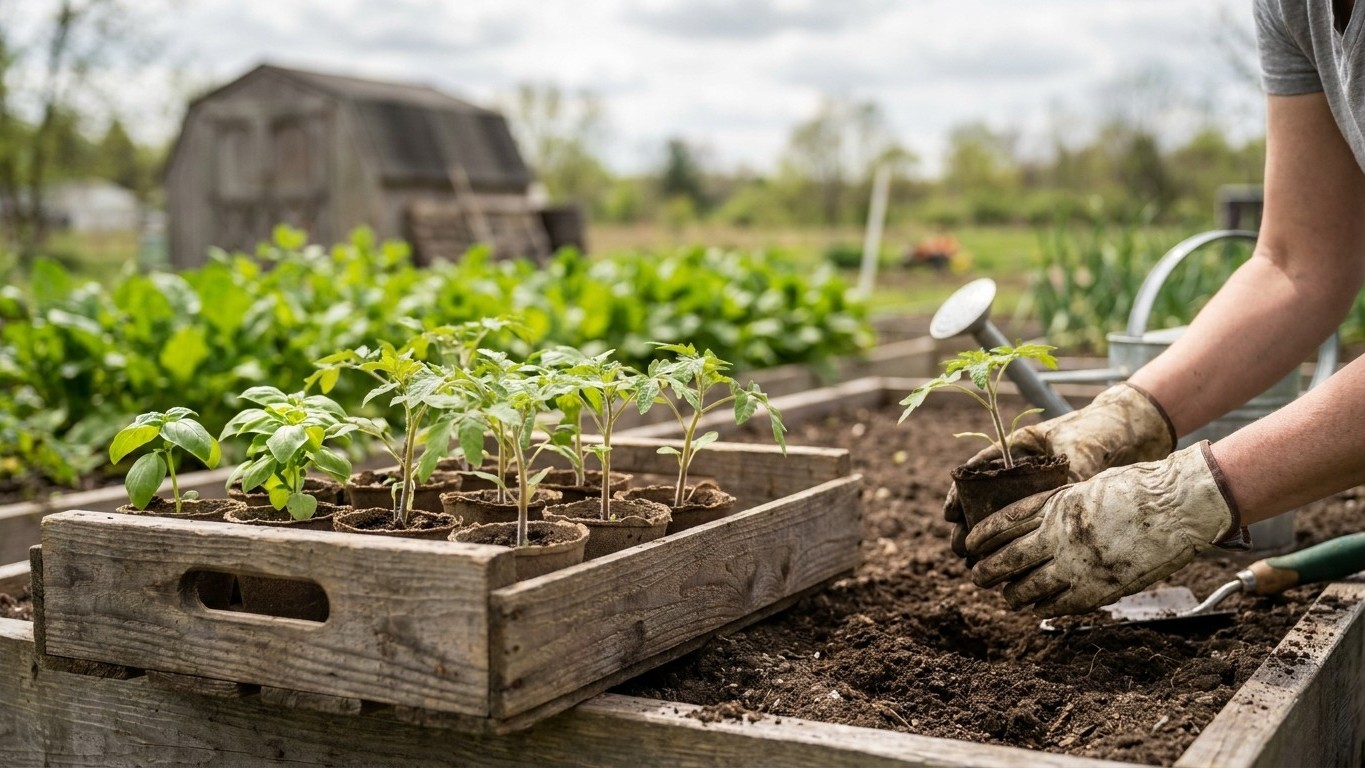

By May, most of New Hampshire is finally clear to plant in earnest. Cold-hardy crops like peas, lettuce, and onion sets can go into the ground early in the month, while tomatoes, peppers, squash, and other tender crops should wait for the back half of May in most spots, and into early June in the North Country or at higher elevation. The exact timing depends less on the calendar than on how fast the soil has warmed.
What goes in the ground in May

The state’s reference weather station shows the last spring frost falling between April 16 and April 27. That means by the time May opens, the highest-risk frost period is technically behind the calendar for many lower-elevation, southern gardens. But that number comes from one airport-based station, and actual gardens in the hills, in shaded valleys, or up north routinely see frost a week or two later than that window suggests. Treat early May as still frost-capable everywhere except the mildest corners of the state.
That caution splits the month into two planting tiers. The cold-tolerant group can go into the ground as soon as soil is workable and not waterlogged: peas, spinach, lettuce, carrots, beets, radishes, and alliums like onion sets and shallots. These crops shrug off a light frost and actually prefer the cooler soil temperatures May still delivers early on. Brassica transplants, cabbage, broccoli, kale started indoors earlier in spring, can also go out now under a floating row cover for insurance.
The tender group is the gamble. Tomatoes, peppers, squash, cucumbers, beans, and basil need both the frost risk to have passed and soil temperatures reliably above 60°F at root depth, something air temperature alone won’t tell you. Given the hardiness zone range across the state, USDA zone 3b to 6a, a gardener near the milder zone 6a edge might safely set out tomatoes in the second half of May, while a zone 3b garden at elevation or in the North Country should hold those same plants until very late May or push them into June. Soil thermometers cost little and settle the argument better than guessing from a warm afternoon.
What to start under cover
Tomatoes and peppers that will go outside once the frost risk clears should already be growing by May, since they need six to eight weeks of indoor head start before transplanting. If you haven’t started them, buying nursery transplants is the more realistic path than sowing seed now and hoping for a full harvest before fall frost arrives.
What still makes sense to start under cover this month is anything with a shorter runway. Squash, cucumbers, and melons need only three to four weeks indoors before they’re ready to move outside, so starting them now in pots or cell trays gives them a jump on direct-sown competitors without exposing tender seedlings to a cold snap. Basil falls into the same category: it’s frost-sensitive and slow to germinate in cool soil, so starting it under cover and transplanting once nights are reliably mild works better than direct-sowing in early May.
The two failure modes worth naming plainly: starting long-season crops like tomatoes this late means small, underdeveloped transplants that may not fully mature before fall frost returns in October, somewhere between the 13th and the 26th at the reference station. And starting fast crops like squash too early, weeks before the soil and air are ready for them outside, leaves you with rootbound, leggy plants sitting in trays far longer than they should. Count backward from your own expected last frost, not from the first day of the month.
What is ready to pick
May is a lean but real harvest month. Asparagus, once established, sends up spears that should be cut as soon as they reach six to eight inches, before the tips loosen and go feathery. Rhubarb stalks are ready when they’ve reached a good length and pull away from the base with a gentle tug, not cut, to avoid damaging the crown. Perennial herbs like chives and sorrel are back in growth and fine to harvest lightly.
If spinach, lettuce, or radishes went into the ground in early April, they’re likely ready by mid-to-late May. Lettuce is best picked young and often, radishes as soon as their shoulders push above the soil line, usually within three to four weeks of sowing. Anything overwintered under a cold frame, kale or leeks that survived the cold months, is often still producing usable leaves and stalks even as new spring growth takes over.
This is also the month to finish clearing out the root cellar or pantry. Stored winter squash, potatoes, and onions from the previous fall harvest should be checked over: any squash with a soft spot or a potato that’s started sprouting eyes needs to be used or composted before it spreads rot to the rest of the stash. Garlic and shallots planted the previous fall are still weeks away from harvest and shouldn’t be disturbed yet.
The jobs that matter this month
Soil preparation tops the list, and timing matters more than effort. Working wet, heavy soil compacts it for the whole season, so wait until a handful crumbles rather than smears before turning beds or adding compost. Once that’s done, mulching pays off, but only after soil has had a chance to warm; mulch too early and you trap the cold in in a month when warming the root zone is the whole point.
Staking, watering, and succession
Peas and any climbing crops need their supports installed now, before vines sprawl and tangle on the ground. Retrofitting a trellis around established growth damages roots and stems. Watering rhythm also needs to shift from the light, frequent watering of seed starts to deeper, less frequent soaking that encourages roots to grow down rather than stay shallow, especially for transplants just going into the ground. And this is the month to begin succession sowing in earnest: another round of lettuce, radishes, and beans every two weeks keeps a steady harvest coming instead of one glut followed by a gap.
Pest scouting
Flea beetles show up fast on young brassica transplants, leaving a shotgun pattern of tiny holes, and slugs thrive in the damp soil common this time of year. Checking undersides of leaves every few days catches both before they do real damage. Anyone who skipped dormant pruning on fruit trees and berry canes earlier in spring should let it go now; pruning after bud break stresses the plant and cuts into the current season’s fruit set.
What not to do in May
The most common misstep is trusting a warm afternoon over the thermometer in the soil. Air temperature in the 70s doesn’t mean the ground six inches down has caught up, and tomatoes or peppers set into cold soil often just sit there, stunted, even if they survive. Waiting an extra week for the soil to actually warm beats replacing dead or stalled transplants later.
Pulling row covers or cold frame lids off too early after a mild stretch is the second trap. Because actual gardens, especially those away from the valley floor, tend to see frost linger past the reference station’s April 16 to April 27 window, a cover removed on the first warm weekend can leave tender seedlings exposed to a frost that shows up a week or two later than expected.
Heavy nitrogen feeding early in the month is another classic overcorrection. It pushes lush leafy growth on transplants before their root systems are established enough to support it, and on fruiting crops it can delay flowering in favor of foliage. A light, balanced feed at planting time does more good than a nitrogen-heavy boost meant to compensate for a slow start. Finally, resist digging or tilling wet clay soil just because the calendar says it’s time. That single mistake can leave a bed compacted and poorly drained for the rest of the season.
Checking this against your own county
Every figure here comes from one reference weather station, and New Hampshire’s geography doesn’t cooperate with a single statewide date. Elevation, proximity to lakes, and the long stretch between the southern border and the North Country can shift planting windows by two weeks or more in either direction. A garden in the Lakes Region or the Great North Woods should expect a later safe planting date than one near the seacoast.
The most reliable next step is checking with the UNH Cooperative Extension, which tracks local conditions and planting guidance specific to New Hampshire’s counties rather than a single averaged date.
Common questions
Is it safe to plant tomatoes outdoors in early May in New Hampshire?
Generally not. The reference frost window runs April 16 to April 27, but many gardens see frost later than that, and tomatoes need warm soil on top of frost-free air. Late May is the safer target for most of the state, later still at elevation or in the north.
What can I direct-sow in May if it’s still cold at night?
Peas, spinach, lettuce, carrots, beets, radishes, and onion sets all tolerate cool soil and light frost, making them the safest direct-sow options early in the month.
Why are my May-planted seedlings not growing?
Cold soil is the usual culprit. Air temperature can feel warm while soil six inches down is still in the 50s, which stalls tender transplants like tomatoes and peppers even without a hard frost.
When should I check stored potatoes and squash from last fall?
May is a good checkpoint. Sprouting potatoes and softening squash should be used or discarded now, before the rot spreads to the rest of what’s left in storage.