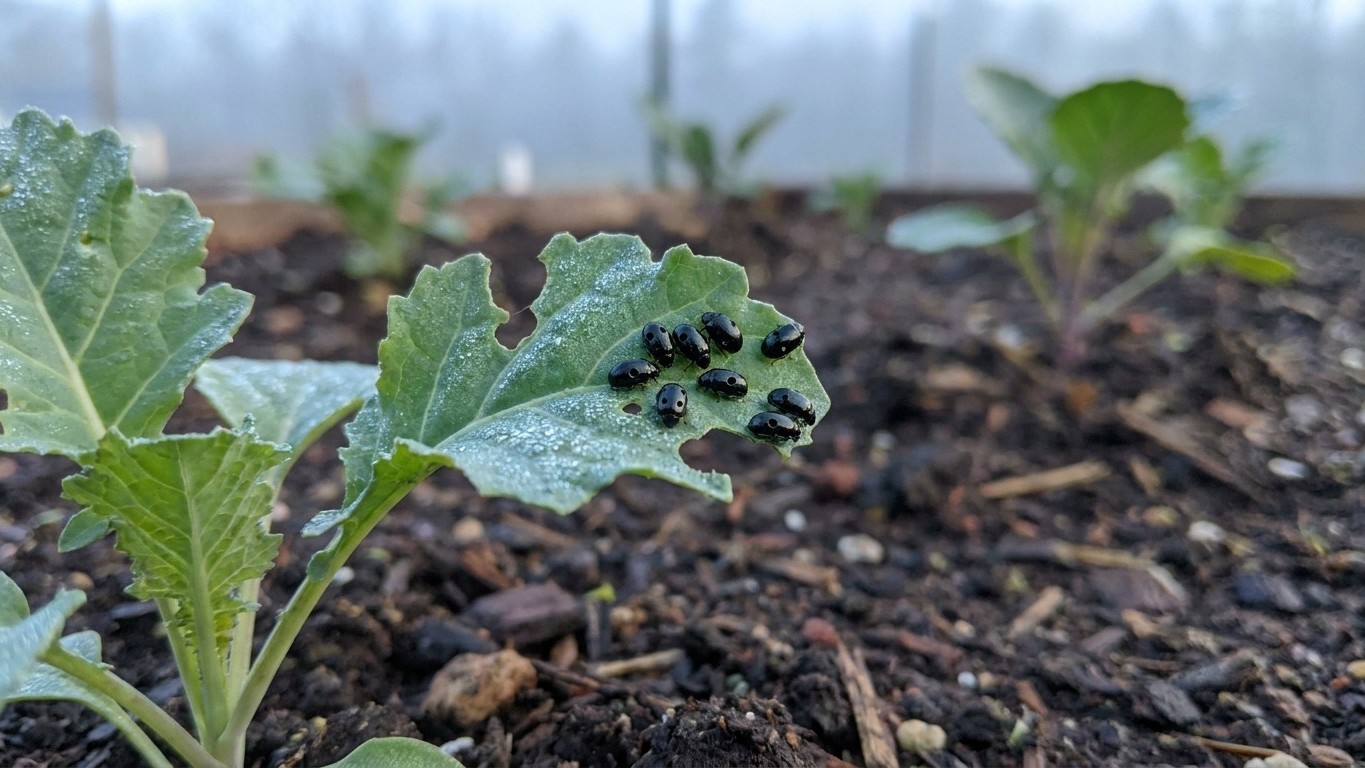

Flea beetles show up in New Hampshire the moment soil temperatures climb past roughly 50°F, which usually lands somewhere between late April in the Seacoast and Merrimack Valley and mid-May in the Lakes Region and North Country. The adults come out of leaf litter and soil cracks first, hungry, and they head straight for young brassicas, eggplant starts, and potato foliage. Stopping them means acting before that window opens, not after the holes appear in your kale.
This pest doesn’t wait for summer. It’s a cool-season problem that peaks in spring and can flare again in early fall, catching a lot of home gardeners off guard because they associate insect damage with July heat.
When Flea Beetles Arrive in New Hampshire

New Hampshire spans several USDA hardiness zones, from 3a up in Coos County to 6a along the coast near Portsmouth. That range matters for flea beetle timing. Gardeners in Concord or Manchester often see the first adults feeding on transplants by the first week of May. Up in Lancaster or Berlin, that same activity might not start until late May or even early June, once the ground has fully thawed and warmed.
Flea beetles overwinter as adults, tucked into soil, mulch, garden debris, and the edges of wooded areas bordering vegetable plots. They don’t die off in a Granite State winter the way some tender insects do. Instead, they go dormant and reemerge the instant conditions turn favorable. A stretch of 60-degree days in April, even with frost still possible at night, is enough to trigger movement.
Once active, adults feed for two to three weeks before laying eggs at the base of host plants. Larvae then spend a few weeks underground feeding on roots, which is why potato and radish crops sometimes show stunted growth even when the foliage above looks only lightly chewed. A second generation of adults often emerges in July or August, meaning New Hampshire gardeners can face two separate waves in a single season, especially in warmer years.
Which Plants Take the Hit
Brassicas take the worst of it here. Cabbage, kale, broccoli, arugula, and radish are favorites, and seedlings are far more vulnerable than mature plants. Eggplant runs a close second, particularly right after transplanting when the leaves are tender and small. Potatoes get hit both above ground (adult feeding on leaves) and below (larval feeding on tubers and roots), which can leave small pockmarks on harvested potatoes that look cosmetic but sometimes invite secondary rot.
How to Confirm It’s Flea Beetles
The signature sign is a “shotgun” pattern, dozens of tiny round holes scattered across a leaf, each one smaller than a pencil eraser. Unlike caterpillar damage, which tends to be ragged and concentrated along leaf edges, flea beetle feeding is scattered and precise. The insects themselves are tiny, often under an eighth of an inch, shiny black or bronze, and they jump like fleas when disturbed. That jump is the giveaway. Aphids don’t jump. Neither do most leaf beetles their size.
Seedlings hit hard by flea beetles in the first two weeks after emergence can die outright, since the growing point gets damaged before the plant has enough leaf area to compensate. Mature plants usually survive cosmetic damage but yield less, especially brassicas grown for their leaves rather than roots.
What Actually Stops Flea Beetles in a New Hampshire Garden
No single method works alone. The gardeners who keep damage low combine timing, physical barriers, and a couple of well-placed cultural tricks rather than reaching for one fix.
Delay Planting or Use Transplants
Direct-seeded radish and arugula planted in early May, right when adults are most active, get hammered. Pushing the same seeds two to three weeks later, once the first generation has laid eggs and moved on, cuts damage noticeably. For brassicas that need a head start anyway, like broccoli and cabbage, starting indoors and transplanting larger, tougher seedlings gives the plant enough leaf mass to shrug off early feeding.
Floating Row Covers
This is the single most reliable physical barrier for home gardens. Lightweight fabric laid over hoops or directly on the bed at planting time blocks adults from reaching seedlings entirely. It has to go on before the first adults show up in spring, and the edges need to be sealed with soil or staples, since flea beetles will find any gap. The tradeoff: row covers also block pollinators, so they need to come off once flowering brassicas or cucurbits need bees. For crops harvested as leaves before flowering, like kale or arugula, covers can stay on the whole season.
Trap Crops
Planting a strip of mustard greens or a fast-growing radish variety a week or two before the main crop gives adults something to feed on first. Some New Hampshire growers seed a border row of mustard around brassica beds specifically to pull beetles away from the plants they actually want to harvest. It’s not foolproof, but it reduces pressure on the main planting.
Diatomaceous Earth and Kaolin Clay
Dusting seedlings with food-grade diatomaceous earth creates an abrasive surface that discourages feeding, though it needs reapplication after rain, which in a New Hampshire spring means fairly often. Kaolin clay sprays work on a similar principle, coating leaves so the plant looks and feels unappealing. Neither kills flea beetles outright; both make the plant less attractive to feed on, buying time for seedlings to toughen up.
Insecticidal Options
For infestations that overwhelm physical and cultural controls, spinosad-based sprays and pyrethrin products labeled for flea beetles offer a faster knockdown, applied in early morning or evening when beneficial insects are less active. These should be treated as a backup rather than a first move, since repeated use can affect pollinators and other beneficial insects visiting the same garden.
Reducing Flea Beetle Numbers Long-Term
Fall cleanup matters more than most gardeners realize. Adults overwinter in garden debris and the leaf litter at the edge of wooded borders, which are common around New Hampshire properties. Clearing spent brassica plants and tilling soil in fall, rather than leaving beds to sit through winter untouched, removes a chunk of the overwintering population before it ever gets a chance to wake up in spring.
Crop rotation helps too, though it works better against the larval stage than the adults, which can fly in from neighboring yards regardless of what was planted last year. Moving brassicas to a different bed each season, ideally with two or three years between plantings in the same spot, disrupts the larvae feeding on roots underground.
Beneficial nematodes applied to soil in early spring target flea beetle larvae before they emerge as adults. This is a longer-term investment rather than a quick fix, since it takes a full season or two to notice a real reduction in adult numbers, but it’s one of the few methods that addresses the underground stage directly rather than just protecting foliage.
One detail worth knowing: flea beetle populations tend to run heavier in gardens next to fallow fields, hedgerows, or unmowed grass, since those areas provide the leaf litter and undisturbed soil the insects need to overwinter successfully. A property backing up to woods or an abandoned pasture, common across rural New Hampshire, will typically see earlier and heavier pressure than a garden surrounded by mowed lawn on all sides.