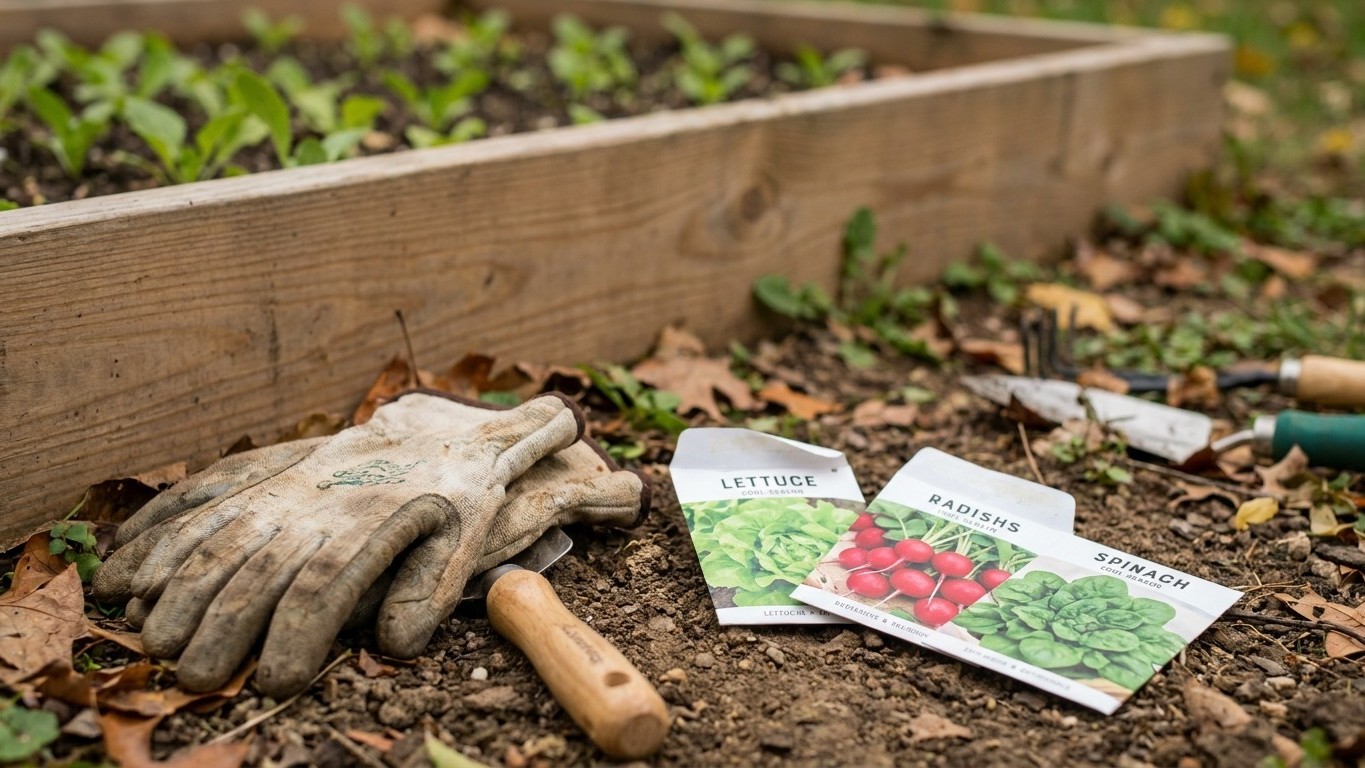

September in New Hampshire sits in the gap between summer’s last tomatoes and the first hard frost, which typically lands between October 13 and October 26 depending on where you garden. That leaves real room for fast-growing cool-season crops: spinach, lettuce, radishes, arugula, mache. Garlic waits for next month. This is as much a harvest month as a planting one, and the two overlap more than most calendars admit.
What goes in the ground in September

The deciding factor isn’t the date on the wall, it’s how many weeks of growing time are left before that first fall frost window of October 13 to October 26. Soil is still warm from summer, which actually helps germination, but daylight is shrinking fast, and that slows everything down compared to a June sowing. The math that matters: take a crop’s days-to-maturity, add a week or two for the slower fall light, and see if it fits before frost arrives.
Spinach, arugula, mache (corn salad), and radishes are the safest bets early in the month. All of them mature in 25 to 45 days, and spinach and mache actually improve in flavor after a light frost rather than dying from one. Lettuce works too, especially loose-leaf types, if sown in the first half of the month. Turnips sown now for their greens, not roots, can still size up in time.
Garlic and shallots are a different story. In New Hampshire they go into the ground in October, after the soil has cooled further, so resist the urge to plant them early just because the beds are open. Carrots, beets, and other 60-plus-day root crops are a gamble this late unless they went in during August; direct-sowing them now usually means an unfinished crop when frost hits.
| Crop | Days to maturity | September planting verdict |
|---|---|---|
| Spinach | 30-45 | Safe, tolerates light frost |
| Arugula | 25-40 | Safe, fast enough for early September |
| Radishes | 25-30 | Safe, quickest option |
| Mache | 40-50 | Safe, improves after frost |
| Garlic | N/A (fall-planted, overwinters) | Wait for October |
| Carrots | 60-75 | Risky unless started in August |
If a cold frame or low tunnel is available, the list above stretches further. Both buy two to four weeks of extra growing time by holding heat and blocking wind, which matters more in the north country than along the Merrimack Valley.
What to start under cover
Counting backward from a frost window of October 13 to October 26 changes what “starting” even means this month. There isn’t much point starting slow transplants indoors for outdoor planting now, since most wouldn’t reach transplant size before the ground turns unfriendly. What does make sense is starting quick greens under cover, meaning a cold frame or an unheated hoop, specifically to transplant into that same protected space a few weeks later.
Lettuce and spinach starts sown indoors in early September, under lights or on a bright sill, are ready to move into a cold frame by late month, right as outdoor direct-sowing options run out. That gives a second wave of harvest into November in a mild pocket, later in colder valleys.
The two failure modes run in opposite directions. Start too early, working on a June mindset, and warm early-September air pushes lettuce and brassica starts to bolt or stretch into leggy, rootbound seedlings before they ever get planted out. Start too late, treating September like it’s still midsummer, and the seedlings won’t have enough daylight left to size up before the cold locks them in place. The safe zone is the first ten days of the month for anything meant to reach a cold frame by early October.
Herbs are worth a mention here too. Parsley, chives, and cilantro started indoors now in pots can move to a sunny kitchen windowsill for winter use, sidestepping the frost question entirely.
What is ready to pick
September is the busiest harvest month of the New Hampshire garden year, which makes the planting question only half the story. Tomatoes, peppers, and summer squash are still coming in steadily from a July planting, especially in southern counties, though their pace slows as nights cool. Pole and bush beans are usually finishing their last flush.
Winter squash and pumpkins are the crop to watch closely. They’re ready when the rind resists a fingernail scratch and the stem has started to dry and turn gray; pulling them too early, while the skin is still glossy and soft, shortens how long they’ll store. Leave them on the vine as long as frost allows, then cure them in a warm, airy spot for one to two weeks before moving to storage.
Orchard fruit overlaps with the vegetable harvest here. Early and mid-season apple varieties are typically ready through the month, and plums often finish up in the first half. A ripe apple should separate from the branch with a gentle upward twist, not a hard yank.
Sweet corn planted in late spring is usually wrapping up by now too, judged the same way it always is: peel back a bit of husk, and the kernels should run milky, not clear, when pierced.
The jobs that matter this month
Soil preparation for next year pays off disproportionately when it’s done now rather than in spring scramble. A soil test taken in September gives amendments like lime all winter to work into the ground, instead of a rushed spring application that hasn’t had time to adjust pH before planting.
Garlic bed prep belongs on this month’s list even though the cloves themselves wait until October. Clearing the bed, working in compost, and letting it settle for a few weeks means the ground is ready the moment planting time arrives, rather than a scramble in cold, wet soil.
Watering rhythm still matters. September days can be dry even as nights cool, and shallow watering habits carried over from August leave newly seeded greens and fall transplants stressed right when they need steady moisture to germinate evenly.
Pest scouting shouldn’t stop just because summer’s winding down. Squash vine borer damage and fall webworm nests are both easier to spot and remove now, before the insects overwinter and become next year’s problem. Cutting out webworm nests and cleaning up spent squash vines denies both pests a place to settle in.
A short list worth running through before the month ends:
- Cut back and remove spent bean and pea vines to limit disease carryover
- Bring tender potted herbs and citrus indoors before the first cold snap
- Seed a cover crop like winter rye on any bed that’s finished for the season
- Sharpen and clean hand tools before winter storage sets them up for rust
- Check stored onions and early-harvest squash for soft spots weekly
None of these are glamorous, but skipping them tends to show up as a worse spring, not an immediate disaster, which is exactly why they’re easy to put off.
What not to do in September
The most common mistake is treating a warm afternoon as permission to direct-sow warm-season crops, tomatoes, peppers, beans, straight into the ground. Air temperature is not soil temperature, and neither one changes the fact that frost is coming within the October 13 to October 26 window at the reference station, likely sooner at higher elevation or in a low-lying frost pocket. Anything needing 60 or more warm days simply won’t finish.
A close second is uncovering cold frames or row covers too eagerly after a stretch of mild weather. New Hampshire Septembers are famous for a warm week followed by a sharp cold night, and plants hardened off under cover can take real damage if they’re exposed right before that swing hits.
Nitrogen fertilizer is the other trap, particularly on fruit trees, berry canes, and perennial beds. A dose of high-nitrogen feed this late pushes soft new growth that has no time to harden before frost, and that new growth is often the first tissue killed when cold arrives, weakening the plant going into winter rather than helping it.
Finally, don’t leave winter squash and pumpkins in the field once the vines have died back and a hard frost is forecast. A light frost on the fruit itself is tolerable for some varieties, but a hard freeze softens the flesh and shortens storage life dramatically, even if the squash looks fine from the outside.
Checking this against your own county
These dates and this zone range describe a starting point, not a guarantee for any one backyard. New Hampshire runs from USDA Hardiness Zone 3b in the far north to 6a along the southern border and coastal strip, and elevation, valley cold pockets, and distance from open water all shift frost timing by a week or two in either direction from the reference figures above. A garden in Coos County and one in Rockingham County are not on the same clock.
The frost dates cited here come from one weather station and tend to run later in spring and earlier in fall than what a rural or elevated garden actually experiences. For a planting calendar built around a specific county, the UNH Cooperative Extension is the reliable next stop.
Common questions
Is it too late to start a vegetable garden in New Hampshire in September?
Not for quick crops. Spinach, arugula, lettuce, and radishes can all still mature before the first fall frost window of October 13 to October 26, especially if sown in the first half of the month.
When should garlic actually go into the ground in New Hampshire?
October, after soil has cooled further than it is in September. Prepping the bed now, with compost worked in, sets it up for that October planting.
Will a light September frost kill my tomato plants?
Yes, tomatoes and peppers are frost-tender and will be damaged or killed by the season’s first freeze. Harvest what’s ripe or near-ripe and consider covering plants overnight if a cold night is forecast before the main harvest is done.
How do I know if my county’s frost date is different from the state average?
Check with UNH Cooperative Extension for county-level guidance, and pay attention to local terrain: low-lying areas, valleys, and higher elevations typically see frost before flatter, lower ground nearby.
Gardeners who plant by the Moon can check the September 2027 moon planting calendar, a tradition rather than a proven method.