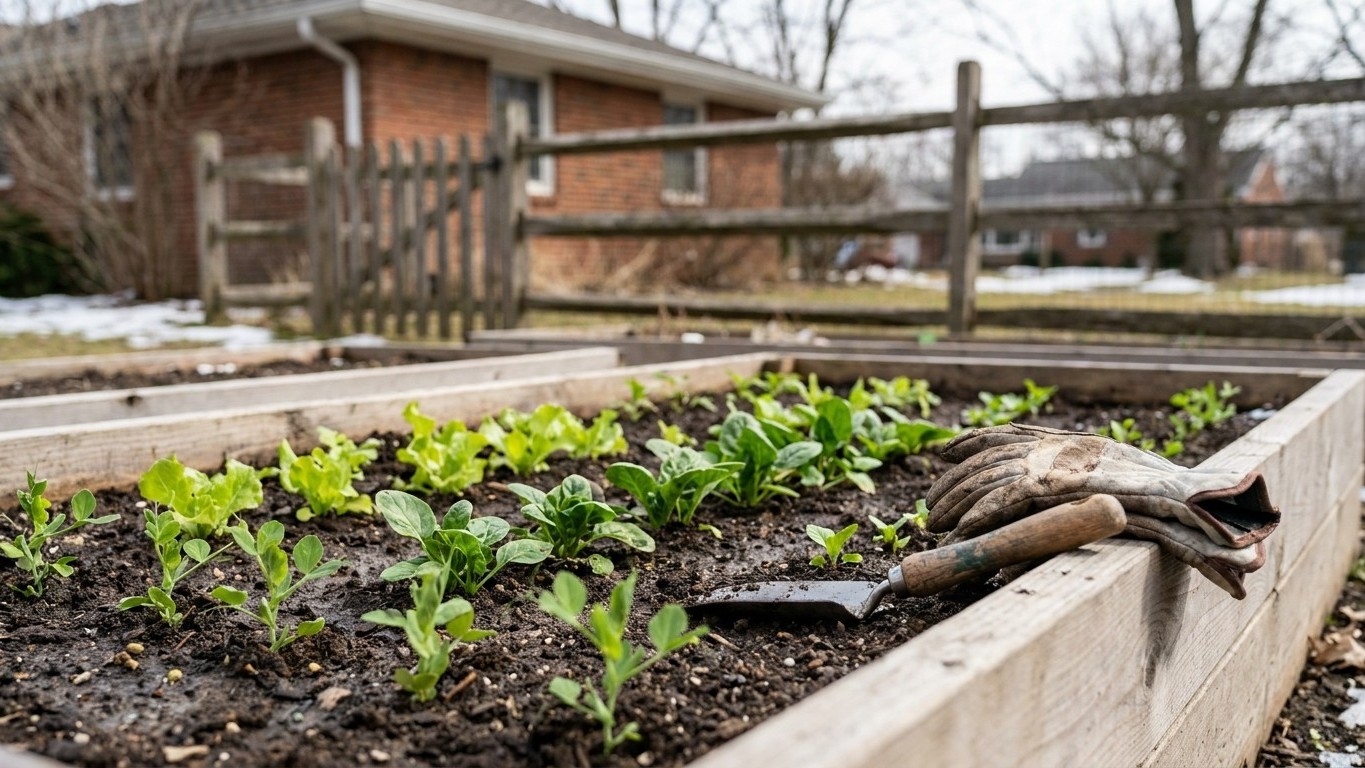

In New York’s warmer pockets, Long Island, New York City, and the lower Hudson Valley, cold-hardy crops like peas, spinach, and onion sets can go into workable soil by the second half of March, alongside garlic that’s already overwintering. In the colder interior and upstate counties, the ground is often still frozen or waterlogged, and March stays a prep-and-plan month rather than a planting one.
What goes in the ground in March

The calendar says March everywhere in the state, but the soil doesn’t agree with itself from one county to the next. What actually decides whether you can plant is soil temperature and workability, plus how close you are to the last spring frost window. For New York City, that window runs March 23 to April 3, based on NOAA’s 1991-2020 climate normals for Central Park. That’s a 30 to 70 percent freeze probability band, not a hard line, and it applies to a dense urban site. Upstate counties and the Adirondacks push both frost dates later in spring and earlier in fall, sometimes by weeks.
Given that window, early March across most of the state falls squarely before the safe planting range, not after it. That matters because it rules out anything tender. Warm-season crops, tomatoes, peppers, beans, squash, have no business outdoors this month anywhere in New York.
What does tolerate the risk is a short list of genuinely cold-hardy plants. Garlic and shallots planted the previous fall keep growing through cold snaps and don’t need touching. Where soil has thawed enough to work with a hand trowel, and it isn’t sticky or waterlogged, you can direct-sow peas and put in onion sets. Spinach, arugula, and mache handle frost well and can go in under a floating row cover or a cold frame for insurance. Kale and lettuce transplants started indoors earlier can move out under the same protection once the worst cold has passed.
Cold frames and low tunnels do real work here. They buy roughly one USDA zone’s worth of protection, which in the state’s 3b to 7b range can mean the difference between soil that’s workable and soil that’s still frozen solid. Bare-root fruit trees, berry canes, and asparagus crowns can also go in this month once the ground has thawed, since they’re dormant and unbothered by a late cold spell the way a leafy transplant would be.
If your ground is still frozen or under snow, don’t force it. Forcing rhubarb or chicory indoors, in a dark bucket or root cellar, gives you something to harvest while the outdoor beds catch up.
What to start under cover
Seed starting this month should be counted backward from your local last-frost window, not from March 1 itself. Using the NYC range of March 23 to April 3 as a reference point, and knowing upstate gardens run later, the arithmetic works like this: tomatoes and peppers generally need six to eight weeks indoors before transplant, so seed for those goes in around the second half of January through early February in the warmer zones, and correspondingly earlier upstate isn’t the goal since transplant dates there are later too. For gardeners still catching up, early March is the last realistic window to start peppers and eggplant if you want full-sized transplants by the time the soil warms.
Broccoli, cabbage, and other brassicas need less lead time, roughly five to seven weeks, which makes early-to-mid March a solid start date for a first outdoor planting in April or early May. Lettuce and other quick greens can be started in succession every couple of weeks rather than all at once, so you’re not flooded with a single harvest window.
The two ways this goes wrong are opposite problems. Start too early and you end up with tomato seedlings that are rootbound in their cell trays weeks before the ground is warm enough to take them, leggy and stressed by the time transplant day arrives. Start too late, particularly for long-season crops like peppers, and you run out of growing season before frost returns in fall, a window that closes as early as November 14 in the city and sooner upstate. Counting backward from your actual frost date, rather than a generic seed-packet suggestion, is the only way to hit that middle ground.
What is ready to pick
Almost nothing new is coming out of a New York garden in March, and that’s worth saying plainly rather than dressing up. The growing season for most outdoor crops doesn’t restart until soil warms weeks from now. What’s on the table this month is what survived the winter or what you’ve kept going indoors.
Overwintered kale, leeks, and parsnips left in the ground since fall often taste better after cold exposure, since the plant converts starches to sugars as a natural antifreeze. If you mulched them heavily, dig carefully, the ground around the crowns may still be firm. Cold frames holding spinach, mache, or claytonia planted the previous fall should be producing steadily by now, especially on sunny days when the frame traps heat.
Indoors, sprouts and microgreens fill the gap fastest, ready in one to two weeks from seed with no soil required beyond a shallow tray. They’re the closest thing to a March harvest that doesn’t depend on the weather at all.
Storage crops need attention now more than at any point since fall. Squash, potatoes, and onions held since harvest are five or six months into storage, and this is when the weak ones start to go. Check squash for soft spots near the stem end, sort potatoes for any that have sprouted or gone soft, and pull onions that feel spongy when squeezed. One rotting item left in a bin can take down its neighbors, so a five-minute check saves more than it costs.
The jobs that matter this month
March carries more deadline pressure than any other pre-planting month, and skipping these jobs costs you the whole season, not just a week.
Pruning, ordering, and planning
Dormant pruning of fruit trees, grapevines, and berry canes needs to happen before buds swell and sap starts running, since cuts made after growth begins waste the plant’s stored energy and slow fruiting. Seed catalogs are still shipping, but popular varieties sell out by late winter into early spring, so any order you’re planning should go in now rather than after the good options are gone. This is also the month to finalize crop rotation, since planting the same family in the same bed two years running builds up soil-borne disease and pest pressure that gets worse every season it’s ignored.
Soil, tools, and storage
A soil test now gives you results back in time to amend before the ground is planted, rather than guessing at fertilizer needs after the fact. Turning the compost pile speeds decomposition and gets finished material ready for spring beds. Cleaning and sharpening pruners, loppers, and hoes takes an afternoon and prevents ragged cuts that invite disease into wounded plant tissue. Raised bed frames, trellis posts, and fencing that shifted over winter are easier to repair now, before crops are in the ground and every misstep damages something growing. And keep checking those stored crops, since rot caught early is a loss of one squash, caught late is a loss of the whole bin.
What not to do in March
The most common mistake this month is trusting the air instead of the soil. A run of 60-degree afternoons doesn’t mean the ground has warmed to match, and tender transplants set out because “it feels like spring” almost always meet a frost they can’t survive, especially before the window closes on April 3 even in the city. Wait for soil temperature and the calendar range together, not either alone.
A close second is uncovering cold frames, row covers, or mulched beds too early after a mild stretch. New York’s spring weather swings hard, and a week of warmth followed by a hard freeze can wipe out growth that had just started hardening off in the open air. Leave protection in place a little longer than feels necessary rather than pulling it at the first warm afternoon.
Feeding nitrogen at the wrong moment causes its own damage. Fertilizing dormant fruit trees or overwintered perennials too early pushes soft new growth that a late frost then kills outright, setting the plant back further than if you’d waited. Hold nitrogen applications until growth has actually resumed, not when you expect it to.
Finally, working wet soil compacts it badly enough to affect drainage and root growth for the whole season. If a handful of soil forms a muddy ball instead of crumbling, stay off the bed and wait a few more days.
Checking this against your own county
A statewide March guide is a starting point, not an instruction sheet. New York’s elevation changes, lake effect from Erie and Ontario, and the sheer distance between Long Island and the Adirondacks shift frost dates by weeks within the same state, and the USDA’s own hardiness map puts the state anywhere from zone 3b to 7b depending on location. A garden in the Finger Lakes basin behaves differently from one on the Long Island Sound, even in the same month.
For a local reading, check Cornell Cooperative Extension, which runs county offices with planting calendars and soil test services tuned to your specific area rather than the state average.
Common questions
Can I plant tomatoes outdoors in New York in March?
No. Tomatoes are frost-tender and the state’s last frost window doesn’t close until at least late March in the city, later upstate. Start seed indoors this month instead and transplant only after the danger has passed.
Is it too early to prune fruit trees in March?
No, this is close to ideal, as long as you finish before buds visibly swell. Pruning after growth resumes wastes the tree’s stored energy and can reduce the year’s fruit set.
What’s the earliest crop I can direct-sow in March?
Peas and onion sets tolerate cold soil and light frost, making them the most realistic direct-sown crops this month once the ground is workable and not waterlogged.
Why do my stored potatoes suddenly start rotting in March?
Storage crops are five to six months into their storage life by now, and any weak spots from bruising or moisture during harvest tend to fail around this point. Sorting the bin monthly catches problems before they spread.