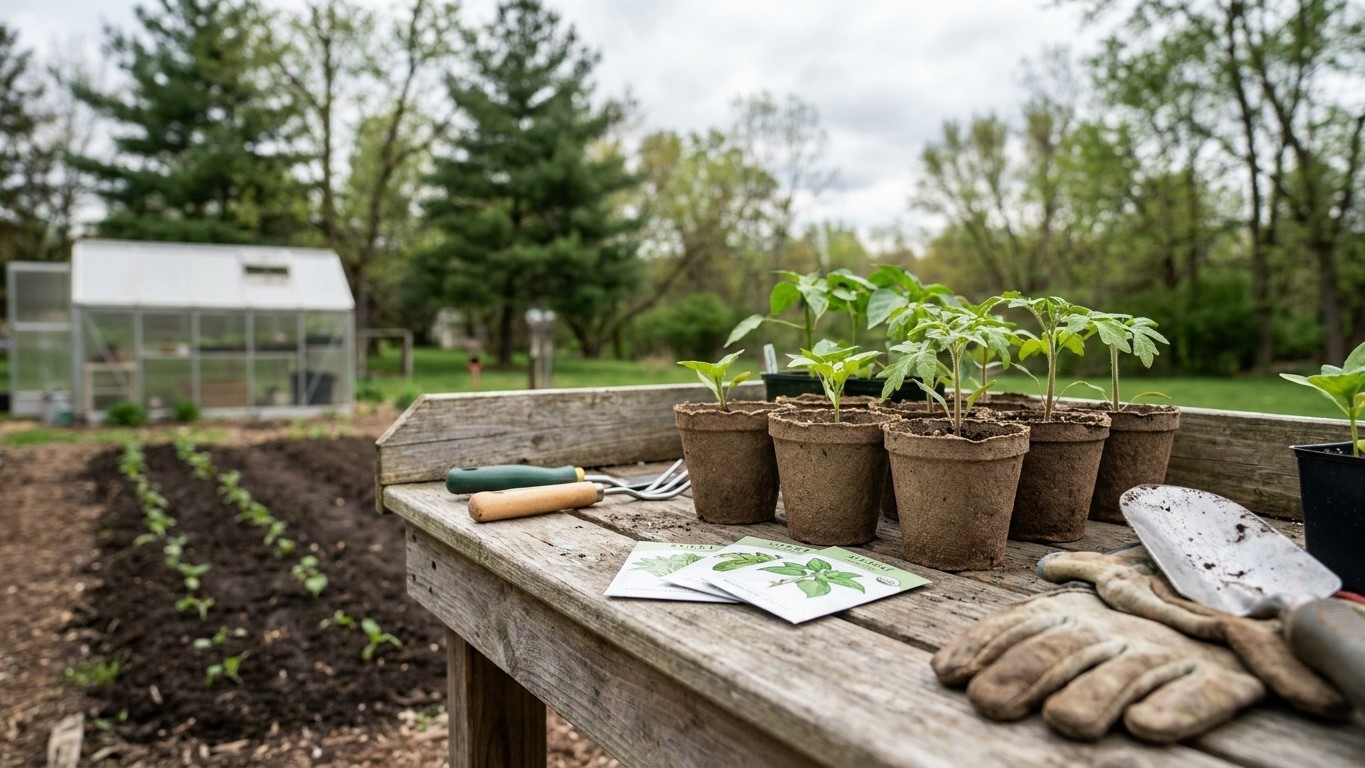

April in Newfoundland and Labrador sits well ahead of the frost window, so the honest answer is that almost nothing goes into open ground yet. Garlic and shallots planted last fall keep growing where the soil is workable, cold frames push hardy greens along, and the real work this month happens indoors: starting transplants, prepping soil, and getting ahead of a short growing season that won’t forgive a late start.
What goes in the ground in April

The average last spring frost for the St. John’s area lands May 30, and that’s a mean date pulled from three decades of records, not a guarantee. In roughly half the years on record, frost arrives even later than that. April, sitting a full month or more ahead of that midpoint, is not a month for tender crops in open soil anywhere in the province, and pretending otherwise wastes seed and effort.
What does work is narrower but real. Garlic and shallots planted the previous fall are already rooted and can go in now on ground that has thawed and drained, provided the bed isn’t still frozen solid or standing in meltwater. Bare-root fruit trees, canes, and dormant perennial stock can also be planted once the soil is workable, since they’re not pushing tender new growth yet and can tolerate a cold snap that would kill a seedling outright.
What tolerates the cold this month
- Garlic and shallots (fall-planted, continuing to establish)
- Bare-root fruit trees, berry canes, and dormant rootstock
- Hardy peas and fava beans, but only under a cold frame or low tunnel, and only once soil has thawed
- Cold-hardy greens (spinach, mâche, arugula) started under cover rather than in open beds
Skip the alliums-from-seed and the direct-sown brassicas until the soil has genuinely warmed. Cold, wet ground does more damage to seed than a light frost does to a seedling: rot and poor germination cost more than waiting three or four extra weeks.
What to start under cover
This is where April earns its keep. The arithmetic starts from that May 30 average frost date and works backward, and because it’s a midpoint rather than a safe date, it pays to build in a buffer rather than sowing right to the line. Tomatoes and peppers need roughly 6 to 8 weeks indoors before they’re ready to go out, which puts their start window in early-to-mid April for anyone aiming at a late-May or early-June transplant date. Onions and leeks want closer to 10 to 12 weeks, so those should already be under lights by the time April opens, with later sowings still worth doing for a second wave. Brassicas (cabbage, broccoli, kale for transplanting) sit around 6 weeks out.
| Crop | Weeks before transplant | Indoor start window |
|---|---|---|
| Onions, leeks | 10-12 weeks | Late winter, continuing into early April |
| Tomatoes, peppers | 6-8 weeks | Early to mid-April |
| Brassicas (cabbage, broccoli) | 5-6 weeks | Mid-April |
| Herbs (basil, parsley) | 6-8 weeks | Early to mid-April |
The two ways this goes wrong are predictable. Start too early and the transplants outgrow their pots weeks before it’s safe to move them outside, turning leggy and rootbound on a windowsill. Start too late and there’s not enough season left for a plant like a pepper to size up and ripen fruit before the first fall frost, which averages October 17 in the same records. Neither error is fatal on its own, but both shave weeks off a growing season that’s already tight.
What is ready to pick
Outdoors, April offers little. Anything still standing in the garden from fall, overwintered kale, hardy leeks, or parsnips left in the ground, can be dug or cut once the soil softens enough to work a fork into it, and the flavor in overwintered parsnips and kale is often better after a winter of cold than it was in fall.
Cold frames are the more reliable source this month. Spinach, mâche, and loose-leaf lettuce sown under cover in late winter should be sizing up enough for a first light harvest, picked outer-leaf-first so the plant keeps producing. Indoors, sprouts and microgreens fill the gap in a week to ten days from seed and need no more than a windowsill and a shallow tray.
This is also the month to go through the root cellar or basement stash and pull anything on its way out. Squash with soft spots, potatoes that have started sprouting eyes, and onions gone soft at the neck should be used first or composted; a single rotting squash in storage can taint the ones around it faster than most people expect.
The jobs that matter this month
April is the busiest planning month of the year here, even though little is going into open ground. Dormant pruning of fruit trees, currants, and gooseberries should be finished before buds break; once new growth starts, every cut costs the plant energy it needs for the season rather than wood it’s shedding anyway. If the buds are already swelling on a given tree, that window has closed for it specifically, even if it’s still open on a slower-waking neighbor.
Seed catalogs thin out fast this time of year, and the varieties bred for short, cool seasons (early tomatoes, quick brassicas) tend to sell out first. Ordering now, rather than waiting for a warm afternoon to remind you, is the difference between getting the variety that actually matches Newfoundland’s season and settling for whatever’s left.
The rest of the list
- Testing and amending soil pH and organic matter before beds are planted
- Turning compost piles as they thaw, to get air back into material that’s been frozen solid
- Cleaning and sharpening pruners, hoes, and spades before the season’s heavy use starts
- Repairing raised beds, fencing, and cold frame covers damaged over winter
- Chitting seed potatoes in a bright, cool spot so they’re sprouting by planting time
None of this is filler work. A pruning cut made three weeks late, or a seed order placed after the good stock is gone, shows up as a smaller harvest in August, not as an obvious mistake in April.
What not to do in April
The classic error is trusting a warm afternoon over the calendar of averages. A run of 50-degree days in April feels like spring, but the soil several inches down is still cold and slow to warm, and seed sown into it tends to rot before it germinates rather than simply waiting. Wait for the soil itself to warm, not just the air.
Uncovering cold frames or removing winter mulch too early after a mild stretch is the second trap. A week of gentle weather followed by a hard frost, which is well within the odds given that the average frost date is May 30 and years run later than that as often as earlier, can wipe out tender growth that had just been exposed. Keep the covers on standby even after pulling them back, and be ready to throw them over a bed again on short notice.
Nitrogen is the third mistake, applied at the wrong point. Feeding a heavy dose of nitrogen to dormant fruit trees or overwintered perennials before they’ve broken dormancy pushes soft, early growth that’s more vulnerable to the frosts still ahead. Wait until buds are actively opening before feeding, and favor compost or a balanced feed over straight nitrogen this early in the season.
Checking this against your own county
A provincial average is a starting point, not an instruction for a specific yard. The Avalon Peninsula, moderated by the ocean, runs weeks ahead of interior Labrador, and elevation shifts frost timing even within a short drive. A garden in a low, frost-prone hollow will lag behind one on a gentle slope a mile away, regardless of what the average date says.
For local guidance that accounts for these differences, the Newfoundland and Labrador Department of Fisheries, Forestry and Agriculture publishes provincial resources at gov.nl.ca/ffa, and it’s worth checking before locking in a planting date based on averages alone.
Common questions
Is it too early to plant vegetables outside in Newfoundland and Labrador in April?
For nearly all vegetables, yes. The average last spring frost is May 30, and since that’s a mean date rather than a safe cutoff, frost has arrived later than that in roughly half the years on record. April is for indoor starts, cold frames, and fall-planted garlic, not open-ground sowing of tender crops.
What does hardiness zone 6a mean for gardening here?
The reference city sits in Canadian hardiness zone 6a, a rating built from Canada’s seven-variable system rather than the single-factor USDA scale used elsewhere on this site. The two numbering systems don’t convert directly, so a Canadian 6a shouldn’t be read against a USDA zone number from a US planting guide.
Can I still prune fruit trees in April?
Usually yes, as long as it’s done before buds break and push new growth. Once a tree’s buds are visibly swelling and opening, pruning cuts start costing the plant stored energy rather than removing dormant wood, so check each tree individually rather than pruning by date alone.
What should I start indoors this month if I haven’t already?
Tomatoes, peppers, and herbs like basil still fit an early-to-mid-April start for a late-spring transplant, and brassicas for transplanting can go in mid-April. Onions and leeks ideally started earlier, but a later sowing still gives usable transplants, just smaller ones at planting time.