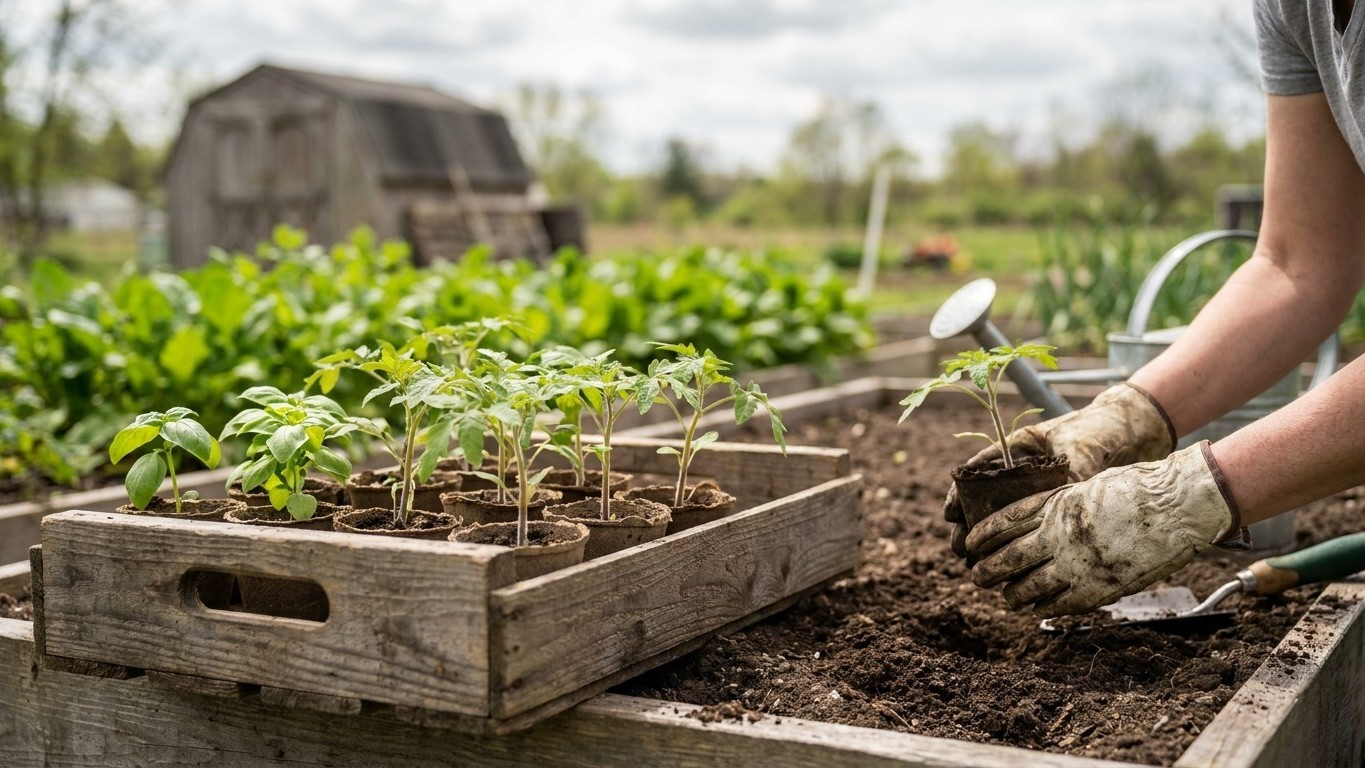

May in Newfoundland and Labrador means hardy, cold-tolerant crops go into open ground: peas, spinach, lettuce, radishes, kale, onion sets and seed potatoes. Frost is still a live risk through most of the month, so tender crops like tomatoes, peppers and squash stay indoors or under cover until later. Cold frames and low tunnels buy a few extra weeks for anything in between.
What goes in the ground in May

The average last spring frost for the St. John’s area sits at May 30, based on Environment and Climate Change Canada’s Climate Normals for 1981-2010 at station ST JOHN’S A. That figure is a mean, not a guarantee: in roughly half of all years, frost arrives later than that date. So treat all of May, and even the first days of June, as inside the frost window rather than past it. Soil temperature, not the date on the wall calendar, decides what survives.
Direct-sow the crops that shrug off a light frost: peas, fava beans, spinach, arugula, lettuce, radishes, turnips and kale all tolerate cool, damp soil and a chilly night. Onion sets and shallot bulbs can go in as soon as the ground is workable, and seed potatoes can be planted, though the first shoots that push through need hilling with extra soil if a cold snap threatens. Garlic planted the previous fall is already up and needs nothing more than a weed check.
What does not belong in open ground yet is anything that dies at 32°F: tomatoes, peppers, eggplant, cucumbers, squash, beans and corn. Those wait for warmer soil later in the season. Bare-root fruit trees, canes and asparagus or rhubarb crowns can still go in this month while they’re dormant or just breaking bud, and a cold frame or a length of row cover over a bed of transplanted brassica seedlings stretches the safe window by a couple of weeks on either side.
What to start under cover
Work backward from the frost window instead of a fixed date. Tomatoes, peppers and eggplant need roughly six to eight weeks indoors before they’re ready to go outside, and since outdoor planting for those crops realistically waits until well after the mean May 30 frost date, this month is the window for starting them under lights or on a bright sill. Count back from your intended transplant date, not from the first of the month.
Squash, cucumbers and melons are different. They resent having their roots disturbed, so they’re best started only three to four weeks before transplanting, in individual pots that go straight into the ground with minimal handling. Starting them too early leaves you with rootbound, leggy plants sulking on a windowsill for weeks past their prime. Starting too late, on the other hand, means they run out of the short growing season before fruit has time to ripen, a real problem in a province where the frost-free stretch between the mean spring and fall dates (May 30 to October 17) is already tight.
Brassica transplants for later succession, such as broccoli and cabbage, can also go into flats now for planting out once the first round has matured or the weather has settled. Keep a close eye on light: seedlings started under cover on a low-light windowsill stretch and weaken fast, and a cool porch or unheated greenhouse often does better than an overheated indoor room.
What is ready to pick
Outdoors, May offers little in the way of fresh harvest, and that’s worth saying plainly rather than padding the list. Parsnips left in the ground over winter are the exception: a season of freezing and thawing sweetens them, and digging them now, before new top growth restarts, gives one last harvest before the roots turn woody. Rhubarb is usually the first real crop of the season, with stalks ready to pull as soon as they reach a decent length, generally when they’re firm and at least 10 to 12 inches tall.
Anything sown under a cold frame or low tunnel earlier in spring, such as spinach, mâche or arugula, may already be at a cut-and-come-again stage by mid-month. Indoors, sprouts and microgreens fill the gap for anyone wanting something fresh on the table while the outdoor garden is still catching up.
This is also the month to go through the root cellar or storage shelf with a critical eye. Stored squash, potatoes and onions that made it through winter are approaching the end of their storage life, and soft spots, sprouting eyes or a sweetish smell all signal it’s time to use them before they spoil. Check the pile every week or two rather than assuming it will keep until you get around to it.
The jobs that matter this month
Soil preparation tops the list. As the ground thaws and dries enough to be worked without compacting into clumps, turning in compost or aged manure now gives it weeks to settle before the bulk of transplanting begins. Working wet soil, on the other hand, wrecks its structure for the whole season, so wait for a dry stretch rather than forcing it.
Finish any dormant pruning on fruit trees and berry canes before the buds fully break; once leaves emerge, cuts heal more slowly and the plant wastes energy on wood that’s coming off anyway. Harden off any seedlings started indoors by setting them outside for a few hours a day, increasing gradually, before they go into the ground permanently. Skipping this step is one of the most common reasons transplants collapse in their first week outside.
Stake peas and other climbers while they’re still short. Doing it after they’ve flopped over means untangling stems and snapping roots. Start a succession rhythm for fast crops like lettuce and radish, sowing a short row every couple of weeks rather than one large batch that all comes ready at once. And scout for slugs early: Newfoundland and Labrador’s damp spring conditions are ideal for them, and a few evenings spent checking under leaves for early damage saves entire rows of seedlings later.
Round out the month with practical maintenance: turning the compost pile now that it’s thawed, sharpening and oiling tools before the season’s heavy use, checking cold frame seals and hinges, and repairing any bed edges or fencing that frost heave shifted over winter.
What not to do in May
The most common mistake is trusting a warm afternoon over the soil thermometer. Air temperature can hit the 60s while soil a few inches down is still in the 40s, and tomatoes or peppers set out on that basis simply sit and sulk, or die outright if a cold night follows. Wait for the soil itself to warm, not just the air.
Uncovering cold frames or pulling row cover too early after a mild stretch is the second classic error. A few warm days followed by one clear, calm night is exactly when frost forms, and plants that were fine under cover the week before can be killed overnight once exposed. Keep protection in place until the frost window has genuinely passed, not just until it feels warm enough.
Heavy nitrogen feeding early in the month is a third trap, particularly on brassicas and other greens. Nitrogen pushed too soon produces soft, lush growth that is more vulnerable to a late frost than the slower, hardened growth those crops would otherwise put on. Hold off on nitrogen-heavy feeds until the frost risk has genuinely eased, and favor compost or a balanced feed instead if plants need a boost now.
Checking this against your own county
The May 30 mean last frost and October 17 mean first frost cited here come from a single station, ST JOHN’S A, and Newfoundland and Labrador is not one climate. Elevation, distance from the coast and the sharp divide between Labrador and the island push these windows by weeks in either direction; a garden in Labrador City or an inland valley on the island can trail the Avalon Peninsula by a month or more. Treat every date on this page as a starting point, then confirm it against local conditions and the provincial Newfoundland and Labrador Department of Fisheries, Forestry and Agriculture resources for planting guidance closer to your own county.
Common questions
Is it too early to plant tomatoes outside in May in Newfoundland and Labrador?
Yes, for most of the province. The mean last spring frost for the St. John’s area is May 30, and that’s an average, not a safe date, since frost arrives later than that in roughly half of all years. Start tomatoes indoors this month instead and transplant only once soil has warmed and frost risk has clearly passed.
What is the hardiness zone for Newfoundland and Labrador?
St. John’s sits in Canadian hardiness zone 6a, based on Natural Resources Canada’s Plant Hardiness Site using 1991-2020 normals. This is the Canadian zone system, built on seven climate variables, and it does not convert directly to the USDA zones used elsewhere in the United States, so the numbers aren’t comparable one to one.
Can I plant potatoes in May if frost is still possible?
Yes. Seed potatoes generally tolerate being planted before the last frost since the tubers stay protected underground. The risk is to emerging shoots once they push through the soil surface; hilling extra soil over young shoots protects them if a cold night is forecast.
Why does my neighboring town have a different planting window?
Local frost dates shift with elevation, coastal exposure and the general north-south divide across the province. The dates on this page reflect one weather station near St. John’s, so a garden further inland, at higher elevation, or in Labrador should expect a later last frost and an earlier first fall frost than what’s listed here.