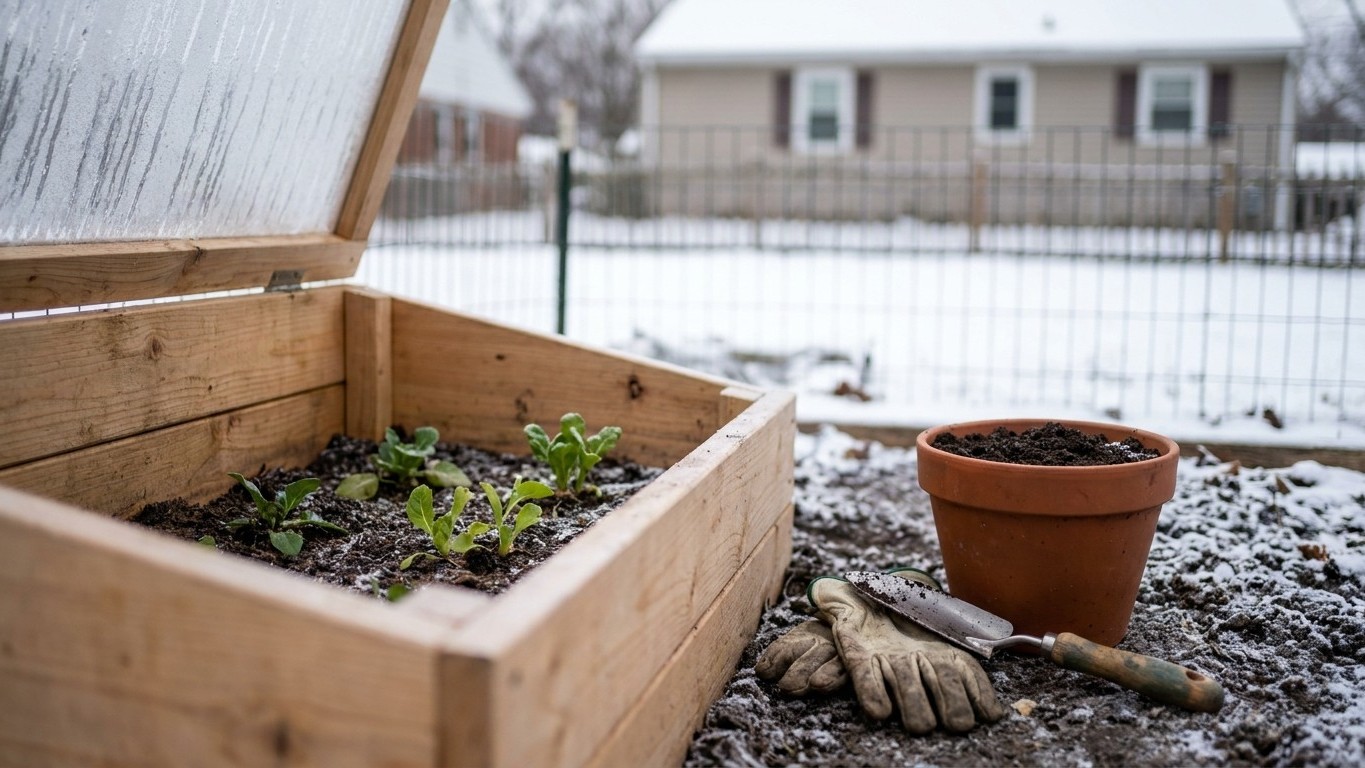

January in Newfoundland and Labrador is not a planting month. The ground is frozen or blanketed in snow across most of the province, and the mean last spring frost for the St. John’s area sits at May 30, with plenty of years running later. What you can do this month is start slow-growing crops indoors, force a few things in the dark, and get every dormant job done before the soil even thinks about waking up.
What goes in the ground in January

Nothing goes into open ground in Newfoundland and Labrador this month. That is the honest answer, and it is worth saying plainly rather than padding a list with crops that would freeze solid within a day. The soil across the Avalon Peninsula, central Newfoundland and Labrador itself is either frozen to depth or locked under snow cover, and even where a thaw briefly softens the surface, a hard freeze follows within days. Soil temperature, not the calendar, decides when a seed or a bulb can survive, and in January that temperature is nowhere close to workable anywhere in the province.
Garlic and shallots, which normally go into the ground in fall for a spring harvest, are already planted by this point or waiting for spring instead. If fall planting was missed, the fallback is a spring planting once the ground thaws, not a January attempt that would simply fail to root before freeze-up returns.
Where there is real work for the ground this month, it is protective, not productive. Cold frames and low tunnels that already hold hardy greens from fall sowings can keep those plants alive and slowly growing on the mildest days, but they are not a place to add new seed now. Bare-root fruit trees, canes and roses ordered for spring delivery should stay heeled into damp sand or sawdust in a cold, frost-free spot rather than sitting exposed, ready to go into prepared holes the moment the ground opens.
Indoors is where January planting actually happens. Rhubarb crowns lifted from the garden and packed into a dark, cool spot, or forced under a bucket in a heated space, will push tender pink stalks within weeks. Chicory roots treated the same way in a dark box produce witloof heads that taste nothing like the bitter field green. Both are genuine January harvests, just not outdoor ones.
What to start under cover
Work backward from the mean last spring frost of May 30 rather than from the date on the wall, and build in extra slack because that figure is a midpoint, not a guarantee: in roughly half the years on record, frost has arrived later. Onions and leeks are the classic January starts here because they need ten to twelve weeks of growth before they can handle transplanting into cool spring soil, and starting them now under grow lights puts transplant-ready seedlings right around the point when the ground becomes workable in late spring.
Slow perennial vegetables such as globe artichokes, if being tried at all in this climate, also belong on the January sowing bench, since they need a long head start indoors before any outdoor placement can even be considered, and even then they will need serious winter protection or container culture to survive here.
The crops to hold back are the fast, heat-loving ones. Tomatoes and peppers sown in January in a climate where the last frost falls on average May 30, and often later, will be rootbound and leggy on a windowsill long before it is safe to plant them out. That is the first failure mode: starting too early and fighting weak, stretched stems for months. The second failure mode runs the other way, waiting so long that a short growing season (frost returns on average October 17) never gives fruiting crops enough warm days to finish. For most warm-season vegetables in this province, February or even March is the more realistic start, keeping January reserved for the truly slow growers and for onions and leeks that tolerate an early, patient start under lights.
What is ready to pick
Little to nothing comes out of an open garden bed in Newfoundland and Labrador this month, and any list claiming otherwise is not describing this climate. What still feeds a household comes from three places: what was tucked under cover before the snow arrived, what is stored, and what can be grown fresh indoors in the meantime.
Kale and other hardy overwintering greens, if mulched heavily or growing under a low tunnel, can often still be harvested a few leaves at a time even under snow, since kale tolerates hard freezes and simply sweetens with cold. Leeks left in the ground under a thick mulch layer behave the same way and can be dug as needed if the ground around them has not frozen too solid to work a fork into. Cold frames holding fall-sown spinach, mache or arugula will keep producing small pickings on any day mild enough for growth, even if that growth has nearly stopped.
Indoors, sprouts and microgreens are the most reliable January harvest of all, ready in a week to ten days from a jar or a tray with no soil and no daylight requirement beyond a windowsill. This is also the month to walk the root cellar or storage shelves and check squash, potatoes and onions for soft spots, sprouting eyes or a sweet, fermenting smell, since one turning squash left in a bin will speed up the spoilage of everything around it.
The jobs that matter this month
January carries more real work than the frozen ground suggests, and skipping it costs the whole season ahead. Dormant pruning of fruit trees, currants and gooseberries is best done now while the plants are fully asleep and the bare branch structure is easy to read; cuts made in January heal cleanly before spring sap flow begins, while the same cuts made after growth starts stress the plant and invite disease.
Seed ordering belongs on this month’s list as well, and it is not a small task. Popular varieties, especially short-season ones bred for cooler climates like Newfoundland and Labrador, sell out early, and ordering in January instead of March is often the difference between getting the variety that actually matures before the mean October 17 first fall frost and settling for whatever is left on the shelf.
Planning next season’s rotation on paper, while the beds themselves are buried, avoids the common mistake of replanting the same family in the same soil out of habit rather than intention. This is also a reasonable month to send a soil sample to a lab if one has not been tested recently, since results take weeks to come back and amendments can be planned before the spring rush.
Compost piles, if not frozen through, still benefit from an occasional turn to keep whatever activity remains going. Tool maintenance, cleaning soil and rust off blades and running a file over pruners and hoes, takes an afternoon now and saves frustration later. Beds, cold frames and fencing damaged by winter weight or wind are easier to repair in the calm of January than in the rush of a spring planting window, and stored crops deserve a repeat check partway through the month, since rot spreads fast in a warm cellar.
What not to do in January
The most common mistake this month is starting warm-season seeds too soon because a seed catalog arrived and the itch to plant something took over. Tomatoes, peppers and squash sown in January in a province where the mean last frost is May 30, and often later, will be tall, pale and rootbound well before it is safe to plant them outside. The fix is patience: hold those seed packets until closer to the actual start date, and use January for onions, leeks and the truly slow growers instead.
A second mistake follows any stretch of unusually mild weather, which does happen along the coast even in deep winter. Uncovering cold frames, pulling mulch off overwintering beds, or assuming the worst of winter has passed leads directly to frost damage when the cold returns days later, as it reliably does in a province where the first fall frost the previous autumn only just fell on average October 17. Keep protective mulch and covers in place until there is a sustained, real shift in the season, not one warm afternoon.
Feeding nitrogen to anything right now is also a waste at best and a hazard at worst. Dormant plants are not taking up nutrients, and a nitrogen application now can leach away before growth resumes in spring or, in the case of fruit trees, push soft new growth right into a hard freeze if it happens to trigger an early response. Save fertilizer for when growth is visibly starting, not for the month when everything is still asleep.
Checking this against your own county
A province-wide month is a starting point, not a set of instructions for a specific yard. The reference figures here, a mean last frost of May 30 and a mean first fall frost of October 17, come from the St. John’s area, and Newfoundland and Labrador is not one climate: Labrador’s interior runs colder and later than the Avalon Peninsula, coastal fog belts behave differently from inland valleys, and elevation shifts frost windows by weeks in either direction. The Canadian hardiness zone of 6a cited for the reference city applies to that location specifically, not to the whole province.
Before planning around any of these dates, check them against local conditions through the Newfoundland and Labrador Department of Fisheries, Forestry and Agriculture, which maintains provincial planting and growing guidance suited to specific districts.
Common questions
Can anything actually be planted outdoors in Newfoundland and Labrador in January?
No. The ground is frozen or snow-covered across the province, and soil temperature, not the calendar, is what allows roots to establish. The only outdoor activity this month is protecting crops already in place under cold frames or mulch, not adding new plantings.
When should tomato and pepper seeds be started for this climate?
Later than January in most cases. With a mean last frost of May 30, and frost arriving later in roughly half of all years on record, starting these seeds in January usually produces leggy, rootbound seedlings long before it is safe to set them outside. February or March is a more realistic window for most gardeners here.
Is the Canadian hardiness zone the same as a USDA zone?
No, and the two should never be treated as interchangeable. The Canadian system, which rates the reference city here at zone 6a, is built on seven climate variables, while the USDA system uses one. Natural Resources Canada itself notes there is no simple conversion between the two, so a Canadian zone number should never be read against a USDA hardiness map.
What is the single most useful January task for a home garden here?
Dormant pruning of fruit trees and berry canes, paired with early seed ordering. Pruning heals best while plants are fully asleep, and ordering seed in January, before the short-season varieties suited to this province sell out, protects the whole growing season that follows.