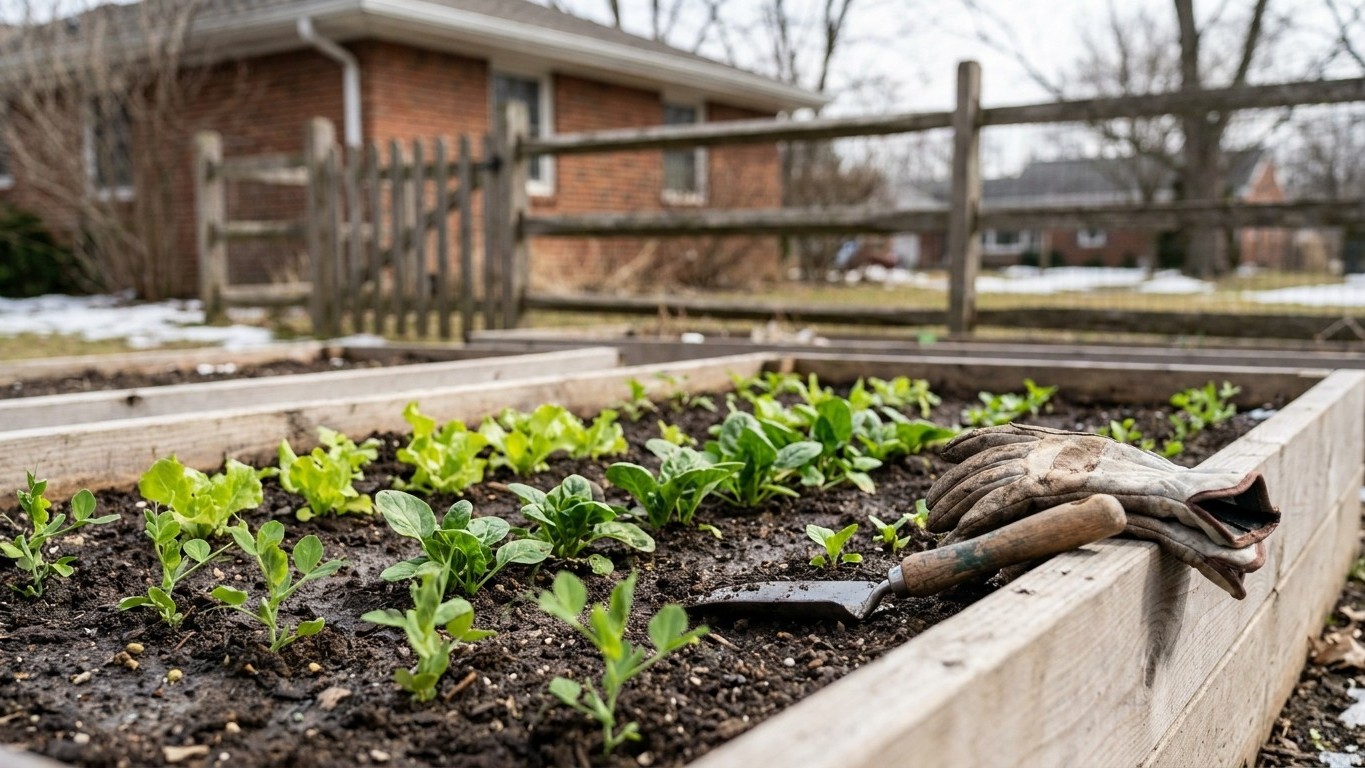

Peas, spinach, lettuce, kale, radishes, turnips and onion sets can go into North Carolina soil in March, along with potatoes once the ground is workable. What can’t go in yet is anything warm-season: tomatoes, peppers, beans and squash need soil that’s stayed reliably warm, and in the Piedmont that point doesn’t usually arrive until the last frost window closes, somewhere between March 23 and April 5.
What goes in the ground in March

The calendar says March. Your soil thermometer says something else, and the thermometer wins. Frost dates are built from air temperature records, not soil temperature, and a mild afternoon that feels like spring can sit over ground that’s still cold four inches down, right where seeds and roots actually live. That gap is why the same planting list can succeed in one March and rot in the next.
For Charlotte, sitting in the Piedmont, NOAA’s 1991-2020 climate normals put the last spring freeze in the 30-70% probability band between March 23 and April 5. That means for a good chunk of March, the region is still inside frost territory, not past it. Anything planted before that window closes is a bet against a cold snap, and it’s a bet the garden loses more often than gardeners like to admit.
What’s safe now
Cold-hardy crops don’t care much about that window. Spinach, lettuce, kale, collards, turnips and radishes can be direct-sown as soon as the soil breaks apart in your hand instead of clumping. Peas go in early too, since cool, damp soil is exactly what they want. Onion sets and onion or leek transplants can go in the ground now, and seed potatoes can be planted once the soil is dry enough to work without compacting it into mud. Asparagus crowns and bare-root rhubarb also belong on this month’s list, along with any dormant fruit trees, brambles or bare-root perennials still waiting to be planted.
What’s still a gamble
Tomatoes, peppers, eggplant, squash, cucumbers, beans and melons all need both the air and the soil to have warmed past the point where a March 23-April 5 freeze is still plausible. Setting these out early doesn’t just risk one bad night. Even if a plant survives a light frost, cold soil around its roots stalls growth for weeks, so an “early” transplant often ends up smaller than one started on schedule.
| Category | Examples | March status |
|---|---|---|
| Hardy, direct-sow now | Spinach, lettuce, kale, peas, radishes, turnips | Safe |
| Alliums and roots | Onion sets, seed potatoes, leeks | Safe once soil is workable |
| Bare-root and dormant | Asparagus crowns, rhubarb, fruit trees, brambles | Safe, weather permitting |
| Warm-season | Tomatoes, peppers, squash, beans, melons | Gamble until soil warms past the frost window |
The Piedmont numbers above are anchored to Charlotte. Head west into the Blue Ridge and that frost window slides several weeks later; drop into the coastal plain and it moves earlier. Nothing here should be read as a fixed date for the whole state.
What to start under cover
Seed packets like to tell you to start indoors “6-8 weeks before your last frost,” which only works if you know your last frost. Using the Piedmont range of March 23 to April 5, counting back 6 to 8 weeks lands somewhere in late January to early February for tomatoes. If you missed that window, March isn’t a dead end. Seedlings started now will simply be ready for a later transplant date, pushed toward late April or May instead of the earliest possible slot after frost.
Peppers and eggplant run on a longer clock, generally 8 to 10 weeks before transplanting, which puts their ideal start even earlier than tomatoes. Starting them in March means accepting a later transplant, not a smaller plant forced to catch up. Vining, fast-growing warm-season crops like squash, cucumbers and melons work the opposite way: they only need about 3 to 4 weeks of head start before going outside, so starting them indoors in mid-to-late March lines up well with an April or early May transplant once soil has warmed.
The two ways this goes wrong both come from ignoring that arithmetic. Start too early, using a generic date instead of your own frost window, and you end up with tomato seedlings that are leggy, rootbound and stressed weeks before it’s safe to put them outside, a plant that never quite recovers its vigor. Start too late, and warm-season crops with long maturity times run out of frost-free days before they finish producing. The fix is the same in both directions: work backward from your actual last-frost range, not from a date printed on a seed packet grown somewhere else.
What is ready to pick
March harvests come almost entirely from what survived the winter, not from anything planted this season. Kale, collards and leeks that were left in the ground through the cold months are often at their sweetest right now, since a hard freeze converts starches to sugars in these crops. Spinach and lettuce started under a cold frame or low tunnel in late winter can be cut a leaf or two at a time well before open-ground plantings catch up.
Sprouting broccoli, if it overwintered, may just be starting to send up its first small heads, and those should be cut while tight, before the buds loosen and yellow flowers appear. Anything grown as microgreens or sprouts indoors keeps producing on a rolling basis regardless of what’s happening outside, and it’s one of the few crops that goes from seed to plate in under two weeks this time of year.
The other half of March’s food supply is sitting in storage, not in the garden. This is the month to go through stored potatoes, onions and winter squash and pull anything that’s gone soft, sprouted heavily or started to smell. A potato with a few small sprouts is still fine to cook once they’re rubbed off; a soft, wrinkled one is on its way to rot and should come out before it spreads to the rest of the bin. Onions that have started to sprout green shoots from the top are past their storage life but can still be used quickly, or replanted for scallions.
The jobs that matter this month
March is a deadline month more than a planting month, and several of these deadlines are unforgiving. Dormant pruning of fruit trees, grapevines and cane fruits needs to happen before buds swell and break; prune after that point and you’re cutting into active growth, which stresses the plant and reduces the coming season’s fruit. Apples, pears and most brambles should be finished before new leaf tissue shows.
Soil and structure
Any soil test worth having should be done now, before amendments need time to work into the root zone ahead of spring planting. If beds were left uncovered over winter, this is also the point to turn compost into piles that have gone dormant in the cold, since warming temperatures restart the microbial activity that breaks material down. Raised beds, trellises and fencing that took damage over winter should be repaired now, before plants are in the ground and a repair means stepping on soil you’d rather not compact.
Planning and tools
Seed catalogs move fast in late winter and early spring, and popular varieties, especially disease-resistant tomatoes and heirloom types, sell out before the season gets going. If seed hasn’t been ordered yet, March is close to the last comfortable window. It’s also worth sketching out crop rotation for the coming season while last year’s layout is still fresh, since planting the same family in the same bed two years running invites the pests and diseases that specialize in it. Hand tools and pruners benefit from a sharpening and a wipe-down with oil before the season’s heavy use starts, and it’s a fifteen-minute job that saves frustration all spring.
What not to do in March
The most common mistake this month isn’t ignorance, it’s optimism. A run of 70-degree afternoons convinces gardeners the frost danger has passed, and warm-season transplants go into ground that’s still cold at root depth. The plants may survive the air temperature and still stall for weeks, because cold soil slows nutrient uptake regardless of how warm it feels standing next to it. Wait for the soil, not the forecast.
A related error is pulling row covers, cold frames and mulch off too soon after a mild stretch. Since the last frost in the Piedmont can run as late as April 5, a week of nice weather in early or mid-March is not proof the risk has passed. Uncovering hardy crops early doesn’t usually kill them, but it does expose tender new growth to a setback that costs more time than leaving the cover on for another week or two would have.
Nitrogen timing trips people up too. Feeding a heavy dose of nitrogen to dormant or barely-waking perennials pushes soft, fast growth that’s more vulnerable to a late freeze, not less. It’s better to hold off on feeding fruit trees and perennials until they’ve clearly broken dormancy. And working wet soil, whether digging beds or tilling, compacts the structure you’re trying to build; if a handful of soil forms a muddy ball instead of crumbling, it’s not ready yet, no matter how much you want to get started.
Checking this against your own county
Everything above is anchored to Charlotte and the Piedmont, and North Carolina spans USDA hardiness zones 5b through 8b, a range built on winter’s extreme minimum temperature rather than spring timing. That spread matters here more than in most states: elevation in the Blue Ridge pushes frost dates weeks later than the Piedmont, while the coastal plain typically clears frost earlier. A statewide month is a starting point, not an instruction for your specific yard.
For county-level planting calendars and frost data tuned to your actual location, the NC State Extension service maintains local resources through its county offices.
Common questions
Can I plant tomatoes outside in North Carolina in March?
Not safely in most of the state. The Piedmont’s last frost window runs March 23 to April 5, and tomatoes set out before that closes risk a freeze that can kill or badly set back the plant.
What vegetables can go in the ground earliest in March?
Peas, spinach, lettuce, kale, radishes and turnips tolerate cold soil and light frost, along with onion sets and seed potatoes once the ground is workable.
Is it too late to start tomato seeds indoors in March?
No, but it shifts your transplant date later, generally toward late April or May rather than right after the last frost, since tomatoes typically need 6 to 8 weeks indoors before going out.
How do I know if my soil is ready to work in March?
Squeeze a handful. If it crumbles apart, it’s ready; if it forms a muddy ball, it’s still too wet, and working it now will compact the structure for the rest of the season.