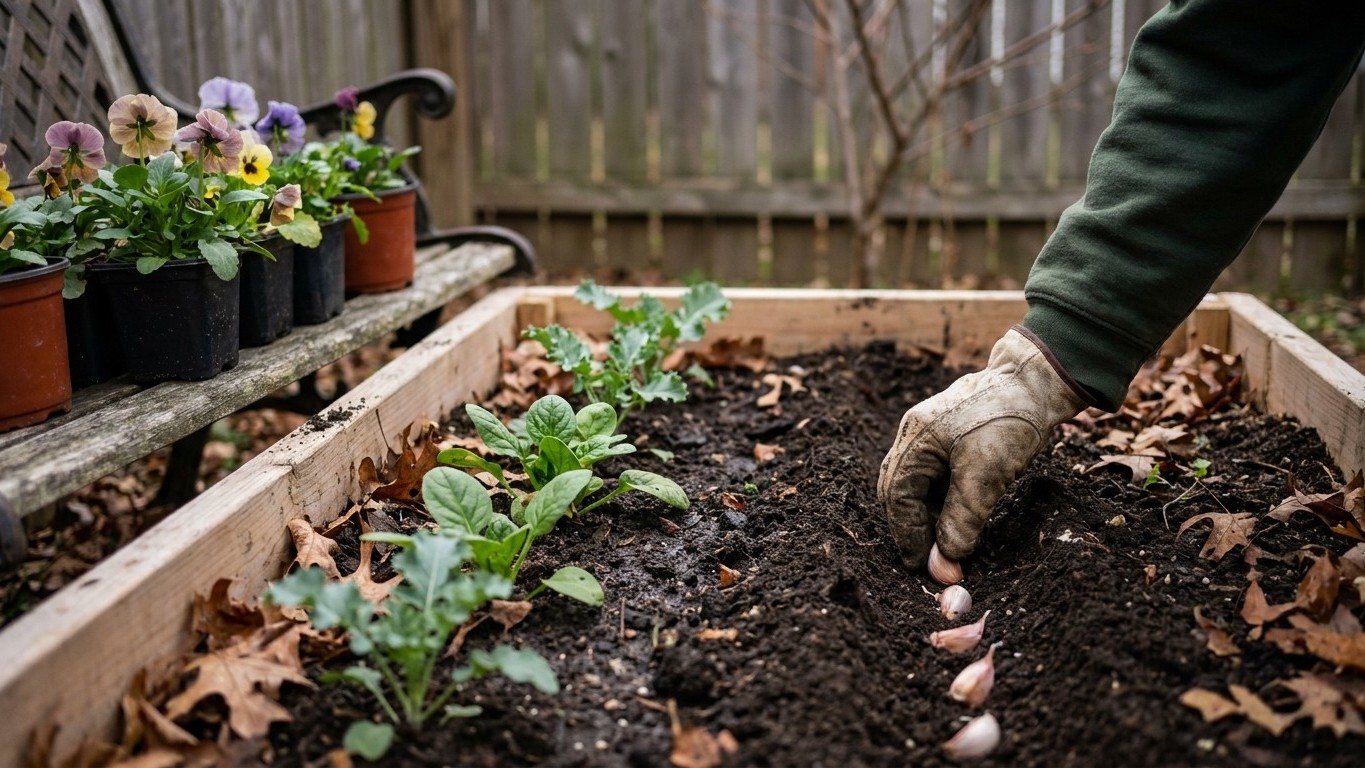

October is one of the busiest planting months in North Carolina’s Piedmont, not one of the leanest. Garlic, shallots, spinach, kale, lettuce, and spring bulbs all go into the ground now, while soil still holds summer warmth and the first frost sits weeks away. Trees, shrubs, and cover crops belong on this month’s list too. The exact timing shifts with elevation and distance from the coast, but across most of the state, October rewards a gardener who plants rather than one who waits for spring.
What goes in the ground in October

Soil temperature drives what survives here, not the date on the calendar. Charlotte’s average first fall frost lands between October 30 and November 8, based on NOAA’s 1991-2020 climate normals for the Piedmont. That means most of October runs frost-free across the belt that includes Charlotte, Greensboro, and Raleigh, and a gardener with four or five weeks of open ground ahead can plant with real confidence.
The anchor crops for this month
Garlic and shallots carry October. Cloves go into loosened, well-drained beds any time from early in the month through the weeks that follow, and they need that stretch of cooling weather ahead of them to size up by early summer. Spinach, lettuce, arugula, and mustard greens germinate fine in soil that has cooled from summer highs but hasn’t gone cold, and most mature in 30 to 45 days, fast enough for a real harvest before a hard freeze shuts things down. Kale and collards planted now tolerate frost outright and often taste better after a light freeze softens their bitterness.
- Radishes and turnips: ready in three to six weeks, a safe fit for early or mid-October sowing
- Carrots and beets: need closer to two months, a tight fit unless sown in the first week or two of the month
- Daffodils, crocus, and hyacinth: go in once soil cools below roughly 60°F, usually mid-to-late October in the Piedmont
- Trees, shrubs, and perennials: root growth continues in soil warmer than the air well into November
What doesn’t belong in this month’s list: tomatoes, peppers, squash, beans, and anything else needing 60 or more warm days to produce. There simply isn’t enough frost-free runway left, no matter how mild the afternoons feel.
What to start under cover
Counting backward from frost works better than counting forward from a sowing date, because the frost window is what actually ends the clock. Charlotte’s first fall frost falls between October 30 and November 8. Subtract the number of days a crop needs to mature, and that number tells you the last responsible sowing date.
Cold frames, row covers, and low tunnels
A lettuce or spinach variety that matures in 30 days can go into a cold frame or under a low tunnel as late as the first week of October and still produce a harvest right through that frost window, since both crops shrug off the earliest freezes anyway. Push a 45-day crop into a plastic-covered tunnel and it can run another two to three weeks past frost before growth stalls from shortening daylight rather than cold. Kale, mustard, and Asian greens started under row cover now often outlast anything left in the open ground, because the cover buffers overnight lows enough to keep leaves growing well past the point where uncovered plants would freeze solid.
The two ways this goes wrong are predictable. Start seeds too early in warm, humid cover and seedlings stretch into thin, leggy transplants that flop over once real cold arrives. Start too late and the crop hits November’s short days before it has built enough leaf area, so it sits and barely grows no matter how warm the tunnel stays underneath. The middle two weeks of the month are the sweet spot for anything meant to size up before daylight gets too short to matter.
What is ready to pick
October is harvest season as much as planting season. Sweet potatoes need digging before a hard frost kills the vines, since frost-damaged tops let soil moisture reach the roots and start rot within days. Winter squash and pumpkins left on the vine through most of the month keep hardening their skins, which is exactly what makes them store well.
How to tell it’s ready
A thumbnail pressed into winter squash rind should leave no mark once it’s cured; if the nail sinks in easily, give it more time on the vine. Pumpkins are ready when the stem starts to dry and cork over and the rind holds a hollow sound when tapped. Sweet potatoes should be dug on a dry day, handled gently to avoid bruising, and cured somewhere warm for about a week before storage.
- The last tomatoes and peppers, picked ahead of frost even if slightly underripe
- Fall greens sown in late summer: kale, collards, spinach, lettuce
- Apples in the mountain counties, where the season runs later than in the Piedmont
- Herbs like sage, thyme, and rosemary, which only get better with the first cool nights
Anything still in storage from summer, onions, garlic, and earlier squash, deserves a check now. Soft spots, sprouting, or a sweet smell mean that item gets used first, not left to spoil the rest of the batch.
The jobs that matter this month
Frost timing decides more of this month’s task list than anything else. With Charlotte’s first frost landing between October 30 and November 8, harvest or protect tender crops on that schedule rather than guessing by feel. Row cover or an old sheet thrown over beds on the coldest forecast nights buys another week or two for peppers and tomatoes that haven’t quite finished.
Soil, mulch, and cover crops
Bare beds left empty over winter lose structure and nutrients to rain. Sowing winter rye or crimson clover now, while soil is still warm enough to germinate, holds that ground and adds organic matter back in spring. This is also the month to test soil pH and add lime if needed, since lime takes months to shift acidity and won’t be ready in time if it goes down in late winter instead.
Protecting what’s already in the ground
Newly planted garlic and bulbs need a heavy mulch layer before the ground goes cold, insulating roots through winter freeze-thaw cycles that otherwise heave cloves right out of the soil. Perennials divided or moved this month should get the same treatment. Clean up spent plant debris from summer crops promptly. Old tomato and squash vines left in place over winter give pests and disease somewhere to overwinter, which shows up as next year’s problem.
- Stake tall fall brassicas before winter winds knock them sideways
- Keep watering new transplants on a steady rhythm until roots establish, even as air cools
- Move or plant trees and shrubs while soil stays warmer than the air
- Check stored crops weekly for the first signs of rot
What not to do in October
A stretch of warm afternoons in early October tempts a lot of gardeners into putting out tomato or pepper transplants, betting the mild weather holds. It won’t, not long enough to matter. Charlotte’s frost typically lands by early November, and a plant needing 60-plus warm days simply runs out of season regardless of how pleasant the air feels on a given day.
Fixable mistakes
Feeding beds a high-nitrogen fertilizer this late pushes soft new growth right when plants should be hardening off for winter. That tender growth is the first thing frost damages, and it weakens the plant heading into cold rather than helping it. Pulling row covers off during a mild afternoon and leaving beds uncovered overnight is another common slip; frost can arrive with little warning inside that October 30 to November 8 window, and one unprotected night undoes weeks of season-extending work.
Leaving sweet potatoes in the ground too long after a light frost kills the vines is a costly wait-and-see move, since rot can set into the tubers underground before the next dig day arrives. And planting spring bulbs while soil is still warm from summer risks premature sprouting that gets damaged by the first real cold snap. Wait for soil to actually cool, not for the calendar to say it should have.
Checking this against your own county
A statewide October is a starting point, not an instruction. North Carolina spans USDA hardiness zones 5b to 8b, and Charlotte’s frost dates describe the Piedmont, not the whole state.
| Region | General frost timing | What that means for October |
|---|---|---|
| Piedmont (Charlotte, Raleigh, Greensboro) | First frost late October to early November (NOAA normals for Charlotte) | Most of the month is frost-free; plant through it |
| Blue Ridge Mountains | Frost typically arrives earlier than the Piedmont | Shift fall plantings toward early October; harvest tender crops sooner |
| Coastal Plain | Frost typically arrives later than the Piedmont | An extra week or two of safe planting time for quick-maturing greens |
For county-specific frost data and a state planting calendar built for these differences, North Carolina State Extension is the reliable next stop.
Common questions
Is it too late to plant garlic in North Carolina in October?
No. October is prime garlic planting time across the Piedmont, since cloves need the cold months ahead to develop into full bulbs by early summer. Coastal areas can push planting slightly later; mountain counties should plant on the earlier side of the month.
Can I still plant grass seed in October in North Carolina?
Cool-season lawns (fescue) do well seeded in October, since soil is warm enough for germination and cooler air reduces the stress young grass faces. Warm-season lawns (Bermuda, zoysia) should not be seeded now; they need a full warm season ahead to establish.
What vegetables can handle a light frost in North Carolina?
Kale, collards, spinach, and Brussels sprouts all tolerate light frost without damage, and many gardeners find the flavor improves afterward. Lettuce and Asian greens survive a light frost but do better with row cover protection once frost becomes a regular overnight event.
When exactly will the first frost hit my area?
For the Piedmont around Charlotte, NOAA’s 1991-2020 normals put the first fall frost between October 30 and November 8. Mountain counties typically see frost earlier than that window; the coastal plain typically sees it later. Check county-level data through NC State Extension for a closer estimate.