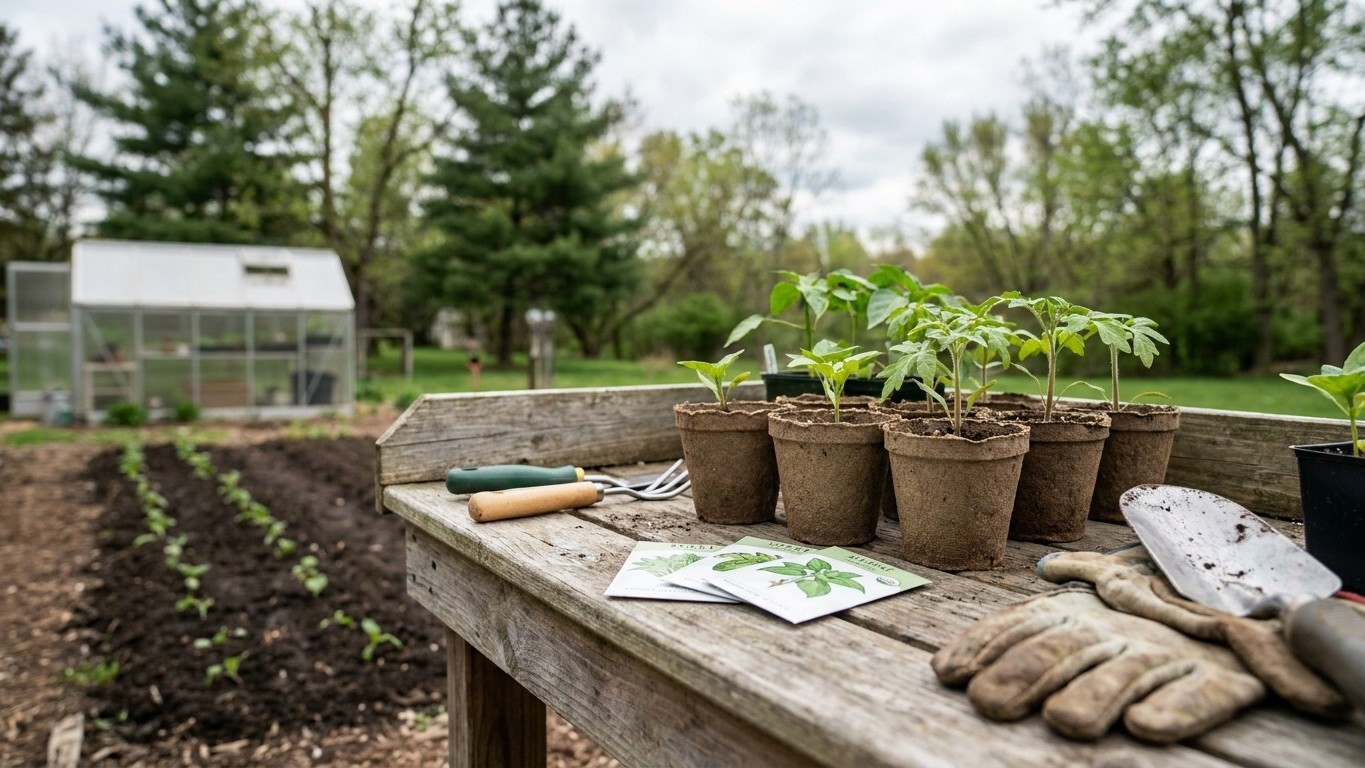

April in North Dakota sits weeks before most gardens can safely take tender crops outdoors, since the reference frost window runs May 4 to May 15. This month belongs to hardy greens, alliums, and peas once soil is workable, plus indoor seed-starting, dormant pruning, and bed prep. Warm-season planting waits.
What goes in the ground in April

Soil temperature decides this month, not the calendar. North Dakota’s last spring frost falls between May 4 and May 15 at the reference weather station, which means April sits three to six weeks ahead of that date depending on where in the month you’re standing. Air can feel mild by mid-month while six inches down the ground is still cold and wet from snowmelt. That gap between what your skin feels and what a seed feels is where most spring planting mistakes start.
What actually tolerates this window are the crops bred for cold soil and light frost. Peas go in as soon as the ground can be worked, even if a hard freeze is still weeks away, because pea seed germinates in soil as cool as 40 F and the seedlings shrug off a light frost. Spinach and other cold-hardy greens follow the same logic: sow them once the top few inches of soil crumble instead of clump, and they’ll germinate before the last frost date arrives, not after.
Onion sets and shallots can go in during this stretch too, since alliums root in cold soil and actually prefer an early start. Toward the back half of the month, once the ground has drained and warmed a little, seed potatoes can go in as well, particularly in the southern part of the state where soil dries out sooner than in the north.
Bare-root planting is the other big April opportunity. Fruit trees, berry canes, and asparagus crowns are typically planted while they’re still dormant and before buds break, and April is often the last comfortable window for that in a state where the ground has only recently thawed. Rhubarb divisions go in the same way, straight into prepared soil while the crown is dormant.
What doesn’t belong outdoors yet: tomatoes, peppers, beans, corn, squash, and anything else that dies at 32 F. Those wait for the calendar to catch up to the frost window, not the other way around.
What to start under cover
Work backward from the last frost window of May 4 to May 15 and the arithmetic tells you what to start now. Long-season, heat-loving crops like tomatoes and peppers need six to eight weeks indoors before they’re ready to transplant outside. Counted back from early-to-mid May, that puts their ideal start in late February or March, which means by April these should already be growing indoors, not just getting sown. If they haven’t been started, an April sowing still works. Expect smaller transplants at frost-out time, and lean toward earlier-maturing varieties to make up the lost weeks.
Squash, melons, and cucumbers run on a shorter clock, needing only three to four weeks under cover before they go out. That makes early-to-mid April the right window to start them indoors for a transplant date right around the last frost, since starting any earlier risks vines outgrowing their pots before the soil outside is warm enough to receive them.
The two ways this goes wrong both come down to timing. Start too early and you get leggy, rootbound seedlings straining against a small pot weeks before the ground is ready, stretching toward light and losing vigor. Start too late and North Dakota’s frost-to-frost season, roughly four and a half months between the May frost window and the September 25 to October 5 fall frost window, doesn’t leave enough runway for a full harvest, especially with longer-season peppers and tomatoes.
A cold frame or unheated hoop house can bridge the gap for hardy greens and brassica transplants, letting you start lettuce, kale, and cabbage a little earlier than an open bed would allow without the light and space demands of full indoor growing.
What is ready to pick
April harvests outdoors in North Dakota are thin, and it’s worth saying so plainly rather than dressing up an empty garden. Most of the state is still working through the last of winter’s grip on the soil, and anything that survived the winter in the open ground, overwintered kale, leeks left under mulch, is the extent of what’s coming out of a bed this month.
Indoors and under cover is where the real April harvest happens. Cold frames maintained through the winter often carry spinach, mache, or hardy lettuce that can be cut through this month, especially in the southern part of the state where sun angle and slightly milder temperatures give cold frames a head start. Sprouts and microgreens grown on a windowsill or under a grow light fill the gap for households wanting something fresh weekly without depending on the outdoor calendar at all.
Storage crops need attention now too. Potatoes, winter squash, and onions held over from the previous season are entering their riskiest stretch, since warming temperatures in a garage or root cellar speed up sprouting and rot. Check squash for soft spots near the stem, onions for any that have gone soft or started sprouting green shoots, and potatoes for wrinkled skin or dark eyes pushing out. Pull and use anything showing early signs before it spreads to the rest of the stored crop.
Rhubarb forced indoors in a dark, cool space can produce pale, tender stalks well ahead of what the outdoor plant offers, giving a household its first taste of the new season before the garden itself has caught up.
The jobs that matter this month
April in North Dakota is a working month even though the garden itself looks bare. Dormant pruning of fruit trees, grapevines, and berry canes needs to wrap up before buds break, and once leaves start pushing out, the window for clean cuts without stressing the plant closes. If pruning hasn’t happened yet, this is the last reasonable stretch to get it done.
Seed ordering deadlines are tightening by this point too. Popular varieties, especially short-season tomatoes and cold-hardy greens bred for northern climates, tend to sell out earlier each cycle, and ordering now instead of waiting avoids settling for whatever’s left on the shelf.
Soil work pays off disproportionately this month. A soil test taken as soon as the ground is workable gives time to correct pH or nutrient gaps before planting starts in earnest, and turning over the compost pile now, once it’s thawed enough to fork through, speeds up the breakdown that will feed beds later in the season.
Tool maintenance is easy to skip and expensive to skip wrong. A dull hoe or pruner damages plant tissue instead of cutting it cleanly, inviting disease into a wound that a sharp blade would have avoided. Cleaning and sharpening now, before the rush of planting season, means tools are ready when the work actually starts.
Bed edges, raised bed frames, and garden fencing often take a beating over winter from freeze-thaw cycles and snow load. Walking the garden now to repair loose boards, sagging wire, or heaved edging saves a scramble later when there are seedlings waiting to go in and no time to fix infrastructure.
What not to do in April
The most common April mistake in North Dakota is trusting the air instead of the soil. A run of 60-degree afternoons can feel like spring has arrived, but the ground underneath is often still in the 40s, and tender transplants set out during that warm stretch either sit stalled or die outright when a frost follows, which it usually does before the May 4 to May 15 window closes.
Uncovering perennials, roses, or strawberry beds too early after a mild spell is the second trap. Winter protection removed in early April, followed by a return to freezing overnight lows, which is common this early in the state, can undo months of protection in a single cold night. Leave mulch and covers on until the freeze risk has genuinely passed, not just until the first warm week shows up.
Nitrogen fertilizer applied too early is the third mistake worth naming. Cold soil doesn’t let plant roots take up nitrogen efficiently, so an early feeding either washes away with spring rain and snowmelt runoff or sits unused until the plant can access it, at which point a second dose on top of the first pushes growth too fast and too soft right when a late frost could hit it hardest. Wait until soil has warmed and plants are actively growing before feeding.
Working wet soil rounds out the list. Digging or tilling ground still saturated from snowmelt compacts it, squeezing out the air pockets roots need later. Wait for soil to crumble rather than clump before turning it.
Checking this against your own county
A state-wide April guide is a starting point, not a set of instructions for your specific yard. North Dakota’s elevation changes, the difference between the Red River Valley in the east and the higher ground farther west, and the gap between northern counties near the Canadian border and southern counties closer to South Dakota can shift frost windows by weeks in either direction. A garden at higher elevation or in a low-lying frost pocket will run later than the reference dates here, sometimes by ten days or more.
For a planting calendar built around your specific county, check the North Dakota State University Extension service, which tracks local conditions and variety recommendations county by county.
Common questions
Can I plant tomatoes outdoors in North Dakota in April?
No. April sits well ahead of the last frost window of May 4 to May 15, and tomatoes die at freezing temperatures. Start seed indoors this month if it hasn’t happened already, and hold transplants until the frost window has passed.
What’s the earliest crop I can direct-sow outdoors in April?
Peas and cold-hardy greens like spinach are typically the earliest, since they germinate in cold soil and tolerate a light frost. Sow them as soon as the ground can be worked rather than waiting for a specific date.
Is it too late to start seeds indoors in April for a North Dakota garden?
For quick-maturing crops like squash and cucumbers, no, April is close to ideal since they only need three to four weeks under cover. For tomatoes and peppers, which need six to eight weeks, an April start means smaller transplants and shorter-season varieties may fare better.
How do I know if my county’s frost dates differ from the state average?
Elevation, latitude within the state, and proximity to large water bodies all shift frost timing. The North Dakota State University Extension service publishes county-level planting information that accounts for these local differences.