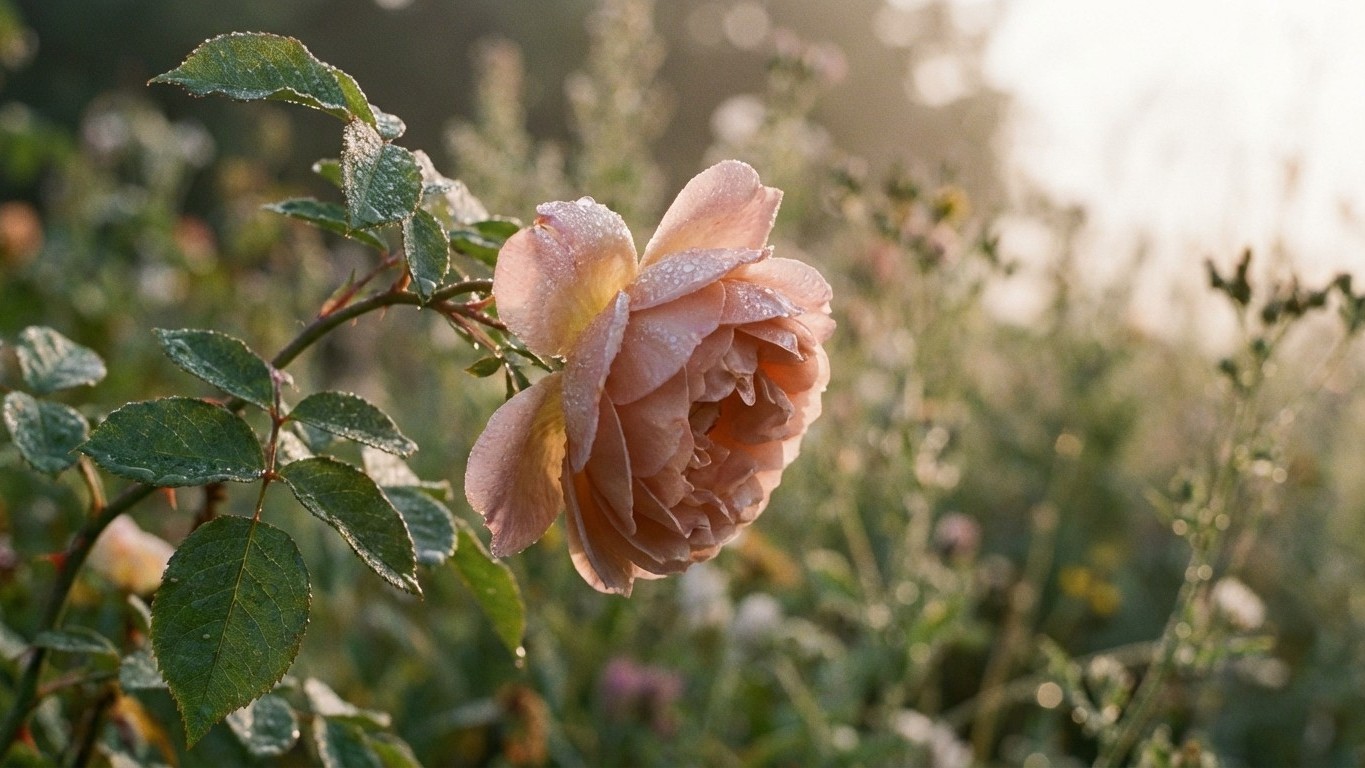

Rugosa roses, the Canadian Explorer and Parkland series, and a handful of tough shrub roses on their own roots come through North Dakota winters with little help. Hybrid teas, most floribundas and many English roses do not, even though garden centers stock them every spring. The split comes down to how cold the canes get and what part of the plant regrows afterward. What follows is a shortlist of named roses that hold up, the ones to skip, and what to read on the tag. For the broader how-to, see our guide to growing roses in North Dakota.
Which roses survive a North Dakota winter
The state sits in USDA zones 3b to 4b on the 2023 USDA Plant Hardiness Zone Map. That system rests on a single variable, the average annual extreme minimum temperature. It says nothing about wind, snow depth or how often a January thaw is followed by a hard refreeze, and all three decide whether a rose lives. A cane buried under snow sits at a fairly steady temperature. The same cane sticking up above the drift takes the full cold and the wind with it.
Frost timing matters too, though in a different way. At the Fargo reference station, the 32°F freeze probabilities in the NOAA NCEI U.S. Climate Normals put the last spring frost between May 4 and May 15, and the first fall frost between September 25 and October 5. Those are airport figures. Rural and suburban gardens can freeze later in spring and earlier in fall than the airport, and higher ground runs colder still. A rose that keeps pushing soft growth into October gets caught by that early fall freeze, which is why plants bred for short seasons shut down on time.
Which types of rose clear zone 3b to 4b?
Rugosas and their hybrids sit at the cold end of the range. They are wrinkle-leaved, thorny, and tolerant of wind, sand and road salt. The Explorer series was bred in Canada for prairie winters and includes shrubs and climbers. The Parkland series, from Morden, Manitoba, follows the same idea. The native wild prairie rose, Rosa arkansana, is the state flower and needs no help at all. Tough own-root shrub roses belong in this group, because if the top dies back, what regrows is the rose you paid for.
Where do hybrid teas fall?
At zone 5 and below they need protection every fall, and in the colder parts of the state even protected plants often lose the canes. A hybrid tea in North Dakota is a yearly commitment, not a plant you set and forget.
Named roses that hold up here
Buy by name rather than by category. The names below are widely sold, and each has a track record in cold-winter gardens.
Which shrub roses are the safest bets?
Therese Bugnet is a hybrid rugosa bred in Alberta. It makes a tall, arching shrub with reddish canes and fragrant, double pink flowers. In a normal winter it loses little more than the tips of its canes. Hansa is a true rugosa with double, magenta-purple flowers, a strong clove scent and big orange-red hips in fall. It takes wind, sandy soil and salt spray from a shoulder-high snowplow ridge without complaint.
Prairie Joy, a pink double from the Parkland series, was bred in Morden for exactly this climate and rarely needs more than a spring trim. William Baffin, an Explorer climber, is one of the hardiest climbing roses commonly sold for cold regions. It will cover a fence or a pillar and usually keeps its canes alive above the snow line. Henry Hudson, a compact white rugosa hybrid, suits a small yard where Hansa would be too big.
What about Knock Out and New Dawn?
Knock Out is stocked in every garden center, and its tag is usually written for warmer zones than most of North Dakota. In practice it dies back hard, often to the snow line or to the ground. It then regrows from the base and blooms on that new wood the same summer, and it keeps blooming until frost. That makes it a workable perennial-style shrub here, as long as you expect a smaller plant each spring than the tag photo shows.
New Dawn is the borderline case on this list. This pale pink climber is tough and disease resistant, but its long canes are not reliably hardy in a North Dakota winter. If you grow it, lay the canes down and cover them before the ground freezes hard. Left standing on a trellis, they often die back, and the plant restarts from the base with fewer flowers.
Sold here, but not for this zone
Garden centers stock roses nationally, so the shelves fill with plants bred for Oregon, Georgia and everywhere between. Hybrid teas are the best-known group. Peace, Mister Lincoln and Double Delight are classics that sell well, and none of them is a dependable perennial in zones 3b to 4b. Grandifloras and most floribundas behave the same way. The flowers are beautiful, and the winter record is poor.
Two other groups deserve a second look. Many David Austin English roses are only marginally hardy here, so a tag that sounds promising may still be too mild for your garden. Drift roses, the low groundcover types, are sold alongside Knock Out and often share its habit of dying back in cold winters, which is fine if you want a shrub that rebuilds every year but disappointing if you wanted a mound that lasts.
Rose bags and pre-leafed pots tend to show up in stores in early spring, when frost is still on the calendar for weeks. A plant that has already broken dormancy has soft growth that the next freeze can burn. Check the stems before buying. Firm green canes are fine, while pale, stretched shoots mean the plant has been sitting in warm storage.
If you buy a tender rose anyway, plan the protection before you plant it. After the ground begins to freeze in fall, mound soil over the crown, and add mulch or leaves on top. Pull it back gradually in spring, once the hardest freezes are over. Skip this step and the likely outcome is a dead graft union and a plant that never returns.
What to check on the label before buying
Start with the zone on the tag. Anything rated 5 or higher is a gamble here, and a rating of 3 or lower is a good sign. Look for the words Explorer, Parkland or rugosa, which point to breeding for cold. A tag that gives no zone at all often means the rose was bred for the national market, so ask before you buy.
Grade comes next. Bare-root roses are sold in different grades, and the higher grades have more and longer canes than the lower grades. In a short season, a heavier plant has more stored energy to get established before the first fall frost, so it is worth the extra few dollars.
Then find out whether the rose is grafted or on its own roots. A grafted rose is a named variety joined to the roots of a tougher, different rose. The bump where they meet is the graft union, and it is the weak point in cold. If winter kills the top, the shoots that come back are the rootstock, a different rose with different flowers, and the variety you bought is gone. An own-root rose has no such risk, because everything that regrows from the base is the rose on the tag. The colder the winter, the more often the top dies, so choose own-root plants when the label says so. Most Explorer and Parkland roses are sold that way.
Checking this against your own county
The frost dates above are for the Fargo reference station, and the zone range of 3b to 4b covers a whole state. Your yard can sit a zone colder than a town thirty miles away, and low spots or open ground can freeze earlier in fall. Call your county Extension office before you buy a rose rated near the edge of your zone. North Dakota State University Extension has county offices across the state, and the staff there know which roses have held up locally and how snow cover usually behaves in your area.
Common questions
Do Knock Out roses survive North Dakota winters?
They survive as a root system and regrow from the base, but the canes usually die back to the snow line or the ground. Because they bloom on new wood, they still flower the same summer. Expect a smaller shrub each spring, and mulch the crown in fall.
Can I grow hybrid teas in North Dakota?
You can, with work. They need soil mounded over the crown every fall and a gradual uncovering in spring, and some canes will still die. A grafted plant risks losing the named variety altogether if the union freezes, so own-root plants are the better bet where they are offered.
Do rugosa roses need winter protection?
Hansa and other true rugosas generally do not. They take wind, salt and deep cold. Hybrid rugosas such as Therese Bugnet may lose some cane tips, which you trim in spring once you can see which wood is alive.
Is an own-root rose really hardier than a grafted one?
The roots are not hardier, but the plant is more dependable. If the top freezes to the ground, an own-root rose regrows as the same variety, while a grafted rose may come back as its rootstock. In zones 3b to 4b, that difference often decides whether a rose lasts.