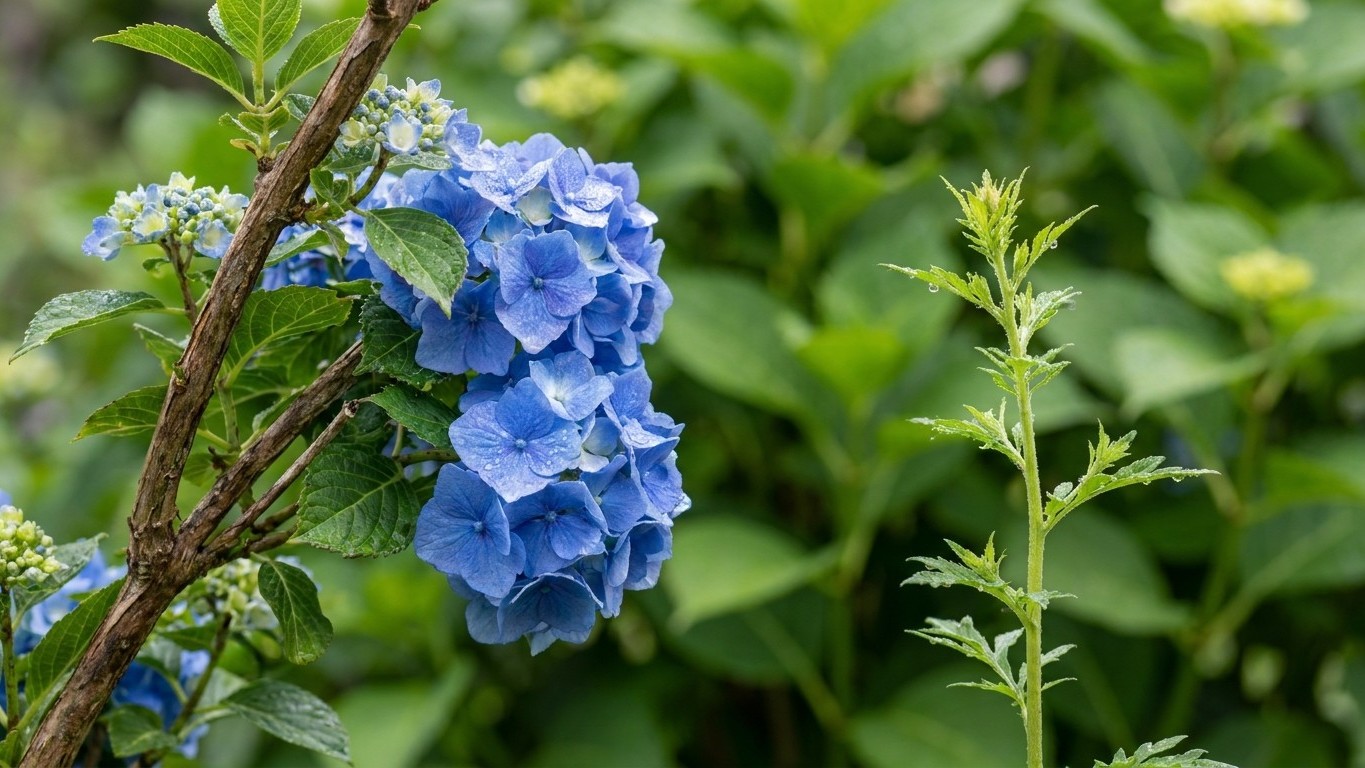

Panicle and smooth hydrangeas usually get through a North Dakota winter with a mulched crown and a deep drink before the ground freezes. They may lose stem tips or die to the ground, but they flower on new growth, so they still bloom. Bigleaf hydrangeas, and oakleaf here, are the ones that need real protection. Their flower buds ride on last year’s stems, and a bare stem in a hard winter often means a healthy-looking shrub with no flowers.
What this comes down to in North Dakota

At Fargo, the reference station, the first fall frost arrives between September 25 and October 5, and the last spring frost falls between May 4 and May 15 (NOAA NCEI U.S. Climate Normals). Winter protection has to be in place after that first frost and before the ground locks up, and it stays until the spring window has mostly passed. Gardens outside the airport can see the last spring frost one to two weeks later and the first fall frost one to two weeks earlier, so the protected season is longer than those dates suggest.
The state sits in USDA hardiness zones 3a to 4b. That system rests on one number, the average annual extreme minimum temperature, so it says how cold the worst night of a typical year gets and nothing about wind, snow depth or how long the cold lasts. Those three things decide most winter losses.
Which hydrangeas need winter protection in North Dakota?
It depends on where the flower buds form. Types that bloom on new wood can lose every stem above the snow line and still flower the next summer. Types that bloom on old wood cannot.
| Type | Flowers on | Typical hardiness | What winter does |
|---|---|---|---|
| Panicle | New wood | Zone 3 | Tip dieback, sometimes more; still blooms on new wood |
| Smooth | New wood | Zone 3 | Often dies to the ground; regrows and blooms |
| Bigleaf | Old wood, and new wood on reblooming selections | Zone 5 for most, zone 4 for some | Buds on old stems freeze; few or no flowers |
| Oakleaf | Old wood | Zone 5 | Marginal here; buds freeze in a cold winter |
What actually kills hydrangeas over winter?
Cold alone is only one cause. Dry winter wind pulls moisture out of exposed stems while frozen roots cannot replace it. A warm spell in March can wake buds that a freeze in April then kills. Voles tunnel under mulch and snow and chew bark at the base of the shrub. Roots in an unwatered fall can also be dry when the ground freezes, and dry roots handle cold badly. A good protection plan handles each of these, which is why a pile of leaves alone often falls short.
Working it out for your own garden
A single date on a calendar will not hold up after a move or an odd year. The method below works from the frost window and from where a given hydrangea carries its buds.
How early does a fall planting need to go in?
A new shrub needs roughly six weeks of root growth before the ground freezes. Count backward six weeks from the first fall frost window (September 25 to October 5 at Fargo), which puts the planting deadline at about August 14 to 24. Soil usually stays workable for a while after the first frost, so that count is a cautious one. A shrub planted after that range goes into winter with a small root ball, and frost heave can push it partway out of the ground. For a garden a week or two colder than the reference station, shift the whole range earlier by that much. Spring planting after the May 4 to May 15 window avoids the issue entirely.
Will a named hydrangea bloom after a North Dakota winter?
Take Limelight, a panicle hydrangea rated hardy to zone 3 that blooms on new wood from midsummer into fall. Plant it in late May, after the spring frost window, and it has a full season to root. If the winter kills the stems back to a foot above the crown, the plant regrows and still sets flowers on that new growth. Winter costs height, not blooms. The one risk is the coldest corner of zone 3a, where a mulched crown is cheap insurance.
Now take Endless Summer, a bigleaf selection. It flowers on old wood and on new wood. After a mild winter with the stems alive, it blooms in early summer. After a hard winter that kills the stems to the ground, it depends on new-wood flowering, and those blooms may open late, sometimes only just ahead of the September 25 to October 5 frost window. That is where the line falls: a bigleaf in zone 4 with a cage and a sheltered spot can bloom, while the same shrub in zone 3 gives you green foliage most years. If yours does flower, Why Hydrangeas Are Pink in North Dakota, and How to Turn Them Blue explains the color.
How do you tell winter injury from other problems?
In spring, scratch a small patch of bark on a stem with a thumbnail. Green underneath means the stem is alive. Brown and dry means it is dead. Buds that swell and open are fine, and buds that stay shriveled and black are frozen. New shoots from the base only mean the upper stems died. Bark stripped in a ring at ground level, with narrow gnaw marks, points to voles. Brown, crisp leaf edges on new growth in May usually come from a late frost or from dry wind. Wait until late May or early June before cutting anything off a bigleaf, since buds on the lower stems often break late.
What changes across the state
The 3a to 4b zone range shows how much the state varies. The state has no ocean or Great Lake nearby to moderate its cold, so the differences come from elevation, latitude, wind and snow cover.
The northern tier and higher ground in the north, such as the Turtle Mountains, run colder than the south, and gardens there should plan for the harder end of the range. The land rises toward the west, where drier air and open, windy ground can make exposure matter more. The Red River Valley is flat and open, so wind sweeps snow off the garden. Where snow blows away, the soil freezes deeper and stems stick up into the cold air, which makes cover more important there than the zone alone suggests.
Town and farmstead conditions matter almost as much as geography. A shrub on the south or east side of a house, with a shelterbelt or fence on the windward side, can behave like a plant a full zone warmer. River valleys and wooded draws, like those along the Missouri, can hold a bit more warmth and shelter from wind. A shrub in an open front yard with nothing but lawn upwind will suffer more, even in the same town. The snow itself helps: stems under a foot or more of snow are insulated, and stems above it take the full cold. Choose spots where snow drifts and stays, such as the lee of a fence or building, and put bigleaf there if you grow it at all.
The mistakes this state punishes

A common error is mulching too early. Pile leaves on in September and the soil stays warm, voles move in, and the plant never fully hardens off. Wait until a hard freeze has frozen the top inch or two of soil, which is often late October into November, then mound 8 to 12 inches of shredded leaves or straw over the crown. For a bigleaf, add a wire cage 2 to 3 feet tall around the stems and fill it with the same material. Avoid whole maple leaves, which mat down and hold water. A ring of hardware cloth at the base blocks voles.
Wrapping a shrub in plastic does harm. Plastic traps heat on sunny days and moisture against the stems, and the buds can start growth that the next freeze kills. Burlap breathes and breaks the wind, which is what you want.
Late fertilizer is another quiet loss. Nitrogen after midsummer pushes soft growth that does not toughen before the first frost window. Stop feeding by midsummer. A dry fall is a related problem, so give the shrub a deep soaking in October before the ground freezes.
On the other end of winter, a common mistake is uncovering too soon. A warm week in March tempts people to pull the cage, and a freeze in April then hits buds that have started to wake. Pull the cover in stages once the snow is gone and the hardest freezes have passed, and keep burlap or an old sheet nearby for frost nights up to the last-frost window. Pruning bigleaf stems in fall is the last common mistake, because it removes the buds the shrub is carrying.
Checking this against your county
The Fargo dates are a starting point. Your own garden may run one to two weeks later in spring and earlier in fall, and more at elevation. Your county office at NDSU Extension can tell you the local frost pattern, which varieties have held up nearby, and when the ground tends to freeze where you live. For the broader basics on siting and care, see the state guide to growing hydrangeas in North Dakota.
Common questions
Do panicle hydrangeas need winter cover in North Dakota?
Usually a mulched crown is enough. They are rated for zone 3 and flower on new wood. A foot of shredded leaves over the base and a deep fall watering cover most winters, and a windbreak helps young plants.
When should I put winter protection on and take it off?
Add mulch and cages after the top inch or two of soil has frozen, usually from late October into November. Take them off in stages once the snow is gone and the hardest freezes have passed, then watch for frost up to the May 4 to May 15 window at Fargo, or later in colder gardens.
Why did my hydrangea leaf out but not bloom?
If it is a bigleaf or oakleaf type, the flower buds on last year’s stems probably froze. The plant regrew from lower buds or the base, which gives foliage but no flowers. A cage, a sheltered spot, or a reblooming selection improves the odds.
Can I overwinter a potted hydrangea outdoors?
Roots in a pot are exposed to cold on all sides and freeze much harder than roots in the ground. Move the pot to an unheated garage or shed after the plant goes dormant, water it lightly a few times over winter so the root ball does not dry out completely, and bring it back outside after the spring frost window.