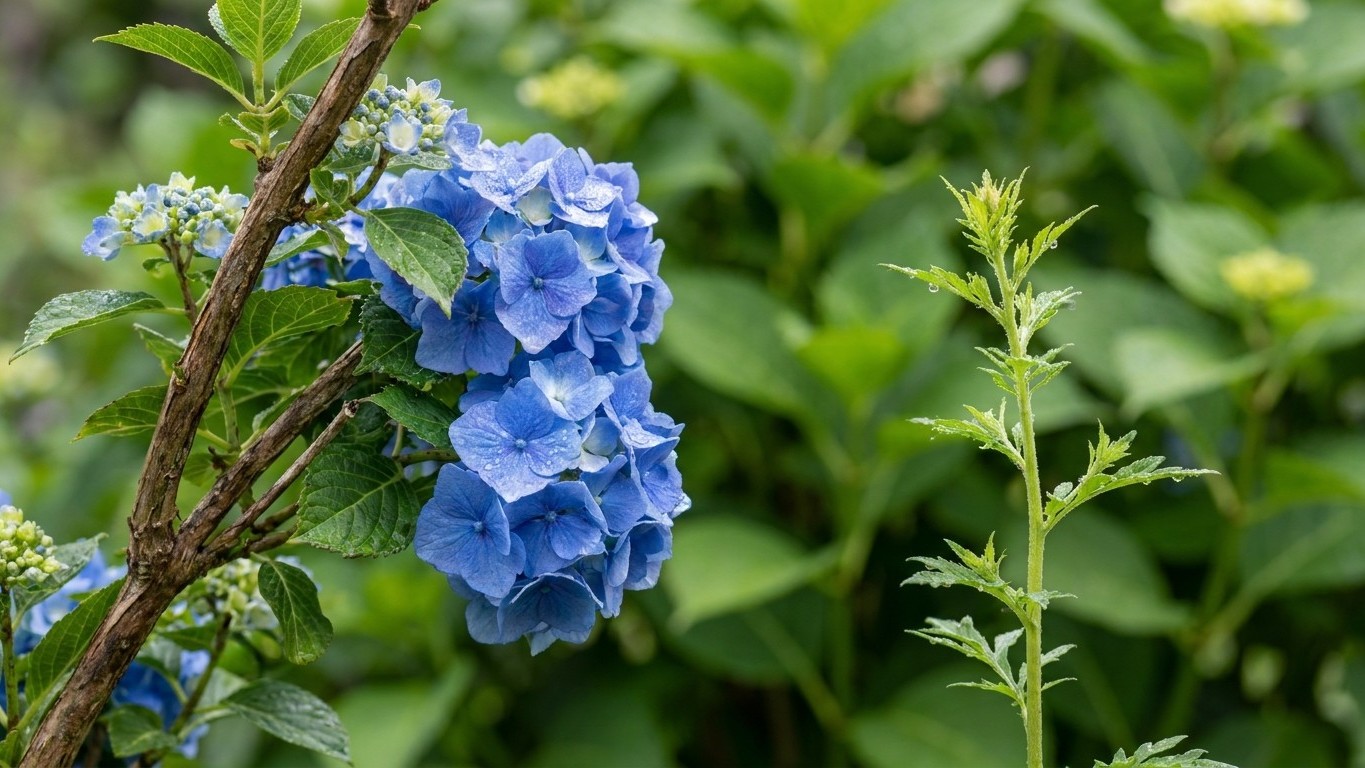

Hydrangeas that bloom on new wood come through North Dakota winters. That means smooth hydrangeas (Annabelle and its relatives) and panicle hydrangeas (Limelight, Quick Fire, Tardiva). Even when a hard winter kills the stems to the ground, they grow back and flower the same summer. Bigleaf types that set buds on last year’s stems are the gamble, because those buds are often what the cold kills.
What this comes down to in North Dakota

At Fargo, the reference city for these dates, the last spring frost falls between May 4 and May 15 and the first fall frost between September 25 and October 5 (NOAA NCEI U.S. Climate Normals, 32°F freeze probabilities). The state sits in USDA zones 3a to 4b, a rating built on one variable: the average annual extreme minimum temperature. Both numbers say the same thing, which is that a hydrangea here has to be cold-hardy and quick to bloom.
Those Fargo dates come from an airport station. Many gardens, especially rural, low-lying or exposed ones, can see the last spring frost later and the first fall frost earlier than the airport does. That trims a season of roughly four and a half months at the airport to something shorter in your yard. For a general walkthrough of the plant itself, see growing hydrangeas in North Dakota. What follows is only about which ones make it through the winter.
The table lays out the cultivars in this section, shortest season first.
| Cultivar | Type | Zones | Blooms on | Color |
|---|---|---|---|---|
| Annabelle | Smooth | 3 to 9 | New wood | White |
| Incrediball | Smooth | 3 to 8 | New wood | White |
| Invincibelle Spirit II | Smooth | 3 to 9 | New wood | Pink |
| Quick Fire | Panicle | 3 to 8 | New wood | White aging to pink |
| Limelight | Panicle | 3 to 8 | New wood | Lime, then white and pink |
| Tardiva | Panicle | 3 to 8 | New wood | Creamy white |
| Endless Summer | Bigleaf | 4 to 9 | Old and new wood | Blue or pink |
Annabelle
Hardy in zones 3 to 9, Annabelle opens big white globes in early summer on new wood. It is a dependable choice for the coldest parts of the state. Even if the top dies back, the base resprouts and flowers in time for the season.
Incrediball
A smooth hydrangea rated for zones 3 to 8, it carries white blooms on new wood. Its stems are stiffer than Annabelle’s, so the flower heads stay up after rain. Its bloom time is about the same, which makes it a safe pick for a short season.
Invincibelle Spirit II
This is a pink smooth hydrangea for zones 3 to 9, also flowering on new wood. It opens in early to mid summer and can rebloom later if you remove the spent flowers. It is one of the few pink options that does not depend on surviving the winter above ground.
Quick Fire
A panicle hydrangea for zones 3 to 8 that blooms on new wood. It is among the earliest panicles to flower, with white blooms that turn pink as they age. The early start suits a short season better than most of its relatives.
Limelight
Another zone 3 to 8 panicle, it blooms on new wood. The flowers open lime green in mid to late summer and fade to white and pink. It is tough and widely sold, with enough time to finish blooming before fall frost in most yards.
Tardiva
This late panicle for zones 3 to 8 blooms on new wood with creamy white, cone-shaped flowers. It opens later than Limelight, so in a yard where fall frost arrives early, the display can be cut short. It works best in sheltered spots and on the warm side of the state.
Endless Summer
A bigleaf hydrangea rated for zones 4 to 9, with blue or pink flowers on both old and new wood. In the southern edge of the state’s range it sometimes blooms on the new growth alone. In zone 3 gardens it is a gamble, because the old-wood buds often die over winter and the new-wood flowers arrive late.
Working it out for your own garden
How do you check a cultivar against your frost dates?
Start with your own last spring frost, not the airport’s. If Fargo’s range is May 4 to May 15 and your yard runs one to two weeks later, plan around roughly May 11 to May 29. Shrubs from a nursery should go in after that window, and a late-spring snow is no reason to hurry. On the fall end, a hydrangea needs time to root before the ground freezes. Count back from your own first fall frost, and check with your county extension office for the planting cutoff.
Now run Limelight through it. It is hardy to zone 3 and blooms on new wood, so a hard winter that kills the top still leaves roots that push shoots in late May. Those shoots have the whole summer to produce flowers, and Limelight typically opens its blooms around mid-summer, leaving weeks of margin before the first fall frost. Tardiva runs the same math with a weaker result. It opens later, so a fall frost that arrives early in your yard can catch it in full bloom or before.
Where does the pruning line fall between new wood and old wood?
With Annabelle or Limelight you can cut stems hard in late winter or early spring, because the flowers form on growth that has not appeared yet. A bigleaf like Endless Summer has to be handled more carefully, since flower buds that formed last summer sit on last year’s stems. Cut those off in spring and you cut the bloom with them. The exact timing is covered in When to Prune Hydrangeas in North Dakota.
How do you tell which hydrangea problem you have?
Three common symptoms show up on a winter-stressed hydrangea. Match what you see to the list:
- Bare, brittle stems with no leaves by early June point to winter dieback.
- Blackened or limp new leaves after a cold snap in spring mean frost damage to fresh growth.
- Yellow leaves with green veins suggest the soil is too alkaline for the plant to take up iron, a common issue on many North Dakota soils.
What changes across the state
North Dakota is not one climate. The Red River Valley in the east is flat and holds a steady snow cover. That cover insulates roots, which is why smooth and panicle hydrangeas come back reliably there even after brutal cold. Fargo’s numbers describe this part of the state. Farther west the land rises and rolls, and wind strips snow off open ground. Roots with no blanket are exposed to the full cold, and the same shrub that sails through in the valley can lose crowns on an exposed slope.
North to south matters too. Gardens near the Canadian border and in the north-central region sit toward the colder end of the zone 3a to 4b range, and the growing season ends sooner. The southern tier is milder, and the Missouri River valley offers some shelter from the worst wind. Higher ground, such as the Turtle Mountains, runs cooler than the plains around it.
In practice, the colder or more exposed your site, the more you should favor the earliest bloomers on the list, Annabelle, Incrediball and Quick Fire. A windbreak, a fence, or the south side of a building can shift a yard warmer. For protection from wind and cold, see winter protection for hydrangeas in North Dakota.
The mistakes this state punishes

Many losses here trace back to a short list of errors:
- Planting during a warm spell in April. The air feels like spring, but the soil is still cold, and a late freeze often follows. Wait until your own last frost has passed and plant in May.
- Buying a bigleaf hydrangea because the tag shows blue flowers, without checking the zone. Labels written for a national market often list a zone range that starts warmer than yours. In most of North Dakota, choose a smooth or panicle type instead.
- Picking a late-blooming variety for a yard where fall frost comes early. A shrub that opens its flowers in September has little room to finish.
- Pruning old-wood hydrangeas in spring, which removes the buds that were going to flower.
- Skipping mulch around the base before the ground freezes. New plantings are especially exposed.
The common thread is timing. Plant early enough to root before the ground freezes (ask your extension office for the local cutoff), choose by bloom date, and prune by wood type. Fix those three and you avoid many of the common losses.
Checking this against your county
Fargo’s frost dates are a starting point for your garden. Your county extension office knows your local frost dates, soil pH and which cultivars have performed well nearby. Contact it through North Dakota State University Extension, and read the state guide to growing hydrangeas in North Dakota for site, soil and watering.
Common questions
Can bigleaf hydrangeas survive a North Dakota winter?
The plant often survives, but the flower buds on old wood usually do not. Reblooming types such as Endless Summer can flower on new growth, but in the colder zones that bloom comes late and may be cut short by fall frost.
Which hydrangea is the hardiest choice for North Dakota?
Annabelle and other smooth hydrangeas are rated to zone 3 and bloom on new wood. Panicle types such as Limelight and Quick Fire are also rated to zone 3 and are also dependable.
How long should I wait before deciding a hydrangea is dead?
Wait until the first week of June. Hydrangeas leaf out late, and a bare shrub in mid-May is often still alive. Scratch the bark on a stem, and if it is green underneath, the stem is alive.
Will a hydrangea that dies back to the ground still bloom?
Smooth and panicle hydrangeas will, because their flowers form on the new shoots. A bigleaf that dies back to the ground usually will not flower that year, since the buds were on the stems that died.