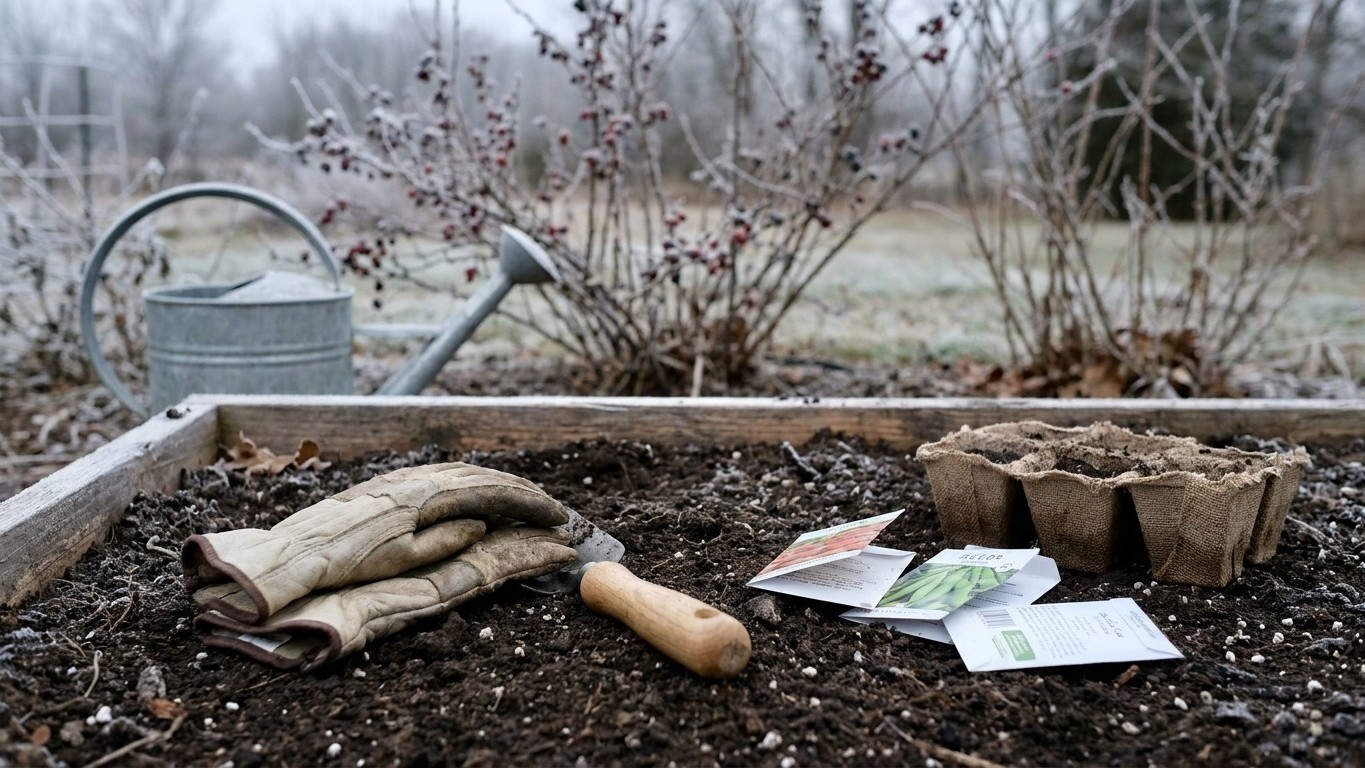

Nothing goes into open ground in the Northwest Territories in February. With an average last spring frost of May 25 at Yellowknife and a Canadian hardiness zone of 1b, the ground is frozen solid and will stay that way for months. What this month actually offers is indoor sowing counted backward from that frost window, forced greens from the root cellar, and the dormant-season jobs that decide how the rest of the season goes.
What goes in the ground in February

The honest answer is nothing. There is no outdoor sowing window this month anywhere in the Northwest Territories, and pretending otherwise sets a gardener up to lose seed and time. The reason is not the calendar, it is the ground itself: soil this cold cannot support germination, and even hardy seedlings would face weeks of frozen or near-frozen conditions before any real growth could start. The average last spring frost at Yellowknife sits at May 25, and that figure is a midpoint, not a promise. In roughly half the years on record, frost arrives even later than that. Treat May 25 as the center of a window that can run well into June, not a date to circle on a calendar.
That said, a handful of things quietly continue through this stretch. Garlic and shallots planted the previous fall are sitting under snow cover doing exactly what they should: nothing visible, but developing root systems underground, protected by the insulating layer above them. There is no fresh planting of these bulbs now, since the ground is not workable, but checking that mulch or snow cover has not blown away from a fall-planted bed is worth five minutes outside.
Cold frames and low tunnels matter more this month than any open-ground list could. A cold frame set against a south-facing wall, even in zone 1b, can trap enough solar heat on a clear day to keep a hardy green alive under glass, though it will not push new growth in any meaningful way yet. Forcing is the other real option: rhubarb crowns lifted or covered indoors, or chicory roots dug and stored specifically for forcing into pale, tender chicons in a dark, cool spot. Both give a fresh, homegrown harvest from material that has been dormant, without asking anything of the frozen ground outside.
What to start under cover
Indoor seed starting in February works backward from the frost window, not forward from the calendar page. With an average last frost of May 25, and knowing that date is a midpoint rather than a guarantee, count back from early June rather than late May to build in a margin. Long-season crops that need eight to ten weeks indoors before transplant, such as onions from seed or the earliest peppers for a short-season grower willing to baby them under lights, land squarely in this window if the household plans to set plants out once the ground has truly warmed, likely well into June given how late frost risk runs here.
Leeks and celery, both slow starters that tolerate a longer indoor stretch, also fit a February sowing date for many growers in this zone. The math matters more than the crop list: an eight-week crop sown now is ready to move outdoors around early April, which is still deep winter in the Northwest Territories, meaning it needs several more weeks under lights or in a heated space before it ever sees a cold frame, let alone open ground.
Two mistakes show up every season. The first is starting too early, which produces stretched, rootbound seedlings sitting in small pots for months longer than they should, weakened before they ever reach the garden. The second is starting too late for crops that genuinely need a long lead time, which then run out of the short northern growing season before they mature. Given how late frost risk lingers here, most gardeners are better off erring toward the second half of the indoor-start window rather than the first, and reserving the earliest February slots only for the truly slow crops.
What is ready to pick
Little to nothing comes out of an outdoor garden in the Northwest Territories in February, and no amount of season-extension changes that in zone 1b. What feeds a household this month comes from what was put by earlier: root cellars, cold storage, and whatever is growing indoors under lights.
Stored squash, potatoes, and onions need a hands-on check now rather than later. Squash with a soft spot near the stem or a sweet, fermented smell is turning and should be used first, not left to spread rot to the rest of the batch. Potatoes that have started sprouting in storage are still edible once the sprouts are removed, but any that have gone soft or green-tinged should be pulled out and composted rather than risking the rest of the bin. Onions that feel soft at the neck when squeezed are past their storage life.
Indoors, sprouts and microgreens fill the gap between stored crops and the garden. A tray of pea shoots or radish microgreens on a windowsill takes seven to ten days from seed to harvest, giving fresh greens on a rolling basis without any dependence on outdoor conditions. Overwintered kale or leeks left under deep snow cover elsewhere sometimes survive to be dug in early spring, but that is a late-winter or early-spring event, not a February one this far north, and digging through frozen ground to check is rarely worth the effort yet.
The jobs that matter this month
Dormant-season work carries real weight in February, and skipping it costs more than an idle month would suggest. Pruning fruit trees and cane fruit while they are fully dormant, before any sap starts moving, is one of the highest-value jobs available right now: cuts made on a leafless, inactive plant heal cleanly and direct next season’s growth exactly where it is wanted, something that gets harder and messier once buds swell.
Seed ordering belongs on this month’s list too, and not as an afterthought. Short-season varieties bred for northern gardens sell out early, and a gardener who waits until the ground thaws to order is choosing from whatever is left rather than what actually suits zone 1b. Pairing that order with a written rotation plan for the coming season, noting where nightshades, brassicas, and legumes grew last time, prevents disease buildup and keeps soil fertility balanced without needing to remember it later by guesswork.
Soil testing and amending can happen now if a sample was pulled before the ground froze solid, or through a lab kit that only needs a bagged sample rather than fresh digging. Turning an outdoor compost pile is mostly on hold while it is frozen, but an indoor or insulated bin can keep working through the cold months, and checking that it has not gone anaerobic under a crust of ice is worth a look.
Tool maintenance rounds out the list: cleaning soil and sap residue off pruners and shovels, sharpening blades that went dull by the end of the last season, and oiling wooden handles before they dry out and crack. None of this shows up in a harvest count, but every one of these jobs saves hours of frustration once the ground finally opens up.
What not to do in February
The most common mistake this month is reading a mild stretch of air temperature as a sign the ground has warmed. It has not. Soil holds cold far longer than air does, and a few days of sun on the surface does nothing to change the frozen mass a foot down. Nothing warm-season, and frankly nothing at all, should go into open ground based on a warm afternoon in February.
Uncovering fall-planted garlic or any mulched bed after a mild spell is another regular error. A brief thaw is not spring, and pulling back protective mulch or snow cover exposes dormant plantings to the next cold snap with no buffer left, which can kill what would otherwise have sailed through winter untouched.
Feeding nitrogen to anything right now, indoors or out, is premature. Seedlings under lights need it once they have true leaves and are actively growing, not the moment they germinate, and dormant fruit trees or canes should get nothing at all until they show real signs of breaking dormancy. Nitrogen applied too early pushes soft, weak growth that has nowhere useful to go and, on outdoor plantings, wastes fertility that will leach away before roots are active enough to use it.
Starting long-season indoor crops too early is the last trap. Given how late the average last frost runs here, an ambitious gardener who starts tomatoes or peppers in early February, aiming for an outdoor date that will not arrive for months, ends up babying overgrown, stressed seedlings indoors far longer than any pot or light setup was built to handle.
Checking this against your own county
A territory-wide frost window is a starting point, not an instruction. Elevation, distance from open water, and the simple difference between the northern and southern reaches of the Northwest Territories can shift these dates by weeks in either direction. A community north of Yellowknife runs colder and later than the station data suggests; one further south or at lower elevation may see the ground open earlier. The Yellowknife A figures used here come from one weather station, and a territory this size is not one climate.
For local advice tailored to a specific community, the Northwest Territories agriculture services page is the right place to start before committing seed or labor to a date that may not hold locally.
Common questions
Can anything be planted outdoors in the Northwest Territories in February?
No. The ground is frozen and the average last spring frost does not arrive until May 25, itself a midpoint that can run later in half of all years. Fall-planted garlic and shallots continue developing under cover, but nothing new goes into open soil this month.
What does zone 1b actually mean for a gardener here?
Zone 1b is a Canadian hardiness rating built from several climate variables, not the single-measure USDA system used elsewhere in the United States. It marks the Northwest Territories among the coldest gardening zones on the continent, which is why the outdoor season is so short and so late to start.
Is it too early to start seeds indoors in February?
For most crops, yes. Counting back from an outdoor date that will not arrive until deep in spring, only the slowest-growing crops, such as onions or leeks needing eight to ten weeks indoors, make sense to sow this early. Faster crops started now will outgrow their pots long before it is safe to move them out.
What should be checked in stored crops this month?
Squash, potatoes, and onions all need a hands-on check for soft spots, sprouting, or a sweetish smell that signals early rot. Anything showing these signs should be used or discarded now, before it spreads to the rest of the stored batch.