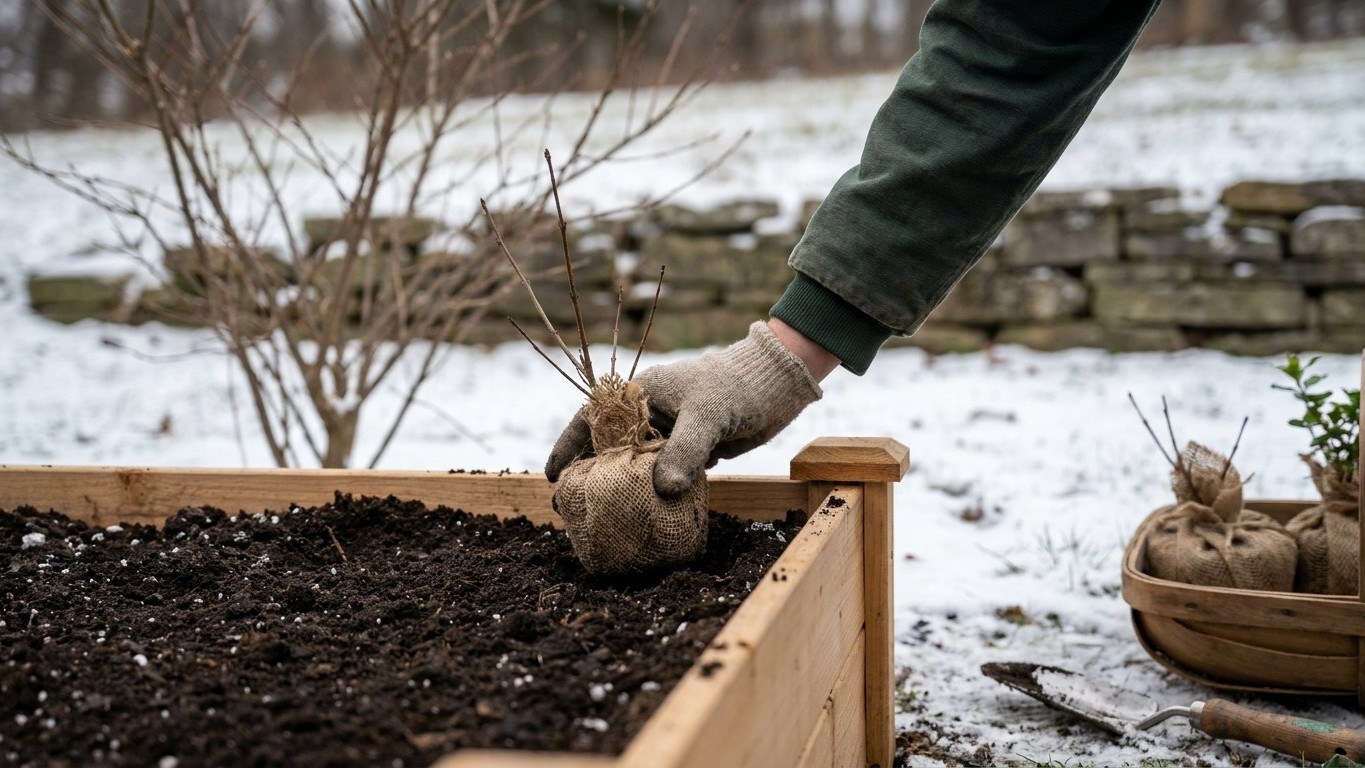

December in Nova Scotia sits deep in dormancy, weeks past the average first fall frost and months from the average last spring frost. Hardiness zone 6b (Canadian system) means the open garden is closed to new planting except for a short list of cold-hardy exceptions. Garlic and shallots still go into workable soil, cold frames keep greens alive, and bare-root stock can be planted where the ground isn’t frozen solid. Most of this month’s real work happens under cover, in the shed, and on paper.
What goes in the ground in December

The honest answer for this month is that almost nothing new goes into open, unprotected soil in Nova Scotia. The province’s average first fall frost lands around October 18 and the average last spring frost isn’t until roughly May 7, according to Environment and Climate Change Canada’s climate normals for the Halifax Stanfield station. December falls squarely in the middle of that dormant stretch, so soil temperature, not the calendar, is what closes the door here: ground that’s frozen or waterlogged won’t support root establishment no matter what the crop.
That said, a narrow window stays open where soil remains workable, particularly in milder coastal pockets or during a stretch of unseasonably dry weather. Garlic and shallots are the classic exception: both can still be tucked into loosened, well-drained beds and mulched heavily with straw, since they need a cold period to form properly and a late planting beats none at all. Bare-root fruit trees, canes and roses that arrive dormant from nurseries can also go into the ground if it hasn’t frozen, or be heeled into a trench of loose soil or sand until spring if it has.
What still works under structure
Cold frames and low tunnels extend the season for anything already established, hardy lettuce, spinach, mâche, kale, rather than starting anything new. Rhubarb crowns and chicory roots lifted from the garden can be forced in a dark, cool space indoors for a harvest of tender stalks or chicons over the following weeks. None of this replaces open-ground planting, but it keeps something productive moving while the beds themselves rest.
What to start under cover
Counting backward from the average last spring frost of May 7 is the only reliable way to time indoor sowing, and it works against December rather than for it. Most vegetables want their seed started somewhere between six and twelve weeks before transplant, which puts the safe sowing window for the bulk of the garden in late January through March, not now. Start today and you’re looking at eight to twenty weeks of extra pot time, which almost guarantees leggy, rootbound seedlings that sulk badly once they finally go outside.
There are exceptions, but they’re narrow. Seeds that need a period of cold before they’ll germinate, many perennial herbs and native wildflowers among them, can be sown into pots of damp medium now and set in an unheated shed, garage or the refrigerator to complete that stratification on schedule. Slow alliums grown for a very long season, certain leeks or exhibition-length onions, sit closer to the edge of workable timing than most crops, but even those are better started in late January than in December given how far off May 7 still is.
The two failure modes worth naming plainly: sow too early, as December sowing of ordinary tomatoes or peppers would be, and you get overgrown, stressed transplants weeks before it’s safe to set them out. Sow too late, which is the opposite risk waiting in February and March, and short-season varieties may not mature before the first fall frost arrives again in October. December’s job is patience and preparation, not the seed tray itself, for anything without a cold-stratification requirement.
What is ready to pick
Little to nothing comes out of an open Nova Scotia garden this month, and there’s no point pretending otherwise. What feeds the household instead is what was tucked away or protected earlier in the season. Kale, leeks and Brussels sprouts left standing under a blanket of snow often taste better for the cold, since a hard frost converts stored starches to sugars; leeks in particular can be dug as needed straight through winter as long as the ground beneath the snow hasn’t frozen solid.
Cold frames and low tunnels are worth checking regularly, since spinach, mâche and hardy lettuce inside them keep producing small harvests through the darkest weeks, just far more slowly than in summer. Indoors, sprouts and microgreens on a windowsill or under a grow light fill the gap for anyone missing fresh greens, ready in a matter of days rather than weeks.
The bigger job this month is quality control on what’s already in storage. Squash should be checked over for any soft spots or a sweet, fermenting smell, both signs it needs to be used immediately rather than left to spread rot to its neighbors. Potatoes that have started sprouting or gone green from light exposure should be pulled and used or discarded, and onions worth a squeeze test: any that have gone soft at the neck are on their way out and should move to the front of the meal plan.
The jobs that matter this month
A dormant month is not an empty one, and December carries more real deadlines than it gets credit for. Dormant pruning of fruit trees, brambles and grapevines can begin once leaves have dropped and the wood is fully asleep, and doing it now, rather than waiting for a late-winter rush, gives cuts time to callus before the vulnerable window of late-winter cold snaps. Apple and pear trees especially benefit from having damaged, crossing or overly dense branches removed while the structure is easy to see without leaves in the way.
Seed catalogs move fast, and popular or limited-run varieties sell out well before the sowing season most gardeners expect. Placing orders now, while selection is full, beats discovering in February that the tomato variety that did well in past years is already gone. This is also the natural point to sketch next season’s bed rotation on paper, since decisions made calmly in December, away from the pressure of an open planting window, tend to hold up better than ones made in a spring rush.
Soil testing and amending can happen anytime the ground isn’t frozen, and adding compost or lime now gives it the full winter to integrate before spring planting begins. Turning an existing compost pile keeps it active even in cold weather, and this is as good a time as any to clean and sharpen pruners, spades and hoes so they’re ready rather than rusted come the first workable day. Raised beds, fencing and cold frame frames that took a beating over the growing season are easier to repair now, before winter storms add more damage, than in the scramble of early spring.
What not to do in December
The most common mistake this month is trusting a mild afternoon over the soil and the calendar. A run of unseasonably warm days can tempt gardeners to pull mulch off garlic beds or open cold frames wide, only for a hard freeze days later to hit newly exposed crowns and tender greens that had lost their protective cover. Mulch and row covers should stay in place through the winter regardless of short warm spells; they’re doing their job precisely during the swings, not just the steady cold.
Feeding is another trap. Nitrogen applied late in the season pushes soft, new growth on perennials, shrubs and any lingering greens, and that tender growth has no time to harden off before the next freeze arrives, so it simply dies back and wastes the plant’s stored energy. December calls for holding off on fertilizer almost entirely, saving it for when active growth resumes.
Working frozen or waterlogged soil does more harm than good as well. Walking on saturated beds or trying to dig or plant into partly frozen ground compacts the structure and damages root systems that would otherwise be fine left alone. If the ground won’t yield easily to a trowel, that’s the signal to wait, not to force it, and to redirect that energy toward the pruning, ordering and planning tasks that don’t care what the soil is doing.
Checking this against your own county
A province-wide picture is a starting point, not a set of instructions for a specific backyard. Nova Scotia’s frost dates and hardiness zone come from the Halifax Stanfield station, and elevation, distance from the coast, and the real difference between the milder Annapolis Valley and colder inland or Cape Breton districts can shift these windows by weeks in either direction. A garden a short drive from the water often has a longer safe season than one further inland at similar latitude.
For local guidance that accounts for these variations, the Nova Scotia Department of Agriculture is the right next stop, along with the province’s own planting resources for anyone wanting a more site-specific read on timing.
Common questions
Can I still plant garlic in Nova Scotia in December?
Yes, where the soil hasn’t frozen and is still workable. Garlic planted late should go in deep and be mulched heavily with straw to protect it through the rest of winter, since it still needs a cold period to develop properly.
Is it too late to start seeds indoors in December?
For most vegetables, yes. Counting back from the average last spring frost of May 7 puts the safe sowing window for the majority of crops in late January through March; starting in December usually produces leggy, rootbound seedlings by transplant time.
Should I prune fruit trees in December?
Dormant pruning is one of the better uses of this month, once trees have fully dropped their leaves. Cuts made now have time to callus before the coldest stretches of late winter arrive.
Why is my hardiness zone listed as 6b if my area feels colder?
The 6b figure comes from Natural Resources Canada’s data for the Halifax area and reflects seven combined climate variables, not just winter lows. Higher elevation, inland or northern locations within the province commonly run a full zone or more colder than that reference point.