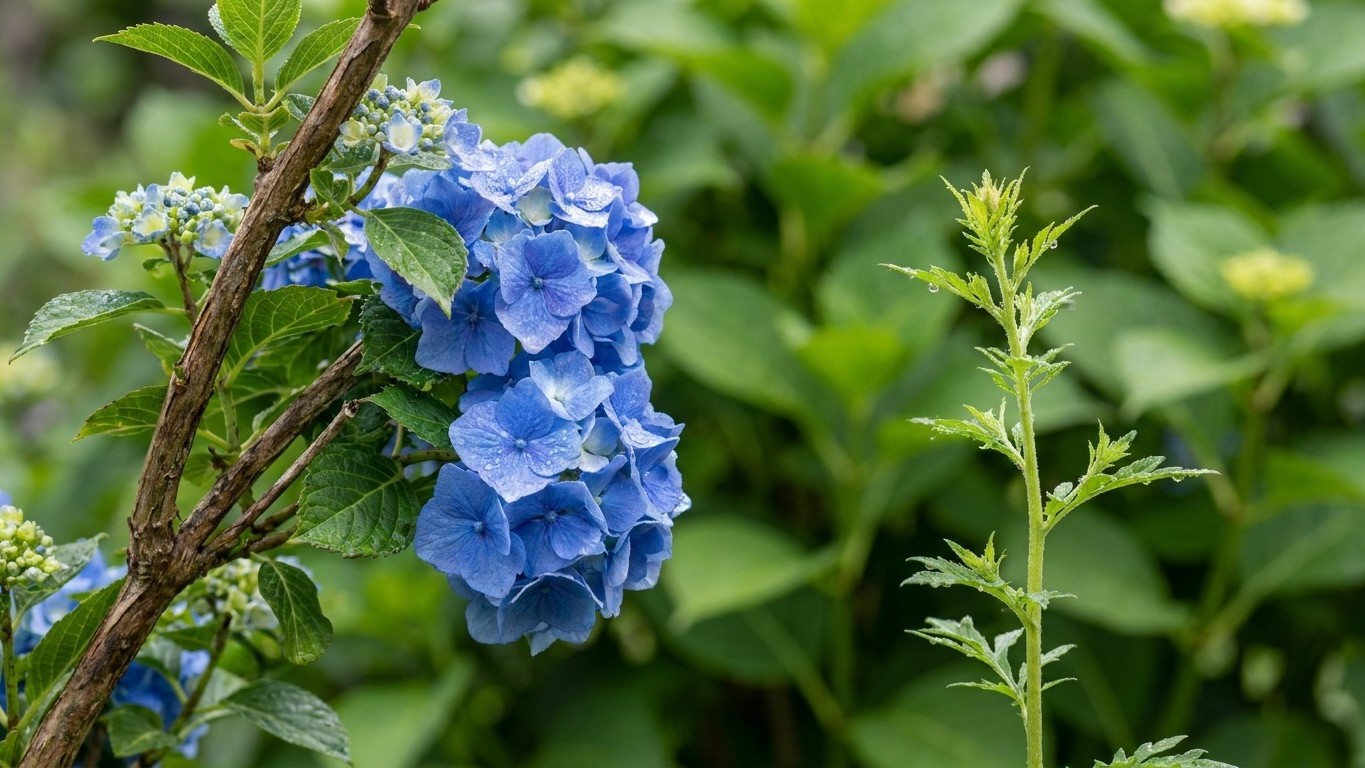

Hydrangeas that flower on new wood survive a Nova Scotia winter and bloom afterward, even when the stems die back to the ground. That means panicle types such as ‘Quick Fire’, ‘Limelight’ and ‘Tardiva’, and smooth types such as ‘Annabelle’. Bigleaf and oakleaf hydrangeas form their buds the summer before, so a hard winter or a late spring frost can erase the whole year’s flowers. The difference shows up in July.
What this comes down to in Nova Scotia

At the Halifax Stanfield station, the mean last spring frost is May 7 and the mean first fall frost is October 18, according to Environment and Climate Change Canada’s climate normals. That leaves about 164 frost-free days, and the Canadian plant hardiness zone for Halifax is 6b, from Natural Resources Canada. Both dates are midpoints. In one year out of two the last frost falls after May 7, and in one year out of two the first fall frost comes before October 18.
The season is long enough for almost any hydrangea to leaf out and flower. The limit is what winter does to the buds. A shrub that sets flower buds on last year’s stems gambles them on every January thaw and every April cold snap. A shrub that flowers on shoots grown this spring takes no such risk. The Canadian zone is built from seven climate variables, and it does not convert to a USDA zone. Nursery tags usually quote USDA zones, so read them as a rough screen only. For the broader picture, see the guide to growing hydrangeas in Nova Scotia. The six cultivars below run from the shortest season needed to the longest.
Quick Fire
A panicle hydrangea, listed on most tags. It opens white and ages to pink and red, and it flowers on new wood. It is among the earliest panicles to bloom, so it suits cool coastal summers and inland gardens where the season runs short.
Annabelle
A smooth hydrangea, with big white mophead blooms on new wood. It dies back in hard winters and still flowers. The stems are weak and flop after rain, which is a styling problem and not a hardiness one.
Limelight
A panicle hydrangea. Its blooms start lime green, turn white, then blush pink in fall, all on new wood. It blooms later than ‘Quick Fire’ but leaves plenty of margin before the first fall frost.
Tardiva
A late panicle, with creamy white cones in late summer on new wood. Winter is no obstacle. What needs checking is a cold year with an early fall frost, which can cut the bloom short in upland or northern districts.
Endless Summer The Original
A bigleaf hydrangea, blue or pink depending on soil acidity. It carries buds on both old and new wood. When winter kills the old buds, it still produces some flowers on new growth, though later and fewer.
Nikko Blue
A classic bigleaf, flowering on old wood only. Around Halifax it sits at the edge of what it tolerates. In harsher inland spots it often leafs out green and never flowers.
Working it out for your own garden
Cultivar names go out of date, but the method for judging a new one does not. It takes three facts: on which wood the plant blooms, roughly when it opens, and how many weeks remain before frost.
How do you count back from the frost window?
Start with the mean last spring frost of May 7 and treat it as the middle of a window. Wait another one to two weeks before setting out potted shrubs, which gives a planting range of roughly mid to late May. Add a week or two more for inland or upland gardens, which run behind the reference station.
Now work it end to end with ‘Quick Fire’. Planted in mid to late May, it pushes new shoots through June and opens its first flowers later in summer. The mean first fall frost is October 18, so the bloom has about three months of runway. Even a cold year that pulls the frost forward by several weeks leaves it plenty of time.
‘Tardiva’ tests the line. It opens late in the season, so only a short stretch remains before the mean frost. In a mild fall that is enough. In an early-frost year the bloom is shortened, but it still opens, because the buds form on new wood.
‘Nikko Blue’ is the case that fails. It needs a long season, yet planting date does not rescue it. Its buds formed the previous summer, so the question that decides the bloom is whether they survived the winter.
| Cultivar | Blooms on | Typical bloom start | Result in a normal year |
|---|---|---|---|
| Quick Fire | New wood | Early July | Blooms with a wide margin |
| Annabelle | New wood | July | Blooms even after dieback |
| Limelight | New wood | Late July to August | Blooms with a comfortable margin |
| Tardiva | New wood | Late August | Blooms, margin shrinks in cold years |
| Endless Summer The Original | Old and new wood | July if buds survive | Reduced bloom after hard winters |
| Nikko Blue | Old wood | July if buds survive | Often no bloom |
What changes across the province
Halifax is a coastal station, and the Atlantic keeps both ends of its season gentler than the interior. Spring arrives slowly at the shoreline because cold water holds temperatures down. Winter low points are softened, and fall frost holds off longer. Inland and upland districts do not get that cushion.
Northern and upland parts of the province run weeks behind the reference station. In the Cape Breton highlands and on high ground in the interior, the last spring frost lands later and the first fall frost arrives sooner. Those gardens have a shorter season, and that makes new-wood bloomers like ‘Quick Fire’ and ‘Annabelle’ the safer picks. A late panicle like ‘Tardiva’ is more exposed there.
Sheltered valleys and basins form a third pattern. Cold air drains downhill and pools, so a low pocket can frost well before a slope above it. Moisture-laden air near the Bay of Fundy and the Northumberland Strait also shifts the season, each in its own direction. A good winter snow cover works as insulation for the base of the shrub, but a coastal winter can strip it with a thaw and leave roots exposed to a refreeze.
These differences mean the Halifax numbers are a starting point. Add a week or two of caution as you move inland or uphill, and treat your own frost pockets as separate places. Winter-damage care, such as mulching and burlap, is covered in the winter protection guide.
The mistakes this province punishes
A few errors show up again and again in Nova Scotia gardens. Each one links back to the climate.
- Planting into a warm April. A mild week in April tempts gardeners to plant, but the soil is still cold and the last frost may be weeks off. Wait until the mean date of May 7 has passed, then add a margin.
- Choosing a bigleaf for a shoreline or inland bed and counting on flowers. Pick a panicle or smooth hydrangea if bloom matters, and treat a bigleaf as a bonus.
- Pruning in fall. Cutting an old-wood bloomer in autumn removes next year’s buds. Timing for each type is in the pruning time guide.
- Feeding late. Nitrogen in late summer pushes soft new growth that frost burns.
- Giving up in May. A shrub that looks dead may simply be slow. Run the scratch test before pulling anything.
The common thread is acting on the calendar when the plant’s own clock matters more. Hydrangeas here leaf out late, and a patient gardener loses fewer shrubs.
Checking this against your county
A provincial figure from one station is a starting point, and the right planting window or cultivar for your lot depends on its slope, shelter and distance from the water. Local growers, garden centres and regional agricultural staff often know the local frost pockets and the cultivars that have held up nearby. The Nova Scotia Department of Agriculture is the place to ask about local conditions, and the guide to growing hydrangeas in Nova Scotia covers the rest.
Common questions
Which hydrangea is the hardiest in Nova Scotia?
Panicle and smooth hydrangeas, such as ‘Limelight’ and ‘Annabelle’, bloom reliably. They flower on shoots grown that spring, so winter dieback does not cost them their bloom.
Will a bigleaf hydrangea survive a winter in Halifax?
The plant itself usually survives, since Halifax sits in Canadian zone 6b. The flower buds on old wood are what is at risk. Expect fewer blooms, or none, after a hard winter or a late frost.
Is Canadian zone 6b the same as USDA zone 6b?
No. The Canadian system uses seven climate variables and the USDA system uses one, and there is no simple conversion between them. Use nursery tag zones as a rough guide and rely on local experience.
My hydrangea looks dead in May. Should I pull it?
Wait. Scratch a stem to check for green, and give the plant until the leaves open. Hydrangeas often break dormancy late in this climate.