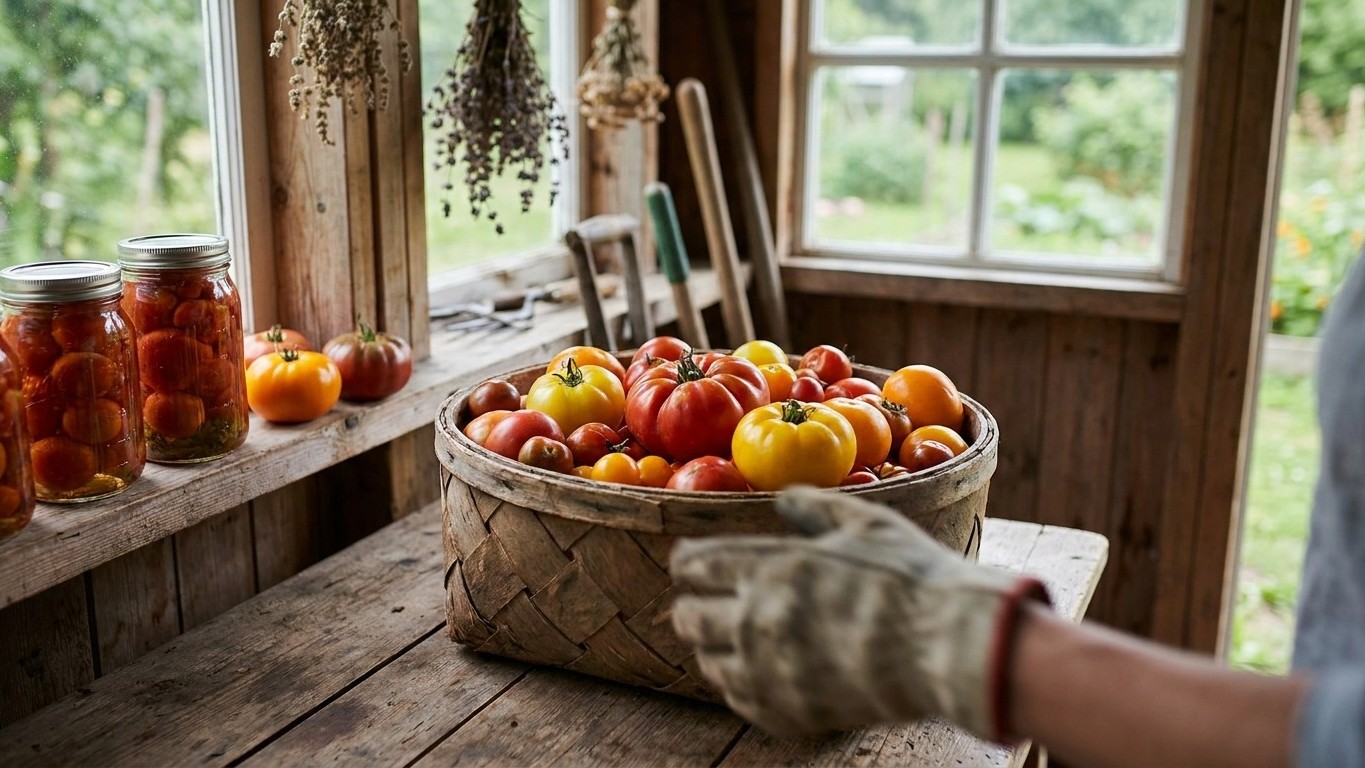

Storing tomatoes in the refrigerator doesn’t just mute the flavor. It breaks down the internal structure of the fruit, and the damage shows up as a mealy, grainy texture that never comes back once the tomato warms back up. Cold temperatures below what a tomato evolved to handle stop the enzymes that build flavor compounds and rupture the cell walls that hold the flesh firm. Keep ripe tomatoes on the counter, stem side down, out of direct sun, and only eat them within the window where they still have some give to the skin.
Why this matters
A tomato is still alive and ripening after you pick it. Cold air below the temperature a tomato is built for causes what food scientists call chilling injury: the cell membranes inside the fruit lose their integrity, water leaks out of the cells, and the flesh collapses into that soft, watery, mealy texture people associate with supermarket tomatoes. The flavor compounds that develop in the last stages of ripening, the ones that give a homegrown tomato its smell and sweetness, are produced by enzymes that slow down or stop working in the cold.
Skip proper storage and you lose two things at once: texture and taste, and neither comes back once you bring the tomato back to room temperature. This matters even more if you’re growing for seed. A tomato that’s gone mealy from cold storage has often started to break down internally in ways that affect the seed and gel around it, so if you’re planning to save seed from a particularly good fruit, that’s one more reason to keep it off the cold shelf. The seed-saving process works best from fruit that ripened and was stored properly, not from something that spent a week in the crisper drawer.
When to do it
Storage decisions start the moment you pick the fruit, and the right approach depends on what stage the tomato is at, not the date on the calendar. A tomato picked green and firm needs a completely different path than one picked fully ripe and soft. Watch the fruit itself: color moving from green to a blush of pink or yellow is the breaker stage, and from there the tomato will keep ripening off the vine using stored sugars, as long as you don’t chill it.
Fully ripe fruit, the kind with real color all the way around and a slight give when you press it gently, is at its peak and should be eaten within a few days. That’s the point at which people reach for the fridge out of habit, thinking they’re buying time. They’re doing the opposite. The moment a tomato is fully colored and slightly soft is the moment its shelf clock starts ticking fastest, and cold storage doesn’t pause that clock, it just adds cell damage on top of it. If you’ve got more ripe fruit than you can eat in that window, that’s the cue to move toward canning, sauce, or freezing rather than the refrigerator.
How to do it

Counter storage for ripening and ripe fruit
Set ripe or nearly ripe tomatoes on the counter, stem scar facing down. This matters more than it sounds: the stem scar is a soft spot, and resting the tomato on it protects the shoulders, which bruise easily, from taking the weight. Keep them in a single layer, not stacked, since the weight of tomatoes piled on top of each other bruises the fruit underneath and speeds up rot at the pressure points. Keep them out of direct sunlight on a windowsill, which raises the surface temperature unevenly and can cause soft spots to form faster on the sunny side than the shaded side.
For green or barely-turning fruit, a paper bag speeds up even ripening. Put two or three tomatoes in a paper bag, not plastic, and fold the top closed loosely. Tomatoes give off ethylene gas as they ripen, and the bag traps just enough of it to accelerate the process without trapping moisture, which plastic does and which promotes mold. Adding a ripe banana or apple to the bag gives the batch an extra dose of ethylene and speeds things along further. Check the bag once a day and pull tomatoes out as soon as they color up.
When the fridge is the right call anyway
There’s one legitimate exception. If a tomato is fully ripe, cut, or starting to split and you genuinely can’t use it for a day or two, the fridge will slow the mold and fruit fly problem even though it costs you texture. In that case, treat it as a short-term holding pattern, not storage: use the tomato within a day or two, and let it sit at room temperature for an hour before eating so some of the texture and aroma partially recovers.
| Method | Best for | Effect on quality |
|---|---|---|
| Counter, single layer | Ripe or nearly ripe fruit | Best texture and flavor, use within a few days |
| Paper bag with ethylene fruit | Green or breaker-stage fruit | Speeds ripening evenly, check daily |
| Refrigerator, short term | Cut or overripe fruit needing a day or two | Slows spoilage, damages texture permanently |
| Canning or freezing | Bulk ripe harvest you can’t eat fresh | Preserves for months, changes raw texture entirely |
- Never wash tomatoes before storing them, only right before you use them.
- Store stem side down to protect the softest point on the fruit.
- Keep ripening fruit and fully ripe fruit in separate spots so you’re not tempted to eat the wrong batch first.
What goes wrong

The most common mistake is the fridge itself, but the second most common looks like extra care rather than a mistake: washing tomatoes as soon as you bring them in. Rinsing fruit right after harvest and then storing it introduces surface moisture that mold thrives on, and a tomato sitting damp on the counter will spot and soften days before a dry one would. Wash tomatoes only right before you cut into them, never before storage.
Stacking is another quiet failure. A tomato at the bottom of a bowl full of other tomatoes takes on pressure bruises that don’t show as obvious dents at first but turn into soft, discolored patches within a day. If you’re harvesting a lot at once, spread the fruit out on a tray or in shallow boxes rather than piling it into a deep bowl.
Cracked fruit is its own problem, and it often traces back to the growing stage rather than storage. Tomatoes that crack around the shoulders usually did so because of a sudden change in water availability, and that’s worth checking against your watering routine rather than blaming storage after the fact. Cracked fruit spoils fast no matter how well you store it, so use those first and don’t count on them lasting through the week. If you were planning to save seed from a particularly good specimen, skip a cracked one, since the exposed flesh is already an entry point for the same rot organisms that would ruin the seed inside; the seed-saving steps work best starting from intact, fully ripe fruit.
Doing it differently
Storage needs shift a bit depending on what you grew. Paste-type tomatoes, with their thicker walls and lower water content, hold up on the counter noticeably longer than a juicy slicing tomato before they soften, which is part of why they’re the standard choice for sauce and canning. Cherry and grape tomatoes, by contrast, have thinner skins and spoil faster once picked, so treat a full pint as something to work through within a couple of days rather than a week. If you’re still deciding what to plant next season with storage life in mind, the variety guide breaks down which types hold up longest off the vine versus which ones are bred for eating fresh within a day or two of picking.
Greenhouse-grown fruit tends to come in with a more even ripeness across the whole plant, since temperature swings are gentler, which means fewer green stragglers needing the paper-bag treatment. Container-grown plants, especially in a hot spot against a wall, often ripen fruit faster and less evenly than the same variety in a raised bed, so check container plants more often rather than assuming the whole truss will be ready together. None of this changes the core rule. Whatever the growing method, once the fruit is off the plant, the counter beats the fridge every time texture and flavor matter more than buying an extra day or two.
Common questions
Can I put a tomato back in the fridge after I already refrigerated it?
You can, but the damage from the first cold exposure is already done. A second trip to the fridge won’t make the texture worse in a way you’d notice beyond the first round, but it won’t undo anything either. Treat it as already past its best and use it in cooking rather than raw.
Do cherry tomatoes need different storage than big slicers?
Cherry and grape tomatoes spoil faster once ripe because of their thin skins and high surface area relative to their size, so keep them in a single layer, uncovered, and plan to eat a picked batch within a couple of days rather than stretching it out like you might with a beefsteak type.
Is it true that tomatoes stop ripening once you pick them?
No, a tomato picked at the breaker stage or later keeps ripening off the vine using sugars already stored in the fruit, which is exactly why counter storage works for green-shouldered tomatoes. A tomato picked fully green before any color break, though, has little sugar reserve left to draw on and will ripen slowly and often taste flat compared to one that ripened on the plant.
Why did my stored tomatoes get soft on one side but stay firm everywhere else?
That’s almost always pressure bruising from resting against another tomato, a bowl edge, or from being stacked, rather than a storage temperature problem. Check how the fruit is arranged. If tomatoes are touching or piled, spread them into a single layer and the uneven softening should stop showing up on the next batch.