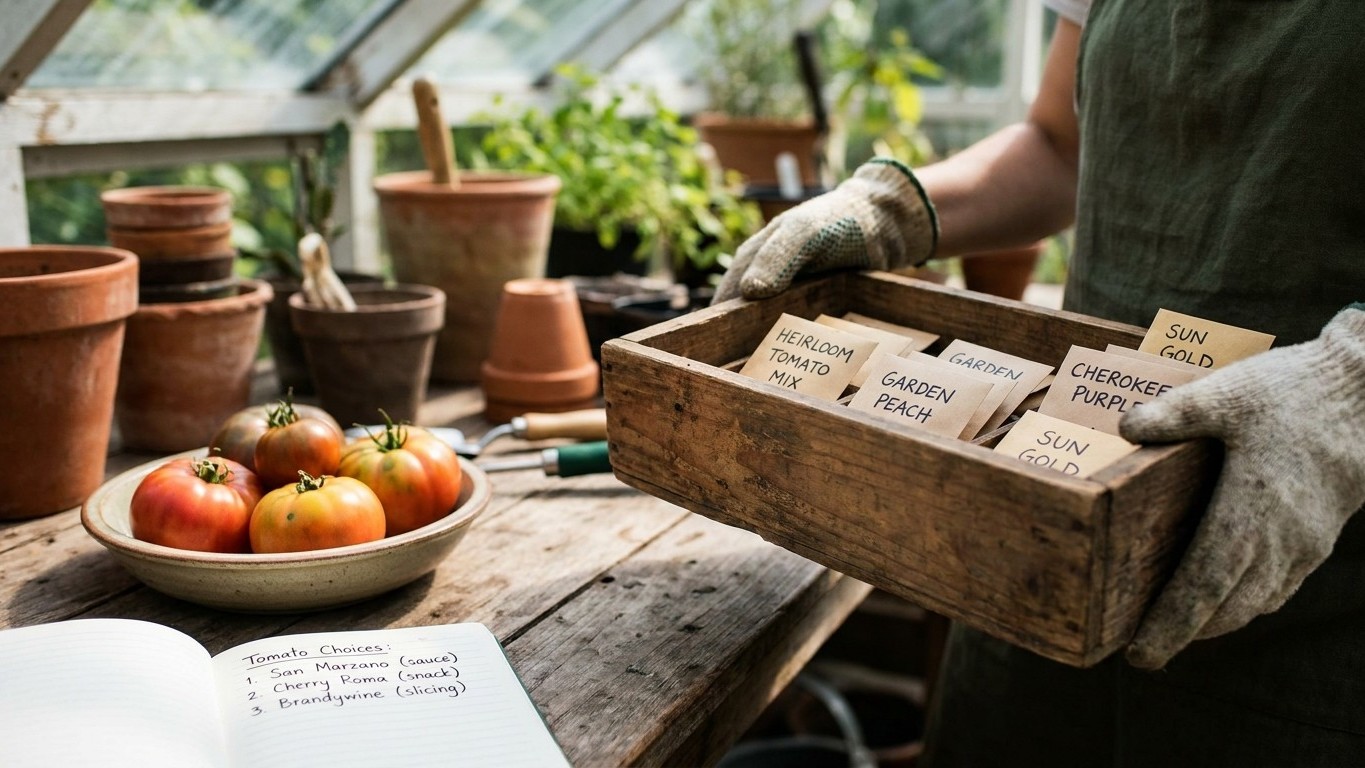

There are thousands of tomato varieties, and the difference between the one that feeds you all summer and the one that never colors up is rarely flavor. It is arithmetic. A variety needs enough frost-free days to reach maturity where you garden, plus a month of picking after that, and the figure printed on the packet is counted from the day the transplant goes into the ground rather than the day you sow.
The table below holds 148 varieties from three seed catalogues, with the days each publishes. Search it by name, sort it by maturity, and read the two sections underneath before you order anything.
148 tomato varieties for the home garden
Days to maturity for every variety we hold, from three seed catalogues. Each figure is counted from the day the transplant goes into the ground, not from sowing: the two differ by about six weeks. Names in green have their own page.
| Variety | Days from transplant | What it is | Fruit size | Best for |
|---|---|---|---|---|
| Sun Gold | 57 | orange, cherry, crops until frost, 2 disease resistances | 15–20 gm | salads and snacking |
| Supersweet 100 | 60 | red, cherry, crops until frost, 2 disease resistances | 15–20 gm | salads and snacking |
| Sakura | 55 | cherry, crops until frost, 4 disease resistances | — | salads and snacking |
| San Marzano II | 78 | heirloom, crops until frost | — | sauce and canning |
| Celebrity Plus | 78 | slicing, ripens in one flush, 6 disease resistances | 7–9 oz | slicing |
| Cherokee Purple | 72 | purple, heirloom, crops until frost | 13–14 ounce | slicing |
| Big Beef Plus | 72 | red, beefsteak, crops until frost, 6 disease resistances | — | slicing |
| Amalfi | 68 | paste, ripens in one flush, 6 disease resistances | — | sauce and canning |
| Juliet | 60 | paste, crops until frost, 2 disease resistances | — | sauce and canning |
| Tiren | 75 | green, paste, crops until frost, 3 disease resistances | 5–6 oz | sauce and canning |
| Granadero | 75 | red, paste, crops until frost, 5 disease resistances | 4–5 oz | sauce and canning |
| Amish Paste | 85 | paste, crops until frost | 8-12 oz | sauce and canning |
| Brandywine | 78 | heirloom, crops until frost | 7 inches | slicing |
| Jasper | 60 | red, cherry, crops until frost, 2 disease resistances | 7–10 gm | salads and snacking |
| Firebird | 72 | beefsteak, ripens in one flush, 4 disease resistances | 10–12 oz | slicing |
| Plum Regal | 75 | red, paste, ripens in one flush, 5 disease resistances | 4 oz | sauce and canning |
| Black Cherry | 64 | black, cherry, crops until frost | — | salads and snacking |
| STM 2255 | 72 | red, beefsteak, ripens in one flush, 4 disease resistances | 8–12 oz | slicing |
| Cherry Bomb | 64 | cherry, crops until frost, 2 disease resistances | — | salads and snacking |
| Kuzco | 66 | paste, ripens in one flush, 5 disease resistances | — | sauce and canning |
| Attracta | 58 | cherry, crops until frost, 5 disease resistances | — | salads and snacking |
| Defiant PhR | 65 | slicing, ripens in one flush, 4 disease resistances | — | slicing |
| Tasmanian Chocolate | 75 | chocolate, slicing, ripens in one flush | — | slicing |
| Harvest Moon | 75 | golden, specialty, crops until frost, 1 disease resistances | 7 to 10 oz | slicing |
| Jolene | 79 | green, beefsteak, ripens in one flush, 3 disease resistances | 8–10 oz | slicing |
| Big Beef | 70 | gold, beefsteak, crops until frost, 6 disease resistances | — | slicing |
| Blue Tonic | 72 | slicing, crops until frost, 6 disease resistances | — | slicing |
| Tidy Treats | 60 | red, cherry, crops until frost | 36 inches | sauce and canning |
| Amai | 58 | grape, crops until frost, 5 disease resistances | 15–20 gm | salads and snacking |
| Unity | 70 | green, beefsteak, crops until frost, 5 disease resistances | — | slicing |
| Indigo Cherry Drops | 71 | red, cherry, ripens in one flush | — | salads and snacking |
| Estiva | 70 | red, slicing, crops until frost, 3 disease resistances | 7–9 oz | slicing |
| Black Krim | 80 | black, heirloom, crops until frost | 8-16 oz | slicing |
| Early Girl | 60 | slicing, crops until frost, 2 disease resistances | — | slicing |
| Lucky Tiger | 70 | green, specialty, crops until frost | — | — |
| Mountain Magic | 66 | red, cocktail, crops until frost, 3 disease resistances | — | salads and snacking |
| Striped German | 78 | bicolor, heirloom, crops until frost | — | slicing |
| Marbonne | 69 | red, specialty, crops until frost, 2 disease resistances | 7-9 oz | — |
| Marnero | 72 | purple, beefsteak, crops until frost, 4 disease resistances | 7–10 oz | slicing |
| Nova | 60 | red, grape, crops until frost, 2 disease resistances | 2 inch | sauce and canning |
| New Girl | 62 | slicing, crops until frost, 2 disease resistances | — | slicing |
| Edox | 55 | cherry, crops until frost, 4 disease resistances | — | salads and snacking |
| Blush | 70 | golden, specialty, crops until frost | — | salads and snacking |
| BHN 589 | 75 | beefsteak, ripens in one flush, 3 disease resistances | 8–10 oz | slicing |
| Wisconsin 55 | 80 | slicing, crops until frost | 6–8 oz | sauce and canning |
| Galahad | 72 | crimson, beefsteak, ripens in one flush, 6 disease resistances | 3 inch | slicing |
| Sunpeach | 60 | pink, cherry, crops until frost, 2 disease resistances | 15–20 gm | salads and snacking |
| Sunrise Sauce | 57 | orange, paste, ripens in one flush, 2 disease resistances | 4–6 oz | sauce and canning |
| German Johnson | 75 | pink, heirloom, crops until frost | — | slicing |
| Carbon | 76 | purple, heirloom, crops until frost | 10-12 ounces | slicing |
| Hot Streak | 70 | yellow, beefsteak, crops until frost, 6 disease resistances | 6–12 oz | slicing |
| Matt's Wild Cherry | 60 | red, heirloom, crops until frost | 5 gm | slicing |
| Citrine | 60 | orange, cherry, crops until frost, 1 disease resistances | — | salads and snacking |
| Mimosa | 60 | orange, grape, crops until frost, 4 disease resistances | — | salads and snacking |
| TY Yellow Mimi | 60 | yellow, cherry, crops until frost, 5 disease resistances | 15–20 gm | salads and snacking |
| Rebelski | 75 | red, slicing, crops until frost, 6 disease resistances | 7–8 oz | slicing |
| Lemon Boy Plus | 75 | yellow, specialty, crops until frost, 5 disease resistances | 7–8 oz | — |
| Contessa | 75 | red, beefsteak, crops until frost, 5 disease resistances | 8–10 oz | slicing |
| Gold Nugget | 56 | golden, cherry, ripens in one flush | — | salads and snacking |
| Five Star Grape | 62 | grape, crops until frost | — | salads and snacking |
| Geronimo | 78 | beefsteak, crops until frost, 5 disease resistances | 8-10 oz | slicing |
| Red Pearl | 58 | grape, crops until frost, 1 disease resistances | 15–20 gm | salads and snacking |
| Pink Berkeley Tie Dye | 70 | green, specialty, crops until frost | 8-12 oz | — |
| Speckled Roman | 85 | yellow, paste, crops until frost | 6-8 oz | sauce and canning |
| Marmango | 70 | orange, beefsteak, crops until frost, 5 disease resistances | 5–8 oz | slicing |
| Washington Cherry | 60 | red, cherry, ripens in one flush | 20–25 gm | salads and snacking |
| GinFiz | 72 | striped, specialty, crops until frost, 5 disease resistances | 10–14 ounce | — |
| Abigail | 75 | pink, beefsteak, crops until frost, 1 disease resistances | 10–16 oz | slicing |
| Pozzano | 72 | orange, paste, crops until frost, 3 disease resistances | — | sauce and canning |
| Mountain Fresh Plus | 75 | red, beefsteak, ripens in one flush, 3 disease resistances | 8-16 oz | slicing |
| Purple Bumble Bee | 70 | purple, specialty, crops until frost | — | — |
| Cipolla's Pride | 82 | heirloom, crops until frost | 10–16 oz | sauce and canning |
| Black Angel | 65 | specialty, ripens in one flush, 6 disease resistances | 6–10 oz | — |
| Clementine | 68 | orange, cocktail, crops until frost, 2 disease resistances | 2 oz | salads and snacking |
| Woodstock | 75 | bicolor, specialty, crops until frost, 3 disease resistances | 36 inches | salads and snacking |
| Valentine | 55 | red, grape, crops until frost, 1 disease resistances | — | salads and snacking |
| Candy Bell | 65 | grape, ripens in one flush, 1 disease resistances | 15 gm | salads and snacking |
| Margold | 75 | bicolor, beefsteak, crops until frost, 3 disease resistances | 7–10 oz | slicing |
| Dr. Wyche's Yellow | 75 | golden, heirloom, crops until frost | — | slicing |
| Apple Yellow | 62 | yellow, cherry, crops until frost, 5 disease resistances | 20–25 gm | salads and snacking |
| Golden Sweet | 60 | yellow, grape, crops until frost, 2 disease resistances | 15–20 gm | salads and snacking |
| Tomatoberry Garden | 60 | red, cherry, crops until frost | 10-15 gm | salads and snacking |
| Green Zebra | 72 | black, heirloom, crops until frost | — | slicing |
| Glacier | 55 | red, heirloom, ripens in one flush | 2 inch | slicing |
| Mochi | 60 | cherry, crops until frost, 1 disease resistances | 20–25 gm | salads and snacking |
| Mountain Merit | 75 | red, slicing, ripens in one flush, 5 disease resistances | — | slicing |
| Moskvich | 60 | red, heirloom, crops until frost | 4-6 oz | slicing |
| Honey Bee | 60 | yellow, cherry, crops until frost, 1 disease resistances | 15–20 gm | salads and snacking |
| Strawberry Fields | 75 | pink, specialty, crops until frost, 2 disease resistances | — | — |
| Bronze Torch | 65 | pink, specialty, crops until frost | 1/2 oz | salads and snacking |
| Indigo Kumquat | 75 | orange, specialty, crops until frost | 15–20 gm | — |
| Martha Washington | 78 | pink, beefsteak, crops until frost | — | slicing |
| BHN 871 | 74 | yellow, slicing, ripens in one flush, 4 disease resistances | 10–12 oz | slicing |
| Favorita | 58 | red, cherry, crops until frost, 4 disease resistances | 15–20 gm | salads and snacking |
| Bonbolya | 72 | pink, beefsteak, crops until frost, 6 disease resistances | 8–10 oz | slicing |
| Verona | 67 | red, paste, crops until frost, 3 disease resistances | 1/2 oz | sauce and canning |
| Cauralina | 72 | specialty, crops until frost, 3 disease resistances | 8-14 oz | sauce and canning |
| Black Prince | 74 | black, heirloom, crops until frost | 25 to 40 pounds | slicing |
| Pruden's Purple | 67 | pink, heirloom, crops until frost | 1 lb | slicing |
| Queen Bee | 60 | yellow, cherry, crops until frost, 1 disease resistances | — | salads and snacking |
| Damsel | 73 | pink, specialty, crops until frost, 3 disease resistances | — | — |
| White Cherry | 59 | yellow, cherry, crops until frost | 15-20 gm | salads and snacking |
| Cherokee Green | 72 | purple, heirloom, crops until frost | — | slicing |
| Caiman | 76 | beefsteak, crops until frost, 5 disease resistances | — | slicing |
| Green Bee | 75 | specialty, crops until frost | — | — |
| Marmalade Skies | 75 | green, specialty, crops until frost, 1 disease resistances | 7 to 8 oz | sauce and canning |
| Valencia | 76 | orange, heirloom, crops until frost | 8-10 oz | slicing |
| Japanese Black Trifele | 74 | burgundy, heirloom, crops until frost | 4–6 oz | slicing |
| Pink Wonder | 73 | pink, specialty, crops until frost, 4 disease resistances | 6–10 oz | — |
| Captain Lucky | 75 | bicolor, specialty, crops until frost | 10–16 oz | — |
| Kakao | 70 | specialty, crops until frost, 2 disease resistances | 1/2 oz | — |
| Magic Bullet | 70 | green, specialty, crops until frost | — | salads and snacking |
| Blue Beech | 82 | heirloom, crops until frost | 8–10 oz | sauce and canning |
| Nepal | 78 | red, heirloom, crops until frost | 10-12 oz | slicing |
| Red Torch | 65 | yellow, specialty, crops until frost | 2 inch | salads and snacking |
| Yellow Mini | 57 | yellow, cherry, crops until frost, 1 disease resistances | 15–20 gm | salads and snacking |
| Sungreen 4029 | 58 | green, cherry, crops until frost, 2 disease resistances | 15–20 gm | salads and snacking |
| RuBee Dawn | 60 | red, slicing, crops until frost, 5 disease resistances | 3 inch | slicing |
| Enroza | 75 | pink, beefsteak, crops until frost, 6 disease resistances | 6–8 oz | slicing |
| Marnouar | 85 | purple, beefsteak, crops until frost, 6 disease resistances | 10–16 oz | slicing |
| Paisano | 68 | red, paste, ripens in one flush | 4–5 oz | sauce and canning |
| Yellow Brandywine | 78 | yellow, heirloom, crops until frost | — | slicing |
| Bigdena | 77 | red, beefsteak, crops until frost, 6 disease resistances | 8–12 oz | slicing |
| Beefsteak Red | 90 | tomatoes, crops until frost, 2 disease resistances | — | — |
| Better Boy | 75 | tomatoes, crops until frost, 3 disease resistances | — | — |
| Better Bush | 68 | tomatoes, ripens in one flush, 3 disease resistances | — | — |
| Big Boy | 78 | tomatoes, crops until frost | — | — |
| Bonnie Original | 75 | tomatoes, crops until frost, 3 disease resistances | — | — |
| Bush Goliath | 85 | tomatoes, crops until frost, 3 disease resistances | — | — |
| Celebrity | 65 | tomatoes, ripens in one flush | — | — |
| German Queen Heirloom | 80 | tomatoes, crops until frost | — | — |
| Husky Red Cherry | 65 | tomatoes, crops until frost, 2 disease resistances | — | — |
| Park's Whopper Improved | 65 | tomatoes, crops until frost, 4 disease resistances | — | — |
| Patio | 70 | tomatoes, ripens in one flush, 3 disease resistances | — | — |
| Pink Delicious | 90 | tomatoes, crops until frost | — | — |
| Ponchi Mi | 63 | tomatoes, ripens in one flush | — | — |
| Roma | 80 | tomatoes, ripens in one flush, 2 disease resistances | — | — |
| Sun Sugar Yellow Cherry | 75 | tomatoes, crops until frost, 2 disease resistances | — | — |
| Sunset Torch | 63 | tomatoes, ripens in one flush | — | — |
| Tami G Grape | 62 | tomatoes, crops until frost, 2 disease resistances | — | — |
| Tidy Rose | 55 | tomatoes, crops until frost, 2 disease resistances | — | — |
| Tiny Temptation Cherry | 63 | tomatoes, ripens in one flush | — | — |
| Legend | 68 | slicing, ripens in one flush | — | — |
| Mortgage Lifter | 95 | slicing, crops until frost | — | — |
| Oregon Spring | 70 | slicing, ripens in one flush | — | — |
| San Marzano | 78 | sauce/paste, crops until frost | — | — |
| Siletz | 75 | slicing, ripens in one flush | — | — |
| Stupice | 65 | slicing, crops until frost | — | — |
Source: Johnny's Selected Seeds, Bonnie Plants and Territorial Seed Company. Each figure is counted from transplant. · 148 entries · updated August 24, 2026
The one number that decides everything

Days to maturity is the only figure on a seed packet that can rule a variety out entirely, and it is also the most misread. Catalogues count it from transplant, meaning from the day a six-week-old seedling goes into warm soil. Counting from the day you sow adds roughly six weeks and makes every variety look impossible.
Work backwards rather than forwards. Take the first fall freeze for your area, subtract the days to maturity, then subtract another month for the picking you actually want. What remains is your last useful planting date. If it falls before the soil is warm enough to hold a transplant, the variety does not fit your season, and there is no technique that fixes that. Our frost dates by state and province gives the two ends of that calculation for sixty-three territories.
A margin under thirty days means one flush of fruit and nothing after it. That is not a reason to avoid a variety, but it is a reason to plant a second, faster one alongside it, such as the fast-maturing Early Girl Tomato, its close relative the New Girl Tomato, the disease-resistant Rebelski Tomato, the equally resilient Defiant PhR Tomato, the compact Tidy Rose Tomato, the Stupice tomato, the prolific Tami G Grape Tomato, the sweet Sun Sugar Yellow Cherry Tomato, the reliable Enroza Tomato, a slower heirloom such as the Dr. Wyche’s Yellow Tomatom such as the German Johnson Tomatom such as the Cherokee Purple Tomato for later in the season, the reliable paste-type Roma Tomato: When to Plant It, and What to Do With the Paste Tomatoes, the sweet Sunpeach Tomato, the Nova tomato, the cold-hardy Wisconsin 55 Tomato, the quick-fruiting Tiny Temptation Cherry Tomato, the cold-hardy Moskvich Tomato, the vividly colored Sunset Torch Tomato, the early-fruiting Ponchi Mi Tomato, the sweet Pink Delicious Tomato, the beefsteak-flavored German Queen Heirloom Tomato, the compact Bush Goliath Tomato, the high-yielding Bigdena Tomato, the reliable Paisano Tomato, the prolific Husky Red Cherry Tomato, the vividly colored Red Torch Tomato, the richly flavored Kakao Tomato, the compact Green Bee Tomato, the early-ripening RuBee Dawn Tomato, the deeply flavored Black Prince Tomato, the vigorous Hot Streak Tomato, the striped Green Zebra Tomato, the disease-resistant Geronimo Tomato, the quick-cropping Five Star Grape Tomato, the earlier-ripening Yellow Brandywine Tomato, the compact Valentine Tomato, the early-ripening Purple Bumble Bee Tomato, the compact Mochi Tomato, the mango-flavored Marmango Tomato, the low-acid Lemon Boy Plus Tomato, the compact Margold Tomato, the early-ripening Clementine Tomato, the soft-hued Blush Tomato, the prolific Matt’s Wild Cherry Tomato, the early-yielding Sungreen 4029 Tomato, the compact Yellow Mini Tomato, the compact Strawberry Fields Tomato, the golden-fruited Citrine Tomato, the compact Red Pearl Tomato, the sweet, early-producing Gold Nugget Tomato, the prolific little Edox Tomato: When to Plant the Cherries That Keep Coming Until Frost, the early-yielding Bonbolya Tomato, the reliably early Jasper Tomato, the disease-resistant Firebird Tomato, the striking Blue Tonic Tomato, the reliable Celebrity Tomato, the reliable Better Boy Tomato, the striped Lucky Tiger Tomato, the reliable Attracta Tomato, the equally compact Tidy Treats Tomato, the early-yielding Captain Lucky Tomato, the reliable Big Boy Tomato, the Beefsteak Red Tomato, the disease-resistant Mountain Magic tomato or its blight-resistant cousin the Mountain Merit Tomato, the reliable Legend tomato, the striking Indigo Kumquat Tomato, or the slower but flavor-rich Striped German Tomato, the early-ripening Sunrise Sauce Tomato, the striking Pink Berkeley Tie Dye Tomato, the Unity tomato, the compact Mimosa Tomato, the sweet and early Golden Sweet Tomato, the cold-tolerant Glacier Tomato, the Harvest Moon Tomato, the compact Marnero Tomato, the Amai Tomato: When to Plant It, and What to Do With a 15-20 g Grape, the Valencia Tomato, the early-fruiting Tomatoberry Garden Tomato, the compact Damsel Tomato, the dependable Celebrity Plus tomato, the prolific Juliet Tomato, the robust Big Beef Plus Tomato, the vigorous Tiren Tomato, the slower but flavor-rich San Marzano II Tomato, or the Carbon Tomato, the early-ripening Siletz Tomato, the fast-fruiting Indigo Cherry Drops Tomato, the early-maturing Estiva Tomato, or the Jolene Tomato, the disease-resistant Tasmanian Chocolate Tomato once your season allows itarden/tomatoes/varieties/defiant-phr/”>Defiant PhR Tomato, the STM 2255 Tomato, the fast-maturing Cherry Bomb tomato, or the Kuzco tomato, all bred for cold, short-season climates.
Determinate or indeterminate, and why it changes the work
The habit column matters more to your summer than the color does. A determinate variety grows to a fixed size, sets its fruit over two or three weeks, and stops. That is what you want for sauce: everything ripens at once, as with the disease-resistant Plum Regal tomato or other classic paste-type classic San Marzano tomatoassic Amish Paste tomato, and you spend one weekend at the stove. It also suits a short season, because the plant is not still trying to flower when the frost arrives.
An indeterminate variety keeps growing and keeps setting fruit until something kills it. It needs staking, it needs pruning, and it will give you tomatoes for eating from midsummer to first frost. Most cherry varieties are indeterminate, which is why a single plant can bury a household.
The practical mistake is planting six indeterminates for sauce and finding yourself processing four pounds at a time, twice a week, for two months.
Disease resistance, and what the codes actually promise
Catalogues grade resistance, and the grades are not interchangeable. High resistance means the plant largely escapes the disease under normal pressure. Intermediate means it slows it down: you will still see symptoms, later and less severely. A variety sold as intermediate to late blight will not survive a bad blight year untreated, and planting on the wrong reading of that word costs a crop.
Resistance is also specific. A variety bred against fusarium wilt and verticillium wilt tells you nothing about its behavior under early blight, which is the disease most gardeners actually meet. Heirlooms, as a rule, carry no resistance at all: that is the trade for the flavor, and it is worth making knowingly.
Which tomato for the sauce pot, and which for the salad bowl
The habit column tells you how a plant grows, and the disease codes tell you what will kill it, but neither tells you what to do with the fruit once it is in your hand. That question comes down to flesh. Some tomatoes are built from dense, dry tissue with almost no gel around the seeds, and they lose very little water as they cook. Others are built from thin walls packed with juice, and that juice is exactly what makes them good to eat raw and exactly what ruins a sauce, because it has to boil off before the pot thickens.
The paste types make the case plainly. The Amish Paste tomato, the Amalfi tomato, the Kuzco tomato, the Granadero tomato and the Cauralina tomato all carry meaty, low-juice flesh that was never going to be pleasant sliced onto bread, and that same density is what lets them go from raw fruit to finished sauce in one working session rather than an afternoon of reduction. The Marbonne tomato and the Marmalade Skies tomato belong in the same pot for the same reason: little water to cook off, so the pan thickens instead of thinning. A determinate habit on top of that flesh, as with the Kuzco tomato or the Amalfi tomato, means the fruit arrives together, which is the only combination worth canning around.
Move to the other end of the spectrum and the same trait works in reverse. The Black Cherry tomato, the Citrine tomato, the Clementine tomato, the Golden Sweet tomato and the Cherry Bomb tomato are thin-skinned and full of juice, which is precisely why they split, burst, and taste bright and immediate straight off the vine. Cooked down, that juice would mostly boil away to almost nothing solid. These are for the salad bowl and the hand, not the pot.
The beefsteaks sit in the middle and mislead people the most, because “meaty” sounds like a sauce word. It is not, unless the flesh is also dry. The Big Beef tomato, the Brandywine tomato, the Black Krim tomato and the Mortgage Lifter tomato are dense enough to hold a slab shape on a sandwich but still carry enough moisture in that flesh to slacken a sauce rather than thicken it. Slice them; do not can them. The Oregon Spring tomato is the exception worth noting, dense and nearly seedless enough to work thin in a sauce as well as on a plate.
Where to go from here
If you know which variety you want, the linked names in the table lead to its own page, with the planting window worked out for the coldest and warmest parts of the country. If you know where you garden but not what to plant, start from your state guide instead: each one lists the varieties that finish comfortably there, with the dates.
And if you are choosing for a first year, the honest advice is to plant one variety you are curious about and one that is known to be easy where you live. Curiosity is why anyone grows tomatoes rather than buying them; the reliable plant is what keeps you doing it a second season.
Individual Variety Guides
Each variety above gets its own planting page, worked out from its catalogue days-to-maturity number. Among the cherries, you’ll find the sugary Amai grape tomato, the season-long Attracta cherry, the dark-fleshed Black Cherry, the disease-resistant Jasper, the red Indigo Cherry Drops, the fast Sakura, the orange Sun Gold, the sprawling Supersweet 100, and the container-friendly Tidy Treats. Paste growers can check the one-flush Amalfi, the trickling Juliet, the canning-ready Granadero, and the green-when-ripe Tiren, plus San Marzano II. For slicers and beefsteaks, there’s Better Boy, Big Beef, Big Beef Plus, Black Krim, Blue Tonic, Brandywine, Cherokee Purple, Defiant PhR, Early Girl, Estiva, Firebird, Harvest Moon, Jolene, Lucky Tiger, Marbonne, Marnero, Mortgage Lifter, Oregon Spring, Siletz, STM 2255, Striped German, and Tasmanian Chocolate.