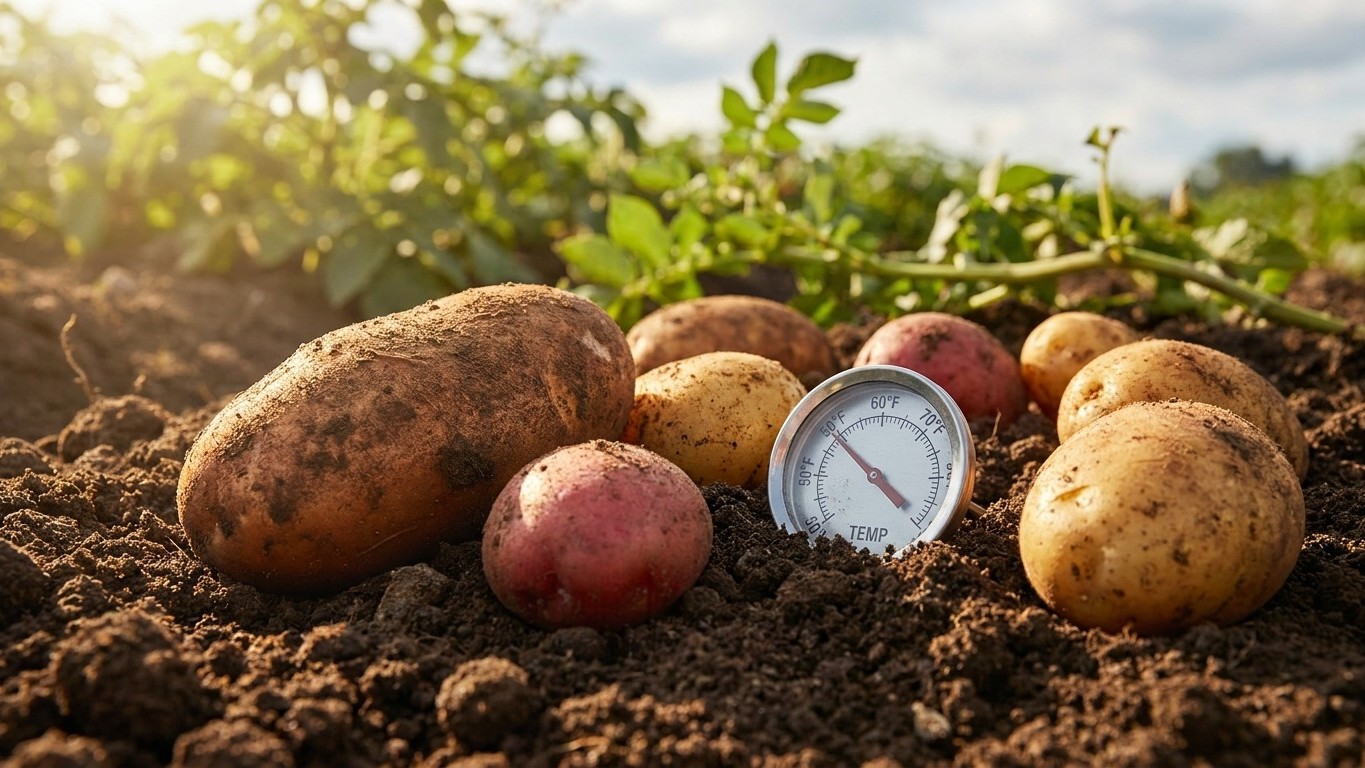

Idaho’s potato country runs on two numbers: a spring frost window and a soil temperature ceiling. Near Boise, the last spring frost falls between April 23 and May 7, according to NOAA NCEI’s 1991-2020 Climate Normals for station USW00024131. That window, paired with a 90°F soil threshold that stalls tuber growth, decides which season class of potato actually has time to finish before summer heat shuts the crop down.
The short answer
The potato that “suits Idaho” isn’t a single named variety so much as a season class matched to how much cool soil time a given spot gets before it crosses that heat ceiling. NOAA NCEI’s Climate Normals put Boise’s last spring frost between April 23 and May 7, using data from station USW00024131. That’s the reference point, not a statewide rule. Boise sits in a low valley; most of the rest of Idaho, including the higher ground where commercial potato production actually concentrates, runs colder and later, which stretches the growing window rather than shrinking it.
What decides the crop is what happens after planting, not the frost date itself. Utah State University Extension and the University of Maine Cooperative Extension (Bulletin #2077) both describe the same mechanism: tuber set and fill shut down when soil temperatures climb above 90°F, and no amount of irrigation reverses that once it happens. The same two sources agree potatoes go in the ground as soon as soil hits 50°F, which lands 14 to 21 days before the last frost date. In a Boise-area garden, that means working soil in early-to-mid April, not waiting for the frost date itself to pass.
That single fact, the 90°F ceiling, is why season class matters more than variety name. An early-season potato reaches its bulking stage and finishes filling tubers before the hottest stretch of summer soil arrives. A late-season type needs a longer stretch of cool-to-moderate soil to do the same job, which works fine at elevation where soil warms more slowly and stays cooler longer, but runs into trouble in a low, hot valley where 90°F soil arrives early and stays late.
So the real answer to “what suits Idaho” splits by elevation and local heat load, not by a single statewide pick. Gardeners near Boise get more mileage out of early and mid-season classes, planted the moment soil hits 50°F, dug before peak summer heat. Growers at higher elevation, where the frost-free window opens later but soil never spikes as hard, have room to run mid-season and late-season classes through a full cycle. Neither USU nor the Maine Extension publishes a days-to-maturity number for any variety, so the honest way to plan is by season class: early, mid-season, or late, matched against how many days your ground spends above 90°F before harvest.
What actually decides it
Soil temperature, not the calendar, starts the clock
The planting trigger is 50°F soil, not a date on a calendar. Utah State University Extension and the University of Maine Cooperative Extension both tie planting to that soil reading, landing it 14 to 21 days ahead of the local last-frost date. A gardener working from a calendar alone, planting on “the last frost date” rather than testing soil, is already two to three weeks behind the mechanism that actually governs early growth. That gap matters more in a short-season year than a long one, because it eats directly into the cool window a variety needs before heat arrives.
The 90°F ceiling caps what any variety can do
Once soil crosses 90°F, tuber set and fill are inhibited, according to both Extension sources, and watering does not undo that. This is the mechanism that decides the whole crop, not a detail to work around later. A variety choice that looks perfect on paper, an early type in a spot with plenty of season left, can still underperform if a heat spike pushes soil past that ceiling during the exact window tubers are trying to size. That’s why the fact sheet framing is about a threshold, not a season length: it’s a hard stop, not a slowdown.
Elevation resets both thresholds at once
Move up in elevation and both numbers shift together. Frost lingers later in spring and returns earlier in fall, which shortens the calendar window. But soil also takes longer to climb toward 90°F and often never gets there at all in a given season, which lengthens the practical window for tuber fill. Boise’s April 23 to May 7 frost range, drawn from station USW00024131, describes a low valley. Higher ground elsewhere in the state runs on a different clock entirely, one this page’s data doesn’t cover, which is exactly why the local soil thermometer matters more than any published date.
How to do it
- Check soil temperature directly, not air temperature, using a soil thermometer pushed a few inches into the bed where potatoes will go.
- Plant once soil reads 50°F, which both Utah State and the University of Maine Cooperative Extension place 14 to 21 days ahead of the local last spring frost date.
- Start with certified seed potatoes, not tubers saved from a grocery store or a prior harvest; uncertified seed carries virus that no amount of good soil management fixes later.
- Match season class to local heat load: choose early or mid-season types where summer soil regularly climbs past 90°F, and reserve mid-season or late types for ground that stays cooler longer.
- Track soil temperature through the growing season, not just at planting, since the 90°F ceiling can arrive mid-summer and stall tuber fill regardless of how well the crop started.
- Harvest ahead of sustained heat where soil is trending toward that ceiling, rather than waiting on a fixed date, since neither Extension source publishes a maturity count to plant by.
What goes wrong
- Planting by the frost date instead of the soil reading. Waiting for the last frost to pass before planting skips the 14-to-21-day head start both Extension sources describe, shortening the cool window a variety has before soil heat catches up. Test soil with a thermometer and plant at 50°F, not on a fixed calendar date.
- Assuming irrigation fixes heat-stalled tubers. Once soil passes 90°F, tuber set and fill are inhibited, and neither Utah State nor the Maine Extension describes watering as a workaround. The fix is timing the crop so bulking happens before that threshold, not compensating for it afterward.
- Using saved or grocery-store tubers as seed. Uncertified seed carries virus that can undercut a crop regardless of how well the season lines up. Starting from certified seed potatoes removes that risk before planting day.
- Treating a Boise frost date as a statewide figure. The April 23 to May 7 range comes from a single low-valley station, USW00024131. Applying it to a higher, colder part of Idaho understates the actual frost risk and can push planting too early for that specific ground.
- Choosing a variety by name alone, without checking season class against local heat. A late-season type planted where soil regularly crosses 90°F for weeks at a stretch runs into the ceiling before it finishes filling. Matching season class, early, mid-season, or late, to the local heat pattern matters more than the variety’s reputation.
Common questions
Does the Boise frost date apply to the whole state?
No. NOAA NCEI’s April 23 to May 7 range is drawn from station USW00024131, a low-valley location. Higher ground elsewhere in Idaho runs colder and later, with a shorter frost-free window but often a lower risk of soil crossing 90°F.
Can I plant potatoes before the last frost date?
Yes, and both Utah State University Extension and the University of Maine Cooperative Extension describe that as standard practice: plant once soil reaches 50°F, which typically lands 14 to 21 days ahead of the last frost date.
Is there a fixed number of days until a potato variety matures?
Neither source used here publishes one. Both describe varieties by season class, early, mid-season, or late, rather than a days-to-maturity count, since actual timing depends heavily on soil temperature and local conditions.
Why does certified seed matter so much?
Uncertified seed potatoes can carry virus that reduces yield and vigor regardless of how well the planting timing and soil conditions line up. Certified seed removes that risk at the source, before a single mechanism around frost or heat comes into play.