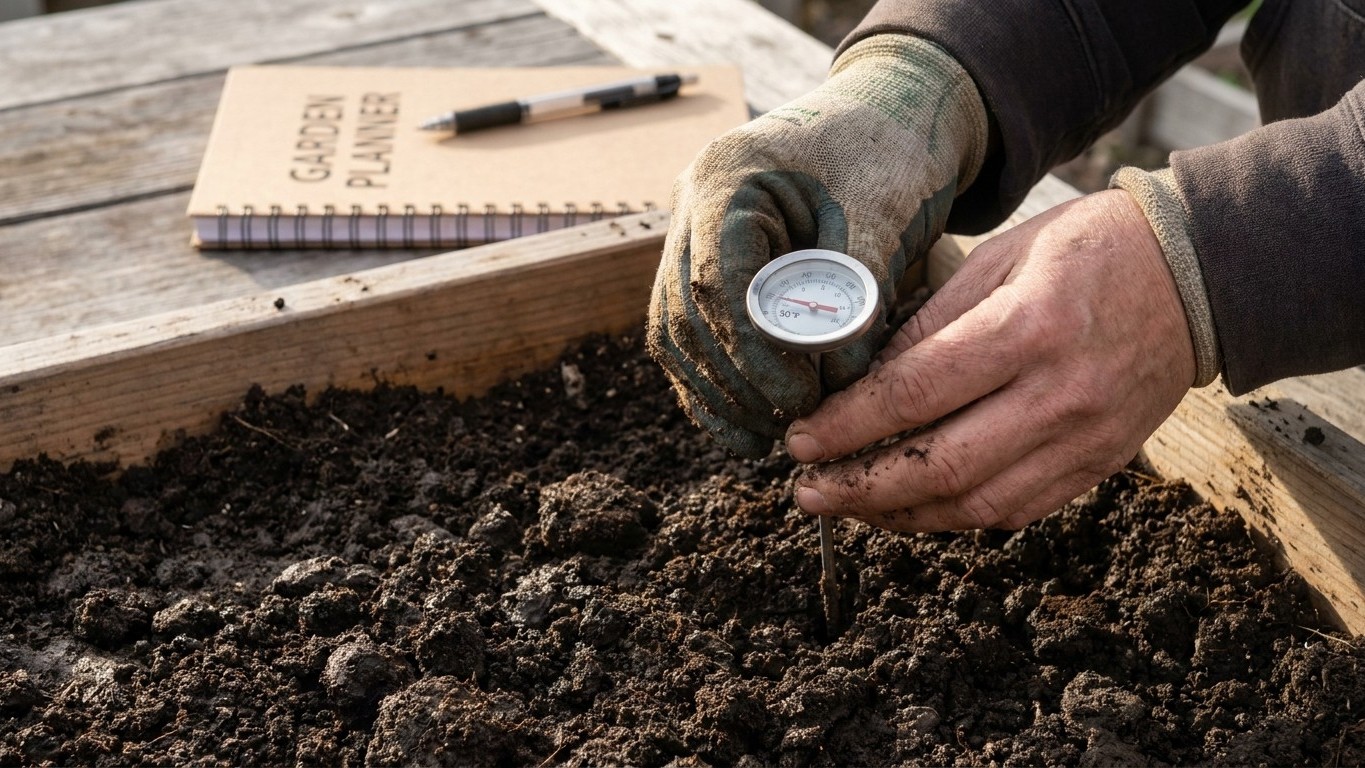

Boise’s last spring frost falls between April 23 and May 7, based on 1991-2020 Climate Normals from NOAA NCEI. Count back 14 to 21 days from that window, and you land on the date your soil hits 50°F, the temperature that actually triggers planting. That’s the number that matters, not the frost date itself.
The short answer
For a gardener working off the Boise reference station (NOAA NCEI station USW00024131), the last spring frost lands somewhere between April 23 and May 7. That’s a two-week spread, which already tells you something: even in one city, the frost date isn’t a single day you can circle on a calendar. It’s a probability band built from three decades of temperature records.
Potatoes don’t actually care about frost the way tomatoes or peppers do. What they care about is soil temperature, and the guidance from Utah State University Extension is specific: plant as soon as the soil reaches 50°F, which works out to 14 to 21 days before the last frost date. So if you’re gardening in the Boise valley and using the early end of that frost window, April 23, you’d be counting back to roughly the first or second week of April for your planting target. Using the later end, May 7, pushes that target into mid-to-late April.
Here’s the catch, and it’s a big one for anyone outside the Treasure Valley. Boise sits low, in a warm river valley pocket. Most of Idaho does not. Higher elevation towns, mountain valleys, and anywhere north of the Boise basin run colder and later, often by weeks, not days. If you’re gardening in Idaho Falls, Sun Valley, or any of the higher benches around Coeur d’Alene, the Boise window doesn’t apply to you directly. You need your own local frost data, not a borrowed one.
That’s why the honest short answer isn’t a date. It’s a method: find your own last spring frost window from NOAA’s climate normals for your station, then count back two to three weeks to find when your soil is likely to hit 50°F. The Boise number is a reference point, useful for illustrating how the math works, not a planting calendar for the whole state.
What actually decides it
Soil temperature starts the clock, not the calendar
Air temperature and soil temperature move on different schedules. A sunny 60°F afternoon can sit on top of soil that’s still sitting at 42°F a few inches down, especially in clay-heavy ground or in a spot that stays shaded most of the morning. Potatoes are planted by soil condition, not by looking at a thermometer on the porch. Utah State University Extension ties the planting trigger directly to that 50°F soil threshold, which is why two gardens ten miles apart, one on a south-facing slope and one in a low, shaded pocket, can be ready for planting a full week or more apart even though they share the same regional frost date.
Elevation rewrites the whole timeline
Idaho’s geography is the reason a single statewide planting date has never made sense. The Boise reference sits in a low valley. Drive up into the mountains, or north toward the panhandle’s higher benches, and both the last frost date and the date soil hits 50°F shift later, sometimes considerably. This page doesn’t have a published figure for those higher locations, and inventing one would be worse than saying nothing. The mechanism to carry with you: elevation and local topography change soil warming speed independently of what any single reference station reports, so a gardener working from a borrowed date needs to treat it as a starting estimate, then confirm with a soil thermometer on their own ground.
The heat ceiling that ends tuber growth early
The other end of the season has its own hard limit. Both Utah State University Extension and University of Maine Cooperative Extension Bulletin #2077 describe the same mechanism: once soil temperatures climb above 90°F, tuber set and fill are inhibited. This isn’t a watering problem, and more irrigation doesn’t reverse it. The plant simply stops sizing tubers in soil that hot. That single fact reshapes the whole planting strategy in warmer parts of Idaho. Where summer soil regularly crosses that 90°F line, the better approach is planting early enough to dig a spring crop before peak heat arrives, rather than trying to nurse a crop through the hottest stretch of summer and hoping it recovers once temperatures drop.
How to do it
- Pull the last spring frost data for a NOAA NCEI station close to your own garden, not a generic statewide figure. If you’re in the Boise area, that’s the April 23 to May 7 window from station USW00024131; anywhere else, look up your nearest station’s own normals.
- Count back 14 to 21 days from that frost date to establish your target planting window, following the range published by Utah State University Extension.
- Check actual soil temperature at planting depth with a soil thermometer rather than relying on the calendar date alone. Don’t plant until the soil itself reads 50°F.
- Source certified seed potatoes rather than potatoes from a grocery bin or last year’s saved crop. Certified seed is inspected to be free of the viruses that build up in uncertified stock and quietly reduce yield year after year.
- Cut larger seed potatoes into pieces with at least one eye each, and let the cut surfaces callus over for a day or two before planting, which reduces rot risk in cool, damp spring soil.
- Plant once the 50°F soil threshold is met, spacing and depth set for your row system.
- Hill soil up around the stems as plants grow, keeping developing tubers covered so they don’t green up in sunlight.
- Track soil temperature through the season. If your area regularly climbs past 90°F in midsummer, plan your harvest of a spring-planted crop before that heat ceiling arrives, rather than expecting the plant to keep sizing tubers through it.
What goes wrong
- Planting by the calendar date instead of soil temperature. A gardener sees the date arrive and plants, even though the soil is still cold and wet. The fix is simple: check the soil itself with a thermometer and wait for that 50°F reading before planting, regardless of what the calendar says.
- Using Boise’s frost window for a higher-elevation garden. The Boise dates are specific to a low valley station. A gardener at higher elevation who plants on that schedule risks a late frost hitting young plants. The remedy is pulling frost normals from a station closer to the actual garden site, not borrowing a number from a warmer part of the state.
- Planting uncertified seed potatoes. Seed saved from a grocery store potato or from last year’s harvest can carry viruses that don’t show obvious symptoms right away but quietly cut yield. Buying certified seed potatoes each season is the direct fix.
- Expecting watering to fix stalled tuber growth in hot soil. Once soil crosses that 90°F ceiling, tuber set and fill stop, and extra irrigation doesn’t restart the process. The remedy is timing the planting earlier in the season so the bulk of tuber development happens before peak summer heat, rather than trying to water a stalled crop back into production.
- Skipping hilling and letting tubers green. Tubers exposed to sunlight near the soil surface turn green and develop solanine, making them unfit to eat. Hilling soil up around the base of the plants as they grow keeps developing tubers covered and solves this before it starts.
Common questions
Do I need to know my exact soil temperature, or is a rough guess close enough?
A rough guess isn’t reliable here. Soil temperature can lag well behind air temperature, especially in shaded or clay-heavy spots, so a simple soil thermometer pushed a few inches into the planting row gives a far more accurate answer than judging by feel or by the weather forecast.
Is the Boise frost window useful at all if I garden elsewhere in Idaho?
It’s useful as an example of how the counting-back method works, not as a date to copy. Because Boise sits in a low valley, most other parts of Idaho run colder and later. Pull your own station’s normals from NOAA NCEI and apply the same 14-to-21-day count-back from there.
What potato type should I choose if my area gets hot summers?
Rather than chasing a specific days-to-maturity number, which neither Utah State University Extension nor University of Maine Cooperative Extension publishes, look at the season class: early, mid-season, or late. In areas where soil regularly exceeds that 90°F ceiling in midsummer, an early or mid-season type planted as soon as soil hits 50°F gives tubers more of a chance to size before the heat sets in.
Does the type of potato affect how I use it, not just how it grows?
Yes, and it’s worth choosing seed with the kitchen in mind. Some potatoes are described by their extension sources as suited for baking, others for boiling, based on published use recommendations rather than texture labels like waxy or floury, which aren’t terms used in this guidance.