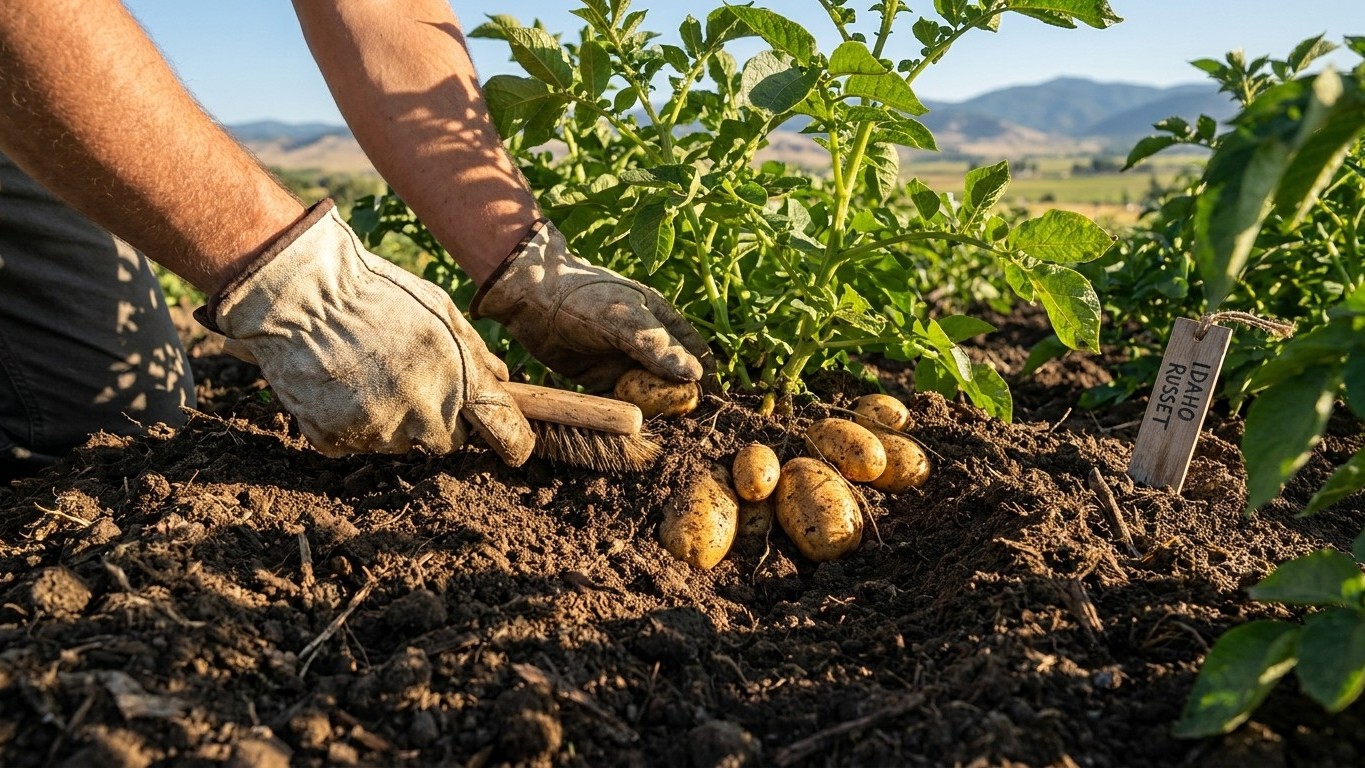

Yes, Idaho grows potatoes about as well as anywhere in the country, but the reason isn’t luck. Boise’s growing season sits mostly under the 90 F ceiling that stops tubers from sizing, and the last spring frost clears by early May in the valleys. That combination lets a gardener plant early, avoid the hottest weeks, and still bring in a full harvest before fall.
The short answer

Two numbers decide whether potatoes work in a given climate: how many days a year the soil gets dangerously hot, and how late the last frost holds on. In Boise, the reference station for southern Idaho, NOAA NCEI Climate Normals for 1991-2020 put the average at 47.5 days a year reaching 90 F or higher. That’s a real number, but it’s not as alarming as it looks once you know what it measures against a potato’s needs.
Utah State University Extension is the authority on the mechanism here: potato plants stop setting and filling tubers once soil temperatures climb past 90 F. The plant doesn’t die, it just quits building the crop underground. So the question for any Idaho grower isn’t “is it hot in July,” it’s “are my potatoes already past their vulnerable stage by the time July’s heat arrives.” In most of Idaho’s valleys, if you plant early enough, the answer is yes.
The last spring frost at Boise, per the same NOAA NCEI dataset (station USW00024131, 30-70% freeze probability band), falls somewhere between April 23 and May 7. That’s a workable window. Potatoes tolerate cool soil better than most vegetables, and the standard planting rule, again from Utah State and echoed by the University of Maine Cooperative Extension, is to get seed potatoes into the ground once soil hits 50 F, which typically lands 14 to 21 days ahead of that last frost date. Knowing exactly When to Plant Potatoes in Idaho based on your local frost dates makes it possible to push the crop’s most heat-sensitive weeks into June, well before Boise’s 90 F days start piling up in July and August.
Caution belongs here too. Boise sits in a low valley. Most of Idaho’s potato ground, including the Snake River Plain further east and the higher benches to the north, runs colder and later. A gardener in Idaho Falls or up toward Rexburg is not working with Boise’s frost dates or Boise’s heat count. The state-wide picture only tells you the mechanism and the shape of the season; the actual dates shift by weeks depending on where you are, which is why understanding the local specifics of Harvesting and Storing Potatoes in Idaho, along with picking from the Potato Varieties That Suit Idaho, matters as much as the planting timeline itself.
Variety season classes and what they’re for
Neither Utah State nor the University of Maine publishes a days-to-maturity figure for named potato varieties, so no reliable number exists to plan a harvest date around. What both sources do publish is season class, early, mid-season, or late, along with what a variety is generally suited for.
| Season class | Typical use | Fits Idaho’s heat pattern by |
|---|---|---|
| Early | Boiling | Sizing up and finishing before peak summer heat arrives |
| Mid-season | Boiling or baking | Needing the full early-planted window to fill before hot soil sets in |
| Late | Baking, storage | Best suited to cooler, higher-elevation Idaho ground where summer heat load is lower |
When to plant here
Working backward from the frost window is the whole trick, and it’s arithmetic you can redo for your own county once you know your local last-frost date.
- Start with your area’s last spring frost date. For Boise, NOAA NCEI puts that window between April 23 and May 7.
- Check soil temperature, not air temperature, with a simple soil thermometer pushed a few inches into the bed. Potatoes go in once soil holds at 50 F.
- Count back 14 to 21 days from your last frost date. If your last frost falls around April 30, that puts planting somewhere between April 9 and April 16.
- Confirm the soil has actually reached 50 F before planting, even if the calendar says it’s time. A cold, wet spring can push that date later regardless of what the frost window suggests.
- Plant as close to the early end of that window as soil conditions allow. The earlier the crop goes in, the more of its tuber-setting stage happens before Idaho’s 90 F days start stacking up in mid-summer.
A gardener outside Boise, at higher elevation or farther north, redoes this same math with a later last-frost date and, usually, a shorter run of 90 F days. The steps don’t change. Only the dates on the calendar do.
What the heat does to the crop
The mechanism is the entire point of growing potatoes anywhere, and Idaho is a useful case because it sits close to the edge of comfortable. Once soil temperature climbs above 90 F, tuber set and fill are inhibited, according to Utah State University Extension. That’s not a slowdown that watering reverses. The plant can look perfectly green and healthy above ground while the tubers underneath simply stop growing, because the heat threshold has nothing to do with moisture. It’s a soil temperature response, and irrigation doesn’t lower soil temperature enough to matter once ambient heat is driving it.
Boise’s 47.5 average days a year above 90 F is a moderate number by national standards, nowhere near the summer heat loads of the Southwest or the Deep South, but it’s real, and it clusters in July and August. That’s exactly why the early-planting math matters so much here. A crop planted in mid-April, with tubers setting through May and June, does most of its heavy filling before those 90 F days start arriving in force. By the time the hottest weeks of summer show up, an early or mid-season variety in much of Idaho’s valley ground is already close to done or being dug.
This is why Idaho functions as a spring-into-early-summer potato state in its warmer valleys rather than a full-summer one. Late varieties, and any planting that gets delayed past the ideal window, run a much higher risk of hitting the wall right as tubers should be sizing up. The fix isn’t more water. There isn’t one, once the soil’s already too hot. The fix is timing the planting date so the vulnerable stage never overlaps with the hottest stretch of the year.
What goes wrong here
- Uncertified seed potatoes. Seed saved from a grocery-store potato or an uncertified source can carry viruses that certified seed programs specifically screen out. Buying certified seed potatoes each season, rather than reusing old stock, is the single most reliable way to avoid a crop that looks fine early and fails quietly later.
- Planting into cold, wet soil before it’s actually ready. Following a calendar date instead of checking soil temperature can put seed potatoes into ground that hasn’t reached 50 F yet. Cold, wet soil invites rot before the plant ever gets established. Check with a soil thermometer instead of guessing from the last-frost date alone.
- Skipping the hilling and ending up with green tubers. Potatoes that develop near the soil surface turn green when exposed to sunlight, and green potato flesh contains compounds that make it unsafe to eat. Hilling soil up around the base of the plant as it grows keeps developing tubers covered and prevents this.
- Digging too early, before the crop has finished filling. Pulling potatoes ahead of schedule, especially with a variety in the mid-season or late class, cuts the harvest short and leaves undersized tubers in the ground. Since no days-to-maturity number is published for named varieties, watch the plant itself: foliage yellowing and dying back is the practical signal that the crop underneath has finished sizing.
Checking this against your own county
Boise’s numbers are a starting point, not an instruction sheet for the whole state. Elevation changes everything in Idaho. A few thousand feet of gain, which is common moving from the Snake River Plain toward the mountains, can push both the last frost date and the start of summer heat by weeks in either direction. North Idaho runs a different climate rhythm from the south, with its own frost patterns that don’t track Boise’s at all.
The reliable move is to check locally rather than assume the state capital’s numbers apply to your garden. University of Idaho Extension is the named authority for county-level planting guidance across the state, and it’s worth a call or a look before locking in a planting date based on a statewide average.
Common questions
Can potatoes handle a light frost after planting?
Established potato plants tolerate cool soil well, which is part of why they’re planted ahead of the last frost date rather than after it. No secondary frost threshold beyond the standard 32 F freeze data is published in the sources used here, so treat the last-frost window itself as the planning date, not a lighter early-season cutoff.
Does watering more during a hot stretch help tubers keep growing?
No. Utah State University Extension is clear that tuber set and fill are inhibited by high soil temperature, above 90 F, and that’s a heat response, not a drought response. Extra water doesn’t cool the soil enough to change the outcome once ambient temperatures are driving it that high.
Why does certified seed matter if my potatoes look healthy?
Because viruses carried in uncertified seed often don’t show obvious symptoms right away. A plant can look normal while the seed source is already compromised, and the problem shows up as reduced yield or quality rather than visible disease. Certified seed programs test specifically for this.
Is there a best variety for Idaho’s climate specifically?
No single variety is named as best for Idaho in the sources used here. What matters more than the variety name is matching its season class, early, mid-season, or late, to your local frost window and elevation, and planting early enough that the tuber-filling stage finishes before your area’s hottest weeks arrive.