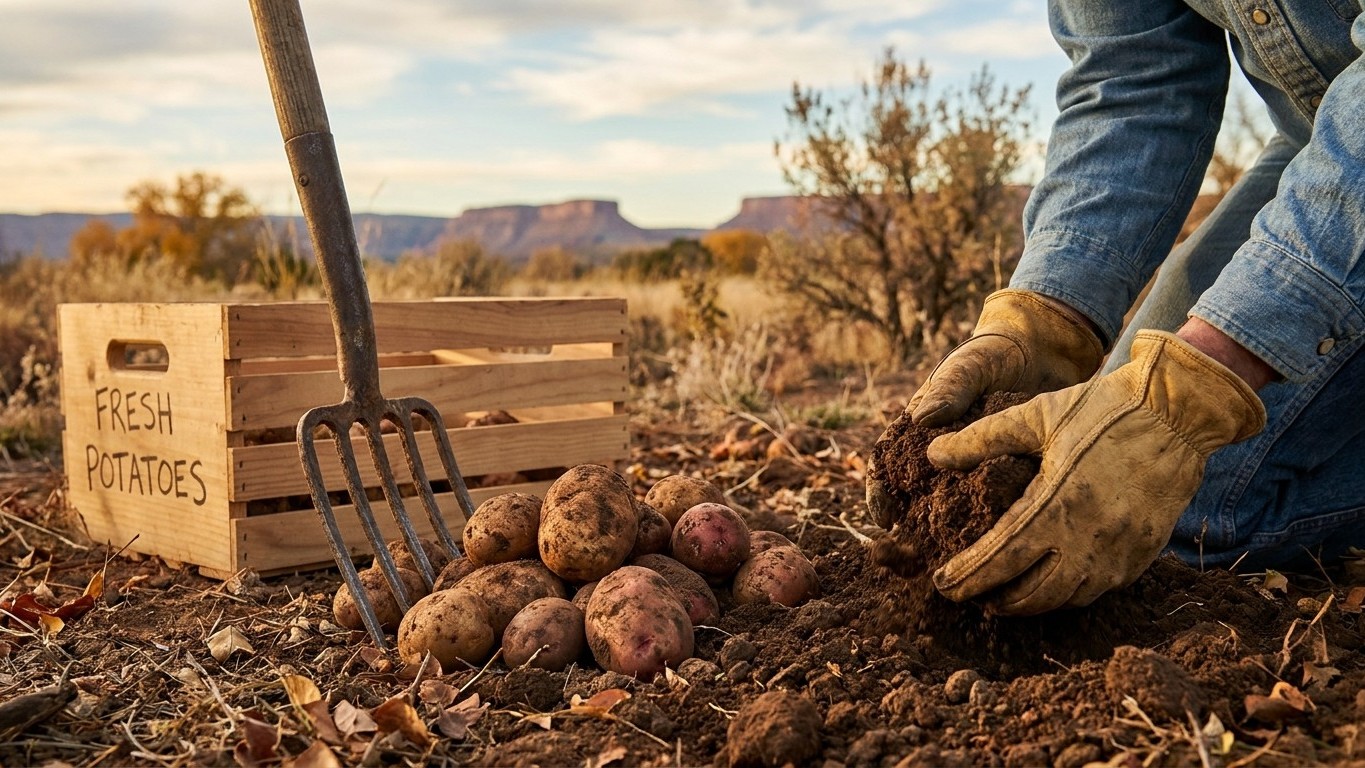

Dig New Mexico potatoes before the ground freezes hard, which in the Albuquerque area typically means finishing between October 29 and November 9. Cure them for two to three weeks at 55-60°F with high humidity, then move them somewhere dark and cold. The catch: a mean minimum of 26.4°F in the coldest month means an unheated shed or garage here will freeze the crop, not just chill it.
The short answer
Two numbers set the whole calendar for New Mexico potato growers. The first is the fall frost window at the Albuquerque reference station, October 29 to November 9, based on NOAA NCEI’s 1991-2020 climate normals. The second is the mean daily minimum temperature in the coldest month, which sits at 26.4°F for that same station. Neither number is a guarantee for your particular yard, especially if you garden at elevation in the mountains around Santa Fe or Taos, or out in a low-lying valley where cold air pools overnight. Those spots often see frost arrive a week or two earlier than the airport data suggests. Check your own county extension office or a local frost record before you set your dig date in stone.
What this means practically: get tubers out of the ground before that late-October to early-November window closes. Potatoes left in frozen or waterlogged soil rot fast, and a hard freeze at the soil surface can damage the skins on tubers still underground even if the vines above ground have already died back. Most gardeners cut the vines a week or two ahead of digging anyway, once the foliage yellows, so timing the frost date correctly matters less for the plant and more for the soil you’re pulling tubers out of.
The bigger complication comes after harvest. A mean minimum of 26.4°F in the coldest month tells you that any storage space without insulation or supplemental heat is going to drop well below freezing on a regular basis through winter. That’s six degrees colder than freezing itself, and it’s an average, not a worst case. A detached garage, an open porch, or a garden shed in most of New Mexico will not hold the 40-45°F range that Utah State University Extension recommends for storage. It will freeze solid on cold nights, and frozen potatoes turn soft, sweet, and unusable within days of thawing.
So the short answer has two parts. Harvest is dictated by frost, and that’s a fixed date range you can plan around. Storage is dictated by insulation, and that’s something you have to build or find, because the ambient climate here won’t do the job for you the way it might in a milder region.
Curing, and where
Curing is the step growers skip most often, and it’s the one that determines whether stored potatoes last through winter or start rotting by December. Utah State University Extension recommends curing at 55-60°F with high humidity for two to three weeks before potatoes go into long-term storage. That temperature range is warmer than most people expect for a vegetable headed into a cold room, but it’s what allows cut and bruised skin to seal over and thicken, which is the main defense against storage rot.
Finding 55-60°F in New Mexico at harvest time, late October into early November, takes some searching. Daytime highs are often still warm enough to overheat a sunny porch, while nighttime lows are already dipping toward the coldest-month range. Here’s a workable order of steps for finding and using that window before you move tubers to permanent storage:
- Dig on a dry day and let tubers sit on the soil surface for an hour or two to air-dry, but don’t leave them in direct sun longer than that. Sunlight greens the skin and makes potatoes bitter.
- Move them immediately to a shaded, unheated space that isn’t exposed to direct sun or wind. A covered porch, an attached garage, or a mudroom often lands close to the 55-60°F range during the first half of November, before the coldest nights set in.
- Spread tubers in a single layer, or in shallow crates, so air moves around each one. Piling them deep traps moisture and heat, which encourages rot rather than curing.
- Cover loosely with burlap or an old sheet to hold humidity near the tubers without sealing off airflow completely. A basement corner with a damp towel nearby works if a porch isn’t available.
- Check the space’s temperature with a basic thermometer over the first few days. If a garage is dropping too close to freezing at night this early in the season, move tubers to the basement instead. If a basement is warmer than 60°F, crack a window or door periodically to keep air moving.
- Hold this cure for two to three weeks, checking periodically for any tubers that are softening or weeping. Pull those and use them soon rather than let them sit through the cure and risk spreading rot to their neighbors.
A shaded porch or mudroom on the east or north side of a house tends to work best in this state’s climate window, because it avoids the strong afternoon sun that can push a west-facing space too warm. An open shed with no insulation is the least reliable option here, since it swings wide between sunny afternoons and the season’s first cold nights.
Storing through this winter
Once cured, potatoes need a different environment entirely. Utah State University Extension recommends dark storage at 40-45°F, while the University of Maine Cooperative Extension sets a slightly more precise target of 38°F at 95 percent humidity for long-term keeping. Both sources agree on the essentials: cold, dark, and humid, but not so cold that the starches convert to sugar and not so warm that sprouting starts within weeks.
New Mexico’s coldest-month mean minimum of 26.4°F sits well below both of those targets. That’s the number that should shape every storage decision this winter. A space that tracks outdoor air closely, like an uninsulated shed or an open carport, will spend much of December, January, and February below freezing on an average night, not just during the occasional cold snap. Potatoes that freeze in storage don’t just get soft. They turn watery and sweet as starches break down, and once thawed they won’t recover; the texture and flavor are gone for good.
The safer bet in most New Mexico homes is an insulated but unheated interior space: a basement, an interior closet against an exterior wall, or a root cellar dug into the ground where soil temperature buffers the swings of outside air. Basements in particular tend to hold a fairly steady range through winter because the surrounding earth moderates temperature extremes, keeping the space closer to the 40-45°F window even when outdoor lows are well below the freezing mark. A garage attached to a heated house, especially one with an insulated shared wall, can also work, though it’s worth checking with a thermometer over a few nights before committing a full harvest to it.
Darkness matters as much as temperature. Light exposure, even indirect light through a basement window, triggers greening and sprouting faster than a slightly warm room will on its own. Boxes, paper bags, or covered bins block light while still allowing some air exchange, which is preferable to sealed plastic that traps moisture and encourages rot.
Humidity is the piece most home storage setups get wrong in a dry state like New Mexico. Basements and closets here often run far drier than the 95 percent humidity the University of Maine recommends, especially once winter heating systems kick on elsewhere in the house and pull moisture out of the air. A shallow pan of water nearby, or storing tubers in slightly damp sand or sawdust, can help close that gap without oversaturating the space.
What goes wrong here
- Digging after a hard freeze hits the soil. Waiting past the October 29 to November 9 window risks frozen ground and frost-damaged tubers. Dig as soon as vines die back, and don’t wait for a calendar date if a cold snap is forecast early.
- Curing in a space that’s too cold too soon. Nighttime temperatures can drop fast in late October, undershooting the 55-60°F range Utah State University Extension recommends. Move the cure indoors to a mudroom or basement corner if a porch is tracking too close to freezing overnight.
- Storing in an uninsulated shed or garage over winter. With a coldest-month mean minimum of 26.4°F, unheated outbuildings will freeze the crop repeatedly through the season. Choose a basement, interior closet, or insulated root cellar instead.
- Air that’s too dry for the tubers to hold up. New Mexico’s low ambient humidity works against the near-saturated conditions the University of Maine recommends for storage. Add a shallow water tray or pack tubers loosely in damp sand to slow moisture loss and shriveling.
- Skipping the sort before storage. Any tuber nicked during digging or softened during curing should be pulled and used right away. One rotting potato in a storage bin can spread decay to the tubers around it well before you notice.
- Storing in light or in sealed plastic. Either mistake shows up fast: light turns skins green and bitter within days, while sealed bags trap condensation that speeds rot. Covered but breathable containers in a dark space solve both problems at once.
Common questions
When should I dig potatoes in New Mexico?
Aim to finish before the first fall frost window, which runs October 29 to November 9 for the Albuquerque reference station. Local conditions, especially at elevation or in low-lying valleys, can push frost earlier, so check your own area rather than relying on this date alone.
Can I store potatoes in an unheated garage over winter?
Not reliably. With a mean minimum of 26.4°F in the coldest month, an unheated garage in most of New Mexico will freeze stored potatoes on a regular basis. A basement or insulated interior space holds the 40-45°F range recommended by Utah State University Extension far more consistently.
How long does curing take before storage?
Utah State University Extension recommends two to three weeks at 55-60°F with high humidity. Skipping this step or cutting it short leaves cuts and bruises unsealed, which raises the risk of rot once potatoes move into cold storage.
What temperature and humidity should stored potatoes have?
Utah State University Extension recommends 40-45°F in a dark space, while the University of Maine Cooperative Extension specifies 38°F at 95 percent humidity for longer-term keeping. Either target works better than New Mexico’s dry ambient air on its own, so adding moisture near the storage area helps close that gap.