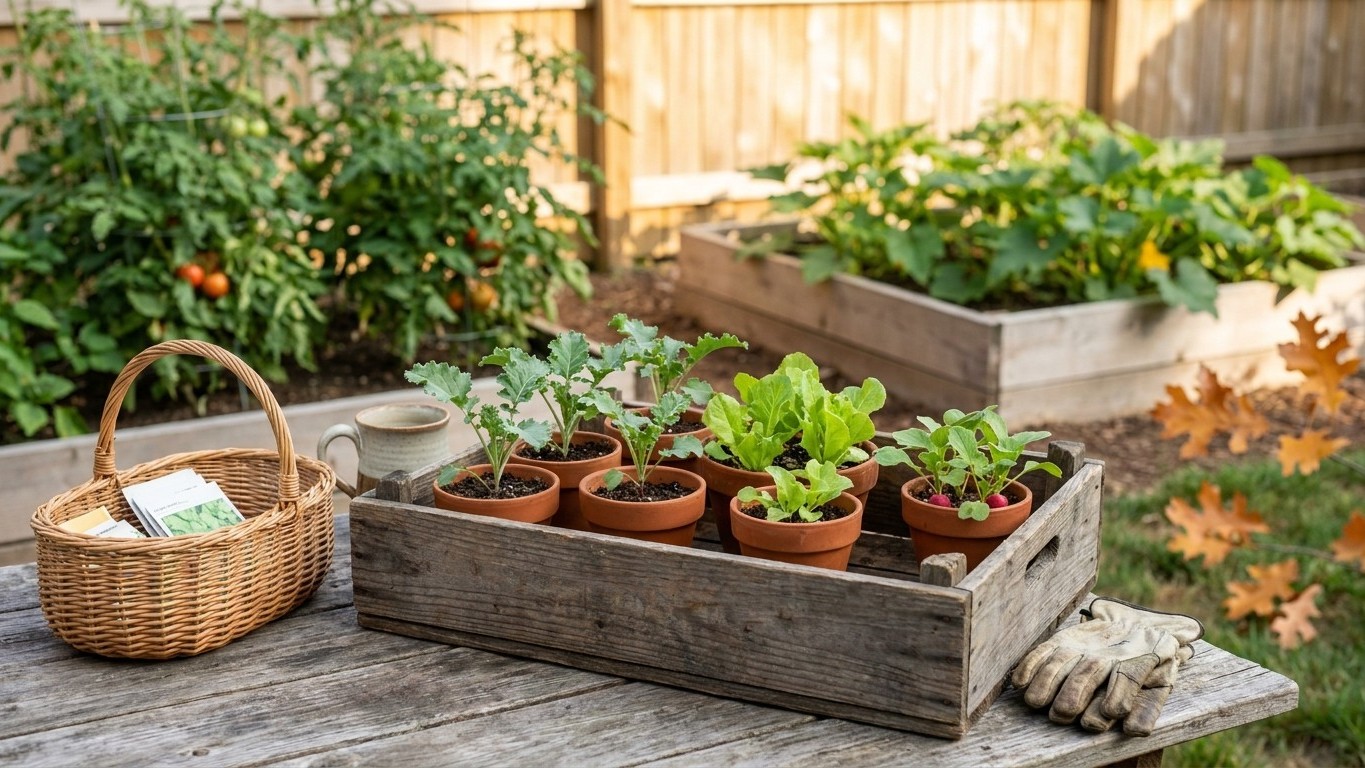

August in Oklahoma is fall-garden planting month, not the tail end of the growing season. With the first fall frost typically landing between October 29 and November 8, there’s still an 80- to 95-day window open for a second round of beans, squash, and cole-crop transplants, provided the soil has cooled enough to let seed germinate at all.
What goes in the ground in August

The calendar says there’s plenty of season left before frost, but the soil doesn’t know that. Oklahoma soil surface temperatures in August routinely sit in the 85 to 95 degree range, and that heat is the real gatekeeper for what germinates, not the date on the seed packet. Lettuce and spinach seed go dormant above roughly 80 degrees, which is why a packet sown straight into bare August dirt often just sits there.
What does work: bush beans sown early in the month, since most varieties mature in 50 to 60 days and easily beat the late-October to early-November frost window. Summer squash and cucumbers planted now for a second harvest follow the same math, coming in around 50 to 55 days. Okra, already established from a spring planting, keeps producing through the heat and doesn’t need replanting.
Transplants matter more than direct-seeding this month. Fall broccoli, cabbage, and cauliflower started as seedlings in July are ready to go into the ground in August, and transplanting skips the germination problem entirely since the plants are past the seed stage. Southern peas, or cowpeas, can still be direct-sown early in the month for gardeners in the warmer southern half of the state.
Hold off on direct-sown carrots and beets until late in the month, when soil temperatures start easing, and plan on shade cloth over any lettuce or spinach bed if you sow before then. Garlic goes in much later in the fall, not now, so don’t rush it into an August bed.
What to start under cover
Count backward from the frost window instead of forward from today. With frost expected October 29 to November 8, a crop that needs 70 days to mature has to be in the ground, not the seed tray, by roughly the third week of August at the latest. That’s the arithmetic behind every fall-garden decision this month: take the days-to-maturity on the seed packet, add a two-week buffer for slower fall growth as daylight shortens, and subtract from the earliest frost date in the range.
Cole crops for a late fall harvest, like a second round of cabbage or Brussels sprouts, need to be started indoors or under light shade now if they weren’t started in July, because they’re pushing the edge of that window. Lettuce and spinach for fall are better started indoors in a cool spot or under 50 percent shade cloth outdoors, since direct heat kills germination before the seedling ever emerges.
The two ways this goes wrong are opposites. Start too early in blazing mid-August heat without any shade protection, and cool-season seedlings stretch, wilt, or simply fail to sprout. Start too late, waiting for temperatures to drop before sowing anything, and the plant runs out of daylight and warmth before it matures, leaving you with a half-grown cabbage when the first hard freeze arrives. Splitting the difference, sowing under partial shade in the first half of the month, gives seedlings enough of a head start without cooking them.
What is ready to pick
August is peak harvest for the crops that love the heat. Tomatoes, peppers, and eggplant keep coming as long as they’re getting consistent water, though tomato and pepper flowers often drop in the hottest stretches from heat stress rather than any fault of the gardener. Okra needs picking every day or two once it starts, since pods that pass 4 inches turn woody fast and stop the plant from setting more.
Southern peas, summer squash, cucumbers, and melons are all in full swing. A ripe cantaloupe slips cleanly from the vine with a gentle tug; a watermelon is ready when the pale spot where it rests on the ground turns from white to a creamy yellow. Sweet corn planted in spring is finishing up its run, with ears ready when the silks turn brown and dry.
Garlic and onions harvested and cured earlier in the summer should already be in storage. This is a good month to check that stash: onions that feel soft at the neck or garlic showing any green sprouting should be used first, before they spread rot to the rest of the batch.
The jobs that matter this month

Watering rhythm decides more than any other single task in August. Deep, infrequent watering, aimed at soaking the root zone rather than wetting the surface daily, builds more drought resilience than a light sprinkle every evening. Morning watering beats evening, since wet foliage overnight in warm, humid air is an invitation for fungal disease.
Mulch pulls double duty this month: it keeps soil temperatures down enough for those cool-season seeds to actually germinate, and it slows moisture loss between waterings. A 2- to 3-inch layer of straw or shredded leaves over a new fall bed does more for germination odds than almost anything else you can do.
Succession sowing keeps the harvest coming instead of arriving all at once. Bush beans sown in two batches two weeks apart, early in the month, spread the crop out and hedge against any one planting struggling with heat.
Pest pressure peaks alongside the temperature. Squash bugs and spider mites thrive in hot, dry conditions, and both are easier to control when caught early, so a quick check under leaves every few days pays off more than a reactive spray after damage is visible. Fall armyworms can show up in new seedling beds and strip a stand of greens overnight, so scout new transplants closely in the first two weeks after they go in.
Beds that finished producing earlier in the summer shouldn’t sit bare. Working in compost now, ahead of a fall crop or a winter cover crop, gives the soil time to settle before the next planting goes in.
What not to do in August
The most common mistake is sowing lettuce or spinach seed straight into hot, uncovered soil and blaming a bad seed packet when nothing comes up. The seed isn’t the problem, the soil temperature is. Shade cloth, or starting seed indoors and transplanting once it’s up, sidesteps the issue entirely.
Waiting too long to start fall cole crops is the second classic error. Gardeners who hold off until the weather finally feels like fall often find they’ve eaten into the growing window they needed, leaving a half-formed head of cabbage when frost hits. Run the days-to-maturity math against the frost window before deciding to wait.
Heavy nitrogen feeding on tomatoes and peppers in high heat pushes soft, leafy growth at the exact moment the plant is already struggling with heat stress, and that lush new growth is exactly what spider mites and aphids prefer. A balanced feed, or none at all during the hottest stretch, serves the plant better than a nitrogen boost.
Finally, don’t assume a few cooler days mid-month mean it’s safe to direct-sow cool-season seed without protection. Soil holds heat far longer than the air does, and a couple of mild days rarely drop the root zone temperature enough to matter.
Checking this against your own county
These dates and zones describe a state-wide pattern, not a guarantee for any one backyard. The frost window of October 29 to November 8 and the hardiness range of 6a to 8a both come from a single reference weather station, and gardens at higher elevation, in low-lying frost pockets, or in the state’s cooler northern counties can see frost arrive one to two weeks earlier than that range suggests. Southern and southeastern Oklahoma tend to run milder and later.
For a planting calendar built around local conditions, the Oklahoma State University Extension service is the best next stop, along with your county extension office, which can speak to frost patterns specific to your area.
Common questions
Is it too late to plant tomatoes in August in Oklahoma?
For a new planting from seed, yes, most slicing tomato varieties need 70 to 85 days and won’t mature before the frost window arrives. Established plants from spring keep producing through August with steady watering.
Why won’t my lettuce seed germinate in August?
Lettuce seed goes dormant in soil above roughly 80 degrees, and Oklahoma soil surface temperatures in August routinely exceed that. Sow under shade cloth or start seed indoors in a cool spot, then transplant once soil temperatures ease later in the month.
What vegetables can I still direct-sow in August in Oklahoma?
Bush beans, summer squash, and cucumbers sown early in the month all have enough days to mature before the first fall frost. Southern peas work too in the warmer southern half of the state.
How do I know when my fall garden needs to go in versus when it’s too late?
Take the days-to-maturity listed on the seed packet or transplant tag, add roughly two weeks to account for shorter fall daylight, and count backward from the earliest date in the fall frost window, October 29. If that lands before today, plant now; if it’s already past, wait for next season.