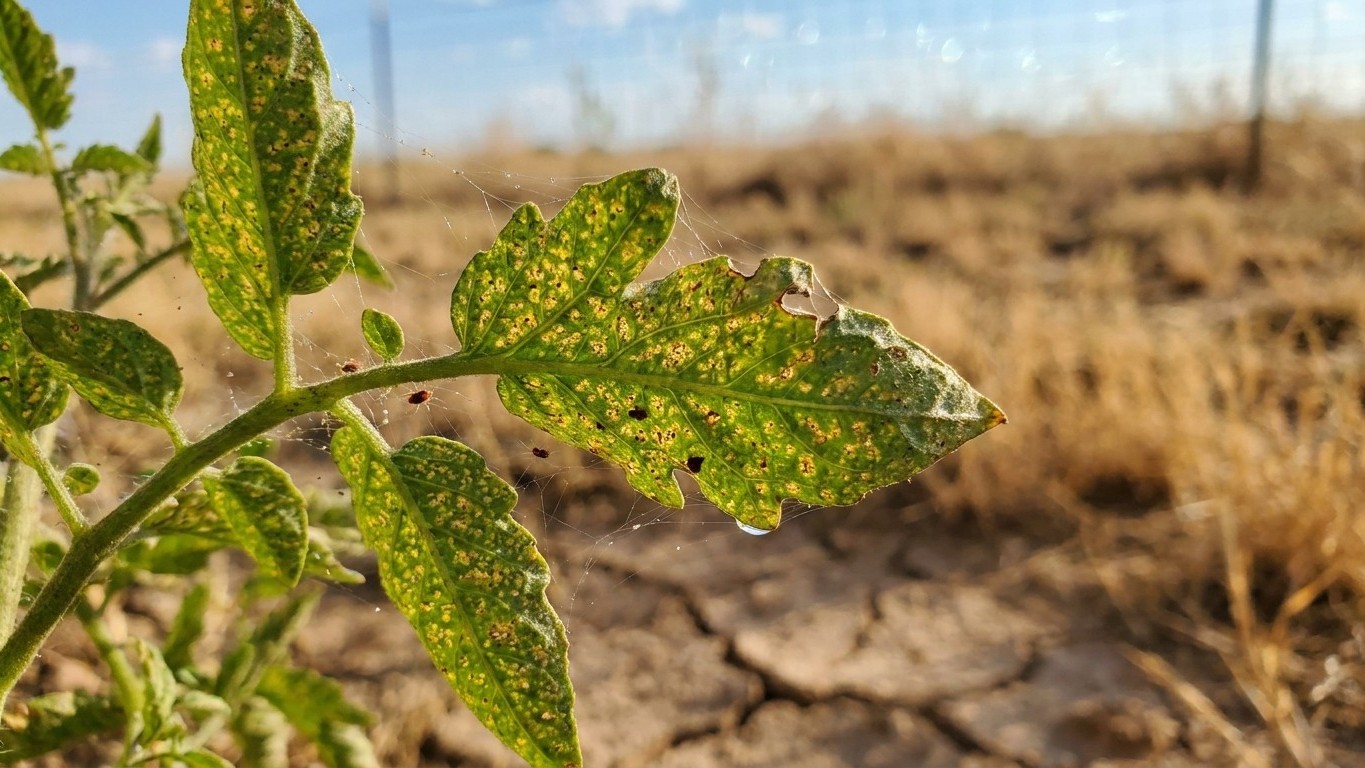

Spider mites turn up in Oklahoma every year without fail, and the trigger is almost always the same: hot, dry stretches that push temperatures past 85°F for several days running. That combination shows up as early as late May in the western panhandle and lingers into September across the rest of the state. Once you spot the telltale stippling on leaves or a faint webbing between stems, the mites have usually been feeding for a week or two already. Stopping them means combining fast physical action (a hard water spray, targeted miticide) with longer-term habitat changes that keep populations from rebounding.
Why Oklahoma’s Climate Is Prime Spider Mite Territory

Spider mites aren’t insects. They’re arachnids, distant cousins of ticks and spiders, and they thrive under conditions that would wilt most garden pests: heat, low humidity, and dust. Oklahoma delivers all three for months at a stretch. The two-spotted spider mite (Tetranychus urticae) is the species homeowners run into most often, and it can complete an entire life cycle, egg to adult, in five to seven days when temperatures sit in the 80s. Compare that to a two-week cycle in cooler, wetter climates, and you start to see why an Oklahoma infestation can go from a few speckled leaves to a full-blown outbreak in under a month.
Drought stress makes plants more vulnerable, not less. A tomato plant or a burning bush that’s already struggling for water produces sap that’s more concentrated in nutrients, which is exactly what mites are after. Landscapers across the state’s central corridor, from Oklahoma City to Tulsa, report that the worst mite damage tends to show up on plants sitting near reflected heat: south-facing brick walls, gravel beds, driveways. That’s not a coincidence. Those microclimates run several degrees hotter and drier than the surrounding yard, and mites gravitate there the way people gravitate toward air conditioning.
Dusty conditions matter too. Unpaved rural driveways, construction sites, and even a dry gravel path can coat nearby foliage in fine dust, and spider mites use that dust as cover from their natural predators. Homeowners in rural counties, where roads go unpaved for miles, often see heavier mite pressure on roadside shrubs and windbreak trees than gardeners in town ever do.
When Spider Mites Show Up: A Regional Timeline
Oklahoma’s size and topography mean the mite season doesn’t start or end on the same date statewide. The panhandle and southwestern plains heat up first and stay hot longest, while the wetter, more forested southeastern corner runs a shorter, milder season.
Western and Panhandle Oklahoma
In counties like Cimarron, Texas, and Beckham, spider mites can appear as early as the first week of May if spring rainfall has been light. This region sees the fewest rainy days of the year, and by mid-June daytime highs regularly clear 95°F. Junipers, arborvitae, and drought-stressed lawns take the brunt of it here, and infestations often persist straight through August.
Central Oklahoma (Oklahoma City, Norman, Edmond)
The metro corridor typically sees its first noticeable mite activity in late May to early June, ramping up through July. Roses, tomatoes, and burning bush are the most commonly affected landscape plants in this zone. A dry July, which happens most years, tends to be the peak window for calls to local extension offices and pest control companies.
Eastern and Southeastern Oklahoma
Higher humidity and more consistent rainfall in the Ozark foothills and around Broken Bow push the mite season back by two to three weeks compared to the panhandle. Outbreaks here are usually shorter-lived too, since natural predator populations (ladybugs, predatory mites, lacewings) tend to be more established in the wetter, more biodiverse eastern counties.
Statewide, a second, smaller wave often shows up in September if the first half of fall stays warm and dry, which is common in Oklahoma’s transition months. That fall flare-up catches a lot of people off guard because they’ve already stopped watching for mites after Labor Day.
How to Spot an Infestation Before It Spreads
Spider mites are roughly the size of a period at the end of a sentence, which means most people never see the bug itself. What they notice first is the damage.
- Fine yellow or white speckling (stippling) on the upper surface of leaves
- A dull, bronze, or dusty look to foliage that used to be green and glossy
- Faint, silky webbing on the undersides of leaves or between stems and branch tips
- Leaves that curl, dry out, and drop weeks earlier than they should
- A dirty, gray film on lower leaves, which is often mite excrement and shed skins mixed with dust
The white paper test is the fastest way to confirm what you’re dealing with. Hold a sheet of white paper or a paper plate under a suspect branch and tap it firmly. If tiny specks fall onto the paper and start crawling, or if you smear one and see a reddish or greenish streak, you’ve got spider mites. Aphids and other soft-bodied pests won’t produce that same streak, and they’re usually visible to the naked eye without the tap test.
What Actually Stops Spider Mites in Oklahoma Conditions
Control has to account for two things at once: killing the mites already present, and changing the conditions that let them explode in the first place. Skip the second part and you’ll be fighting the same battle again in three weeks.
Water Is the First and Cheapest Weapon
A strong jet of water aimed at the undersides of leaves knocks mites and their webbing off the plant and physically disrupts their feeding. Because mites favor dust and dry conditions, a forceful rinse every three to four days during a hot spell does double duty: it removes mites and raises humidity right at leaf level, which slows their reproduction. This works especially well on shrubs, roses, and vegetable gardens where hand spraying is practical. It’s less useful on mature trees, where the canopy is too tall to reach effectively.
Insecticidal Soap and Horticultural Oil
Standard insecticides built for beetles and caterpillars often do little against spider mites, and in some cases they make things worse by killing off the predator insects that would otherwise keep mite numbers in check. Insecticidal soap and horticultural oil work by smothering mites on contact rather than through a nerve toxin, which means resistance builds up more slowly. Coverage matters more than concentration here. Both products need to reach the undersides of leaves, where mites feed and lay eggs, and they typically need reapplication every five to seven days for two to three cycles to break the infestation.
Miticides for Heavier Infestations
When webbing is heavy and leaf damage is already extensive, a product labeled specifically as a miticide (not a general insecticide) is the more reliable option. These are formulated to target the mite’s biology directly and tend to hold up better under Oklahoma’s intense summer heat, when soap and oil sprays can evaporate or break down faster. Always follow label rates exactly. Overuse of a single miticide class is one of the fastest ways to breed resistant mite populations, a problem that’s already been documented in agricultural settings across the Southern Plains.
Bring In the Predators
Ladybugs, lacewings, and predatory mite species (like Phytoseiulus persimilis) eat spider mites as a primary food source and can be introduced into a garden or greenhouse setting. This approach works best in enclosed or semi-enclosed spaces where the predators won’t simply wander off, and it pairs poorly with broad-spectrum insecticide use, since those same chemicals wipe out the beneficial bugs right along with the pests. Encouraging natural predator habitat (leaving some leaf litter, planting pollen-rich flowers like yarrow or dill nearby) tends to be more practical for a typical Oklahoma yard than releasing purchased predatory mites.
Preventing the Comeback
Most Oklahoma mite problems trace back to plant stress, and drought stress specifically. Deep, infrequent watering that reaches the root zone builds a plant’s resilience far better than a quick daily sprinkle that only wets the surface. For lawns and landscape beds, a soil moisture check two to three inches down tells you more than a glance at the surface ever will.
Dust control matters more than most homeowners realize. Keeping gravel driveways watered down during dry spells, or adding a strip of groundcover along a dusty path, cuts down on the dust layer mites use as protective cover. Avoiding over-fertilization with high-nitrogen products also helps, since excess nitrogen produces the same soft, sap-rich new growth that mites prefer to feed on.
Rotating between different control methods, rather than leaning on one spray all season, keeps mite populations from adapting. A yard that gets a water rinse in June, insecticidal soap in July, and a targeted miticide only if things spike in August will generally fare better long-term than one hit with the same product on repeat. Oklahoma’s mite season runs roughly five months in a bad year, and that’s a long time for any single tactic to keep working on its own.
Related guides
- Spider mites in Missouri: When It Shows Up and What Stops It
- Spider mites in Texas: When It Shows Up and What Stops It
- Spider mites in Utah: When It Shows Up and What Stops It
- Spider mites in Washington: When It Shows Up and What Stops It
- Spider mites in Alabama: When It Shows Up and What Stops It
- Spider mites in Arizona: When It Shows Up and What Stops It