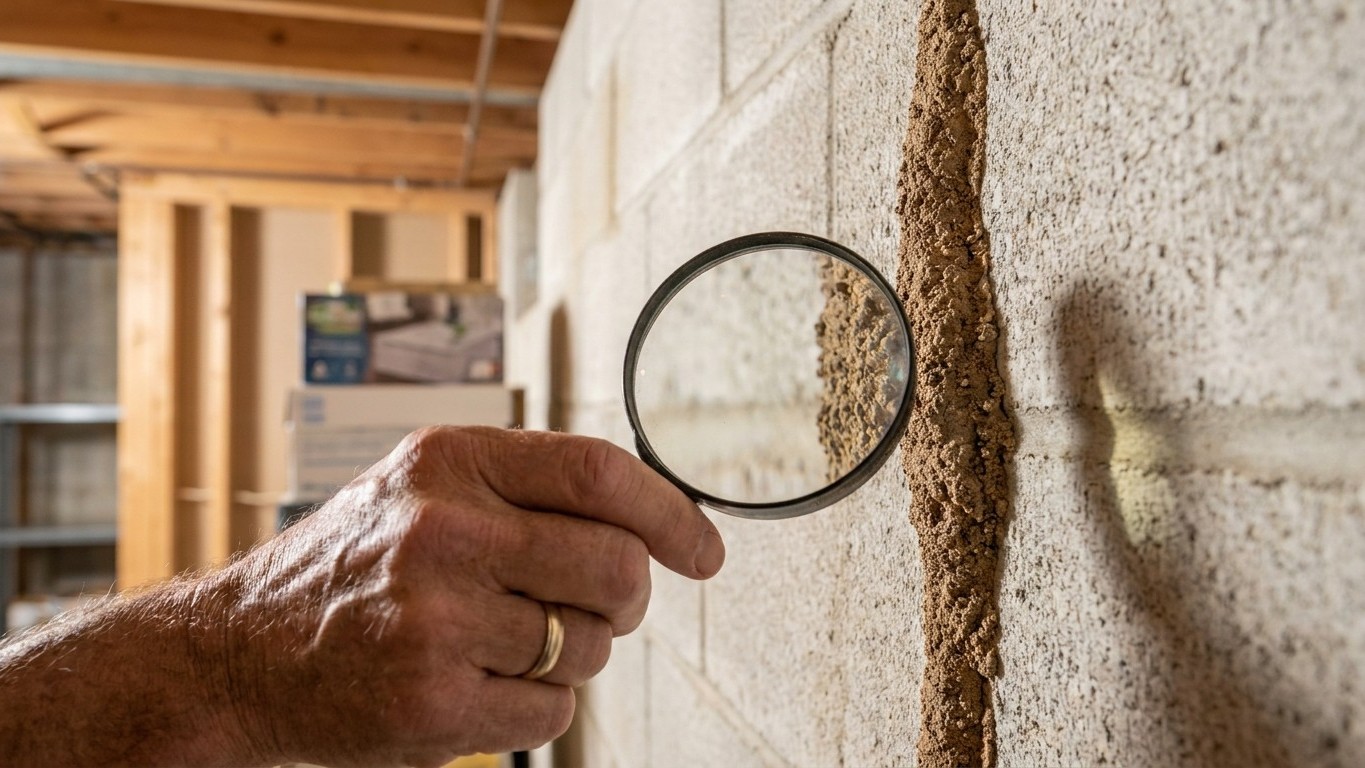

Termite control that lasts starts with the same sequence the EPA uses for every pest: find out how bad it really is, confirm what species you’re dealing with, remove what’s feeding and sheltering the colony, and only then reach for a targeted product. Skipping straight to a spray or a store-bought stake kit almost never solves an active termite problem, because termites live in the soil and in wood framing you can’t see. For anything beyond a minor, contained finding, a licensed pest control professional is the realistic next call.
The order that works

The U.S. Environmental Protection Agency describes this approach as Integrated Pest Management, and it defines it plainly: “Integrated Pest Management (IPM) is an effective and environmentally sensitive approach to pest management that relies on a combination of common-sense practices.” That word order isn’t decorative. It’s the whole method.
Step one isn’t treatment. It’s deciding whether treatment is even warranted yet. The EPA is specific about this: “Before taking any pest control action, IPM first sets an action threshold, a point at which pest populations or environmental conditions indicate that pest control action must be taken.” A single discarded termite wing on a windowsill and an active mud tube climbing a foundation wall are not the same threshold, and they don’t call for the same response.
Step two is identification, because the fix for termites has nothing in common with the fix for carpenter ants or wood-boring beetles, all of which get mistaken for each other constantly. The EPA’s language here is direct: “IPM programs work to monitor for pests and identify them accurately, so that appropriate control decisions can be made.”
Step three is prevention, and it comes before any product: “As a first line of pest control, IPM programs work to manage the crop, lawn, or indoor space to prevent pests from becoming a threat.” For a house, that means the moisture and wood-to-soil contact that make a structure attractive to termites in the first place.
Only after those three steps does the method turn to intervention, and even then it favors the narrowest tool available: “Effective, less risky pest controls are chosen first, including highly targeted chemicals, such as pheromones to disrupt pest mating, or mechanical control, such as trapping or weeding.” The broad approach comes dead last: “Broadcast spraying of non-specific pesticides is a last resort.”
A page, or a homeowner, that opens on a spray has inverted that doctrine. Treatment poured onto or into a house that still offers termites food, water, and shelter doesn’t end the problem. It suppresses it temporarily, and the colony rebuilds or relocates a few feet away, which is exactly why so many termite “treatments” turn into a repeated, expensive cycle instead of a one-time fix.
What works without a pesticide
Before any product enters the picture, several no-label methods reduce what draws termites to a structure and what lets them get inside. None of them kill an existing colony on their own, but they’re the prevention layer the EPA puts ahead of chemical control, and they’re the reason two houses on the same street can have very different termite risk.
Exclusion, moisture, and sanitation
- Exclusion: keeping wood-to-soil contact away from the foundation, sealing gaps around utility penetrations, and maintaining a gap between soil grade and wood siding removes the easy entry points termites use to move from soil into framing. It doesn’t stop termites already inside, but it closes the routes new colonies use to arrive.
- Moisture control: fixing leaking spigots, redirecting downspouts away from the foundation, and ventilating crawl spaces reduces the damp wood that subterranean termites need. It shrinks the habitat; it does not remove termites that have already established themselves in structurally damp wood.
- Sanitation: clearing scrap lumber, stacked firewood, and dead tree stumps away from the house eliminates the cellulose sources that sit right next to a foundation and act as a stepping stone into the structure. It’s tedious, ongoing yard work, not a one-time fix.
- Monitoring stations and physical removal: in-ground monitoring devices flag activity early and let a homeowner catch a threshold before it becomes a structural problem, which lines up with the EPA’s point that “less risky pest controls are chosen first, including… mechanical control, such as trapping.” They detect and sometimes disrupt localized activity, but they are not a substitute for addressing an active infestation in framing.
Be honest about what this buys you: time and reduced risk, not eradication. These practices matter most as prevention on a termite-free house, or as the maintenance layer around a professionally treated one. On an actively infested structure, they don’t replace the work of finding and eliminating the colony.
When a product is warranted
Once monitoring or visible damage confirms an active colony, a targeted treatment becomes the appropriate next step, not the first one. This is the point in the sequence where the EPA’s own order puts intervention, after threshold, identification, and prevention have already been addressed.
What that treatment looks like depends on the state, the termite species involved, and the construction of the house, which is exactly why this article won’t name a product, a brand, an active ingredient, or a dose. Registered termite products differ from state to state and change over time as registrations are renewed, restricted, or withdrawn. The label on the product is the legal document that governs its use, and only the label attached to the product actually purchased and applied in a given state is the one that applies. Anything else, including a generic recommendation, isn’t a substitute for it.
There’s a real safety reason to take that seriously. Pesticides are designed to be toxic to the organisms they target, and the same properties that make them effective against termites can make them harmful to people when they’re used incorrectly, in excess, or without following label directions. Children, older adults, and people with compromised immune systems are considered especially vulnerable to improper pesticide exposure, which is one more reason a homeowner shouldn’t improvise around what a label allows.
Questions about a specific product, whether it’s approved for a particular use, how to handle it safely, or what to do after an accidental exposure, have an official answer channel: the National Pesticide Information Center, reachable at 1-800-858-7378. That’s a more reliable source than a search result or a hardware store employee’s guess, and it costs nothing to call before applying anything.
When to stop and call someone
Termites belong on the short list of household pests where a professional is usually the right first call, not the last resort after DIY attempts fail. That’s not a hedge. Subterranean termite colonies live in the soil, travel through structural wood that’s frequently hidden behind drywall or under slabs, and can number in the tens of thousands to over a million individuals depending on species and colony age. A homeowner can’t inspect, let alone treat, what’s inside a wall cavity or under a concrete foundation.
Professional treatment also depends on equipment and access most homeowners don’t have: soil treatment around and under a foundation, drilling and treating through slabs, or installing baiting systems that require ongoing monitoring and servicing over months or years. Licensed applicators also carry the training to correctly identify the termite species present, since treatment approaches differ between subterranean, drywood, and dampwood termites, and a misidentification can mean the wrong approach entirely.
Saying a home remedy or an off-the-shelf product will handle an active termite infestation would cost the reader more than it saves, both in the price of a delayed proper treatment and in the structural damage that keeps accumulating while a colony goes untreated. Termite damage isn’t cosmetic. It compromises load-bearing wood over time, and repair costs climb the longer a colony stays active.
The prevention steps above are worth doing regardless, and they reduce the odds of an infestation starting in the first place. But once mud tubes, discarded wings, hollow-sounding wood, or visible damage confirm activity, the honest next step is a licensed pest control professional who can inspect the full structure, identify the species, and apply treatment under the state’s current registered options, not a second attempt at a store-bought fix.
Common questions
Can I get rid of termites myself without calling a professional?
For prevention, yes: exclusion, moisture control, and sanitation are homeowner tasks. For an active, confirmed infestation, no. Subterranean termite colonies live underground and inside structural wood that’s inaccessible without specialized inspection and treatment methods.
Does spraying around the foundation stop termites?
Surface spraying rarely reaches the colony itself, since termites travel through soil and hidden wood. The EPA lists broadcast spraying as a last resort precisely because it’s the least targeted option, not the most effective one.
How do I know if it’s termites and not carpenter ants?
Termite wings are equal in length and shed in clusters; carpenter ant wings are unequal in length. Termite damage follows the wood grain with mud-like material inside; carpenter ants leave clean, smooth galleries. When in doubt, accurate identification is step two in the EPA’s own sequence, and a professional inspection settles it definitively.
Who do I call with questions about a specific termite product?
The National Pesticide Information Center, at 1-800-858-7378, answers public questions about registered pesticide products, their approved uses, and safety precautions. The product’s own label, specific to the state where it’s sold, remains the governing document.