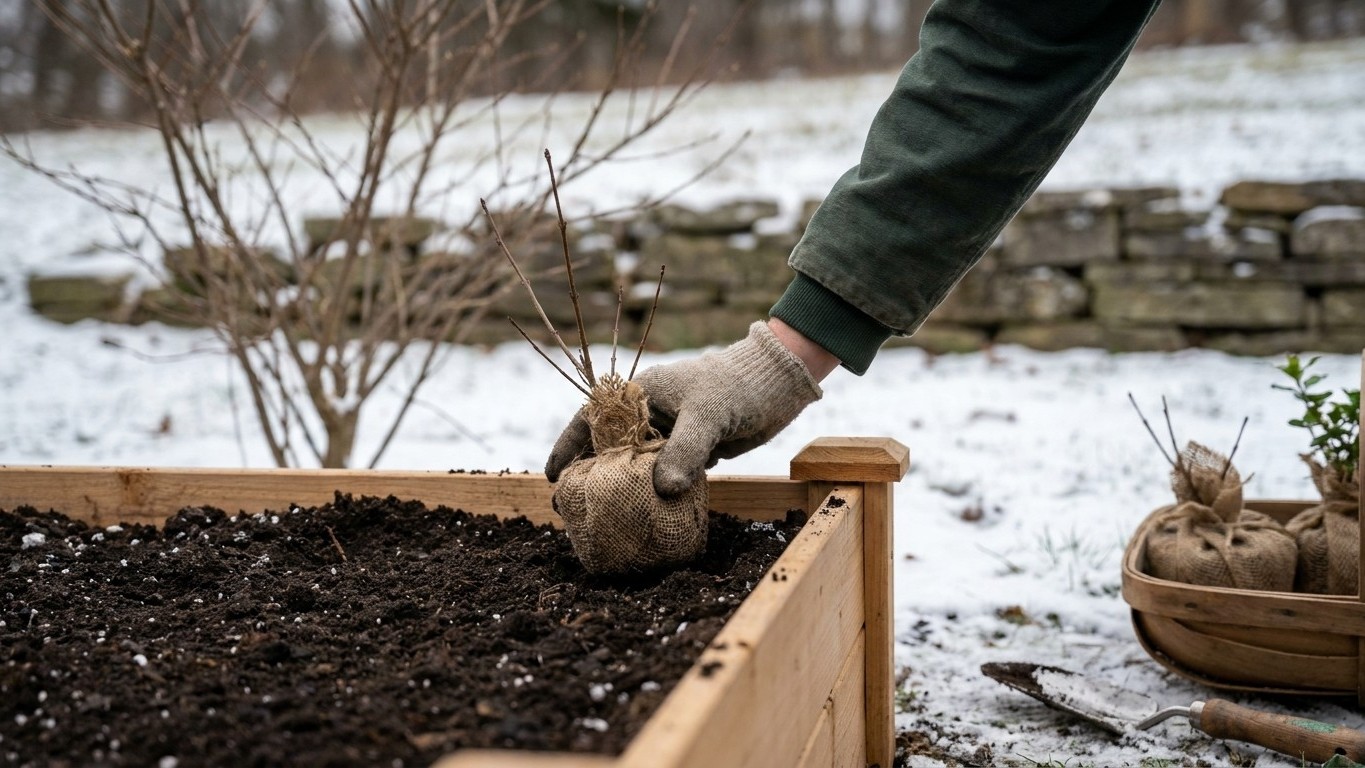

December in Rhode Island sits deep inside the dormant season, well past the first fall frost window of October 24 to November 3 and months from the last spring frost of April 7 to April 17. Almost nothing new goes into open ground. The real work this month is dormant planting, cover crops for next spring’s beds, and protecting what is already stored or overwintering.
What goes in the ground in December

The decision here is not the calendar, it is soil temperature and whether the ground is still workable. Once soil has frozen solid, nothing goes in, full stop. But Rhode Island’s coastal and southern counties often keep a short window of unfrozen, diggable soil into early December, and that window is worth using before it closes for good.
For most of the state, the honest answer is that open-ground planting is finished for the season. If the ground is still soft where you garden, garlic and shallot cloves can still go in as a last-chance planting, tucked 2 inches deep and mulched heavily with straw the moment they’re in. Miss that window and both crops wait until spring, with a smaller harvest to show for it.
Cold frames and low tunnels are the other legitimate December project. A cold frame built over an existing bed of spinach, mache, or claytonia can keep those crops slowly growing on sunny days even when the air outside sits well below freezing. This isn’t new planting so much as season extension, but it functions the same way for a household still pulling greens from the yard.
Bare-root and dormant options
Bare-root fruit trees, roses, and cane berries are sold dormant, and if the ground is still workable, December planting gives roots a head start before spring growth resumes. Heel them into a trench of loose soil or mulch if the ground has already firmed up, and plant properly once it softens again.
Indoors, this is the month to force chicory roots for winter salad greens or force a rhubarb crown in a dark, cool space for an early, tender harvest. Neither needs garden soil at all, which makes them the most reliable “planting” project available this month.
What to start under cover
Seed-starting timelines run backward from the last spring frost window of April 7 to April 17, not forward from the date on the calendar. Tomatoes and peppers are typically started 6 to 8 weeks before transplanting outdoors, which lands in mid to late February for most of the state. Onions from seed usually start 10 to 12 weeks ahead, putting that job in mid-January. December falls before both windows.
Starting those crops now would mean seedlings sitting under lights for two extra months, stretching thin, going rootbound in small cells, and losing vigor before they ever see garden soil. That’s the first failure mode of December starts: too early, and the plant runs out of patience before the weather does.
What does make sense under cover this month is anything that doesn’t run on a frost clock at all. Microgreens and sprouts finish in one to three weeks regardless of the date, and a sunny windowsill or a small grow light setup can keep a steady supply going right through winter. Slow-germinating perennial flower seeds that need a period of cold stratification, such as milkweed or many native wildflowers, can also be sown now in containers left in an unheated garage or cold frame, mimicking the outdoor cold they need before spring germination.
The second failure mode, starting too late, isn’t a December problem so much as a warning for the weeks ahead: once January arrives, the clock on onions starts running, and waiting past that point shortens the growing season those slow crops need to size up before summer heat arrives.
What is ready to pick
Outdoors, harvest is mostly finished. What’s still available comes from crops planted specifically to survive winter, or from storage built up over the fall.
Overwintered kale, collards, and leeks tolerate hard freezes and often taste sweeter after cold exposure, since the plant converts starches to sugars as a natural antifreeze. Brush snow off the leaves and harvest as needed; the plants hold in the ground far better than they would in a refrigerator. A cold frame planted with spinach, arugula, or mache back in early fall can still yield small, steady pickings on milder days, even if growth has nearly stopped.
Indoors, sprouts and microgreens fill the gap for fresh greens, ready in as little as a week from seed. This is also the month to walk through stored squash, potatoes, and onions with a critical eye. Winter squash should feel firm with no soft spots; any give under gentle pressure means it’s starting to break down and should be used first. Potatoes with green tinges or soft eyes and onions gone papery-soft at the neck should be pulled from storage before they spread rot to the rest of the bin.
The jobs that matter this month

Dormant pruning of fruit trees and cane berries is the single biggest task with a real deadline. Pruning while the plant is fully dormant, leafless, and not actively moving sap reduces stress and disease risk compared with cutting into active spring growth. Apples, pears, and brambles all take well to a December pruning pass, provided the wood isn’t frozen solid or wet with ice, which makes clean cuts harder and invites splitting.
Seed catalogs move fast, and popular varieties, especially disease-resistant tomatoes and regionally adapted corn and bean varieties, sell out well before spring planting season. Ordering now, while shelves are full, beats settling for a substitute in March.
Soil testing is worth doing on any bed that underperformed the previous season. A test through the state’s extension service takes several weeks to turn around, and amendments like lime need months to fully adjust soil pH, so a December sample gives spring beds a real chance to benefit before planting.
Turning the compost pile, even a slow, cold pile, keeps decomposition moving and prevents the whole thing from turning into a frozen, anaerobic block by February. Tool maintenance belongs here too: cleaning soil and sap off pruners and shovels, sharpening blades, and oiling metal parts before months of damp storage all prevent rust and dull edges that cost time come spring. Fences, raised bed corners, and trellis posts loosened by a season of wind and growth are easier to repair now, on a mild afternoon, than in the rush of April.
What not to do in December
The most common mistake this month is treating a stretch of unusually mild weather as a green light. A few 50-degree days don’t mean the soil has warmed, and they don’t mean the frost risk has passed. Planting anything tender based on air temperature alone, rather than soil temperature and the calendar’s frost window, is a guaranteed loss once the next cold snap arrives.
Uncovering cold frames or removing winter mulch during a mild spell is the same mistake from the other direction. Straw and row cover piled onto garlic beds, strawberry crowns, or perennial roots are doing their job by insulating against temperature swings, not just cold itself. Pulling that protection off too early exposes roots to a hard refreeze that can do more damage than a steady, unbroken winter would have.
Fertilizing with nitrogen this late in the season is also counterproductive. Nitrogen pushes soft, leafy growth, and any plant that responds to it now will produce tender tissue with no time to harden off before harder cold sets in, tissue that then freezes and dies back, wasting the plant’s stored energy. If soil needs feeding, this is the month for slow amendments like compost or a soil test-guided lime application, not a fast-acting fertilizer.
Working wet or partially frozen soil rounds out the list of avoidable damage. Digging or tilling ground that’s still soggy from fall rain compacts the structure for months, undoing any benefit from the work itself.
Checking this against your own county
A statewide frost window is a starting point, not a guarantee for any single yard. Coastal towns along Narragansett Bay typically stay a degree or two warmer through early winter than inland or higher-elevation spots in the northwest corner of the state, and that gap can shift a workable-soil window by a week or two in either direction. Low-lying areas that collect cold air overnight will also freeze solid earlier than a slope just a few hundred feet away.
For a planting calendar built around local conditions, the University of Rhode Island Cooperative Extension is the reliable next stop, with guidance calibrated to the state’s specific soils and microclimates rather than a single averaged frost date.
Common questions
Can I still plant garlic in December in Rhode Island?
Only if the ground hasn’t frozen solid yet. Where soil is still workable, garlic and shallots can go in as a last option, mulched heavily right after planting. Once the ground freezes, that window is closed until spring.
Is it too late to start seeds indoors this month?
For most vegetables, yes. Tomatoes, peppers, and onions are timed backward from the last frost window of April 7 to April 17, and December starts too early for nearly all of them. Microgreens, sprouts, and cold-stratified perennial flower seeds are the exceptions, since they don’t run on that frost clock.
What USDA hardiness zone is Rhode Island in?
The USDA Plant Hardiness Zone Map places Rhode Island in zones 6a to 7b, based on average annual extreme minimum winter temperature. This is a statewide range; coastal and southern areas tend toward the warmer end, inland and higher elevations toward the colder end.
Should I prune fruit trees in December?
Yes, provided the wood isn’t frozen or coated in ice. Pruning during full dormancy reduces disease risk and stress on the tree compared with cutting during active spring growth, making this one of the better windows for the job.
Gardeners who plant by the Moon can check the December 2026 moon planting calendar, a tradition rather than a proven method.