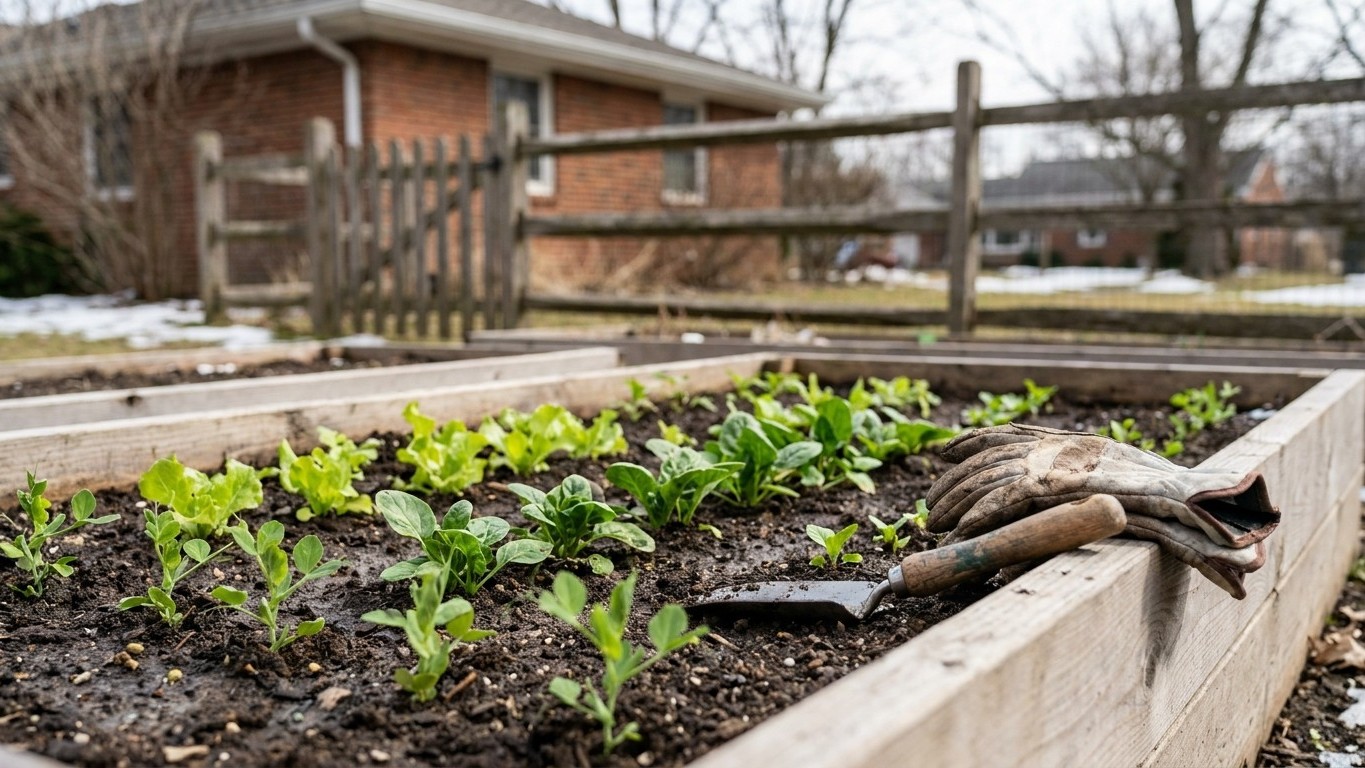

In March, most of Texas can start setting out warm-season transplants and direct-sowing tender crops, but the timing swings by weeks depending on where you garden. Along the upper Gulf coast, the frost risk is essentially over. In the Panhandle and parts of North Texas, a hard freeze is still a real possibility, and the smart move is to keep working with cold-hardy crops a little longer before committing tomatoes and peppers to open ground.
What goes in the ground in March

The decision isn’t the calendar. It’s soil temperature and where your county sits relative to its own last-frost window. Near Houston, NOAA’s 1991-2020 climate normals for the Bush Intercontinental Airport station (IAH) put the last spring freeze somewhere between February 4 and March 1, in the 30-70% probability band. That means by March, most years, the coldest nights are already behind the Gulf coast gardener. It does not mean the same thing 400 miles north.
Texas covers USDA hardiness zones 6a through 10a, the widest spread of any state in the Lower 48. A zone map built on average annual extreme minimum temperature can’t tell you the date of your last freeze, but it does tell you that a gardener in the Panhandle (cooler zones) and a gardener near Brownsville (zone 10a) are not reading the same March at all. Treat the Houston figures above as one data point from the mild end of the state, not a statewide instruction.
Where the frost window has effectively closed, March is when tomatoes, peppers, eggplant, squash, cucumbers, snap beans and sweet corn can go into the ground as transplants or direct-sown seed, alongside continued plantings of okra later in the month once soil has warmed. Where a freeze is still plausible, the safer March list stays cold-tolerant: potatoes, onions and other alliums, English and snap peas, carrots, beets, and the leafy brassicas (kale, collards, cabbage, broccoli) that shrug off a light frost without much damage. Garlic planted the previous fall keeps growing regardless of region. If you’re not sure which camp your county falls into, hold the tender crops another two to three weeks rather than gamble a full flat of transplants on one warm afternoon.
What to start under cover
Seed-starting math runs backward from your local frost window, not forward from a date on a seed packet. Tomatoes, peppers and eggplant generally need six to eight weeks indoors before they’re ready to go into the garden. If your area’s last frost risk clears in early March, as it tends to near the Gulf, those seeds should already be up and growing by now, and starting them in March risks ending up with leggy, rootbound plants sitting in cell trays too long before the ground is ready.
Further north and inland, where frost risk lingers well past the Houston window, March is closer to the right moment to start those same warm-season seeds indoors, timed so transplants are a sturdy four to six weeks old when your own last-freeze risk drops. Melons, squash and cucumbers need less lead time, typically three to four weeks, so they can go in the tray later without falling behind.
The two failure modes are mirror images of each other. Start too early and you get spindly, stressed seedlings that sulk after transplant, or worse, get root-bound and stall permanently. Start too late and the plant never builds enough size to make full use of the growing season before summer heat or the next frost window closes in. Either way, the fix is the same: work out your own area’s frost pattern first, then count backward from it, rather than starting everything on the same date because it’s March on the calendar.
What is ready to pick
March harvests in Texas gardens lean heavily on whatever went into the ground back in fall or midwinter. Cool-season greens planted earlier, lettuce, spinach, arugula, Swiss chard, are usually at peak cutting size now, and the trick to good flavor is to harvest before nighttime temperatures climb enough to push them toward bolting. Once a lettuce plant starts sending up a central stalk, the leaves turn bitter fast, so check plantings every few days rather than waiting for a convenient weekend.
Brassicas planted in fall, broccoli, cabbage, cauliflower, collards, kale, are often heading up or filling out through March, especially in the milder southern half of the state. Root crops seeded in late winter, carrots and beets, are usually still sizing up rather than ready, so resist pulling them early just because the tops look full. Green onions and any overwintered bunching alliums can be harvested as needed.
If you’re storing crops from the previous season, root cellars, garages, or a cool pantry, this is a good month to go through onions, potatoes and winter squash and pull anything showing soft spots or sprouting eyes before it spreads to the rest of the batch. A single soft onion left in a mesh bag can taint the ones around it within a couple of weeks.
The jobs that matter this month

March is when the garden either gets ahead of the season or falls behind it, and the difference usually comes down to a handful of unglamorous tasks. Soil preparation tops the list: working compost or aged manure into beds before the warm-season crops go in gives roots something to grow into immediately, instead of making them wait weeks for amendments to break down. Beds that get this treatment in March consistently outperform beds amended after planting.
Mulching follows close behind. Laying two to three inches of straw or shredded leaves around newly set transplants now conserves the soil moisture that early spring rains provide, before the drier stretches of late spring set in. Staking or caging tomatoes and other sprawling crops is far easier done at planting time than three weeks later, once branches have already gone in every direction and roots have spread past where a stake can go without damage.
Dormant-season carryover work
Anywhere still waiting out the tail end of frost risk, March is also the last practical window for dormant pruning of fruit trees, grapevines and cane berries before buds break and sap starts moving heavily. Pruning after growth resumes costs the plant energy it can’t easily recover. It’s also the moment to finish ordering seed for the crops you haven’t started yet, since popular varieties of tomato and pepper routinely sell out by early spring. Testing soil pH, turning compost piles that have gone dormant over winter, sharpening pruners and hoes, and checking fences and raised-bed frames for winter damage all pay off now, before the growing season fills every free hour.
What not to do in March
The most common March mistake is trusting the air temperature instead of the soil. A run of 75-degree afternoons can feel like summer, but if the last-frost window for your county hasn’t closed yet, a single clear, calm night can still drop temperatures enough to kill tomato and pepper transplants outright. Check your region’s frost pattern, not the week’s forecast high, before committing tender crops to open ground.
A close second is uncovering cold frames, low tunnels or wrapped citrus too early after a mild stretch. Texas springs are known for false starts, a warm week followed by a cold snap, and plants that were hardening off under cover can take real damage if exposed right before a late cold front moves through. Leave protection in place a little longer than feels necessary, especially north of the coastal zones.
Nitrogen timing trips people up too. Heavy nitrogen applications on leafy greens that are about to bolt just pushes soft, fast growth right as the plant is shifting energy toward flowering, which does nothing for flavor or yield. Save the nitrogen push for the warm-season crops that are just getting started, where that growth will actually go toward the harvest you’re after.
Checking this against your own county
A statewide answer is a starting point, not an instruction. Texas runs from USDA zone 6a to 10a, and elevation, latitude and distance from the Gulf all shift frost timing by weeks in either direction, even within the same region. The Houston-area figures cited here come from one weather station; a county 200 miles inland or 500 miles north will see its own frost window on a different schedule entirely.
For a planting calendar built around your specific county, the Texas A&M AgriLife Extension Service maintains county-level guidance and local contacts who track conditions on the ground rather than a single airport station.
Gardeners who plant by the Moon can check the March 2027 moon planting calendar, a tradition rather than a proven method.
Common questions
Is it too late to plant tomatoes in March in Texas?
Not for most of the state. Along the mild Gulf coast, where the last-frost window typically closes by early March, transplants can go in as soon as that risk has passed. Further north and inland, March is often still the right window rather than too late, since frost risk lingers longer there.
Can I still plant onions in March?
Onion sets and transplants generally do best going in earlier in the cool season, but short-day varieties can still be planted in early March in most of the state if they weren’t planted sooner. Bulbing may be somewhat smaller than an earlier planting would produce.
What vegetables tolerate a late freeze in Texas?
Alliums, English and snap peas, carrots, beets, and brassicas like kale, collards, cabbage and broccoli generally handle a light frost without serious damage. Tender crops like tomatoes, peppers, squash and beans do not, and should wait until the local freeze risk has passed.
Why does the same month look so different across Texas?
Texas spans USDA hardiness zones 6a through 10a, one of the widest ranges of any state, and the Gulf coast, Hill Country, North Texas and the Panhandle all sit on different frost schedules. A date that works near Houston can be weeks premature farther inland or north.