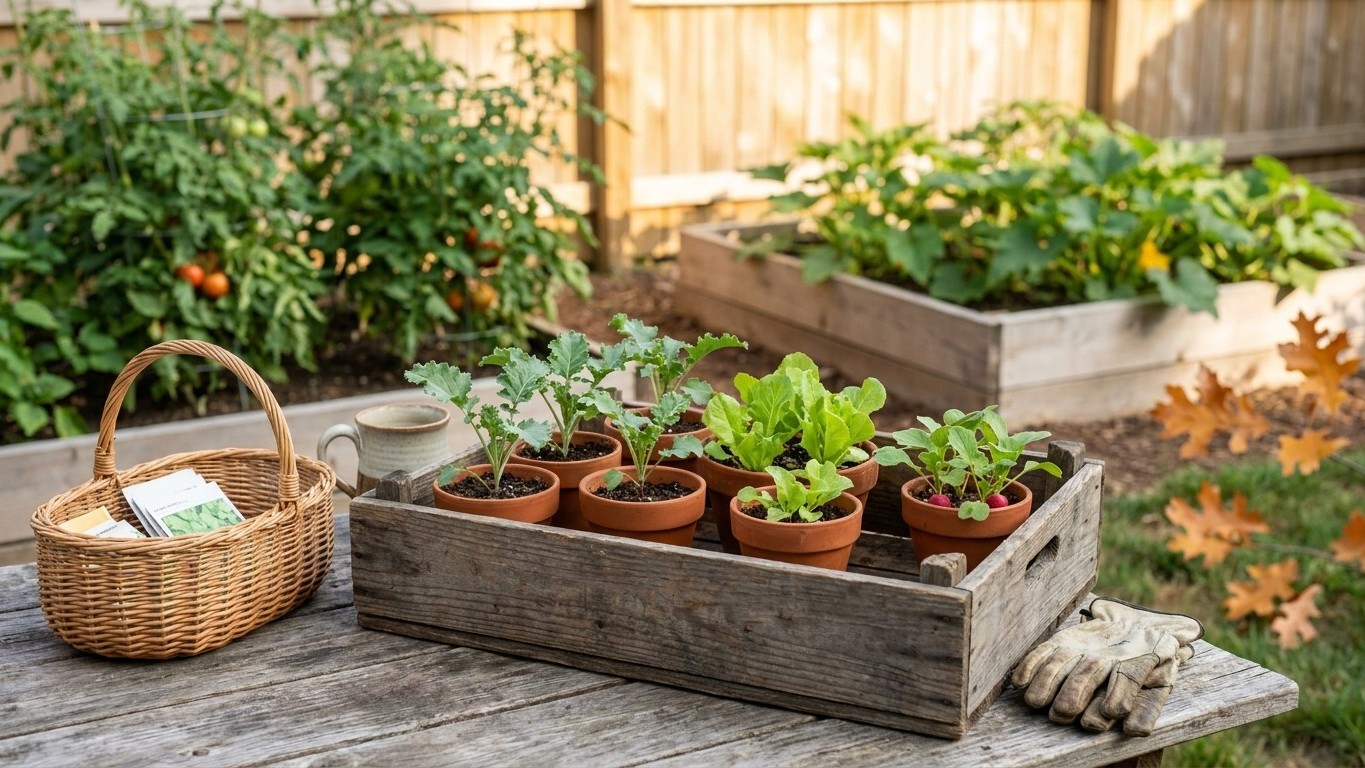

August in Vermont means racing the calendar in two directions at once: harvesting the peak of summer while sowing the last fast crops that can still beat the fall frost. With first fall frost landing between October 3 and October 13 in the Champlain Valley, there’s roughly a two-month window left for anything new going into the ground, and that window shrinks fast the further you climb into the hills.
What goes in the ground in August
By August, Vermont soil has long since cleared the last spring frost window of April 30 to May 10. That’s not the number that matters now, though. What matters is counting backward from first fall frost, October 3 to October 13 at the Burlington reference station, and asking whether a crop can mature in the days remaining. That’s roughly 55 to 70 days depending on how early in August you’re planting and where you garden relative to Lake Champlain.
That window still fits a real list. Direct-sow bush beans in the first week or two of August if your local frost tends toward the later end of the range. Fast lettuce, spinach, arugula, and mustard greens all finish in 30 to 45 days and can go in through most of the month. Radishes and turnips are quicker still. Beets and carrots sown early August have a real shot at a fall harvest, especially with a bit of row cover to buy extra weeks. Peas planted for a fall crop can work too, since they tolerate the cooling nights better than beans do.
The gamble crops are the warm-season ones people are tempted to squeeze in because the weather still feels like summer: tomatoes, peppers, winter squash, and melons started from seed now won’t reach maturity before frost shuts them down. Air temperature is not soil temperature, and neither one is the frost date. If you’re gardening in the Northeast Kingdom or up in the Green Mountains, shave a week or two off every number above, since those areas run colder and shorter than the Champlain Valley station this data comes from.
Brassicas for fall eating, like quick-maturing Asian greens and smaller cabbage varieties, are worth transplanting rather than direct-sowing this late, since transplants save two to three weeks of field time that seeds can’t afford to lose.
What to start under cover
Starting seeds under cover in August is really an exercise in arithmetic, and the equation runs backward from first fall frost, October 3 to October 13. Take a crop’s days-to-maturity, add roughly two weeks for the seedling stage before it’s ready to transplant, and see what’s left before the frost date arrives. For most of Vermont, that math only works for crops finishing in under 60 days total.
Practically, that means fall lettuce, spinach, and other quick greens started in trays or a cold frame in early August have time to reach transplant size and then finish in the garden or under a low tunnel. Kale and collards started under cover in the first half of the month can be set out by early September and will tolerate the season’s first light frosts once established, which extends their harvest well past the average frost date.
The two ways this goes wrong are mirror images of each other. Start too early in the month, especially in a hot greenhouse or a sunny windowsill, and seedlings get rootbound and leggy before there’s anywhere cool enough outside to plant them, since August heat doesn’t let up on schedule. Start too late, past the middle of the month for anything slower than a 40-day green, and the transplant never sizes up before the cold shuts growth down, no matter how mild the fall turns out to be.
Cold frames deserve a mention here too. Seeding directly into a cold frame in mid-to-late August, rather than starting in trays first, skips the transplant shock entirely and often outperforms indoor starts for anything destined to overwinter under cover.
What is ready to pick
August is the month Vermont gardens earn their keep. Tomatoes started ripening by late July in most years and hit their stride now, with the classic test being color plus a slight give under gentle pressure rather than firmness. Summer squash and cucumbers need daily checking, since both can go from perfect to oversized in 48 hours in warm, humid stretches.
Sweet corn planted on a normal spring schedule tends to come in through August, with silks turning brown and kernels running milky when pierced as the surest readiness signs. Beans, whether bush or pole, keep producing if picked every two to three days, and letting pods mature and toughen on the vine is the fastest way to shut a plant’s production down early.
Berries carry a lot of the month’s harvest weight too. Blueberries ripen unevenly on the same bush, so picking every few days rather than stripping a bush in one pass gets more total fruit over the season. Raspberries on summer-bearing canes are usually finishing up, while fall-bearing types are just getting started and will keep going into the cooler weeks ahead.
Garlic and onions planted the previous fall or spring are typically already cured and in storage by now, so August is a good time to check that stash rather than the garden bed: soft spots, sprouting, or a sour smell mean it’s time to use that bulb before it takes its neighbors with it.
The jobs that matter this month
Watering rhythm matters more in August than in any other month, since heat and dry stretches hit at the exact moment fruiting crops are sizing up. Deep, infrequent watering, aimed at the root zone rather than a daily light sprinkle, keeps tomatoes and squash from the stop-start growth that causes blossom end rot and split skins.
Staking and support work that got skipped in June comes due now. Sprawling tomato and squash vines that hit the ground in August rot faster in humid weather and give pests an easy path onto the fruit, so a late stake or trellis still pays off even this far into the season.
Pest scouting earns its place on the list too. Japanese beetles peak in Vermont gardens through August, and squash vine borer damage, wilting vines with a small hole near the base and a sawdust-like residue, shows up clearly enough this month to catch before an entire squash planting collapses. Checking the undersides of tomato and potato leaves for the dark lesions of late blight is worth doing on a weekly walk-through, since this disease spreads fast in the humid stretches August tends to bring.
Succession sowing of quick greens, done every two weeks through the first half of the month, keeps the table supplied into fall without one giant glut. Mulching beds that have gone bare after early harvests holds soil moisture and keeps weed pressure down heading into the last stretch of the season. And weeding before seed heads form now saves an entire season of extra weeding later, since one uncontrolled weed patch in August can seed a bed for years.
What not to do in August
The most common mistake this month is starting warm-season crops because the weather still feels like summer. Tomato and pepper seed sown in August, even under cover, is chasing a maturity date the fall frost window won’t allow, regardless of how warm the air feels on any given day.
Overfeeding nitrogen late in the season is the second trap. A nitrogen boost that would have pushed leafy growth in June instead delays fruit ripening and diverts energy into foliage right when tomatoes, squash, and beans need to be finishing rather than expanding. If a feeding is needed this late, a lower-nitrogen, higher-potassium approach supports ripening fruit instead of working against it.
Inconsistent watering causes more August damage than most gardeners expect. Letting soil dry out hard, then flooding it after a storm or a catch-up watering session, is the classic setup for blossom end rot in tomatoes and peppers and for split skins on ripening fruit. A steady schedule, even if it means less water overall, beats an erratic one every time.
Skipping the weekly disease check is the mistake that costs the most once it’s made. Late blight and other fungal issues can move through a planting in a matter of days during a humid August stretch, and by the time symptoms are obvious without looking, entire beds can already be lost.
Checking this against your own county
Every date and window here comes from a single Burlington-area station on Lake Champlain, the mildest corner of the state. Elevation, distance from the lake, and simple north-south position all shift frost timing by weeks, not days. A garden in the Northeast Kingdom or high in the Green Mountains should expect a shorter, colder version of this calendar than the Champlain Valley gets. For a more localized read on your own frost windows and planting timing, the University of Vermont Extension is the right first stop.
Common questions
Is it too late to plant tomatoes in Vermont in August?
Yes, for anything started from seed. With first fall frost arriving October 3 to October 13, a tomato seeded in August won’t reach maturity before the season ends. An already-established transplant might still ripen a late crop if it was planted earlier in the summer, but starting new tomato seed this month isn’t a workable plan.
What vegetables can I still direct-sow in Vermont in August?
Fast crops are the safe bets: lettuce, spinach, arugula, radishes, turnips, beets, carrots, and bush beans sown early in the month, plus peas for a fall harvest. All of these can mature within the roughly 55 to 70 days left before the average first fall frost.
Why does my garden’s frost date differ from the state average?
The October 3 to October 13 window comes from a single station in Burlington, right on Lake Champlain, which runs milder than most of the state. Higher elevations, inland valleys, and the Northeast Kingdom typically see frost weeks earlier than that range.
Should I fertilize my garden heavily in August?
No. Heavy nitrogen late in the season pushes leafy growth at the expense of ripening fruit and can delay harvest right when crops need to be finishing before frost. If feeding is needed, a lower-nitrogen option supports fruit development better than a standard all-purpose fertilizer would.