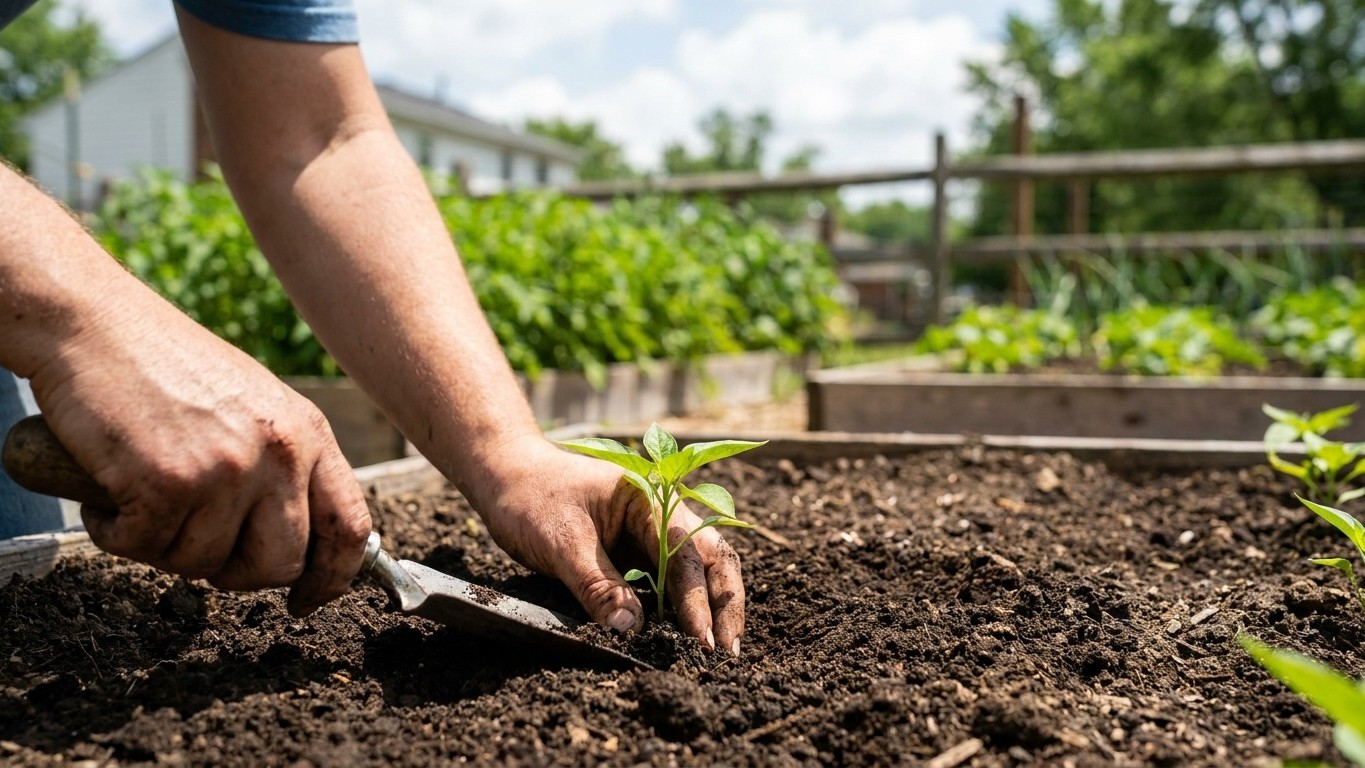

Early July in Vermont sits comfortably between the last spring frost (April 30 to May 10) and the first fall frost (October 3 to October 13), so the ground is open and warm. This is a month for filling gaps with heat-loving direct-sown crops, starting the fall brassica crop under cover, and getting garlic out of the ground before it rots in the soil.
What goes in the ground in July
Soil temperature, not the date on the wall, decides what survives outdoors right now. By early July, soil across most of Vermont has been above 60F for weeks, which is the threshold that matters for beans, squash and cucumber seed. That window between the last spring frost and the first fall frost gives most of the state roughly 85 to 105 days of open growing season left, depending on how close a garden sits to the Lake Champlain shoreline versus the Green Mountains or the Northeast Kingdom.
Bush beans, cucumbers, and summer squash can still go into the ground as direct-seeded crops through the first half of the month and reach harvest before frost. Corn started now is a gamble in the higher elevations but workable near Lake Champlain. Root crops for fall eating, meaning beets and carrots sown in the first two weeks of July, have enough season left to size up before the ground cools. Fall peas, sown by mid-month at the latest, count backward from the October frost window and just barely make it.
Garlic and shallots are not going in this month. They are coming out. Vermont’s garlic harvest typically falls in July, which makes this the month to pull bulbs, not plant them. Fall brassica transplants, meaning broccoli and cabbage started indoors in June, are ready to move into the garden now.
| Crop | Method | Why now |
|---|---|---|
| Bush beans | Direct sow | Warm soil, quick to maturity, still fits before frost |
| Cucumbers, summer squash | Direct sow | Heat-loving, fast-fruiting for late-summer harvest |
| Beets, carrots | Direct sow | Sown now, sized up for fall eating |
| Broccoli, cabbage transplants | Transplant | Started indoors in June, ready for the fall crop |
| Fall peas | Direct sow, first half of month | Last realistic window before October frost |
What to start under cover
The arithmetic that matters here runs backward from the first fall frost, not forward from July. Take the October 3 to October 13 window, subtract the days a crop needs from transplant to harvest, then subtract another four to six weeks for the seedling to grow to transplant size indoors. Broccoli and cabbage for fall harvest need roughly 60 to 70 days from transplant to maturity, which means seed started under cover in early July, moved to the garden by early to mid August, still lands inside the season.
Lettuce and other fast greens are worth starting under cover through July specifically to dodge the heat that makes seed sown directly in open soil bolt or fail to germinate. A shaded cold frame or a spot under row cover keeps soil temperature down enough for germination while the crop waits for cooler weeks ahead.
The two ways this goes wrong both cost a harvest. Start fall brassicas too early under cover, in poor light and cramped cells, and the plants go leggy and rootbound before there is anywhere to put them, checking growth for weeks after transplant. Start too late and the plant runs out of daylight and warmth before it sizes up, leaving a half-formed head when frost arrives. Counting backward from the frost window, rather than sowing on a fixed date, is what keeps a fall crop out of both traps.
What is ready to pick
Garlic and shallots top the list. The tell for garlic readiness is the bottom three to four leaves turning brown while the top leaves stay green, at which point bulbs come out of the ground and go somewhere dry and airy to cure, never in direct sun. Shallots follow the same signal.
Peas sown in spring are finishing their run by early to mid July, and the earliest bush beans planted back in late spring start coming on. Zucchini and summer squash, if the garden had transplants or early direct-sown seed in the ground, begin producing fast enough that missing a picking for a few days turns a tender squash into a baseball bat.
Strawberries wind down through the month while raspberries and blueberries pick up, both worth checking every two to three days rather than waiting for a big harvest day, since ripe berries do not hold on the bush. Broccoli planted early, along with the last cool-season greens before summer heat makes lettuce bitter, round out what is coming off the beds. In warmer pockets near Lake Champlain, the first tomatoes can start coloring by the very end of the month, though that is closer to the exception than the rule statewide.
The jobs that matter this month
Staking and tying tomatoes, peas, and pole beans now, before the plants sprawl, saves fruit from rot and makes disease easier to spot later. A plant staked after it has already flopped across the bed rarely recovers its shape, and the tangled growth traps humidity against the leaves, which matters in a climate as humid as Vermont’s summer.
Watering rhythm counts more in July than at any other point in the season. An inch to an inch and a half of water a week, delivered slowly at the soil line rather than in a quick overhead spray, keeps root zones even. Uneven watering, meaning a dry week followed by a heavy soak, is the direct cause of blossom end rot in tomatoes and split skins in carrots.
Mulch laid down now does two jobs at once: it holds soil moisture between waterings and it suppresses the weed flush that July heat and light bring on. Succession sowing, meaning a fresh short row of beans, beets, or lettuce every two to three weeks, keeps the harvest coming instead of arriving all at once and then stopping.
Pest scouting cannot wait. Squash vine borer moths lay eggs at the base of squash and zucchini stems through early July, and by the time a plant wilts overnight, the larva is already inside the stem and past easy control. Japanese beetles show up on beans and roses through the month and are far easier to knock back with early, repeated hand removal than once populations build. Garlic that has come out of the ground needs curing in a dry, shaded, airy spot for several weeks before storage, not left in a pile in the sun.
What not to do in July
Planting heat-loving crops like squash or cucumbers into soil that is still cold from a wet spring, just because the air feels warm, sets seed up to rot before it germinates. Soil temperature lags behind air temperature by days, sometimes longer after a cold, rainy spell, so checking the soil rather than the thermometer on the porch avoids a wasted planting.
Uncovering cold frames or removing row cover too early after a mild stretch is a common misstep, since a single cool night can undo weeks of protected growth on tender transplants. Vermont’s weather swings enough, even in midsummer, that a few warm days are not a guarantee against a cold night, particularly away from the lake’s moderating effect.
Feeding nitrogen to tomatoes and peppers once they are flowering and setting fruit pushes leafy growth at the expense of the crop, delaying ripening rather than helping it. Nitrogen is useful early, before flowering, not once a plant has shifted into fruit production. Overhead watering in the evening, rather than at the soil line in the morning, leaves foliage wet overnight in Vermont’s humid air, which is exactly the condition that lets fungal diseases like early blight take hold.
Leaving garlic in the ground past its harvest window is its own mistake: bulbs left too long split their wrappers and store poorly, while bulbs pulled too early never size up.
Checking this against your own county
A statewide frost window is a starting point, not an instruction for a specific yard. The April 30 to May 10 and October 3 to October 13 windows above come from a station on the mild shore of Lake Champlain. Elevation, lake effect, and the difference between the warmer Champlain Valley and the higher, colder Green Mountains or Northeast Kingdom can shift both frost dates by weeks in either direction.
Anyone gardening away from the immediate lakeshore should treat these dates as a guide and confirm timing locally. The University of Vermont Extension publishes county-level guidance and a planting calendar that adjusts for these regional differences.
Common questions
Can tomatoes still be planted in Vermont in July?
Transplants set out very early in the month can still ripen fruit before frost in the milder Champlain Valley, but this is a late, marginal planting rather than a reliable one, and it grows less realistic the farther a garden sits from the lake or the higher its elevation.
When should garlic come out of the ground in Vermont?
July is the harvest month statewide. The signal to watch is the lower three to four leaves browning while the upper leaves stay green, not a date on the calendar.
Is it too late to direct-sow beans in July?
No. Bush beans sown in the first half of the month still have enough of the roughly 85 to 105 remaining growing days to mature before the first fall frost across most of the state.
Why do fall broccoli and cabbage need to start indoors in July instead of being sown directly outside?
Counting backward from the October frost window, the transplant needs four to six weeks of indoor growth before it goes into the garden, leaving no room to also wait on outdoor germination and early growth.