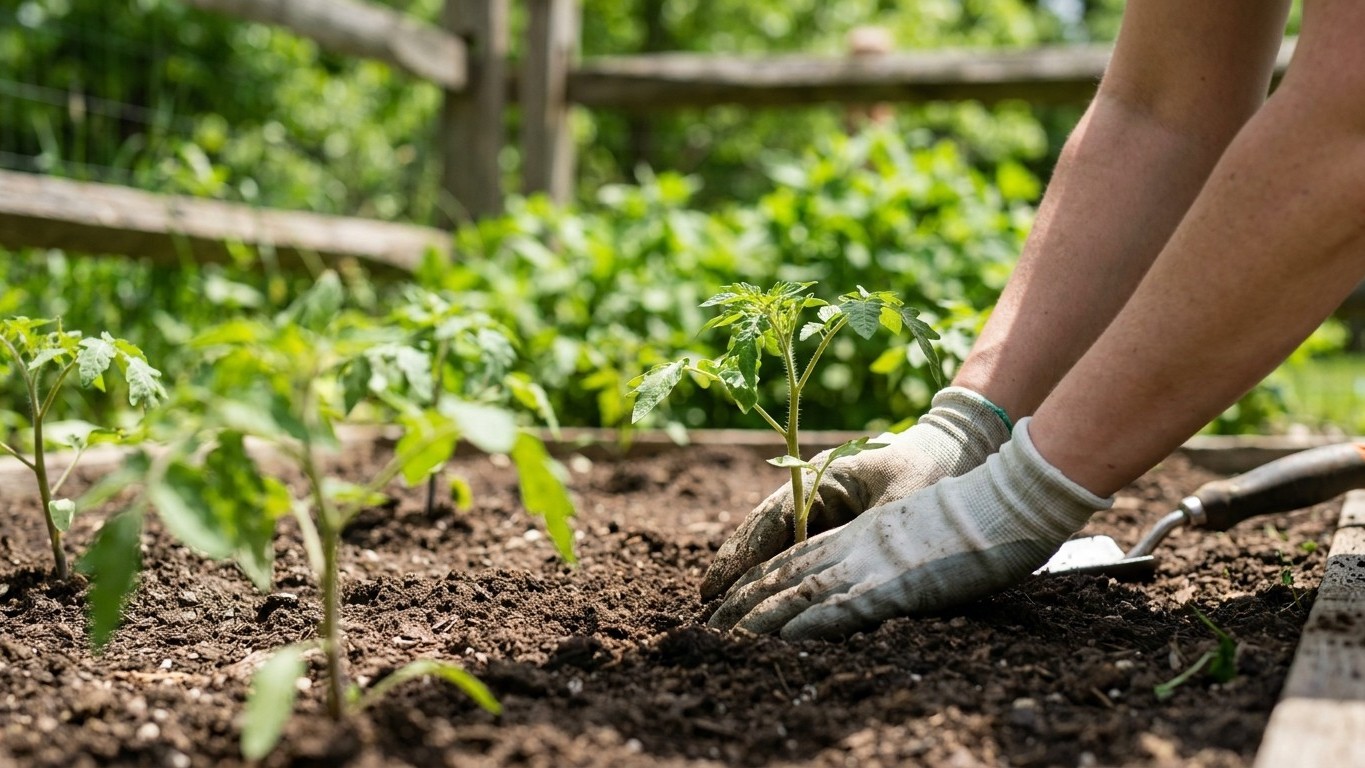

June is Vermont’s green light month. By the time it opens, the state’s last spring frost window (April 30 to May 10, per NOAA climate normals for Burlington) has already passed in the valleys, so nearly everything can go outside: tomatoes, peppers, beans, squash, corn, and the last rounds of peas and greens. The catch is elevation, not the calendar.
What goes in the ground in June
The frost math changes everything about how you read this month. NOAA’s 1991-2020 climate normals put Burlington’s last spring freeze in the April 30 to May 10 range, which means by the first week of June, that risk has statistically cleared in the Champlain Valley. Higher ground doesn’t get the same deal. The Green Mountains and the Northeast Kingdom run substantially colder than the lakeside station this data comes from, so a grower at 1,500 feet in Caledonia County should treat early June the way a Burlington gardener treats mid-May: still watching the forecast, not just the date on the wall.
Soil temperature is the gatekeeper here, more than air temperature ever will be. Warm-season crops like tomatoes, peppers, squash, cucumbers, melons, and beans need soil that’s held steady warmth for several days running, not just a sunny afternoon. If the ground still feels cold and damp when you push a finger in past the second knuckle, wait. A week’s delay costs far less than a stand of squash seedlings blackened by a cold night.
Safe bets versus gambles
Once soil has warmed, June becomes the month to get the tender stuff in without much second-guessing, especially in the lower zones (5a-5b) around the lake. In the colder pockets rated 3b-4a, some of these same crops are safer started a week or two later in the month.
| Crop group | Frost tolerance | June planting note |
|---|---|---|
| Tomatoes, peppers, eggplant | None | Transplant after soil has warmed; hold in colder zones until soil stays consistently warm |
| Squash, cucumbers, melons | None | Direct sow or transplant once nights stay mild |
| Snap beans, corn | Low | Direct sow through the month; succession sow beans every two weeks |
| Beets, carrots, lettuce | Moderate to high | Keep sowing in succession all month for a steady harvest |
| Peas | High | Last practical sowing is early June before heat slows germination |
Alliums like leeks and onion sets can still go in early in the month where they haven’t already, and garlic planted the previous fall is simply growing on now, no action needed beyond weeding.
What to start under cover
Most of the warm-season starts a Vermont gardener needs for the summer garden should already be hardened off and heading outside by June, not starting from seed indoors. What’s left to start under cover this month is mostly aimed at fall harvest, and the math runs backward from the first fall frost window of October 3 to October 13.
Take a fall broccoli or cabbage that needs roughly 60 to 70 days from transplant to harvest. Counting back from early October puts the transplant date in late July or early August, which means the seed itself needs starting indoors sometime in June, four to six weeks ahead of that transplant date. So brassicas destined for fall eating, along with a fresh round of lettuce and herbs meant to replace anything that bolts in summer heat, are the realistic candidates for a seed tray this month.
The two ways this goes wrong are mirror images of each other. Start those fall brassicas too early in June and they sit too long waiting for transplant weather, turning leggy and rootbound in cramped trays, a setback that shows up later as stunted, bolt-prone plants. Start them too late, closer to July, and there isn’t enough runway left before the Kingdom’s shorter season catches up with them. A rough rule that works across most of the state: if you can count backward from your local first frost date and land on a June start, you’re in the window; if the math pushes into July for a crop needing 70-plus days, it’s probably a gamble not worth the tray space.
Cold frames or a simple shaded corner can hold these seedlings if outdoor heat spikes before they’re ready to move, which buys a few extra days of flexibility without losing the whole batch to bolting or transplant shock.
What is ready to pick
June is when the early garden finally starts paying rent. Asparagus beds that have been feeding the household since May are still cutting well into the month, though spears thin out as the plant shifts energy toward growing ferny top growth, a natural signal to stop cutting and let the bed rebuild strength for next year.
Rhubarb stalks are at peak thickness now, ready whenever they’ve reached a usable length, no need to wait for a specific size. Spinach and lettuce sown in April are bulking up fast and should be cut before the heat pushes them toward bitterness or bolting, a shift that can happen within days once temperatures climb. Radishes started early are ready in a tight window too; leave them in the ground too long and they turn woody and hot.
Early peas, if they were sown as soon as the soil allowed, start filling pods toward the end of the month in the warmer parts of the state. The tell is a pod that’s plump but still bright green and snaps cleanly when bent, not one that’s started to yellow or feels papery. Strawberries planted in prior seasons often begin ripening in the last week or two of June, especially in the Champlain Valley’s milder microclimate, with berries turning fully red and pulling away from the stem with light pressure rather than needing to be tugged.
Anything still in cold storage from the previous fall, winter squash, potatoes, or onions, deserves a check now. Soft spots, sprouting eyes, or a sweet fermenting smell mean it’s time to use that item immediately rather than let it spoil the rest of the batch.
The jobs that matter this month
Weeds move fastest in June, faster than most gardeners expect, because warm soil and long daylight favor them as much as anything intentionally planted. A bed weeded now stays manageable through summer; the same bed left alone for two weeks can turn into a genuine reclamation project by July. Getting ahead of this early, while roots are shallow, saves hours later.
Mulching follows right behind weeding, and June is the ideal window because soil has warmed enough that a layer of straw or shredded leaves won’t trap unwanted cold against roots. That same mulch then locks in moisture just as temperatures start climbing, cutting down on how often beds need watering.
Staking and trellising have a narrow window too. Tomatoes, peas, and climbing beans are easiest to support while still small and pliable. Wait until they’ve sprawled across the bed and you’ll be fighting tangled stems and snapping vines trying to force them upright after the fact.
Watering rhythm matters more in June than the raw amount. Deep, infrequent watering trains roots to grow down and reach moisture on their own; frequent shallow watering keeps roots near the surface, which becomes a real liability the moment a dry stretch hits later in summer.
Succession sowing keeps the harvest steady rather than one giant glut followed by a gap. A fresh short row of beans, beets, or lettuce every couple of weeks through June means something new is always coming ready instead of everything finishing at once.
Pest scouting earns its place on this list because June is when Colorado potato beetles and slug damage typically show up on tender new growth. Checking the undersides of leaves every few days catches an infestation while hand-picking or simple barriers still work, before it becomes a chemical-control problem.
What not to do in June
The classic mistake is trusting a warm afternoon over the soil itself. Air temperature in the 70s doesn’t mean the ground has caught up, especially after a cool, wet spring, and tender transplants set into soil that’s still cold below the surface often stall out or rot at the root rather than growing on. Check the soil directly, not just how the day feels on skin.
Removing row covers or cold frame lids too early after a stretch of mild weather is the second common trap, particularly at higher elevations where a warm week can be followed by a sharp overnight drop. Vermont’s spring frost data covers the statewide average window, but the Green Mountains and Northeast Kingdom run their own, later schedule, and a cover pulled off too soon based on lowland comfort can expose seedlings to a night that undoes weeks of growth.
Nitrogen timing trips up a lot of tomato and pepper growers this month. Heavy nitrogen feeding once plants are established tends to push leafy growth at the expense of flowers and fruit, which is the opposite of what a gardener wants heading into summer. A balanced feed, or none at all if the soil was well prepared beforehand, generally outperforms an eager dose of high-nitrogen fertilizer applied out of habit.
Overwatering newly transplanted seedlings out of anxiety is the last common error. Consistent moisture matters, but soggy soil around a young root ball invites rot faster than a dry day ever will. Water deeply, then let the surface dry slightly before the next round, rather than watering on a fixed daily schedule regardless of conditions.
Checking this against your own county
Everything above is a starting point built on statewide averages, not a fixed instruction for every yard in Vermont. Elevation shifts frost timing by weeks, not days, and the difference between a Champlain Valley garden and one in the Northeast Kingdom or up a mountain valley can mean planting warm-season crops two to three weeks apart even though both gardeners are looking at the same calendar page.
The most reliable next step is checking conditions against local data rather than a single statewide figure. The University of Vermont Extension tracks regional soil and frost conditions and is the right place to confirm timing for a specific county before committing seed or transplants to the ground.
Common questions
Is it too late to plant tomatoes in Vermont in June?
No. June is actually the standard window for setting out tomato transplants across most of the state, since the last spring frost has typically passed by early May in the milder valleys and by early June even in cooler pockets.
Can I still direct-sow peas in June?
Early June is workable in cooler parts of the state, but germination slows once soil heats up, so peas sown much past the first week or two of the month often underperform compared to an earlier sowing.
What USDA hardiness zone is Vermont in?
Vermont spans USDA Plant Hardiness Zones 3b through 5b, a range built on average annual extreme minimum winter temperature. Warmer valley areas near Lake Champlain sit toward the 5a-5b end, while high elevations and the Northeast Kingdom run closer to 3b-4a.
Why does Burlington’s frost data not apply to my whole county?
The NOAA frost window cited for Vermont comes from a single Burlington-area station on Lake Champlain, the mildest corner of the state. Higher elevations and areas farther from the lake’s moderating effect see later spring frosts and earlier fall frosts than that station records.