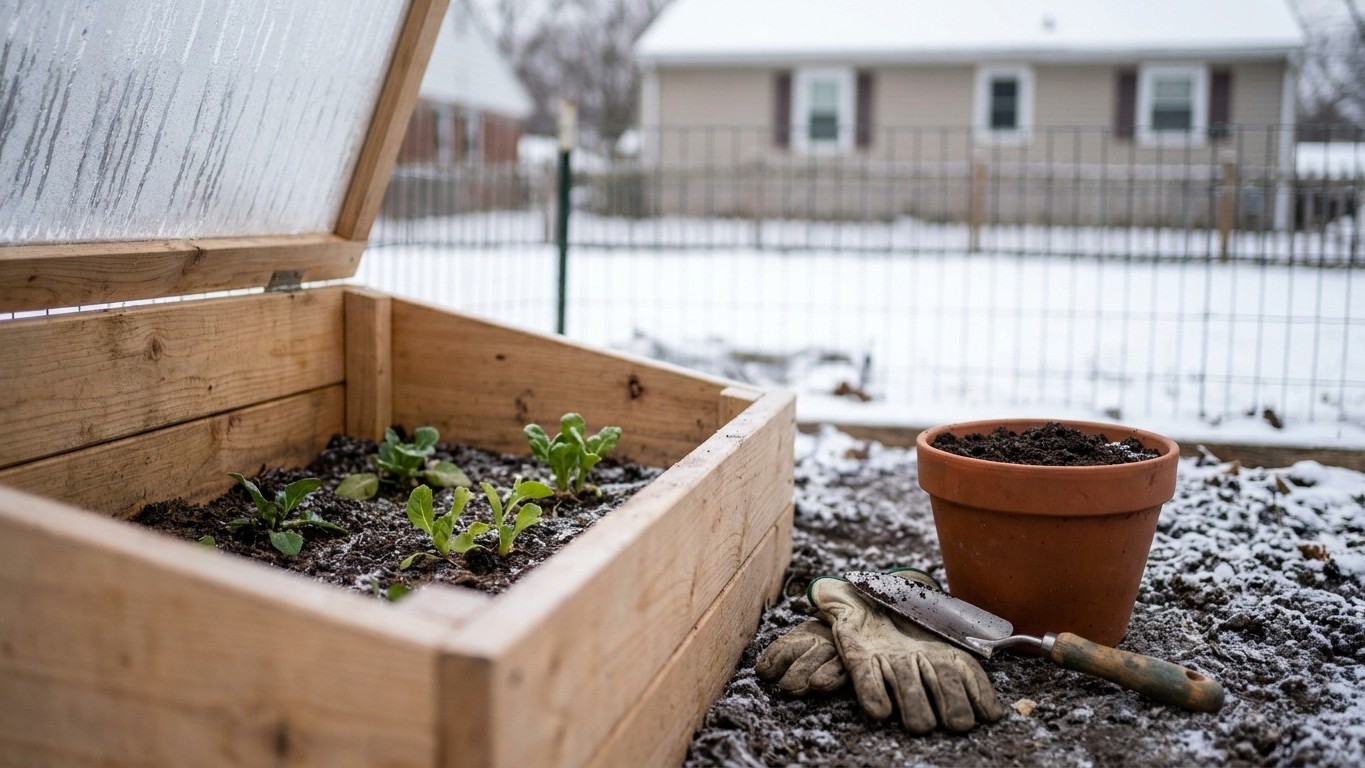

January in Washington means almost nothing goes into open ground west of the Cascades, and nothing at all east of them. But that’s not the whole story: garlic still goes in on workable soil, bare-root fruit trees and canes go in dormant, cold frames keep greens alive, and indoor sowing for leeks and onions already needs to start counting backward from spring.
What goes in the ground in January
The frost dates alone make western Washington sound almost mild. The last spring freeze, going by NOAA NCEI 1991-2020 Climate Normals for station USW00024233, falls between February 27 and March 18. That’s a maritime climate, not a cold one. But a mild frost date doesn’t equal an early planting date here. Soil temperature and daylight, not the thermometer’s freezing line, decide what a seed or root actually does once it’s in the dirt. Cold, wet, low-light soil in January sits there. Nothing rots faster than optimism planted six weeks too soon.
So the honest list for open ground this month is short. Garlic and shallots, if they didn’t go in during fall, can still be tucked into workable beds early in the month, though the cloves will lag behind an autumn planting. Bare-root fruit trees, berry canes, and dormant roses can go into prepared holes any time the ground isn’t frozen or waterlogged. Everything else waits.
Western versus eastern Washington in January
The state’s two halves behave like different climates, because they are. West of the Cascades, ocean air keeps winters mild and wet. East of the range, Washington turns into high desert with a much shorter, harsher season and ground that’s often frozen solid through January.
| Factor | Western WA (maritime) | Eastern WA (high desert) |
|---|---|---|
| Ground condition | Workable between rain events | Often frozen or snow-covered |
| Garlic/shallot planting | Possible early in month | Not advisable until thaw |
| Bare-root planting | Doable on unfrozen days | Wait for spring thaw |
| USDA hardiness zone (2023 map) | Milder end of the 4a-9a range | Colder end of the 4a-9a range |
Where the ground is frozen, the productive move is a cold frame or low tunnel over already-established greens, plus forcing rhubarb crowns or chicory roots indoors in the dark for an early, tender harvest that has nothing to do with outdoor soil at all.
What to start under cover
Indoor sowing in January should be counted backward from the last-frost window, not forward from the calendar. Western Washington’s last freeze falls between February 27 and March 18. Onions and leeks started from seed typically want 10 to 12 weeks of indoor growing before they’re sturdy enough to transplant, which puts a January start almost exactly on schedule for a late-winter freeze window. Wait until March to sow those, and you’re transplanting undersized seedlings into a bed that’s already warming up around them.
Peppers and eggplant are a different case, and this is where the two failure modes show up. Start them too early, in January for instance, and by the time the soil is actually warm enough to receive them, usually well after that last-frost range given how slow this climate is to shed winter’s cold, wet soil, they’ve become rootbound and leggy on a windowsill, stalled and stressed before they ever see the garden. Start them too late and there isn’t enough season left to size them up before fall’s return. The safer window for heat-loving transplants is closer to six to eight weeks ahead of the actual outdoor planting date, which for most of western Washington lands later, not in January.
What January is genuinely good for indoors:
- Onions and leeks from seed, counting 10-12 weeks back from the last-frost window
- Early cabbage and other hardy brassicas under lights, for transplant once soil is workable
- Microgreens and sprouts on a kitchen counter, ready in days rather than months
East of the Cascades, the same backward math applies, but the eventual transplant date slides later, so indoor sowing should slide with it rather than following a fixed western-Washington schedule.
What is ready to pick
Outdoors, January gives up little. That’s the honest answer, and it’s still a productive month if the household knows where to look. Overwintered kale, collards, and leeks that were left in the ground through fall keep going, often sweetened rather than damaged by cold since a light freeze converts some of their starches to sugar. Brassicas tucked under a layer of mulch or row cover can be pulled as needed, provided the plant itself hasn’t been reduced to mush by a hard freeze.
Cold frames and low tunnels are where most of this month’s fresh greens actually come from: spinach, mache, and mustard greens sown in fall keep cropping slowly through winter under cover, growing just enough on sunny days to replace what’s harvested. Indoors, sprouts and microgreens fill the gap for anyone wanting something green and crisp without stepping outside at all.
The other job this month is quality control on what’s already in storage. Squash should be checked for soft spots, especially near the stem end, since one going soft can spread rot to its neighbors in the bin. Potatoes need a look for green shoulders (a sign of light exposure, and a reason to trim and discard the green part) or shriveling that signals a bin drying out. Onions should be checked for any that have gone soft or started sprouting, since those are the ones to use first, not the ones to save for later.
The jobs that matter this month
Dormant pruning is the headline task, and January is close to the ideal window for it. Fruit trees, grapevines, and berry canes are leafless and inactive, which makes it far easier to see the actual structure of the plant and cut with intention rather than guesswork. Pruning now, before buds swell, reduces stress on the plant and shapes growth before the season’s energy gets committed to the wrong branches.
Seed ordering has a real deadline attached to it, even if that deadline is invisible until it’s passed. Popular varieties, especially unusual tomatoes, peppers, and anything from a small regional seed company, sell out well before spring planting season. Ordering in January means first pick rather than whatever’s left on the shelf.
Soil work pays off precisely because nothing is growing to disturb. A soil test taken now gives results in time to amend before spring sowing. Turning compost piles, even in cold weather, keeps the pile from going anaerobic and speeds up the breakdown that will be needed by planting time. Beds that need reshaping, edging, or a load of composted manure worked in are far easier to handle without live plants in the way.
The rest of the list is unglamorous but consequential:
- Sharpening and oiling pruners, loppers, and shovels before the season’s heavy use starts
- Repairing raised bed frames, trellises, and fencing while there’s no crop at risk
- Mapping crop rotation for the coming season, so the same family of plants doesn’t land in the same soil two years running
- Rechecking stored crops on a weekly basis rather than assuming they’ll keep themselves
What not to do in January
The classic mistake is reading a mild, sunny afternoon as a green light. A 55-degree day in western Washington doesn’t mean the soil six inches down has warmed at all; it’s still cold and slow, and any warm-season seed dropped into it will either rot or sit dormant, wasting the seed and the head start. Wait for the soil itself to warm, not the air, and that reading comes from a soil thermometer, not a jacket left at home.
A related error: uncovering cold frames or pulling mulch off overwintered crops during a mild stretch, only to have a freeze return and hit exposed plants that had just lost their protection. Washington’s winter mildness comes in waves, not as a steady trend, so a warm week is not a signal that winter is finished.
Nitrogen fertilizer applied to dormant or barely-active plants in January is largely wasted, and worse, it can push soft, tender new growth right before a freeze arrives, which then kills the new growth and stresses the plant more than doing nothing would have. Save nitrogen feeding for active growth later in spring, and use this month instead for compost and structural amendments that build soil over time rather than forcing a growth spurt the plant can’t use yet.
Checking this against your own county
A statewide January is a starting point, not an instruction. Elevation changes frost timing by weeks even within western Washington, and the Cascades split the state into two different growing climates entirely, with the high-desert east running colder and drier than the maritime west the frost dates above describe. A garden in a low-lying valley will also behave differently than one on an exposed slope a few miles away.
The most reliable next step is checking conditions locally through Washington State University Extension, which tracks regional variation county by county and can adjust these general windows to an actual address.
Common questions
Can garlic still be planted in January in Washington?
Yes, on workable soil in western Washington, though a January planting will lag behind garlic planted in fall. East of the Cascades, wait until the ground thaws.
Is it too early to start tomato seeds indoors in January?
For most of western Washington, yes. Tomatoes typically need six to eight weeks indoors before transplant, and the last-frost window (February 27 to March 18) plus slow-warming soil means a January start usually produces leggy, rootbound plants well before the garden is ready.
Peppers and eggplant follow the same math, since they’re both heat-loving transplants that stall on a windowsill if started too far ahead of the actual outdoor planting date.
What USDA hardiness zone is Washington in?
Washington spans zones 4a to 9a on the USDA Plant Hardiness Zone Map (2023 edition, built on 1991-2020 averages), reflecting the sharp difference between the mild maritime west and the colder high-desert east.
Why don’t warm frost dates mean early planting is safe?
Because frost dates only track air temperature at freezing. Soil temperature and light levels lag well behind, especially in western Washington’s wet winters, so ground can stay too cold and dark for seeds to germinate properly long after the last frost date has technically passed.