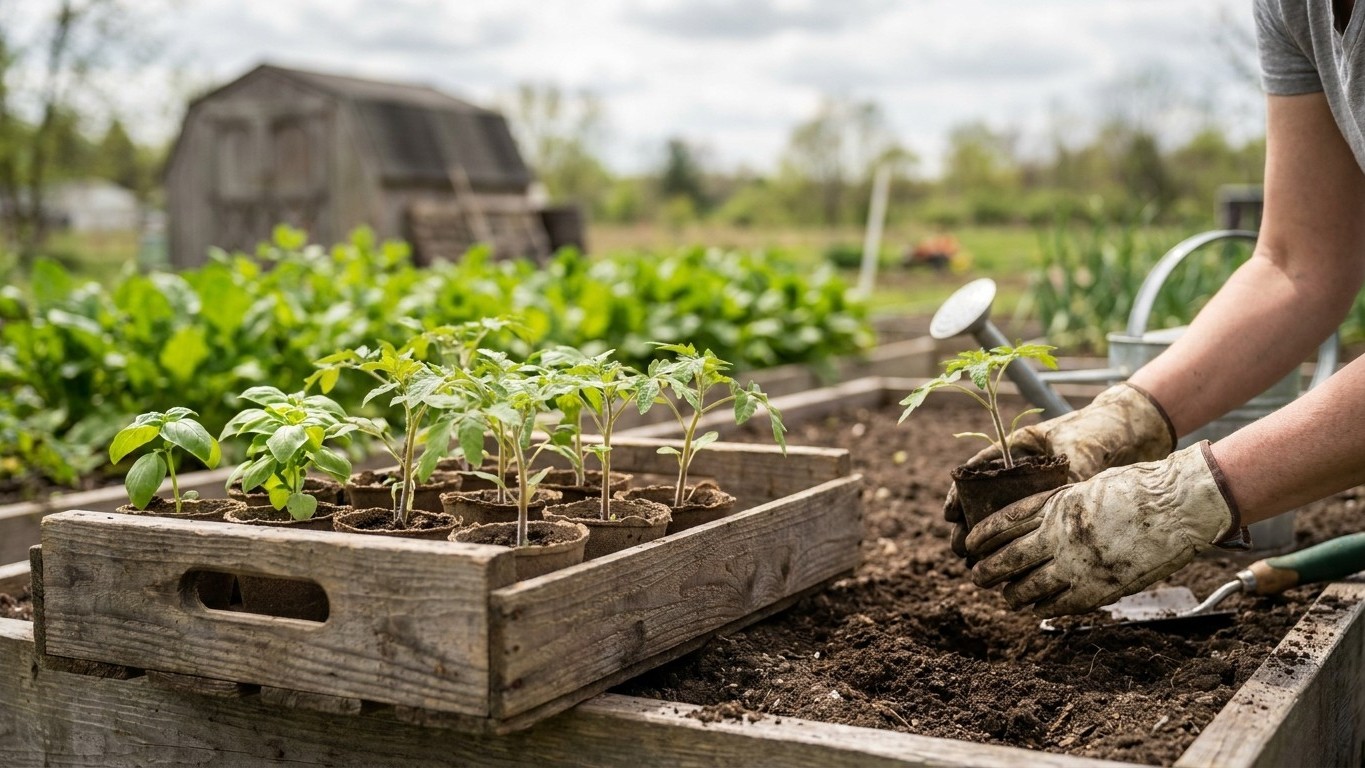

May is prime planting month across most of Washington. West of the Cascades, the last frost window (February 27 to March 18) is long behind you, and cold, wet soil rather than freezing temperatures has been the real brake on the garden. East of the mountains, in the high desert country, the season runs on a different clock entirely, and frost can still be a factor into the month. What changes the answer here is not the calendar square but soil temperature, daylight, and which side of the Cascades you’re standing on.
What goes in the ground in May
West of the Cascades, by May the soil has usually warmed enough to trust it with the crops that sulk in cold ground. Bush and pole beans go in as direct seed. Corn, summer squash, cucumbers, and melons can go into the ground too, though melons and other heat lovers do better under black plastic or a cloche in the cooler coastal counties where summer nights stay chilly. Tomato, pepper, eggplant, and basil transplants move outside this month, but only after they’ve spent a week hardening off in dappled shade and only into soil that feels warm to the hand, not just air that feels warm on your skin. That distinction matters more than any date on a seed packet.
East of the Cascades, the high desert runs behind. Nights stay cooler there well into the month, and a gardener in the Columbia Basin or the Okanogan is often still watching the sky before committing tender starts to open ground. The safe bets there stay closer to what western Washington was planting weeks earlier: lettuce, spinach, peas, brassicas, and the alliums, all of which shrug off a light chill that would set a tomato back for weeks.
Across both sides of the state, this is also a strong month for succession sowing of quick crops: another round of lettuce, radishes, beets, and carrots keeps the harvest coming instead of arriving all at once. Potatoes not already in the ground should go in now, and any garlic planted the previous fall is well up and needs nothing more than weeding and patience.
| Region | Frost risk in May | What’s safe to plant now |
|---|---|---|
| Western WA (maritime) | Very low; last frost window closed by mid-March | Beans, squash, cucumbers, tomato/pepper transplants, succession greens |
| Eastern WA (high desert) | Still possible early in the month | Peas, brassicas, alliums, lettuce, spinach; hold tender transplants a bit longer |
What to start under cover
Most of the classic spring starts, tomatoes and peppers among them, were already sown under cover back in late winter so they’d be ready to transplant once the ground warmed. By May, starting under cover shifts purpose: it’s less about getting ahead of spring and more about setting up the fall garden. Count backward from the first fall frost window (November 13 to November 30) rather than forward from today. A crop like Brussels sprouts or storage cabbage needs roughly three months from seed to a mature head. Sown under cover now, in May, that puts a transplant in the ground by early summer with enough season left to bulk up before the first freeze arrives.
Leeks and celeriac work the same math, since both are slow growers that reward an early indoor start and a long, unhurried summer outdoors. Winter squash for storage can also be started under cover now in the cooler pockets of the state, giving the vines a head start before they go into warm soil.
The two ways this goes wrong are familiar to anyone who’s gardened more than a season or two. Start these fall crops too early and they sit under cover getting leggy and rootbound, stressed before they ever touch soil. Start them too late, particularly for the slow growers like leeks, and they run out of daylight and warmth before reaching a usable size when the first fall frost finally shows up. May sits in the sweet spot for most of these, but a gardener working from a shorter eastern Washington season should lean toward the earlier end of that window.
What is ready to pick
May is when the garden starts paying rent again after winter. Asparagus, if it’s an established bed, is in full swing, and the rule stays the same everywhere: cut spears once they’re pencil-thick and before the tips loosen and start to feather. Rhubarb stalks are thick and ready to pull, and the earlier they’re harvested the more the plant pushes out a second flush later in the season.
Cool-season crops sown in late winter or very early spring are coming into their own now too. Lettuce, spinach, and other salad greens are at their sweetest before the heat of summer pushes them toward bolting, so this is the window to eat them at their best rather than let them go bitter and woody. Radishes sown a month earlier are usually ready to pull, and the first thinnings of carrots and beets, the small roots pulled to give the rest room to size up, make a legitimate harvest in their own right rather than garden waste.
Overwintered crops are finishing their run. Kale that made it through the cold months is often still producing new leaves from the center even as older leaves toughen up, and any leeks left in the ground from the previous fall should come out now before they start pushing up a flower stalk and turning woody at the core.
The jobs that matter this month
Staking and caging come first on the list, and the reason is timing rather than aesthetics. Tomatoes, peas, and pole beans put on fast growth once the weather turns, and a cage set after the plant has already sprawled means broken stems and bruised fruit later. Get the support in the ground now, before the plant needs it, not after.
Mulching follows close behind. As soil warms and days lengthen, bare ground loses moisture fast, and a two to three inch layer of straw, bark, or compost around new transplants holds that moisture in and keeps weed seeds from getting the light they need to germinate. This is also the month to settle into a watering rhythm rather than watering on impulse: deep, less frequent watering trains roots to grow down instead of staying shallow and thirsty near the surface.
Pest scouting matters more in May than almost any other month, because populations are small enough to control by hand if caught early. Slugs go after tender new transplants overnight, aphids cluster on new growth, and cabbage worms start showing up on brassica leaves. A few minutes checking the undersides of leaves every few days beats a full-blown infestation later.
Succession sowing keeps the harvest steady rather than boom-and-bust: another short row of lettuce or beans every couple of weeks means the kitchen has something coming rather than a glut followed by a gap. And hardening off any transplants still waiting to go outside, giving them a few days of increasing outdoor exposure before they’re planted for good, prevents the setback that comes from moving a coddled seedling straight into open sun and wind.
What not to do in May
The most common mistake this month is trusting the air instead of the soil. A warm, sunny stretch in early May can feel like summer, but if the ground underneath is still cold and wet from spring rains, tender transplants like tomatoes and peppers sit there stalled, sometimes for weeks, instead of growing. Check the soil itself, not just the forecast, before committing heat-loving crops to open ground.
A related error is pulling row covers or cloches off too soon after a mild spell. A run of warm days doesn’t mean the risk of a cool night has passed, especially in the transition zones between western and eastern Washington. Leave protection on tender crops a little longer than feels necessary rather than betting on a stretch of nice weather holding.
Nitrogen timing trips up a lot of tomato and pepper growers too. A heavy dose of high-nitrogen fertilizer early in the season pushes lush green foliage at the expense of flowers and fruit, so plants end up big and leafy with little to show for it come summer. A balanced feed, or one leaning toward phosphorus and potassium once flowering starts, serves these crops better than nitrogen alone.
Skipping the hardening-off step is the last classic misstep. A seedling raised indoors or under cover and moved straight into full sun and open wind can scorch or snap within a day, undoing weeks of careful growing in an afternoon.
Checking this against your own county
A statewide picture of May is a starting point, not an instruction for a specific yard. Elevation shifts frost timing by weeks even within a single county, the rain shadow east of the Cascades creates a growing climate almost unrecognizable from the coast, and a garden in the Puget Sound lowlands runs on a different clock than one in the Okanogan highlands or the Columbia Basin. Local microclimates, cold air pooling in low spots, and even a nearby lake or the Sound itself can all move these windows further still.
The most reliable next step is checking that timing against local data rather than a general rule. The Washington State University Extension publishes county-level guidance and planting calendars built for these regional differences, and it’s worth a look before committing seed to ground.
Common questions
Is it too late to plant tomatoes in May in Washington?
No. May is generally the ideal month to move tomato transplants outdoors west of the Cascades, once the soil itself has warmed rather than just the air. East of the mountains, gardeners often wait until later in the month or hold off a bit longer depending on local conditions.
Can I still direct-sow beans and corn in May?
Yes, in most of western Washington the soil is warm enough by this point for direct-sown beans, corn, squash, and cucumbers. In the cooler high-desert areas east of the Cascades, it’s worth confirming soil warmth locally before seeding these heat lovers directly.
What should I be starting under cover for the fall in May?
Slow, long-season crops like Brussels sprouts, storage cabbage, leeks, and celeriac benefit from an under-cover start now, since they need roughly three months or more to mature and the first fall frost window (November 13 to November 30) sets the outer limit.
Why does my garden feel behind other parts of Washington in May?
Elevation, rain shadow, and proximity to the coast or a large body of water shift planting timing by weeks across the state. Eastern Washington’s high desert climate in particular runs on a different schedule than the mild, maritime west side, so a lag is often just local geography rather than anything gone wrong.