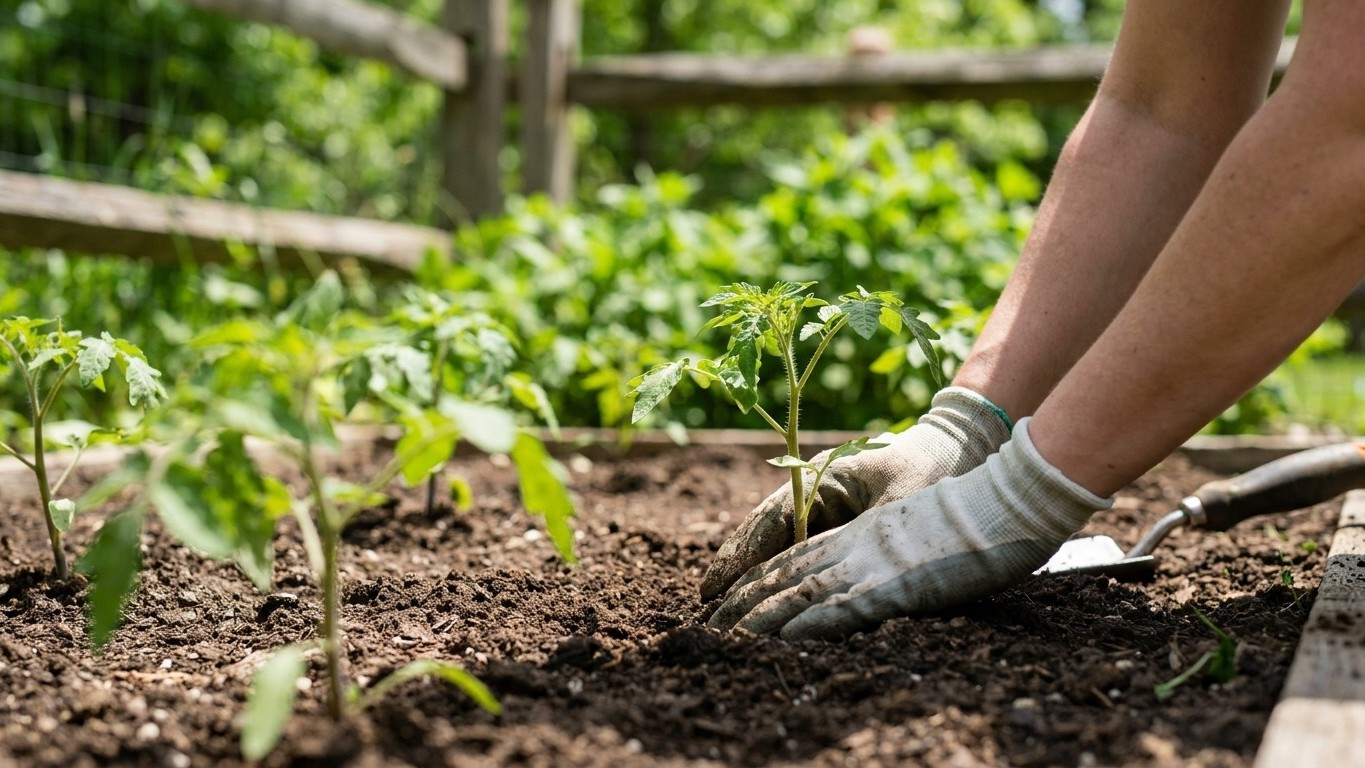

June in West Virginia sits well past the state’s last spring frost window (April 9 to April 23), so this is the month when nearly every warm-season crop can go into open ground with confidence. Tomatoes, peppers, beans, squash, corn, and melons all belong outdoors now, alongside a second wave of quick greens sown for fall.
What goes in the ground in June

The calendar stopped being the limiting factor weeks ago. By June, soil temperature is what decides whether a seed germinates or rots, and across most of West Virginia the ground has warmed enough for the crops that sulk in cold dirt. Beans and sweet corn germinate reliably once soil sits above 60°F; squash, cucumbers, and melons want closer to 65-70°F. In the river valleys around Charleston, that threshold was crossed weeks before June opened. At higher elevations in the Alleghenies or the Eastern Panhandle’s ridgelines, where the USDA Plant Hardiness Zone Map (2023, based on 1991-2020 averages) puts parts of the state as cool as zone 5a against Charleston’s warmer 7a reading, the soil may still be catching up in early June.
Direct-sow bush and pole beans, sweet corn, cucumbers, summer and winter squash, and melons now. Okra can go in toward the back half of the month once nights stay reliably warm. If tomato, pepper, and eggplant transplants didn’t make it out in May, get them in the ground at the start of June rather than waiting, since every week lost now is a week subtracted from the harvest window before the first fall frost (October 18 to November 1).
This is also the month to keep the succession chain moving. Sow another round of bush beans every two to three weeks, and keep dropping in heat-tolerant or bolt-resistant lettuce, along with beets and carrots, for a mid-summer harvest before the real heat shuts salad greens down. Sweet potato slips go in once soil has fully warmed, and basil, along with other heat-loving herbs, transplants cleanly now with none of the cold-snap risk it faced in May.
What to hold off on
Spinach and most lettuce varieties sown now will bolt fast once daytime temperatures climb, so treat any greens planted in June as a short-term crop, not a season-long bed. Peas, if not already harvested, are on borrowed time as heat sets in.
What to start under cover
The seed-starting conversation in June isn’t about spring anymore, it’s about fall. Broccoli and cabbage for an autumn harvest need to go into cell trays or flats indoors, or under light shade outdoors, now, so the math runs backward from the first fall frost rather than forward from the last one. Most fall brassicas need somewhere between 60 and 80 days from transplant to harvest, plus another three to four weeks of growth in the tray before they’re ready to move outside. Counting back from a first frost landing between October 18 and November 1, seed started in early-to-mid June and transplanted by mid-to-late July gives those plants enough runway to mature before cold weather locks in, with some cushion for the years the frost arrives on the early side.
The two ways this goes wrong are predictable. Start too early and the trays sit through July heat with rootbound, leggy seedlings that stall the moment they finally go into the ground. Start too late, especially in the higher, cooler pockets of the state where frost tends to arrive earlier than it does in the Charleston valley, and the crop runs out of season before it sizes up. Splitting the sowing into two batches roughly ten days apart hedges against both mistakes and spreads the fall harvest instead of dumping it all at once.
Cauliflower follows the same backward math but with less tolerance for stress, so keep it out of direct summer sun until it’s hardened off. Fast-cycling herbs like cilantro can still be started under light cover for a heat-shaded planting, since direct summer sun will send it to seed within days of sprouting.
What is ready to pick
June is a genuine harvest month, not a waiting month. Strawberries are finishing their run early in June, and garlic scapes, the curling flower stalks of hardneck garlic, are ready to snap off as soon as they coil, which both feeds the kitchen and pushes more energy into the bulb below ground. Peas sown in early spring are hitting their peak and won’t hold long once heat sets in, so pick daily rather than letting pods toughen on the vine.
Spring-planted lettuce and spinach are on a clock. Once a plant sends up a central stalk, it’s bolting, and the leaves turn bitter fast, so harvest anything showing that stalk immediately rather than waiting for it to fill out further. Radishes sown in April and May are ready in a matter of days once the shoulders push up through the soil surface; leave them too long and they go pithy and hot. Kale and broccoli planted earlier in spring are also coming in, with broccoli ready the moment the central head is tight and beaded, before the individual florets start to loosen and yellow.
By the back half of June, the first zucchini and summer squash of the season often start showing up, sometimes overnight, given how fast the plants size up in the June heat. Check squash plants every day or two once flowering starts, since a zucchini left unchecked for a week turns from tender to baseball-bat in that time, at the cost of flavor and texture.
The jobs that matter this month

Mulching earns its keep in June more than almost any other month. As soil temperatures climb and rainfall gets less predictable, a two- to three-inch layer of straw, shredded leaves, or grass clippings around tomatoes, peppers, and squash holds moisture, keeps roots cooler, and cuts down the weed pressure that otherwise explodes with the heat. Skip it now and July becomes a month of daily watering and constant weeding instead.
Staking and caging need to happen before plants sprawl, not after. Tomato cages and stakes driven in once a plant is already a foot tall risk damaging roots that have spread further than expected; doing it early, while the plant is still small, avoids that entirely. The same logic applies to pole beans and vining cucumbers, which will find something to climb whether a trellis is there or not.
Watering rhythm matters more in June than volume alone. Most vegetable gardens do better with one deep watering delivering roughly an inch to an inch and a half per week rather than frequent light sprinkles, which encourage shallow root systems that struggle the moment a dry spell hits. Morning watering, aimed at the soil rather than the foliage, cuts down on the fungal issues that thrive in humid June evenings.
Pest scouting starts paying off now because June is when several of the state’s worst garden pests emerge in force. Colorado potato beetles, squash bugs, and Japanese beetles all become active this month, and checking the undersides of leaves every few days catches egg clusters before they hatch into a full infestation. Thin any direct-sown beans, carrots, or beets that came up too thick; crowded seedlings compete for water and light and produce smaller, weaker plants across the board. Side-dress sweet corn with nitrogen once it reaches roughly knee height, since corn is a heavy feeder at exactly the stage most gardens hit in June.
What not to do in June
The most common June mistake isn’t planting too early anymore, it’s transplanting carelessly into the heat. Moving tender seedlings, especially brassicas or lettuce started under cover, straight from a shaded tray into full midday sun without a few days of hardening off shocks the plant and stalls growth for a week or more. Transplant in the early evening or on an overcast day instead, and give new transplants a temporary shade cloth for their first 48 hours if a heat spell is forecast.
Overwatering shallowly is another trap. A quick daily sprinkle feels productive but trains roots to stay near the surface, which leaves the whole plant vulnerable the first time a hot, dry stretch hits. Deep, infrequent watering builds a root system that can actually handle a July dry spell.
Nitrogen timing trips up a lot of tomato and pepper growers in June. A heavy dose of high-nitrogen fertilizer once plants are flowering pushes lush green foliage at the expense of fruit set, leaving a bushy plant with disappointing yields. A balanced or fruit-focused fertilizer, applied once flowering has already begun, does far more for the harvest than another round of nitrogen.
Finally, don’t ignore thinning. Direct-sown carrots, beets, and beans left crowded “to see how they do” almost always produce smaller, weaker plants across the board than a properly thinned row, and by the time the crowding is obvious, the damage to root development is already done.
Checking this against your own county
A single statewide frost window is a starting point, not an instruction. West Virginia’s terrain runs from river valleys around 600 feet to ridgelines above 4,000 feet, and that elevation swing moves both the last spring frost and the first fall frost by weeks in either direction. A garden in the Eastern Panhandle’s high ground or the Allegheny highlands should expect a shorter growing season than the Charleston valley figures cited here reflect. For county-specific guidance, planting calendars, and current pest alerts, the West Virginia University Extension Service is the reliable next stop.
Common questions
Is it too late to plant tomatoes in West Virginia in June?
No. June transplants, especially container-grown plants already several weeks along, still have plenty of season ahead before the first fall frost between October 18 and November 1 in the Charleston area, though yields may run slightly lower than a May-planted crop.
Can I still direct-sow corn and beans in June?
Yes, and June is close to ideal, since soil temperatures have warmed well past the 60°F threshold both crops need to germinate reliably.
What vegetables should I start indoors in June for a fall harvest?
Broccoli and cabbage are the main candidates, sown indoors in early-to-mid June and transplanted outdoors by mid-to-late July so they mature before the first fall frost.
Why is my June-sown lettuce bolting so fast?
Rising daytime temperatures push lettuce and spinach to flower and set seed rather than produce leaves; switching to heat-tolerant or bolt-resistant varieties, or planting in partial afternoon shade, slows the process but won’t stop it entirely once real summer heat arrives.
Gardeners who plant by the Moon can check the June 2027 moon planting calendar, a tradition rather than a proven method.