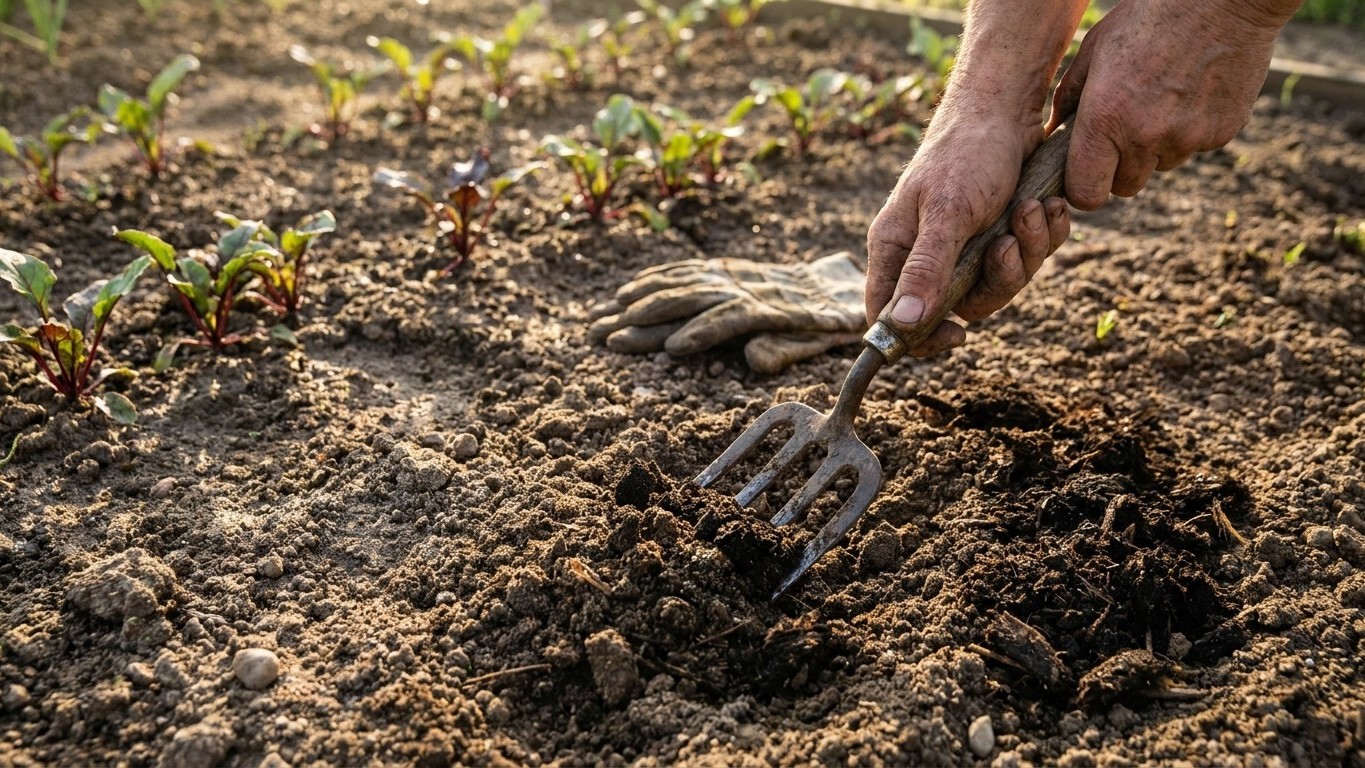

Delaware’s official soil, the Greenwich series, is a well-drained sandy loam sitting close to what beets actually want: deep, loose ground that lets a taproot push down without hitting a hardpan. The catch is organic matter, which sits around 1.7 percent in this series, well below what a beet root needs to size up without going fibrous. For a closer look at how Beet Soil in Delaware stacks up against what the crop actually requires, it’s worth digging into the details. For specifics on When to Sow Beets in Delaware, sow two to three weeks before the last frost, keep the first six weeks evenly watered, and watch the thermometer once summer heat sets in.
The short answer
The Greenwich series, named Delaware’s state soil, runs 48 percent sand, 9 percent clay and 43 percent silt in its surface layer, an Ultisol classification that tells you this ground has been weathered and leached for a very long time. It’s naturally acid, with a surface pH around 6.0, and it drains well rather than holding water in a soggy layer near the roots. For a beet, that drainage is mostly good news. Beets rot in waterlogged ground faster than almost any other root crop, so a soil that sheds excess moisture instead of pooling it removes one common failure point before you’ve even planted a seed.
Where the Greenwich series falls short is organic matter. At roughly 1.7 percent, it’s on the lean side for a crop that, according to Utah State University Extension, wants soil rich in organic matter to develop a smooth, well-sized root. The fix isn’t heavy composting. Utah State’s guidance caps organic matter amendments at 1 inch of composted material per 100 square feet, worked into the bed before sowing. More than that doesn’t help a beet and can throw off the balance of nutrients the root needs to bulk up properly rather than throwing all its energy into leaf growth.
The slightly acid pH of 6.0 sits in a workable range for most vegetable gardens, though it’s worth confirming with your own soil test rather than assuming your bed matches the state series exactly. That caution matters more than it sounds: Delaware spans hundreds of distinct soil series, and the Greenwich series is a representative sample, not a map of every backyard. A garden built on fill dirt, a floodplain a mile from a river, or ground scraped bare during construction can behave nothing like the official state soil, even if it’s only a few miles away.
On heat, the specific count of days Delaware’s reference station spends above 90 F isn’t published in the data behind this page, so it won’t be guessed at here. What is documented is the threshold that matters for the crop itself: Utah State University Extension notes that heat above 85 F combined with water stress makes beet roots woody. Delaware summers reliably produce stretches above that mark, which means the real variable isn’t whether the heat arrives, it’s whether the soil under your beets is dry when it does.
The six weeks that decide it here
Sowing two to three weeks ahead of the last frost is the standard timing rule for beets, and in Delaware that anchors the calculation to a specific window. NOAA’s climate normals for station USW00013781 put the 32 F freeze probability last frost date between April 3 and April 14. Sow two to three weeks before that stretch and the first six weeks of a beet’s life, the period Utah State identifies as the make-or-break stretch for bolting, land squarely in mid-March through late April in a typical year at that reference point.
That window matters because it’s when Delaware’s spring weather is at its most unsettled. Mid-March through April in this part of the mid-Atlantic tends to swing rather than settle: a run of cold, damp days can be followed within a week by a dry, windy stretch that pulls moisture out of a seedbed fast. For a beet, that swing is exactly the setup that triggers premature flowering. Utah State’s research is specific on this point: water stress in those first six weeks, not later in the season, is what pushes a beet to bolt. A dry week during that narrow window does more damage than a dry week in July.
The practical result is that bolting risk in Delaware sits earlier in the calendar than most gardeners expect. It’s tempting to focus watering attention on the hottest weeks of summer, when plants visibly wilt and the risk feels obvious. But by the time July heat arrives, the bolting window has already closed one way or the other. What decides whether a beet bolts is whether the soil stayed consistently moist back in April, while the seedling was still small and easy to overlook between other spring garden tasks.
Remember, too, that these frost dates come from a single airport weather station. Suburban and rural gardens across Delaware typically see their own last frost run one to two weeks later than the reference date, and low-lying or inland spots can lag further still. Treat April 3 to April 14 as a starting point for planning your sowing date, not a guarantee for your particular yard.
What goes wrong here
- Bolting from a dry spell in the first six weeks. Delaware’s swinging spring weather can deliver a week or more without meaningful rain right when seedlings are most vulnerable. Water consistently and deeply during this window rather than waiting for visible wilting, since the trigger happens before the plant shows stress.
- Woody roots from summer heat paired with dry soil. Once temperatures push past 85 F, any lapse in soil moisture starts turning the root fibrous rather than tender. A layer of mulch over the bed and a watering schedule that doesn’t lapse during heat waves keeps this failure from compounding the bolting risk from earlier in the season. These are two separate problems with two separate fixes, not one general instruction to “keep it watered.”
- Low organic matter limiting root size. At around 1.7 percent organic matter in the representative surface layer, Greenwich-series ground doesn’t hold the nutrient reserve a beet root draws on to bulk up. Work in up to 1 inch of composted organic matter per 100 square feet before sowing, per Utah State University Extension guidance, rather than adding more in hopes of a bigger boost.
- Fast drainage drying out the seedbed between waterings. The same well-drained texture that prevents rot in wet spells means the topsoil can dry out quickly in a dry one. Check moisture at seed depth rather than judging by the surface, especially in the two weeks right after sowing.
- Treating the state soil as your own soil. The Greenwich series describes a representative sample across the state, not any single garden. A bed built on fill, near a floodplain, or on ground disturbed by construction can differ completely in texture, drainage and organic matter. A soil test remains the only way to know what you’re actually working with.
Checking this against your own county
Everything above describes a reference point, not a verdict on your specific garden. Soil texture, drainage and organic matter can shift substantially within a few miles, and the only way to know what’s actually under your beet bed is a soil test run through your local extension office. The University of Delaware Cooperative Extension, part of the College of Agriculture and Natural Resources, offers soil testing and can advise on amendments specific to your county rather than a statewide average. Reach out through their office before you commit to a sowing date, particularly if your last frost tends to run later than the airport-station figures cited here.
Common questions
How many days do beets take to mature from seed in Delaware?
Beets are sown directly in place, not transplanted, and the standard range runs 60 to 80 days from seeding to harvest. Counting from a sowing date two to three weeks before Delaware’s reference last frost of April 3 to April 14 gives a rough harvest window, though your actual timeline depends on the variety and your local conditions.
Does Delaware’s state soil mean my garden is automatically good for beets?
Not necessarily. The Greenwich series is a representative sample used to describe the state’s soil character in general terms, but Delaware contains hundreds of distinct soil series. Your yard could be sandier, heavier, wetter or more compacted than the state series, especially if it’s on fill, near a floodplain, or in a spot disturbed by past construction.
Is bolting the same problem as a woody root?
No, and treating them as one issue is a common mistake. Bolting comes from water stress during the first six weeks after sowing and results in the plant flowering early instead of building a root. Woodiness comes later, when heat above 85 F combines with dry soil to toughen the root’s texture. Both are preventable, but they call for attention at different points in the season.
How much compost should I add to a Delaware beet bed?
Utah State University Extension recommends no more than 1 inch of composted organic matter per 100 square feet. Given that Delaware’s representative state soil runs low in organic matter at around 1.7 percent, this amendment is worth doing, but more isn’t better here since beets don’t benefit from excess compost the way leafier crops might.