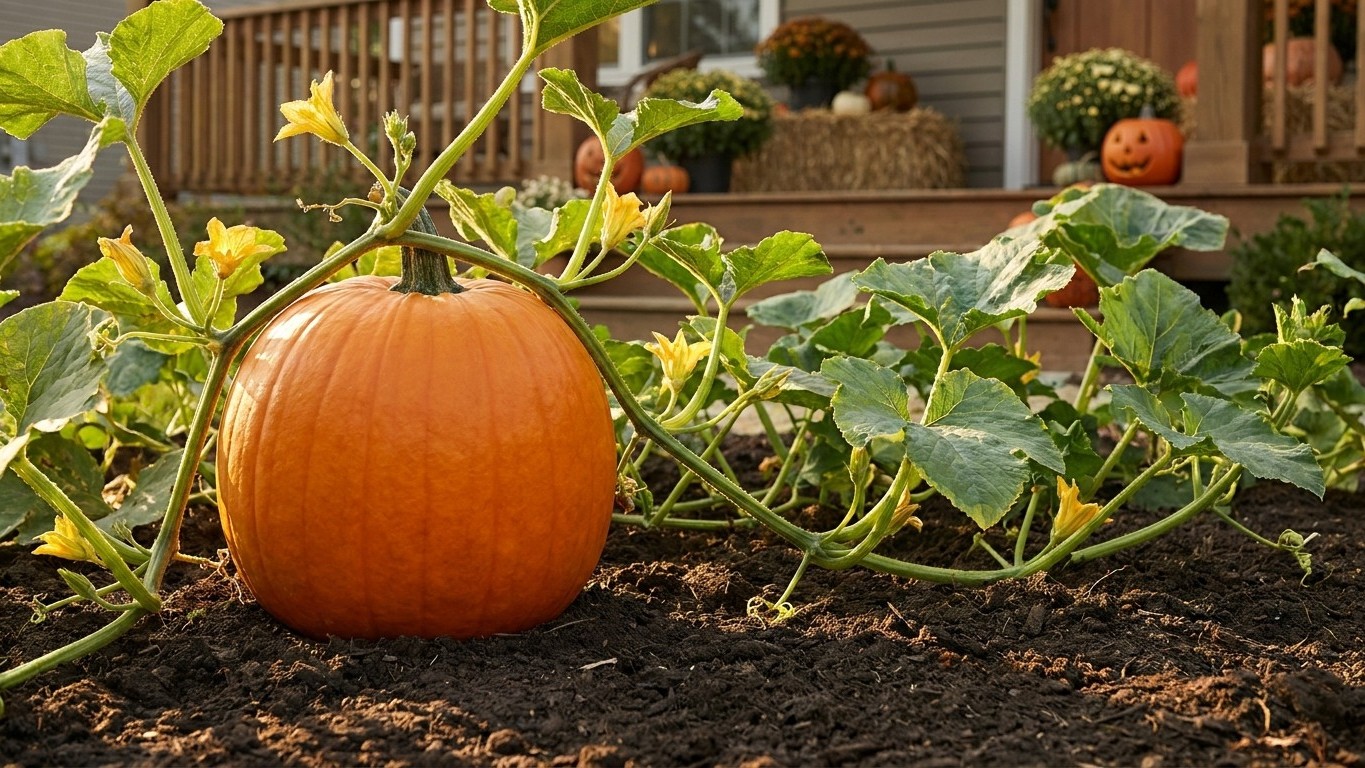

Somewhere between the flowers on a pumpkin vine and the jack-o’-lantern on the porch, there’s a math problem most home gardeners get wrong. Utah State University Extension’s guide to growing pumpkins puts the harvest window at 45 to 55 days after the flowers open, not 45 to 55 days after you dropped seed in the ground. Get that starting point wrong and everything downstream, from curing to storage, shifts with it.
The short answer
Utah State University Extension counts pumpkin maturity from bloom, not from planting. The 45- to 55-day window begins the day flowers open on the vine and ends when fruit has finished sizing up and coloring out. That’s a different clock than the “days to maturity” number printed on a seed packet, which gardeners tend to read as a straight countdown from the day the seed goes into the ground.
Why does that distinction matter so much? Because a pumpkin patch doesn’t germinate, flower, and set fruit on a fixed schedule. Soil temperature, weather swings, and how many blooms actually get pollinated all push the flowering date around from one season to the next, even in the same yard. Two vines planted on the same day can flower a week or more apart. If you’re counting from planting, you’ll guess the harvest date wrong almost every time. If you’re counting from the first open flower, you’re working with the number Utah State University Extension actually publishes.
What comes after that window closes is fairly simple, at least in outline. Fruit that has finished its 45 to 55 days gets cut from the vine, cured for a short period, and then moved somewhere it will not freeze. That last phrase is doing a lot of work: Utah State University Extension does not attach a specific temperature or humidity target to storage, and no keeping-time figure is published either. The guidance stops at “protect from freezing,” which is narrower than the storage advice you might expect for a crop like this.
The same source lists nine pumpkin varieties suited to home gardens, but it attaches no days-to-maturity figure, no size range, and no color description to any of them individually. That’s worth flagging because gardeners often assume every named variety in an extension bulletin comes with its own maturity number. Here, the 45- to 55-day window is a general figure for the crop, not a variety-by-variety breakdown.
What actually decides it
Bloom date, not planting date
The single factor that settles when a pumpkin patch is ready is the date the flowers open, full stop. Everything else, soil warmth, weather, how early you got seed in the ground, only matters because it shifts the flowering date earlier or later. Once flowering happens, the 45- to 55-day clock is what governs the rest. Two gardeners in the same town, planting the same variety a week apart, can end up harvesting on nearly the same date if their vines happen to flower close together.
Soil temperature and frost are two different signals
Utah State University Extension ties pumpkin planting to soil that has warmed to around 65 F. That number describes germination conditions, not the last frost date for a region. The two get conflated constantly, but they’re not interchangeable: a soil thermometer reading 65 F tells you the ground is warm enough for seed, and it says nothing about whether frost risk has passed. Treating 65 F soil as a stand-in for “safe to plant, frost is over” is one of the more common mistakes in the whole pumpkin timeline, and it’s worth separating the two decisions in your head before the season starts.
Pest and disease pressure changes the calendar, not the count
Aphids, squash bugs, cucumber beetles, powdery mildew, wilt diseases and viruses can all slow a plant down or damage fruit before it finishes sizing. None of that changes the 45- to 55-day figure itself, but heavy pressure early in the season can delay flowering, which pushes the whole countdown later. In practice, the health of the vine up to bloom time matters as much as anything that happens afterward, because a stressed plant flowers later and finishes later.
How to do it
- Hold off on planting until soil temperature reaches roughly 65 F, per Utah State University Extension. This is a germination threshold, not a frost-safety marker, so don’t use it to decide whether frost risk has passed in your area.
- Watch the vines closely once growth is underway, and note the date the first flowers open. This is the true starting point for the maturity countdown, not the planting date.
- Count forward 45 to 55 days from that flowering date. This is the window Utah State University Extension gives for fruit to finish sizing, hardening, and coloring on the vine.
- Scout the patch regularly through the growing season for the problems Utah State University Extension flags: aphids, squash bugs, cucumber beetles, powdery mildew, wilt diseases and viruses. Catching pressure early keeps the vine healthy enough to finish its fruit on schedule.
- Harvest before hard freezing weather reaches fruit still on the vine. Fruit left through a freeze is exposed to damage that curing and storage can’t reverse.
- Cure the harvested fruit briefly, then move it to a location where it will not freeze. Utah State University Extension does not publish a specific storage temperature, humidity level, or keeping duration, only the instruction to keep pumpkins away from freezing conditions.
What goes wrong
- Aphids build up on new growth and weaken the vine before flowering even starts. Watching for clusters on leaf undersides early in the season and knocking them back before they spread keeps the plant strong enough to bloom on a normal schedule.
- Squash bugs damage stems and leaves badly enough to slow fruit development. Because they already have detailed coverage on this site, the fix is to check the dedicated squash bugs page for identification and management rather than guessing at control methods here.
- Cucumber beetles feed on leaves and can spread disease between plants as they move through a patch. The same logic applies: the cucumber beetles page on this site covers identification and control in the detail this crop deserves.
- Powdery mildew coats leaves in a white film that cuts down on the plant’s ability to photosynthesize. Reduced leaf function late in the season can shrink fruit size or slow the final stretch of ripening, so removing heavily affected leaves and improving airflow around the vine helps limit the spread.
- Wilt diseases cause vines to collapse suddenly, sometimes after weeks of apparently normal growth. Because affected plants rarely recover, removing wilted vines promptly limits how far the problem spreads to healthy neighbors in the same patch.
- Viruses show up as mottled, distorted leaves and stunted fruit, often introduced by insects feeding on the plant. There’s no cure once a plant is infected, so removing symptomatic vines and controlling the insects listed above is the only practical response Utah State University Extension’s problem list points toward.
Common questions
Does the 45- to 55-day count start when I plant the seed?
No. Utah State University Extension counts that window from the day flowers open on the vine, not from planting or transplanting.
Is 65 F soil the same thing as the last frost date?
No. That figure describes soil warm enough for pumpkin seed to germinate. It’s a separate decision from whether frost risk has passed in your area, and the two shouldn’t be treated as interchangeable.
What temperature should I store pumpkins at after harvest?
Utah State University Extension doesn’t publish a specific storage temperature, humidity level, or keeping-time figure for pumpkins. The only published guidance is to keep them somewhere they will not freeze.
Are the nine pumpkin varieties Utah State University Extension lists all similar in size or maturity?
That’s not published either. The nine varieties are named without any attached days-to-maturity, size, or color data, so there’s no basis for comparing them on those points from this source alone.