
Count forty-five to fifty-five days forward from the day a pumpkin’s flower opens, not from the day you dropped the seed in the ground. That’s the window Utah State University Extension gives for pumpkins to mature after flowering. Miss that starting point and every date on your garden calendar is wrong.
The short answer
Utah State University Extension puts it plainly: pumpkins take 45 to 55 days to mature after flowering. Not after germination. Not after transplanting. After the flower opens on the vine. That distinction changes how a gardener should actually think about timing a pumpkin crop, because the seed packet’s “days to maturity” number and the real countdown clock aren’t the same thing.
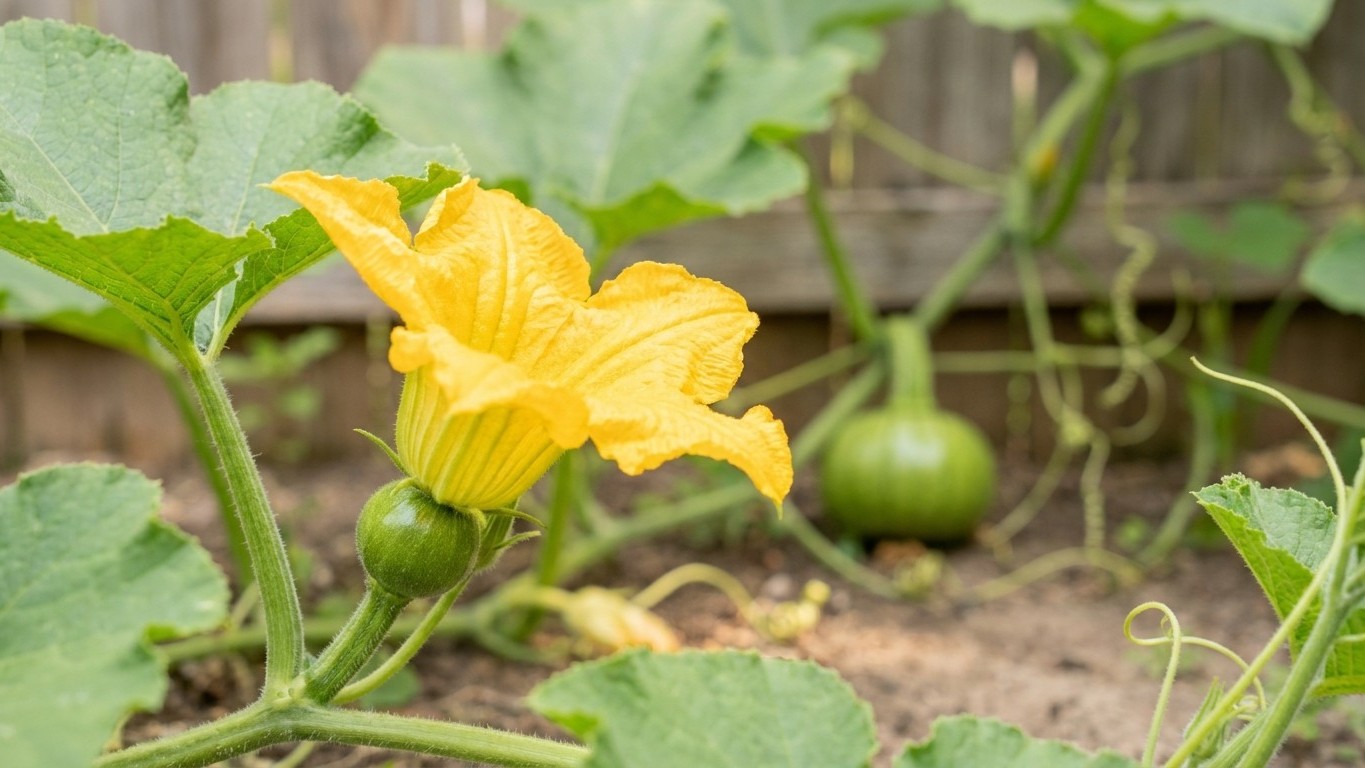
Here’s why it matters in practice. A pumpkin vine doesn’t ripen fruit on a fixed schedule from planting day. It grows leaves and runners for weeks, sending sprawling vines outward in a way that makes How Much Room a Pumpkin Needs — and a Giant One worth knowing before you plant, then starts producing female flowers (the ones with a tiny swollen bulge at the base, which becomes the fruit if pollinated), a stretch of growth that depends heavily on Watering Pumpkins consistently to keep the vine healthy enough to flower on schedule. Until that flower opens and gets fertilized, there’s no fruit developing at all, just vine. So the 45- to 55-day clock doesn’t start ticking until that specific event happens, sometimes six weeks or more after Sowing Pumpkins.
That means two gardens planted on the exact same day can have wildly different harvest dates, depending on when their vines happen to flower. A vine that flowers early in the season has plenty of runway. A vine that flowers late, maybe because of a cool spring or a slow-growing variety, is racing the calendar, and Pumpkin Varieties the Extension Names — and What It Does Not Say can shed light on how much that variety choice matters. If a flower opens in late summer and your region’s first fall frost typically arrives before that 45- to 55-day window closes, you’re looking at a pumpkin that never finishes ripening. Green pumpkins on a frost-killed vine are a common disappointment, and this timing gap is usually why. Hand-Pollinating Pumpkins as soon as female flowers open can help ensure fruit sets early enough to beat the clock.
The practical move is simple: once you spot female flowers opening, mark the date. Count forward 45 days for the earliest realistic harvest, 55 for the latest. Compare that window against your area’s typical first frost. Will Your Pumpkins Ripen? Count From the Flower, Not the Seed is the question every gardener should ask before assuming a late fruit will make it, and knowing Three Signs a Pumpkin Is Ripe — and the One That Settles It can help confirm whether a fruit actually made it across that finish line. If the math doesn’t work, there’s still time to use season-extending tricks (more on that below) or to accept that the last flowers of the season are decorative more than productive, and to start planning What Goes After a Pumpkin Patch once the vines are finished for the year, with a solid grasp of Harvesting Pumpkins guiding when and how to bring in the fruit that does make it.
This single figure, sourced directly from Utah State University Extension’s guidance on pumpkins, is the backbone of every planting and harvest decision that follows.
What actually decides it
Two separate mechanisms govern a pumpkin’s fate, and gardeners often confuse them. The first is timing: whether a given flower has enough days left before frost to become a ripe fruit. The second is readiness: once the fruit has had its time, how you know it’s actually done.
On timing, the flowering date is what settles the question, not the planting date, not the size of the vine, not how many fruits are already on it. A vine loaded with green pumpkins can still have flowers opening in the same week, each one needing its own 45- to 55-day count. Gardeners who assume the whole vine ripens together are often wrong; individual fruits run on individual clocks set by when their flower opened.
On readiness, Utah State University Extension lists three signs that a pumpkin is ripe: the skin is hard and not easily broken when pressure is applied with a fingernail, the fruit is fully colored, and the vine begins to die back. These three don’t always arrive at the same moment. A pumpkin can look fully orange while the rind is still soft enough to dent with a thumbnail. A vine can start yellowing from disease or drought stress while the fruit on it is still immature. Color and vine condition can mislead you.
The fingernail test is the one that settles it. If you press a fingernail against the skin and it doesn’t puncture or leave a mark easily, the pumpkin has hardened enough to be considered mature. Color and vine dieback are supporting evidence, useful for a first glance across the patch, but the fingernail test is the tiebreaker when the other two signs disagree.
There’s a third factor worth naming separately, though it doesn’t affect this year’s harvest at all: seed purity. Pumpkins cross-pollinate easily between varieties growing near each other. That crossing doesn’t change the fruit you’re looking at today, its shape, size, and color are already set. What it changes is the seed inside, which won’t grow true to type next season. If you’re planning to save seed, Utah State University Extension recommends you hand pollinate the flowers yourself, then bag them to prevent bees from introducing pollen from a different variety. If you’re buying fresh seed each year, this step is irrelevant to you.
How to do it
- Wait for the right soil temperature. Sow when soils are 65°F, not on the calendar date of last frost. Soil lags behind air temperature by weeks, so a thermometer pushed a few inches into the ground gives a truer reading than the forecast alone.
- Plant seeds at the right depth and spacing. Use four to six seeds per hill, planted 1 to 2 inches deep, in mounds spaced 4 feet apart. If you’re setting out transplants instead, space them 2 to 3 feet apart within the row, with rows 4 to 6 feet apart.
- Give giant varieties room to sprawl. A giant pumpkin needs at least 100 square feet of garden space per hill, far more than a standard patch pumpkin.
- Use mulch and covers to gain time. Plastic mulch and row covers allow planting up to two weeks before the last frost date, useful in short-season areas where every extra day matters for hitting that 45- to 55-day flowering window before fall frost.
- Water deeply and infrequently. Aim for 1 to 2 inches of water per week rather than frequent light sprinkling, which encourages shallow roots.
- Watch for female flowers and mark the date. Once you see them open, start your 45- to 55-day countdown for that specific fruit.
- If saving seed, hand pollinate and bag the flower. This prevents crossing with a different variety growing nearby, protecting next year’s seed even though it won’t change this year’s fruit.
- Check for the three ripeness signs as the count nears its end. Full color and vine dieback are your cues to start testing; the fingernail test tells you for certain.
- Harvest with the stem attached. Cut rather than snap the fruit free, leaving a length of stem intact.
- Store where the pumpkins will not freeze. No specific temperature, humidity level, or keeping time is published by Utah State University Extension beyond that guidance, so plan storage space accordingly rather than relying on a number that isn’t given.
What goes wrong
- Counting from planting instead of flowering. This throws off every harvest estimate. Reset your count to the day a female flower opens, and use the 45- to 55-day window from that point, per Utah State University Extension.
- Treating 65°F soil as the last frost date. They aren’t the same moment; soil warms more slowly than air. Use a thermometer, or extend your window with plastic mulch and row covers to plant up to two weeks earlier.
- Judging ripeness by color alone. A fully orange pumpkin can still have a soft rind. Run the fingernail test before cutting it loose; that’s the sign that actually settles readiness.
- Snapping the stem off at harvest. A broken or missing stem shortens keeping ability. Cut the fruit free with the stem attached instead of pulling or twisting it.
- Storing pumpkins somewhere they can freeze. Frost damage during storage ruins the fruit fast. Keep them in a space that stays above freezing; no other storage figure is published here, so don’t borrow a number from another crop.
- Letting varieties cross if you plan to save seed. Crossing won’t hurt this year’s pumpkin, but it ruins the seed’s trueness for next season. Hand pollinate the flowers yourself, then bag them to keep out unwanted pollen.
- Buying a carving pumpkin expecting good pie filling. Clemson Extension notes that for pie filling and other cooking needs, gardeners should select sugar pumpkins, a smaller, sweeter variety with close-grained flesh. A carving pumpkin isn’t inedible, it’s simply bred for size and hollow space, which makes for watery, stringy flesh at the table.
- Ignoring early pest damage. Squash bugs and cucumber beetles can weaken a vine before flowering even starts, delaying the whole timeline. Check the site’s dedicated pages on squash bugs and cucumber beetles for identification and control specific to your state.
Common questions
Does the 45- to 55-day window include the time it takes flowers to appear?
No. That window starts only once a female flower has opened, not from seeding or transplanting. The weeks a vine spends growing before it flowers aren’t part of this count.
Can I speed up ripening once the flower has opened?
Utah State University Extension’s guidance doesn’t describe a way to shorten the 45- to 55-day maturation period itself. The tools it does offer, like plastic mulch and row covers, work earlier in the season, letting you plant up to two weeks before the last frost so flowering (and the countdown that follows) happens sooner.
How do I know which flowers on the vine are female and will become fruit?
Female flowers show a small swollen bulge at the base, which is the undeveloped fruit. That’s the flower whose opening date you need to track for the 45- to 55-day countdown.
Is a carving pumpkin bad for eating, or just different?
Just different. Clemson Extension recommends sugar pumpkins for pie filling and cooking specifically because of their close-grained flesh. A carving pumpkin isn’t unsafe or inedible, its flesh is simply watery and stringy compared to a variety bred for the kitchen.