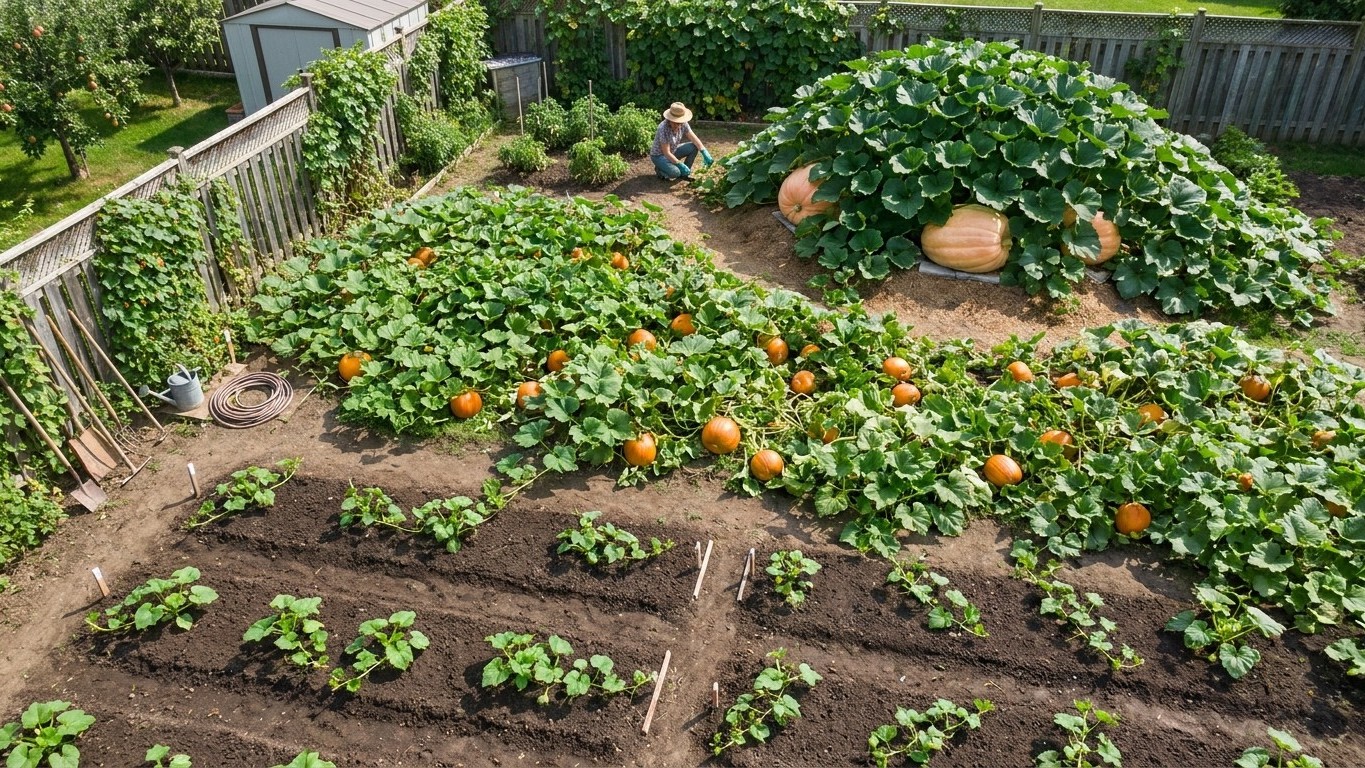

A standard pumpkin plant needs room to run: transplants go 2-3 feet apart in the row, with rows spaced 4-6 feet apart, according to Utah State University Extension. A giant pumpkin is a different animal entirely, needing at least 100 square feet of garden space per hill. Get the spacing wrong and you’re fighting the plant all season.
The short answer
Utah State University Extension’s guidance splits pumpkin growing into two categories, and the space requirement is the first thing that separates them. For a regular pie pumpkin or a mid-size jack-o’-lantern variety, the extension recommends setting transplants 2-3 feet apart within the row, then leaving 4-6 feet between rows. That gap between rows isn’t wasted dirt. Pumpkin vines sprawl, and by midsummer the space between rows fills in with foliage anyway.
Run the math on a small backyard plot and the numbers add up fast. A single row 20 feet long, planted at 3 feet between transplants, holds about six or seven plants. Multiply that by the 4-6 foot row spacing, and a modest three-row planting can eat up 300 square feet or more before the vines even start reaching outward. That’s the footprint most home gardeners underestimate when they buy a seed packet without checking the mature plant size on the label.
Giant pumpkins throw that math out entirely. Utah State University Extension specifies at least 100 square feet of garden space per hill for giant varieties, and that’s a per-plant figure, not a per-row one. One giant pumpkin hill can occupy a space roughly 10 feet by 10 feet, and serious growers often give each hill more room than that once the vine’s side shoots start layering across the soil looking for new rooting points.
Why the gap is so wide
The difference between 2-3 feet and 100 square feet isn’t a typo or a rounding error. A standard pumpkin variety produces a plant with a manageable vine length and a handful of fruit. A giant pumpkin variety is bred and grown specifically to push one fruit to an extreme size, which means the plant behind it needs a root system and leaf canopy to match. Extension guidance treats these as two separate growing systems, not two sizes of the same system, and the space allotment reflects that split.
Before laying out a garden bed, it helps to know which category the seed falls into. A packet labeled for pie pumpkins or classic carving pumpkins follows the 2-3 foot, 4-6 foot rule. A packet or seedling sold specifically as a giant variety needs the 100-square-foot hill spacing, full stop, regardless of how small the garden looks in early spring when the seedling is still just two leaves.
What actually decides it
Several factors get mentioned when people talk about pumpkin spacing, but only one of them actually settles the number. Sunlight competition matters, since pumpkin leaves are broad and will shade out neighboring plants if crowded too close. Root competition matters too, because pumpkin roots spread wide as they search for moisture and nutrients. Air circulation matters as well, since dense foliage traps humidity against the leaves and invites fungal disease. All three of those are real consequences of poor spacing.
But the factor that actually determines the spacing number in Utah State University Extension’s guidance is vine length and mature plant size. A standard pumpkin vine runs a certain distance before it stops producing new growth for the season. A giant pumpkin vine, bred for a completely different outcome, keeps extending its main vine and side vines much further, and it needs new rooting points along the way to support the single enormous fruit it’s carrying. The 2-3 foot row spacing and the 100-square-foot hill spacing are both just physical accommodations for how far each type of vine is expected to travel.
This is why sunlight, roots, and air circulation all improve when spacing is correct, but none of them is the reason the spacing number exists in the first place. They’re downstream effects. Plant a giant pumpkin variety at 3 feet apart like a standard pie pumpkin, and the sunlight, root, and airflow problems all show up together within a few weeks, because the plant simply doesn’t have the square footage to support its own vine growth.
Soil quality plays a supporting role here too. Extension guidance calls for deep, infrequent watering, 1-2 inches per week, and a plant that’s overcrowded can’t take advantage of that watering the way a properly spaced one can, since neighboring root systems compete for the same moisture instead of each drawing from its own zone. Spacing and watering work together, but spacing is the variable a gardener sets once at planting time and can’t easily correct later without disturbing the vine.
How to do it
- Identify the pumpkin type before buying seed or transplants. Check whether the variety is a standard pie or carving pumpkin, or a giant type, since the two follow completely different spacing rules.
- Measure and mark the bed for standard pumpkins. Lay out rows 4-6 feet apart, then mark transplant spots 2-3 feet apart within each row before digging any holes.
- Measure and mark hills for giant pumpkins. Set aside at least 100 square feet per hill, treating each hill as its own growing zone rather than part of a row system.
- Set transplants at the marked spacing. Resist the urge to squeeze in an extra plant “just to see,” since the spacing numbers already account for full-grown vine spread.
- Water deeply and infrequently once plants are established. Utah State University Extension recommends 1-2 inches per week, applied deeply rather than as frequent light sprinkles, so roots grow downward instead of staying shallow.
- Monitor vine spread through the season. As vines extend beyond their original footprint, especially with giant varieties, check that they still have room to lay down new roots at leaf nodes without crowding a neighboring plant.
- Adjust foot traffic patterns around the bed. Once vines fill in the spacing that was originally open ground between rows or hills, plan garden paths elsewhere to avoid stepping on buried vine sections.
What goes wrong
- Planting too close because the seedling looks small. A two-leaf pumpkin seedling gives no visual hint of its mature vine length. Follow the 2-3 foot and 4-6 foot spacing for standard types, or the 100-square-foot hill spacing for giants, regardless of how much empty soil surrounds the seedling in week one.
- Treating a giant variety like a standard one. Giant pumpkin seed sometimes ends up in a garden planned around pie pumpkin spacing, and the plant runs out of room within a few weeks. Confirm the variety type before the bed layout is finalized.
- Watering on a light, frequent schedule instead of deep and infrequent. Extension guidance calls for 1-2 inches per week delivered deeply. Frequent shallow watering encourages roots to stay near the surface, which weakens the plant’s ability to support vine growth into the space it’s been given.
- Ignoring vine spread once the plant is established. A vine that starts in its allotted spacing can still push side shoots into a neighboring plant’s zone later in the season. Check vine direction periodically rather than assuming the original spacing holds for the whole growing period.
- Crowding pumpkins near other insect-prone crops. Dense, overlapping foliage from poor spacing makes it easier for squash bugs and cucumber beetles to move between plants undetected. Proper row and hill spacing keeps plants accessible enough to inspect regularly.
Common questions
Can I grow a giant pumpkin in a smaller space if I trim the vines?
Utah State University Extension’s figure of at least 100 square feet per hill is the baseline space requirement for the variety type, not a suggestion that shrinks with pruning. A smaller footprint works against the plant’s ability to root along the vine and support fruit growth.
Do standard pumpkin rows need to be exactly 4 feet or exactly 6 feet apart?
The guidance gives a 4-6 foot range for rows, so the choice depends on garden layout and how much total space is available, as long as the spacing falls within that range.
Does closer spacing mean I’ll get more pumpkins overall?
Extension spacing figures are based on what the plant needs to grow properly. Crowding plants closer than recommended doesn’t add fruit; it tends to create competition for light, root space, and water instead.
Should watering change once vines fill in the spacing between rows or hills?
The recommendation stays the same throughout the season: 1-2 inches of water per week, applied deeply and infrequently, regardless of how much the canopy has filled in above the soil.