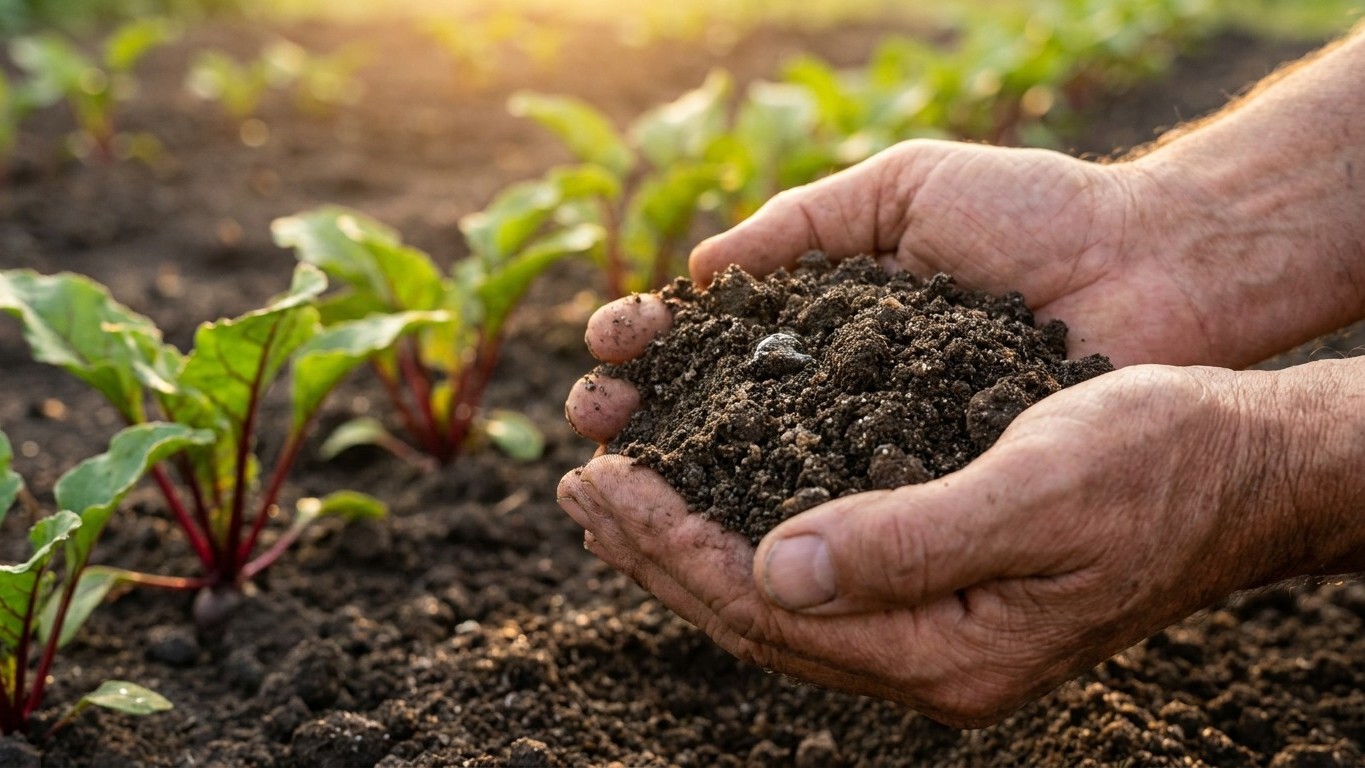

Montana’s state soil, the Scobey series, is a Mollisol: 35 percent sand, 31 percent clay, 34 percent silt, surface pH near 7.0, well drained, with about 2.0 percent organic matter. That combination favors beets more than it hinders them, but it isn’t a guarantee. The real risk window sits in the first six weeks after sowing, when a dry Montana spring can push a young beet straight to flower before the root ever fills out.
The short answer
Scobey is a prairie soil, the kind that built the Corn Belt further east, and Montana adopted it as the official state soil under state law, through the USDA NRCS State Soils program. Its surface horizon runs 35 percent sand, 31 percent clay and 34 percent silt, which puts it on the clayey side of loam rather than the loose, sandy profile beets actually prefer. Utah State University Extension is blunt about what beets want: deep, sandy, well-drained ground rich in organic matter, amended with no more than 1 inch of composted organic matter per 100 square feet. Scobey’s drainage class is listed as well drained, which is the good news, but its clay fraction means it will hold water longer and crust harder after a rain than the sandy loam that USU describes as ideal.
A pH near 7.0 is close to neutral, which is comfortable territory for beets and doesn’t need correcting in most cases. Organic matter around 2.0 percent is a modest, realistic number for a working soil, not the 20-percent-plus reading you’d see in a peat or muck layer. That distinction matters because a garden bed that tests far above 2 percent organic matter is telling you something unusual is going on underneath it, not that you’ve built unusually rich ground.
Where the woodiness risk gets murkier
USU’s second warning is about heat: temperatures above 85 F combined with water stress make the root turn woody and fibrous, ruining texture even if the beet still looks fine from the top. That’s a separate failure from bolting, and it happens later in the season, once the root is sizing up rather than germinating. How many days a year a given Montana location actually crosses 90 F isn’t a figure carried in the sourced data here, so it can’t be stated as fact on this page. What can be said is that any stretch of hot, dry weather during root sizing is the trigger USU names, regardless of the exact day count for your particular valley.
None of this is a diagnosis for one garden. Montana spans hundreds of mapped soil series, and Scobey represents a statewide default, not the dirt behind a particular house. A river-bottom garden, a hillside plot, or any yard a builder has graded and refilled can behave nothing like the Scobey profile. Treat these numbers as a starting point for what Beet Soil in Montana tends to look like, then confirm your own with a soil test.
The six weeks that decide it here
Beets are sown directly in the ground, never transplanted, and the standard guidance is 2 to 3 weeks before the last expected frost. In the Billings area, NOAA’s 1991-2020 climate normals put the last spring freeze somewhere between April 29 and May 10, based on the 30 to 70 percent freeze-probability band. Sow on that schedule and the first six weeks of a beet’s life, the window USU identifies as the make-or-break period for bolting, land squarely in Montana’s classic early-spring stretch: still cool, still capable of a late frost, and often swinging hard between wet snow and dry, windy days within the same week.
That swing is the part worth planning around. Bolting isn’t caused by cold alone; it’s caused by water stress in those first six weeks, according to USU, meaning a beet that goes dry early is the one that panics into flower production instead of building a root. A Montana spring that alternates a soaking snowmelt with a run of drying wind is exactly the pattern that can dry out a shallow seedbed fast, especially on the clay-leaning texture Scobey represents, where the surface can crust and shed water even while the subsoil below stays damp.
Why the risk sits early, not late
This is the piece that gets conflated most often: bolting is an early-season, water-stress problem, and woodiness is a later-season, heat-plus-water-stress problem. They share a cause, dryness, but they show up at different ages and ruin the crop in different ways. A beet that bolts in week four never fills out a usable root at all. A beet that turns woody in week ten looked fine right up until harvest, then disappointed at the cutting board. Managing the first six weeks for even, consistent moisture is the single lever that addresses the bolting risk directly; it doesn’t fully insure against woodiness later, which depends on how hot and dry the ground gets once the root is already sizing.
Reference to Billings’ frost window is useful for timing the sowing date, but it’s one station’s normals, not a promise for every valley. Mountain valleys elsewhere in the state can see frost in any month of the growing season, which changes the safe sowing date considerably even if the six-week bolting mechanics stay the same.
What goes wrong here
- Bolting from a dry, crusted spring seedbed: Scobey’s clay fraction (31 percent) crusts after rain and can dry unevenly at the surface even when the profile below holds moisture. Keep the top inch of the seedbed consistently damp through the first six weeks after sowing rather than watering deeply on a schedule and letting the surface dry between waterings.
- Woody roots from a hot, dry finish: once temperatures push past 85 F during root sizing, any water stress on top of that heat turns the root fibrous. This is separate from bolting and shows up later; the remedy is steady moisture through the back half of the season, not just the first six weeks.
- Over-amending a soil that’s already workable: Scobey’s roughly 2.0 percent organic matter and near-neutral pH mean many Montana gardens don’t need heavy correction. USU caps compost addition at 1 inch per 100 square feet; piling on more organic matter than that doesn’t loosen a clay-leaning texture the way sand or grit would, and can throw off drainage instead of fixing it.
- Treating the state soil as your soil: a Scobey-type profile is a statewide reference point, not a guarantee about any one yard. Sandy river-bottom ground, compacted hillside clay, and fill dirt around a newer house can all behave completely differently from the mapped series, which is why a bed that follows every seasonal rule can still underperform if the underlying texture is a poor match.
Checking this against your own county
Everything above is built from statewide reference points: one representative soil series and one city’s frost normals. Neither replaces a look at your own ground. Montana State University Extension, at montana.edu/extension, runs county offices that can walk through a local soil test, confirm your realistic last-frost date for your specific valley, and flag whether your county’s typical soils lean sandier or heavier than the Scobey reference used here. That local check is especially worth doing if you garden outside the milder river valleys, where frost timing and soil texture can both diverge sharply from the statewide picture.
Common questions
Does Montana’s official state soil mean my garden has that soil?
No. Scobey is the representative series chosen to stand for the state, but Montana maps hundreds of soil series, and river bottoms, hillsides and any lot that’s been graded or filled can differ completely from it. Use it as a starting reference, then confirm your own texture with a soil test.
Is bolting the same problem as a woody root?
No, and treating them as one problem is the most common mistake. Bolting is triggered by water stress in the first six weeks after sowing, per Utah State University Extension, and it happens early, before a usable root ever forms. Woodiness is a later-season problem, caused by heat above 85 F combined with water stress while the root is sizing up. Both call for steady watering, but they happen at different growth stages for different reasons.
When should I sow beets if I’m near Billings?
Standard practice is 2 to 3 weeks before your last expected frost. NOAA’s 1991-2020 normals put that window between April 29 and May 10 for the Billings area, based on the 30 to 70 percent freeze-probability band. That’s a milder valley’s number; other parts of the state can see frost much later.
Do I need to add a lot of compost to Scobey-type soil?
Probably not much. With organic matter already around 2.0 percent and a near-neutral pH, this soil doesn’t need heavy correction for beets. Utah State University Extension recommends no more than 1 inch of composted organic matter per 100 square feet, and clay-leaning ground benefits more from improved drainage structure than from piling on additional organic matter.