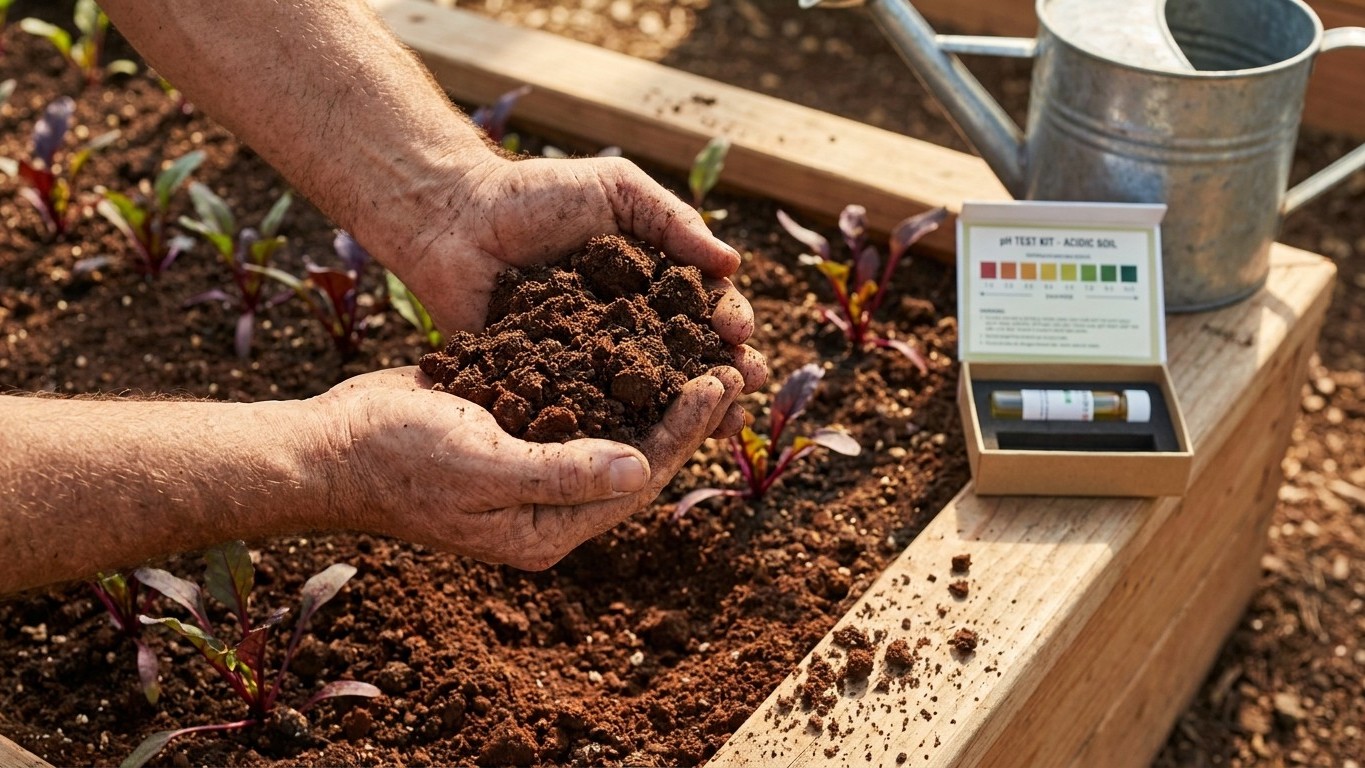

Oregon’s official state soil runs acid and clay-heavy, exactly the profile that gives beets trouble. Add a last-frost window that stretches across two weeks in March west of the Cascades, and the six weeks right after sowing become the stretch that decides whether you pull round, tender roots or watch the plants shoot to seed. Knowing When to Sow Beets in Oregon is the first step; test your soil, water on a fixed schedule from day one, and the state’s own numbers explain why that matters.
The short answer
Oregon’s designated state soil is the Jory series, an Ultisol formally named by state law in 2011 under the USDA NRCS State Soils program. It’s an old, heavily weathered and leached soil, and the surface horizon runs about 14 percent sand, 34 percent clay and 52 percent silt, with organic matter around 5.0 percent and a surface pH near 5.6, slightly acid. It’s classed as well drained, but that’s a structural description, not a texture one. A soil can drain well through its profile and still be dense, silty and slow to warm in a seedbed, which is what the Jory numbers describe.
That combination cuts two ways for a beet. Utah State University Extension, the only source this page relies on for beet culture, is specific about what the crop wants: deep, sandy, well-drained soil rich in organic matter, amended with no more than 1 inch of composted organic matter per 100 square feet. Jory clocks in at only 14 percent sand against 52 percent silt and 34 percent clay, which is close to the opposite texture profile. Well drained, yes. Sandy, no. That mismatch matters most in the first weeks after sowing, when a crusted, clay-heavy surface can seal over fine beet seed before it ever breaks through.
The pH tells its own story. At 5.6, Jory sits on the acid side of neutral, and beets do best closer to neutral. An acid, clay-heavy bed doesn’t just risk crusting, it can also tie up nutrients the seedling needs in that same early window. The organic matter figure, near 5.0 percent, is actually a point in the soil’s favor and a reason not to over-amend: the Utah State guidance caps additions at 1 inch per 100 square feet precisely because more isn’t automatically better.
On heat, the fact record for this page doesn’t carry a published count of how many days the region spends above 90 F in a typical year, so that number isn’t stated here. What is documented is the mechanism: Utah State links heat above 85 F combined with water stress to woody roots, a separate failure from the bolting risk tied to early-season thirst. Neither of those thresholds should be confused with the other.
None of this describes your yard. Oregon spans hundreds of mapped soil series, and Jory is the one chosen to represent the state, not a guarantee about any particular garden. Coastal ground, valley bottomland, and anything a builder has cut, filled or graded will read differently. Treat the Jory numbers as a description of what the region’s ground tends to do, then get your own Beet Soil in Oregon bed tested before you decide anything.
The six weeks that decide it here
Utah State’s guidance is built around a single, narrow window: water stress in the first six weeks after sowing is what pushes beets toward premature flowering, meaning bolting. Since beets are sown directly in place, not started as transplants, that six-week clock starts at seeding, and the standard sowing advice is to get seed in the ground 2 to 3 weeks ahead of the last expected frost. For much of Oregon west of the Cascades, using Portland as the reference point, NOAA’s 1991-2020 Climate Normals put the last spring freeze in the 30 to 70 percent probability band between March 6 and March 21. Sow on that schedule and the critical six weeks land squarely inside the region’s early spring, before the marine layer typically starts to break up.
What does that spring actually do? West of the Cascades, March and April are the wettest stretch of the year in most seasons, driven by Pacific frontal systems moving through on a fairly regular cadence. That’s generally good news for the bolting risk Utah State describes, since a beet that’s getting consistent moisture from rainfall isn’t the plant under water stress. The more common failure in this window isn’t drought, it’s the opposite problem interacting with the Jory-type clay texture: heavy, silty ground can stay saturated and cold longer after a rain, slowing germination and letting the surface crust once it does dry between systems. A short, dry break in an otherwise wet pattern, even a week or so, can be enough to stress newly emerged seedlings if the gardener assumes the ground is still wet from the last storm.
East of the Cascades, the picture changes completely. Central and eastern Oregon sit in high desert, with a shorter frost-free season and a drier spring pattern overall, and the March frost window referenced here for Portland does not apply there. Gardeners on that side of the state are working with a narrower six-week runway and a real risk of the exact early dryness Utah State warns against, which raises the bolting risk even as the later-season woodiness risk from heat above 85 F also arrives sooner in the year.
What goes wrong here
- Crusted seedbed from clay-heavy soil. A Jory-type surface, at 34 percent clay and only 14 percent sand, can seal after a rain and trap fine beet seed underneath. Rake the seedbed to a fine, loose texture right before sowing, and cover seed no deeper than the depth recommended on the seed packet so seedlings don’t have to fight through a crust to reach light.
- Acid pH locking up nutrients early. At a surface pH near 5.6, Jory-type ground sits on the acid side of what beets prefer. Test the actual bed, not just the county reference, and lime according to the test result rather than a guess, since over-liming creates its own problems.
- Bolting from a dry break inside a wet spring. Even in the normally rain-fed six weeks after a March sowing, a week without rain can stress young beets enough to trigger premature flowering. Water on a set schedule rather than relying on rainfall memory, especially once the marine layer starts to lift later in spring.
- Woody roots from a later heat spell. This is a separate failure from bolting, driven by heat above 85 F landing on a plant that’s also short of water. It shows up well after the six-week window, closer to harvest. Deep, even watering and a layer of mulch over the root zone through any hot stretch reduce the risk.
- Over-amending an already decent soil. With organic matter near 5.0 percent in the Jory reference, this ground doesn’t need heavy compost additions. Utah State’s cap of 1 inch of composted organic matter per 100 square feet is a ceiling, not a target to exceed just because clay soil looks like it needs help.
Checking this against your own county
Everything above starts from one mapped soil series and one city’s frost data, and Oregon’s ground and weather vary too much for that to be the last word for any single garden. Before you commit to a sowing date or a soil amendment plan, run a real soil test on your own bed and check your local frost-free window against your county’s numbers, not Portland’s.
Oregon State University Extension, at extension.oregonstate.edu, is the state’s land-grant extension service and the right place to start. County offices there can point you to soil testing options and local planting calendars that reflect where you actually garden, whether that’s coastal fog, Willamette Valley clay, or high desert on the east side of the Cascades.
Common questions
Do I need to lime my soil before sowing beets in Oregon?
Not automatically. The Jory reference soil runs acid at a surface pH near 5.6, but that’s a statewide reference point, not your bed’s number. Test your own soil first and lime only if the result calls for it.
How soon after sowing can bolting happen?
Utah State University Extension identifies the first six weeks after sowing, counted from seeding since beets are direct-sown rather than transplanted, as the window where water stress triggers premature flowering. Consistent watering through that stretch is the main defense.
Is bolting the same problem as woody roots?
No. Bolting comes from water stress in the first six weeks after sowing. Woody roots come later, from heat above 85 F combined with water stress closer to harvest. They call for different fixes and shouldn’t be treated as one issue.
Does the March frost window apply to all of Oregon?
No. The March 6 to March 21 range comes from NOAA data for Portland and applies to areas west of the Cascades. Central and eastern Oregon are high desert with a shorter growing season, and that window doesn’t carry over there.