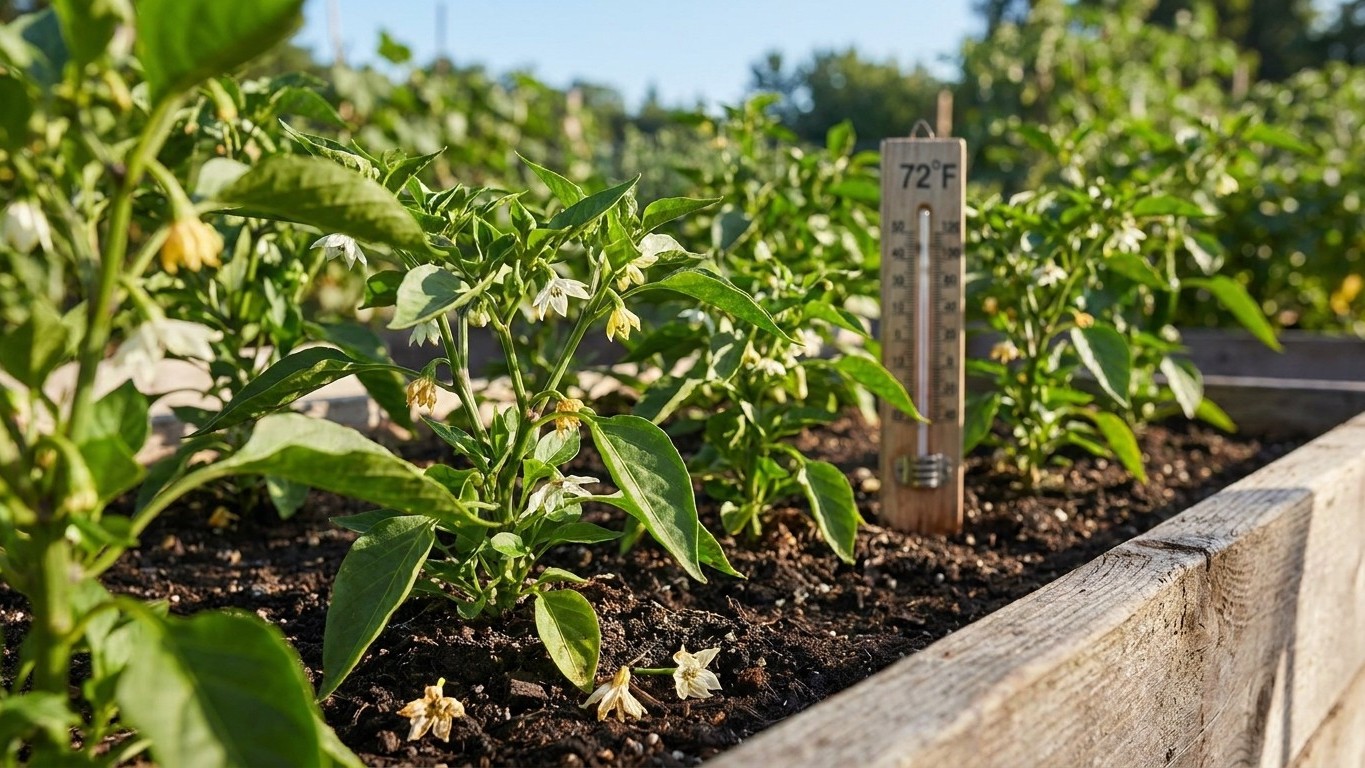

In most of Louisiana, start pepper seed indoors 8 to 10 weeks before you plan to set transplants outside, timed to soil that has warmed to 60°F and a date after your local last frost. South Louisiana’s frost window runs unusually early, January 18 to February 8, so the calendar here looks nothing like a Midwest planting guide. The bigger obstacle isn’t cold at all. It’s Louisiana’s long run of 90-degree-plus days, which starts shutting down pepper flowers well before summer peaks.
The short answer
At the reference station in New Orleans, NOAA’s 1991-2020 Climate Normals put the yearly average at 70.7 days reaching 90°F or higher. That’s roughly ten weeks of the calendar sitting at a temperature pepper plants treat as a hard stop. Above 90°F, pollen goes sterile and blossoms drop before they ever set fruit. The plant can look perfectly healthy, green and leafy, while its flowering simply stalls out. This is why timing pepper seed in Louisiana is less about dodging frost and more about routing the flowering window around the hottest stretch of the year, usually the run from mid-June through August.
The other failure point sits at the opposite extreme. Utah State University Extension notes that pepper fruit set also fails when nights drop below 55°F, even if the plant tolerates the daytime temperature just fine. A pepper can be sitting in perfectly warm afternoons and still refuse to set fruit if it’s getting chilly overnight air.
Here’s where a Louisiana gardener has to do some of their own homework. This site tracks days at or above 90°F for Louisiana locations, but it does not carry summer night minimum temperatures. That number matters for peppers just as much as the heat count does, so don’t guess at it. Don’t assume a location’s latitude tells you its overnight lows, and don’t borrow the coldest month of the year as a stand-in for a summer night reading. Riverbottoms, low fields, and open pasture can all run several degrees cooler after dark than a nearby town, regardless of how far south you are. A simple min-max thermometer set outside near the pepper bed for a couple of weeks in early spring and again in early fall will tell you more than any regional average.
When to start seed here
- Find your local last frost date. For south Louisiana, NOAA’s 1991-2020 data puts the window at January 18 to February 8, based on the 30 to 70 percent freeze-probability band at the New Orleans-area station. That’s an early window by national standards, and it comes with a catch: a 32°F freeze occurs in only 86.8 percent of years there, meaning about one year in seven brings no freeze at all, and the whole risk period straddles the new year rather than sitting cleanly in spring. North Louisiana freezes more reliably and later, so if you’re gardening up there, pull your own county’s frost data rather than using the south Louisiana figure.
- Wait for the soil, not just the calendar. Peppers need soil at 60°F before transplanting, and soil temperature usually lags behind the end of frost risk by some weeks, especially in Louisiana’s heavier clay and silt soils, which hold cold longer than sandy ground. A soil thermometer pushed 4 inches down gives a more honest reading than guessing off the air temperature.
- Count backward 8 to 10 weeks from your expected transplant date. That span is the indoor seed-starting window Utah State University Extension recommends for peppers. If your soil hits 60°F in, say, early March, you’d be sowing seed indoors sometime between early and mid-January. Redo this math with your own soil-warming date, not a generic one, since a river-bottom garden and a raised bed on a south-facing slope won’t warm at the same pace even in the same county.
- Route the flowering window around the heat, not just the sowing date. Because south Louisiana clears frost risk so early, a gardener there has room to get plants in the ground before summer’s 90°F stretch really sets up, letting the crop set its first fruit before the heat arrives. Flowering typically follows transplant by several weeks, so back that timing into your count as well.
- Consider a second sowing for fall. Once the run of 90°F days starts tapering, usually late summer into early fall in most of Louisiana, a second round of transplants can flower and set fruit in the cooler stretch before nights start dipping toward that 55°F floor. Since fruit takes 35 to 45 days to develop from flowering, not from sowing or transplanting, work backward from your area’s typical first fall chill to see how late a summer sowing can go and still finish.
What goes wrong here
- Blossom drop from a heat spell or a cool snap. Louisiana peppers flowering during a run of 90°F-plus days will drop blossoms before fruit ever forms, and the same thing can happen if an unseasonably cool night dips under 55°F during that early frost window. Watch a forecast heat spike and use light shade cloth over flowering plants during the worst afternoons; watch a late cold snap and cover plants overnight with row cover rather than assuming the season’s warmth is locked in.
- Sunscald on exposed fruit. Louisiana’s sun is strong enough that peppers left uncovered by thin or disease-damaged foliage can develop pale, papery patches on the side facing direct light. Avoid heavy pruning that strips leaf cover during peak summer, and if a plant has thinned out from disease, rig temporary afternoon shade over the exposed fruit rather than letting it sit in full sun for the rest of the season.
- Blossom-end rot from uneven watering. Louisiana’s pattern of heavy rain followed by dry stretches disrupts calcium uptake at the root, which shows up as a sunken, leathery spot on the fruit’s blossom end. Mulch heavily to even out soil moisture between rain events, and keep to a consistent irrigation schedule instead of letting the soil swing from soaked to bone-dry and back.
Common questions
Can you grow peppers through a full Louisiana summer without losing fruit set?
Not easily. With 70.7 days a year averaging 90°F or higher at the New Orleans station, most of Louisiana’s mid-summer stretch sits above the threshold where pepper flowers abort. Plants often stall out in July and August and resume setting fruit once temperatures ease in fall, which is exactly why a lot of gardeners plan two flowering windows rather than one continuous summer crop.
How early can south Louisiana gardeners transplant peppers outside?
Earlier than most of the country, since the NOAA frost window there runs January 18 to February 8. But frost clearing early doesn’t mean the soil is ready. Transplanting still depends on soil reaching 60°F, which typically happens later than the frost date itself, so check soil temperature directly rather than transplanting the moment frost risk passes.
Does north Louisiana need a different pepper schedule than south Louisiana?
Yes. The frost data given here reflects a south Louisiana station, and north Louisiana freezes more reliably and later in the year. Gardeners in the northern part of the state should pull their own county’s last frost date rather than applying the January-to-February window that applies farther south.
What pepper varieties do best in Louisiana’s climate?
Utah State University Extension names six pepper varieties suited to home garden growing, but its guidance doesn’t attach a heat rating, a days-to-maturity figure, or a size to any of them. Rather than guess at numbers that aren’t published, treat variety choice as secondary to timing: getting the flowering window to land outside the 90°F stretch and above the 55°F night floor matters more than which variety is in the ground.